

Making sugar visible in Indonesia
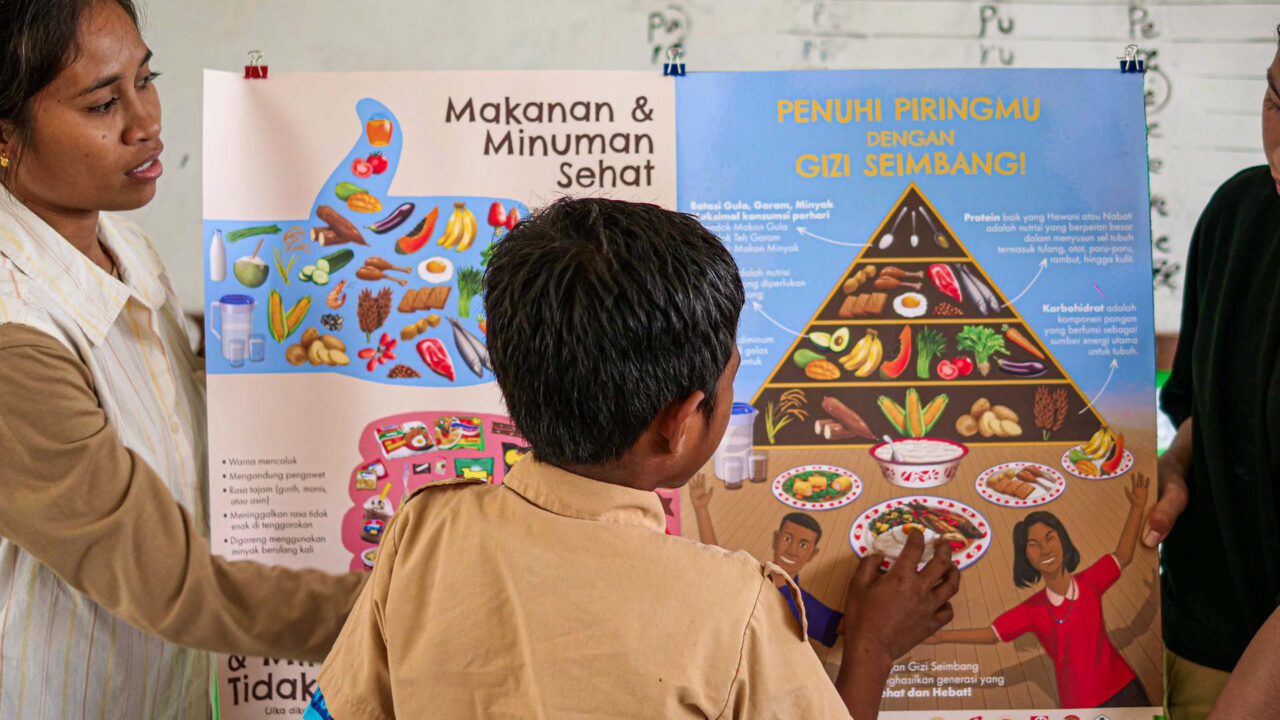
Indonesia’s Nutri-Level labels aim to make the sugar, salt and fat in drinks easier to recognise. Clear information matters, but families also need affordable choices and safe drinking water. Our nutrition education at SDN Ndata connects these questions with familiar foods and everyday life.
On 7 October, WHO described Indonesia’s introduction of Nutri-Level, a front-of-pack system grading beverages from A to D according to their sugar, salt and fat content. Implementation is gradual: the scheme is voluntary for ready-to-serve beverages, while the regulation for processed packaged drinks provides a two-year transition before becoming mandatory.
Making nutrition information easier to understand is useful. In East Sumba, the next questions are equally practical: what can a family afford, what is available locally, and is safe drinking water within reach?
At SDN Ndata, our volunteers use illustrated posters to discuss food variety and products high in sugar or salt. The aim is to explain choices without blaming children or families for the resources they have. Our latest field photograph shows how that conversation begins.
Source: WHO Indonesia, 7 October 2026: front-of-pack nutrition labelling.
