


Donate
Support Care
Articles & News
Field stories
Glossary
Field guides
Health & Medical Program
Kawan Against Malaria
Year-round malaria prevention, parasite-based diagnosis, treatment support and vector control with families across remote East Sumba.
- Active across East Sumba since 2022
- Thousands of insecticide-treated nets distributed
- Hundreds of homes protected through IRS
Malaria control must continue after a campaign leaves
In remote East Sumba, exposure, fever and delayed access are part of daily life. Since 2022, Kawan Against Malaria has worked with families throughout the year: preventing bites, testing suspected cases, supporting appropriate treatment and recognising when a patient needs urgent referral.
The programme
A continuous malaria programme built around families
Malaria is preventable and curable, but the first symptoms can resemble many other infections. A patient needs observation, a parasite-based test and timely clinical decisions, not treatment based on fever alone.
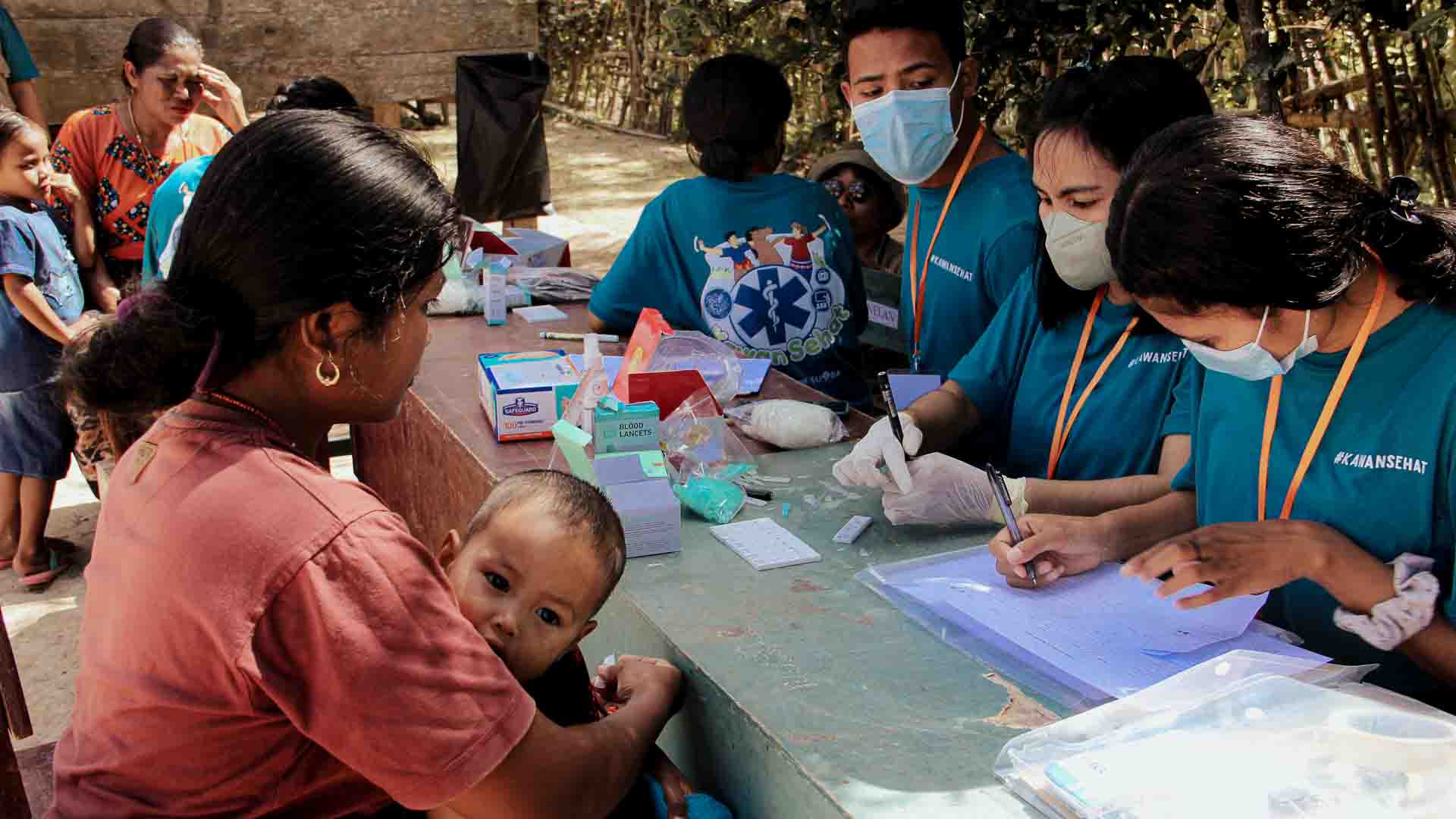
Since 2022, Kawan Against Malaria has brought prevention and clinical action into remote villages. Kawan Sehat agents meet people at home, assess fever, support rapid testing, explain results, follow patients and refer danger signs. During community medical days, teams add broader clinical assessment, malaria screening, microscopy where available, medicines, prevention education and follow-up.
The programme also acts before anyone becomes ill. Thousands of insecticide-treated nets have been distributed, hundreds of homes have received indoor residual spraying, and families learn how to reduce exposure, recognise symptoms and seek testing early. The 2025 Umalulu study is one carefully documented part of this wider programme. It helps measure household risk and refine future action; it does not define the programme on its own.
Prevention, testing, treatment support, training, surveillance and referral continue throughout the year.
Repeated village actions combine net distribution with practical teaching on correct use, care, repair and replacement.
Indoor residual spraying is carried out as part of wider vector-control work by trained teams following safety protocols.
Kawan Sehat agents and community medical teams assess fever, support parasite-based diagnosis and follow patients in remote villages.
From suspected malaria to safer care
A fever must move through a reliable clinical pathway
Early action matters, but speed without diagnostic discipline can miss malaria, overlook another serious infection or expose a patient to the wrong medicine.
Recognise possible malaria
Fever, chills, headache, weakness and recent exposure are taken seriously, with particular caution for young children, pregnant women and people who are already fragile.
Confirm the parasite
A rapid diagnostic test or microscopy is used whenever available. Parasite-based diagnosis guides treatment and helps avoid treating every fever as malaria.
Assess severity
Consciousness, breathing, hydration, repeated vomiting, convulsions, jaundice, bleeding and the ability to drink help determine whether referral is urgent.
Treat or refer safely
Confirmed uncomplicated malaria follows approved national protocols through qualified services. Severe disease, uncertainty or unavailable treatment requires rapid referral.
Follow up and protect
Recovery, medicine completion and recurring fever are reviewed while the household receives practical support on nets, mosquito exposure and when to seek care again.
Fever is not a diagnosis
Local action must remain clinically safe
The programme brings prevention and diagnostic access closer to families while keeping clear limits. Severe malaria can progress rapidly, and other dangerous infections may begin with the same fever.
What the programme can do safely
- Document fever history, exposure, previous treatment and household risk
- Teach early symptoms, danger signs and when waiting is no longer safe
- Provide and demonstrate correct use and care of insecticidal mosquito nets
- Support rapid testing and microscopy through trained health personnel
- Carry out indoor residual spraying under controlled safety protocols
- Connect confirmed or worsening cases to treatment, referral and follow-up
When urgent referral is required
- Altered consciousness, repeated convulsions, collapse or extreme weakness
- Difficulty breathing, shock, severe pallor or suspected severe anaemia
- Inability to drink, persistent vomiting or signs of severe dehydration
- Jaundice, dark or bloody urine, abnormal bleeding or rapidly worsening illness
- Fever in a very young child, during pregnancy or in a highly vulnerable patient
- Any suspected malaria when testing, appropriate treatment or safe monitoring is unavailable
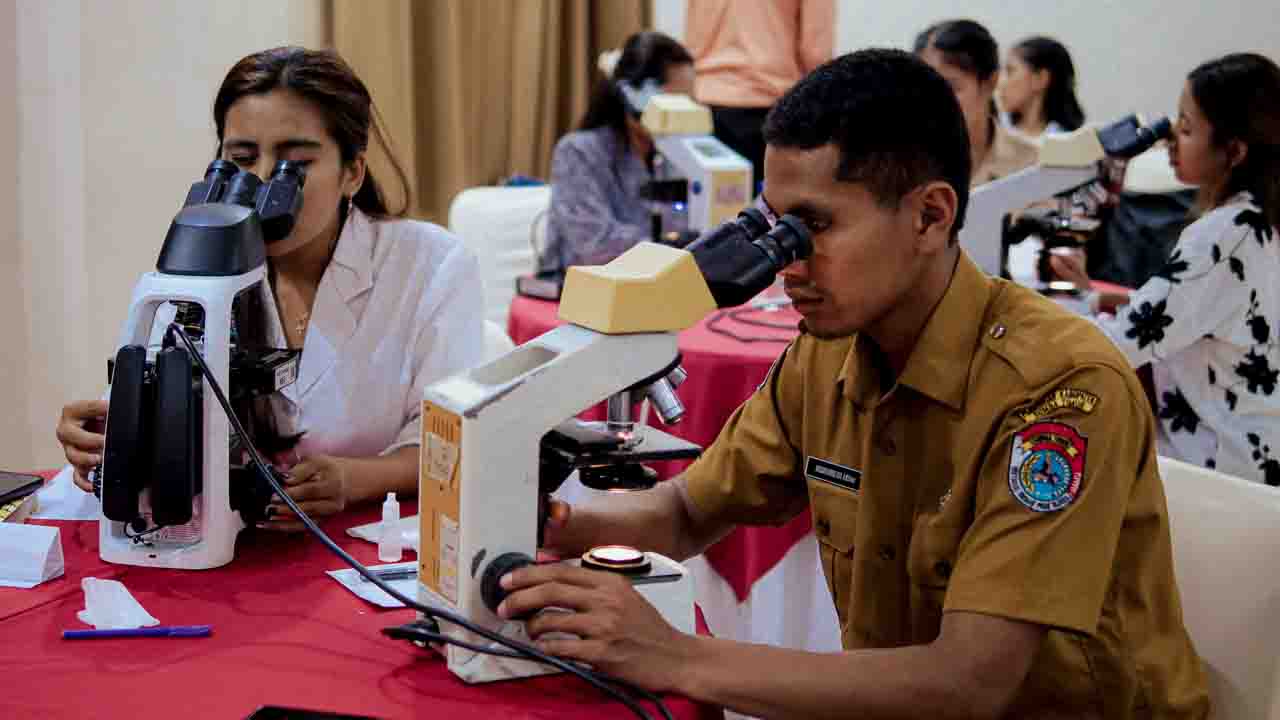
A diagnosis is not a device alone. It depends on correct sampling, slide preparation, reading, recording, clinical interpretation and a treatment pathway that the patient can actually reach.
The diagnostic and prevention chain
Every tool must lead to a safer decision
Rapid tests, microscopes, mosquito nets and sprayers only protect people when training, quality control, clear protocols, stock management and follow-up remain connected. Kawan Against Malaria builds that chain with local teams rather than delivering isolated equipment.
Household knowledge
Families learn how malaria is transmitted, how to use and repair nets, where mosquitoes breed and which symptoms require testing.
Parasite-based diagnosis
Rapid diagnostic tests support early decisions, while microscopy strengthens species identification, parasite detection and laboratory capacity.
Vector control
LLIN distribution and indoor residual spraying are documented, explained and adapted to the condition of each household.
Treatment and follow-up
Confirmed cases are connected to approved treatment and reviewed for deterioration, recurring fever, adherence and referral needs.
What changes in practice
Malaria control becomes local, measured and repeatable
Fewer fevers are treated blindly
Testing separates confirmed malaria from other causes of fever and directs patients towards more appropriate care.
Protection fits the household
Net condition, sleeping spaces, wall surfaces, behaviour and exposure are observed before prevention is planned.
Severe disease is recognised earlier
Families and local agents share a practical language for danger signs, urgent referral and the limits of home care.
Local data changes the next action
Household evidence, test results and field records guide training, supplies, vector control and follow-up instead of assumptions.
Complete field reportThe full Umalulu reportOpen the complete report, including household evidence, field observations and action priorities from the 2025 study.
Scientific reportIMRaD methods and resultsOpen the scientific version covering methodology, findings, discussion, limitations and public-health implications.
Field resultsEast Sumba prevention in practiceSee how education, LLINs, IRS, diagnostics and village partnerships were delivered and documented.
Diagnostic capacityMicroscopy training and validationFollow the practical work of preparing, reading and discussing malaria slides with local laboratory teams.
Live field recordField Notes from Eastern IndonesiaRead current observations from testing, prevention sessions, household work and the realities teams meet in remote villages.
Field guide & glossaryMalaria terms explainedOpen practical explanations of RDTs, microscopy, LLINs, IRS, parasites, referral and community surveillance.
Medical referenceWHO guidelines for malariaConsult the current evidence-based recommendations for diagnosis, treatment, prevention, vector control and surveillance.
Live from the field
Kawan Against Malaria Field Notes, as the work happens
Two recent field signals from testing, microscopy, household prevention, mosquito-net use or vector control. These notes refresh when a relevant Field Note is published.
Directly from the field
Latest Kawan Against Malaria reports
These reports follow the continuing programme: fever assessment, rapid tests, microscopy, treatment support, LLIN distribution, indoor residual spraying, education, referral and the limits teams meet in remote villages.

Combatting Malaria in Sumba: A Crucial Health Battle
Fair Future supports malaria prevention, community education, testing and access to treatment in remote East Sumba communities.

Crucial Preparation for Malaria Eradication in Sumba East
“In the heart of Sumba East, a coalition of heroes united for an epic battle against malaria. They embarked on a journey fueled by hope, dedication, and unwavering commitment. However, what set the stage for their triumph was the meticulous preparation that underpinned every step.

Endemic Malaria: A Multifaceted Challenge for Vulnerable Demographics
The #ZeroMalaria Sumba program by Fair Future is making significant strides in the battle against malaria in eastern Indonesia. Through its meticulous screening, precise treatment, and strategic approach, this initiative aims to save lives and ultimately eradicate the debilitating disease that has long plagued the region.

Combating Malaria: Empowering Communities for a Malaria-Free Future
Take a stand against malaria in Eastern Indonesia! Our groundbreaking #ZeroMalaria Sumba program empowers communities with the knowledge and resources to challenge this deadly threat. Through education, targeted interventions, and grassroots initiatives, we are leading the way to a malaria-free world. the future.

Transforming Lives in East Sumba: Rotary Australia’s Vital Partnership
The partnership between Rotary Australia and Fair Future aims to make a positive impact on vulnerable communities in East Sumba. Through a joint effort, we are dedicated to providing access to clean water and disease control, which will help bring hope and a brighter future to these communities.

Integrated Malaria Prevention Crusade for a Malaria-Free East Sumba
In the heart of East Sumba, Indonesia, the Fair Future Foundation is actively engaged in the battle against endemic malaria through its #ZeroMalariaSumbaTimur program, initiated in 2023. Learn how our multifaceted approach, including Interior Residue Spraying (IRS), is making a significant impact in reducing malaria transmission.

#ZeroMalaria, to eradicate malaria in Laindatang
Fair Future Foundation, in collaboration with Kawan Baik Indonesia and Sumba Volunteer, is working to combat malaria in the highly affected region of East Sumba, Indonesia. Through their program, they aim to provide screening, prevention, and treatment to the remote village of Laindatang.

The #ZeroMalariaSumbaTimur program has been successfully implemented
Fair Future’s ZeroMalaria Sumba Timur program combines community screening, treatment access and prevention in remote malaria-affected villages.

Together, we are joining forces in a powerful effort to combat malaria
A collective initiative against malaria is currently underway in East Sumba, Indonesia. Fair Future, kawan baik, and Sumba Volunteers have joined forces with over 100 volunteers, including doctors, nurses, laboratory technicians, water experts, builders, and government officials.

Malaria Program – Preparing and Mobilizing Resources
As we mentioned in last week’s newsletter, Fair Future Foundation, Kawan Baik Indonesia, and Sumba Volunteer are joining forces to launch a crucial health and medical operation to combat malaria in the Mahu region of East Sumba, Indonesia. The “Malaria Prevention Initiative 2023 – Sumba Timur 2023” aims to prevent, detect, and treat this…

Water and sanitation are crucial in the fight against malaria
Clean water, sanitation and hygiene support healthier living conditions alongside malaria prevention, vector control and access to medical care.

Empowering Health and Transforming Lives of Children
Children in remote Mbatapuhu learn practical health, hygiene and self-care with Fair Future teams using the Kawan Sehat guidebook.
Accountability
Malaria control must remain measurable after the campaign leaves
We document households reached, tests performed, confirmed cases, nets distributed, surfaces sprayed, people trained, referrals made and gaps that remain. Kawan Against Malaria is not a one-day distribution. It is a continuing clinical and public-health process built with communities and local services.
