
Towards 2026…

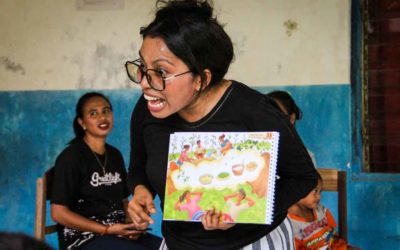
Community trainings on malaria, hygiene and safe water

From the field:help us deliver care
We provide medical & social assistance where it is most needed. Since 2008 we have helped thousands of people & talk about what they are going through.
Select Page
Logo of the Swiss Fair Future Foundation

Donate

Support Care

Programs

All projects

Quick News

Field updates

Stories

Field stories

Every relationship is based on trust

Content type Post Page Gallery
Behavioral Impacts on Spread of Malaria

Behavioral Impacts on Spread of Malaria

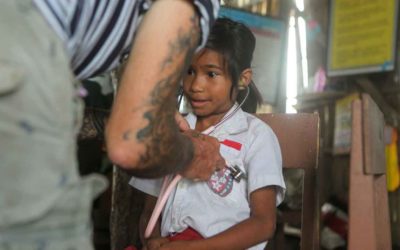
Beyond Borders: Fighting Malaria Together in Eastern Indonesia. This new "Picture of the Day"  shows a young girl from Lapinu village who appears unwell. Taken in 2020, Alex examined her and used a stethoscope to listen to her heartbeat. In April 2023, we revisited the village as part of the Primary Medical Care program. Unfortunately, the girl contracted malaria and suffered from high fever, body pains, and poor overall health. However, after receiving treatment and giving advice to her mother, the little girl has shown significant improvement after just one month.

Our organisation is dedicated to promoting public health in ultra-rural regions of Indonesia (like here in East Sumba), and we're deeply concerned about the impact of malaria on vulnerable communities, as you know already. Sadly, malaria remains a leading cause of illness and death in Indonesia, particularly in East Sumba, where we are based.

Some little history: The word "malaria" originates in Italian. It comes from the expression "mal'aria", which translates as "bad air". This term was used historically to describe the belief that disease was caused by inhaling polluted or stale air in swampy areas. The Plasmodium parasite is responsible for causing malaria, and research suggests that it has been affecting humans for at least 4,000 years.

Several human behaviours contribute irreparably to the spread or persistence of malaria. Here are some of the factors that lead to an increase in malaria cases:

Failure to prevent mosquito bites, poor waste management, inadequate housing and sanitation, deterioration of hygienic conditions, deforestation, alterations to natural habitats, movement of people, drug resistance*** and misuse, limited access to health services, higher illiteracy rates among younger populations, and lack of community involvement and awareness can all lead to an increase in malaria cases… And this, among other examples!

As a result, many people, particularly children and pregnant women, continue to suffer from this preventable and treatable disease. Our program aims to tackle these issues head-on by implementing various activities to strengthen malaria control efforts in the region. It is crucial to highlight that combatting malaria demands a unified strategy encompassing preventive and therapeutic measures. It also involves initiatives to enhance the environment and living standards of communities affected by the disease.

***The problem of self-medication and the consequent development of resistance to antimalarial drugs are two interconnected challenges that significantly hinder the effective management and control of malaria.
read more
Beyond Borders, Fighting Malaria Together in Eastern Indonesia

Beyond Borders, Fighting Malaria Together in Eastern Indonesia

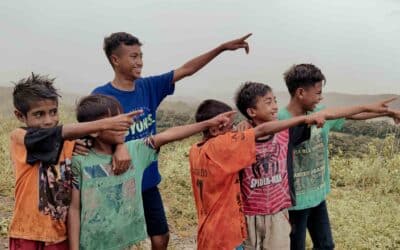
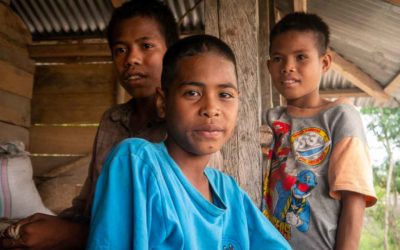
Beyond Borders: Fighting Malaria Together in Eastern Indonesia. This new "Picture of the Day"  shows three kids between 8 and 12 years old. Children are among the most vulnerable malaria victims in Indonesia, especially in the east of the country and of course here, where we work with Fair Future, Kawan Baik foundations and all our partners and friends.

The health and well-being of children in eastern Indonesia are threatened by malaria, which hinders their growth, development, and quality of life. Our organizations have a deep understanding of the urgency to address this issue, and we are working hard on our disease control program, which is of utmost importance. We have a strong track record of working in these regions where the epidemic affects about 80% of children. Collaborative efforts are underway to combat malaria and prioritize the welfare of children in these areas.

Young children are at a higher risk of contracting malaria due to their underdeveloped immune systems. Living in rural and poor areas with limited access to preventive measures only exacerbates the severity of symptoms if infected. A contributing factor is that young children typically haven't been exposed to the malaria parasite enough times to build up immunity* against it.

It can be challenging for young children in our regions to communicate or identify the symptoms of malaria, and their parents may not be familiar with them either. As a result, affected children may display non-specific symptoms like fever, tiredness, loss of appetite, irritability, and vomiting, which could easily be mistaken for other common childhood illnesses like drinking contaminated water. Consequently, this can cause delays in diagnosing and treating malaria accurately

*Some additional explanation: People living in malaria-endemic areas gradually develop acquired immunity, which reduces their susceptibility to severe infections in the future.

read more
Primary Medical Care Progress Report

Primary Medical Care Progress Report

The Primary Medical Care (PMC) program has made a remarkable difference in the rural communities of East Sumba, providing over a thousand treatments that offer critical medical assistance to those in need. Through their unwavering dedication and hard work, the women of the region have been empowered to take control of the health and welfare of their ultra-rural communities. By providing them with the essential knowledge, resources and tools, we have successfully equipped them to face all the socio-medical challenges that come their way. Over nearly five months, Fair Future and Kawan Baik, our partners, all participants, and teams collaborated to go above and beyond in reaching the most challenging areas and evaluating the impact of the field program. The results are awe-inspiring, leaving no doubt that the Primary Medical Care program is the definitive solution to ensure everyone can access emergency medical assistance.

read more
Check blood pressure in rural areas

Check blood pressure in rural areas

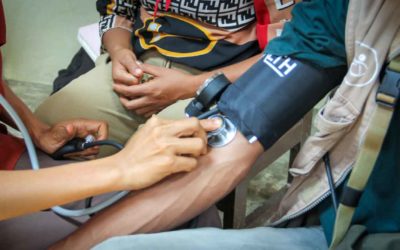
Here in the ultra-rural and poor areas where Fair Future Foundation and Kawan Baik Indonesia work, populations tend to have a higher prevalence of high blood pressure than in urban and wealthier areas. This is mainly due to poor diet, excessive tobacco consumption, and poor hydration. Of course, poverty and limited access to resources will also contribute to higher stress levels, increasing blood pressure. An unhealthy lifestyle increases the risk of cardiovascular disease and other health problems. We teach some “Kawan Sehat” health workers participating in the primary medical care program to measure blood pressure and take the necessary measures.

read more
What do the sanitary facilities we build look like?

What do the sanitary facilities we build look like?

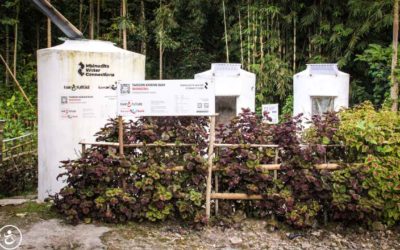
This new "Picture of the Day" shows you an example of construction that we carry out in the poorest villages of Indonesia and Asia. Here the families before did not have access to clean water and toilets. Fair Future and Kawan Baik Foundations have been changing this for years, and noticeable changes are being seen.

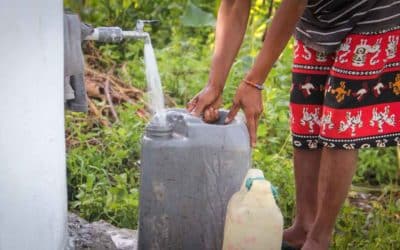
Access to drinking water and toilets is a fundamental human right. Still, unfortunately, in the regions where we are, nearly 90% of families in ultra-rural areas do not have access to these necessities. Here are some steps that can be taken to provide access to clean water and toilets in the regions that do not have access:

The first step is to identify the areas most needing these facilities. Fair Future and Kawan Baik proceed through research, surveys, and working with our local partners and authorities. Once regions that do not have access to clean water and toilets have been identified, we develop plans to provide these services. This takes into account the specific needs of each community. To do this, we have several ways to provide access to clean water, such as drilling deep wells, installing water filtration systems and collecting rainwater. The method used will depend on the specific needs of the community.

Access to toilets is also essential to reduce the rate of infectious diseases such as Cholera, Dengue, hepatitis A, and Malaria. In this photo, two sanitary facilities have been built using the Ferro-Cement method, with a tank for collecting dirty water and clean water for watering.

Fair Future also considers it essential to educate the community on the importance of hygiene and sanitation practices to prevent the spread of disease. We do this through the #waterconnections and #kawansehat and #primarymedicalcare programs.

One of our missions is also to monitor and maintain these new facilities. This requires the training of local community members who will carry out essential maintenance and repairs.

read more
Water Connections, look at all we’ve done!

Water Connections, look at all we’ve done!

Look at what has been done in the last 20 months, it’s simply extraordinary because doing this in this region was a priori impossible, but we did it. We are at the end of the line in the Water Connections project, we have “only” a few things left to build, including a huge 25,000-liter tank. Here is the project map for you, so you can see all that has been done in this ultra-rural region, one of the poorest in Southeast Asia.

read more
Do you have medical equipment or clothes?

Do you have medical equipment or clothes?

Extract and Description of this short News | As part of the departure of the Truck of Life – week #2 of December 2022 – for Sumba East and our Medical-Social Base Camp, we still have a little space available to load equipment such as Medical equipment, medicines and clothes for children and newborns that you no longer use. You can bring all of this to us at the foundation headquarters (see the link here to find us in Denpasar). Here is a list of medicines and other materials you need to bring to Rumah Baik, Denpasar Selatan. Thank you very much for your support Kawan,

read more
Fair Future Picture of the Day

Fair Future Picture of the Day

Each Picture of the Day reveals a reality lived by millions. Shot by Fair Future’s teams in extreme conditions, these images bring voice to the unseen stories of resilience and action in Indonesia.

read more
A Word from Alex – Fair Future Foundation

A Word from Alex – Fair Future Foundation

On this page, Alex shares his reflections on his life experiences and his ideas about the foundation’s efforts, future plans, and the communities we serve. Each post invites you to engage with us to appreciate the spirit of humanity that fuels our mission.

read more
Together we can make it

Together we can make it

Let’s do it together and hold hands to reach the moon. Ensure that the primary medical care program for children can continue as the needs are enormous here in eastern Indonesia. Malaria is ravaging, expectations are high, and we lack the means to buy medical equipment, medicines and everything they all need to get better…

read more