


Donate
Support Care
Articles & News
Field stories
Glossary
Field guides

Health & Medical Program
Kawan Sehat Agents
Trained women and men providing first-line care, prevention, follow-up and early referral inside their own remote communities.
- 27 active health agents
- 700 to 1,000 patients supported each month
- Medicines and supplies restocked every two months
Care begins with someone the village already knows
When a child develops a fever or a wound begins to worsen, the first safe decision often happens at home. Kawan Sehat agents bring trained observation, basic care and a clear referral pathway into communities where formal services remain hours away.
The programme
Local knowledge, structured clinical responsibility
In an isolated village, proximity matters. So do training, clinical limits and the ability to recognise when a patient needs more than community care.
In Lahiru, Desiana brings practical health education into Posyandu care, discussing prevention with children and adults.
Kawan Sehat agents live in or close to the communities they serve. They know the paths, families, languages and practical barriers that shape a patient’s decision to seek care. This trust makes earlier contact possible, but trust alone is not enough. Their work is organised through defined protocols, medical supervision and documented follow-up.
They are not doctors and they do not replace public health centres. They provide approved first-line care, health education and practical support while recognising danger signs and connecting patients to a higher level of care.
Women and men trained to serve communities where routine care remains difficult to reach.
Assessment, approved treatment, prevention, follow-up and referral delivered through the programme.
A 150-page field manual structures knowledge, clinical limits, prevention and safe decisions.
Medicines, dressings and basic diagnostic supplies are reviewed and replenished in the field.
From first contact to follow-up
How an agent supports a patient
The agent’s role is not simply to hand out medicine. Each contact must lead from careful listening to a proportionate decision, a written record and a plan for what happens next.
Listen
The agent hears what has changed, how long it has lasted and what the family has already tried.
Assess
Symptoms, temperature, available vital signs and visible danger signs are checked within the agent’s training.
Decide safely
Approved first-line care is given when appropriate. Severe, uncertain or worsening cases are referred.
Document
Findings, care and referral information are recorded so the next clinical decision begins with evidence.
Return
The agent checks progress, reinforces prevention and contacts the medical team when recovery is not following the expected course.
Clinical boundaries matter
Close enough to act, trained to know the limit
Proximity becomes useful only when it is safe. Kawan Sehat agents work within defined protocols and refer whenever severity, uncertainty or missing resources make local care inappropriate.
What agents can do
- Listen, observe and assess common symptoms and available vital signs
- Clean and dress superficial, uncomplicated wounds
- Provide protocol-approved first-line medicines and oral rehydration
- Support uncomplicated fever, respiratory, skin and digestive complaints
- Monitor children, older people and patients living with chronic conditions
- Teach hygiene, nutrition, malaria, tuberculosis, HIV and infection prevention
When agents refer
- Breathing difficulty, altered consciousness, shock or severe dehydration
- Suspected sepsis, severe infection or rapidly worsening illness
- Major trauma, deep wounds, burns or suspected fracture
- Pregnancy complications or danger signs in a mother or newborn
- Possible tuberculosis, leprosy, HIV or another condition requiring testing
- Any situation beyond available skills, protocols, medicines or diagnostic capacity
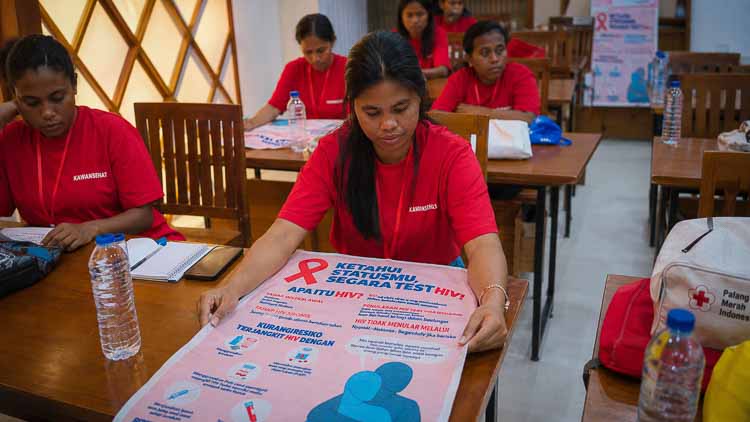
Mira studies a reusable HIV prevention and testing poster during Kawan Sehat training in East Sumba. The material is designed to be carried back into villages and used in local health education.
The system behind each agent
Training turns proximity into safe action
Community knowledge makes contact possible. Structured training makes that contact clinically useful. Agents learn through practical modules, supervised exercises, case review and repeated field support. Their tools are designed for places where connectivity, transport and formal services are limited.
Field manual
Fourteen modules across 150 pages cover first-line care, prevention, danger signs and responsible limits.
Supervised practice
Training, case discussion and field visits help translate written protocols into safer decisions.
Medical backpack
Approved medicines, dressings, basic diagnostics and education materials are organised for home visits.
Kawan Sehat app
Offline and online records support follow-up, review and a clearer picture of health needs across villages.
What changes in practice
A trained neighbour can shorten a dangerous delay
A recognisable first contact
Families can speak with someone they know before distance, cost or uncertainty turns a treatable problem into an emergency.
Earlier clinical warning
Changes in consciousness, breathing, hydration, infection or pregnancy can be recognised and referred sooner.
Prevention in local language
Health education happens during visits, in schools and inside homes, connected to the risks people meet each day.
Records connect visits
Documented findings and follow-up allow the medical team to review decisions and identify recurring problems.
Programme reportPrimary Medical Care: 2024 reportRead the activities, field results and lessons from the programme that supports the agents.
Care systemPrimary Medical CareSee how agents, medical supervision, medicines, referral and prevention work as one field system.
Field toolsDigital tools for rural careUnderstand how offline records support case documentation, follow-up and programme evidence.
PeopleWho are the Kawan Sehat?Meet the women and men who carry care, prevention and practical knowledge into their villages.
Live field recordField Notes from Eastern IndonesiaFollow short, dated updates from training, home visits, medical outreach and prevention work.
Field guide & glossaryHealth and care, explainedExplore clinical terms and practical guides grounded in work inside remote communities.
Medical referencePrimary health careRead the international framework connecting accessible care, prevention and community participation.
Live from the field
Kawan Sehat Field Notes, as the work happens
Two recent signals involving community agents, home care, prevention or training. These notes refresh when a relevant Field Note is published.
Directly from the field
Latest Kawan Sehat reports
These reports document home visits, clinical training, prevention, medicine supply, patient follow-up and the limits agents meet inside remote villages.

PMC program evaluation in Lapinu
These women linked to the PMC program devote part of their lives to saving others. These unsung heroines work tirelessly to keep people from the danger of illness and injury. They put their lives on the line to ensure others can live to see another day.
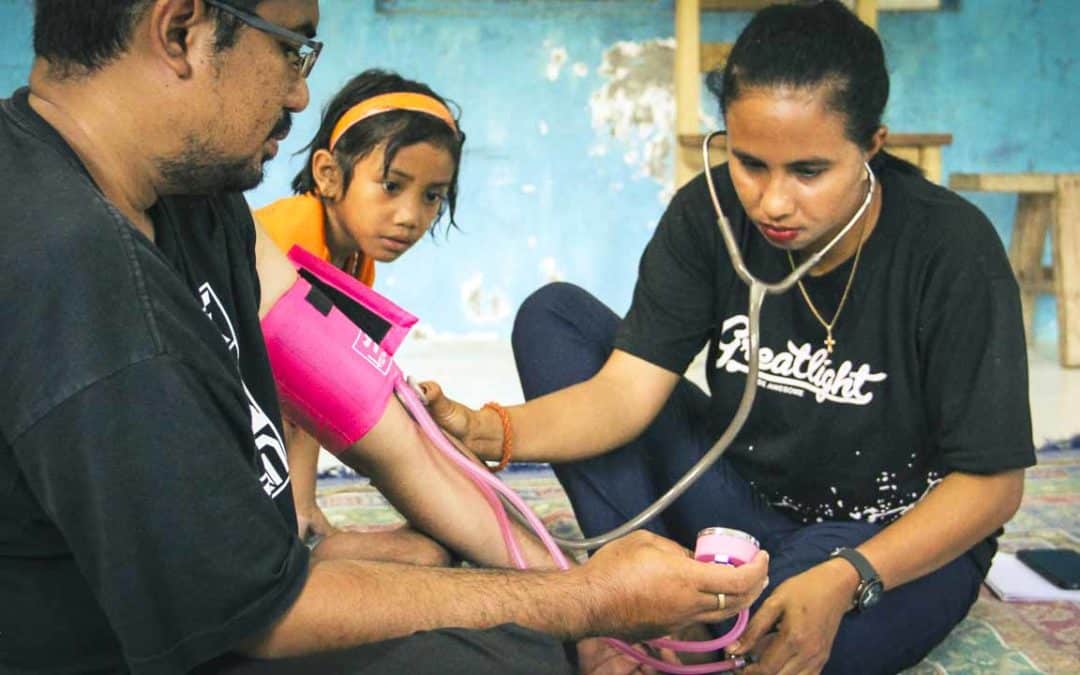
Check Blood Pressure as part of the PMC program
Kawan Sehat health workers learn blood-pressure measurement as part of preventive care and community health monitoring in rural East Sumba.

PMC program evaluation in Mbatapuhu
Non-professionals who give medical care and medicine to people, sick children, and injured. They do so through a unique and innovative medical care program. Because here, there are no doctors, no health centre, or else too far away. No one has a vehicle, and the roads that lead to these villages are often impassable.
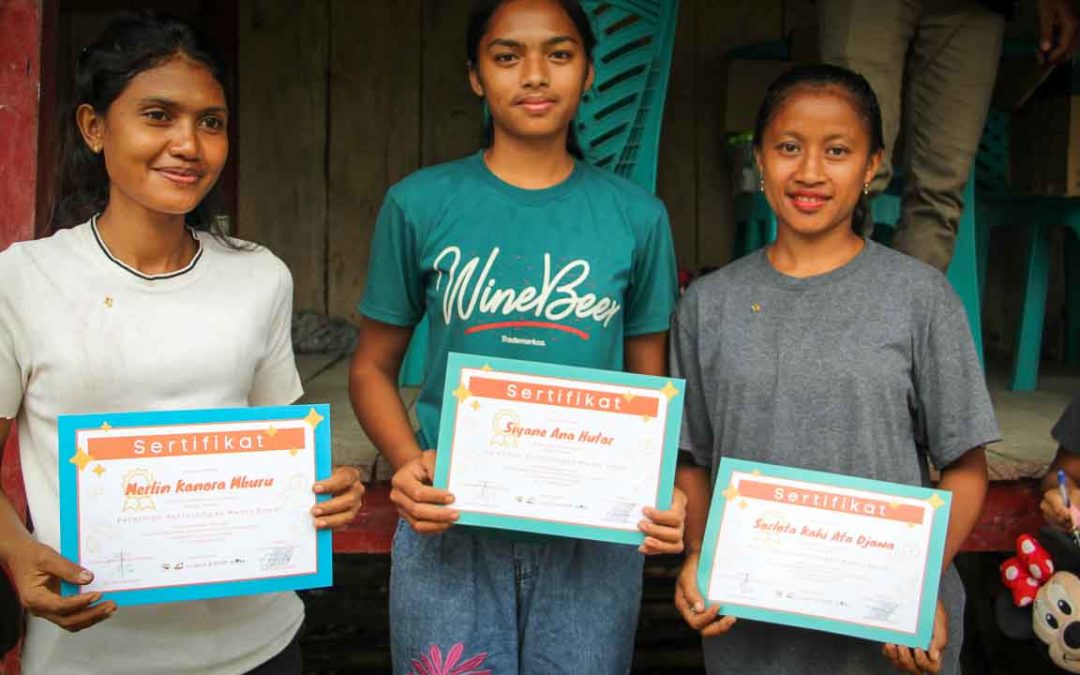
PMC – Teachers receive their training certificate
In Kabanda village, East Sumba, three teachers, participants in the Primary Health Care Program, receive a vocational training certificate for the 1st time.

Evaluation of 8 Kawan Sehat agents, in Mbinudita
In the village where it all started for us: The #rebuildmbinudita program is the construction of a school, and the construction of a drinking water network for more than 2700 people, 60% of whom are children under 12 years old . It is really the (re)construction of an entire village or learning to live healthier, healthier all together, within…

PMC program pre-assessment in Mbinudita
Fair Future teams examine and investigate more than two hundred cases of various illnesses or injuries treated under the primary medical care program by health workers. We also take stock of what will happen next week to accurately assess the supply of new equipment, drugs and medical devices.
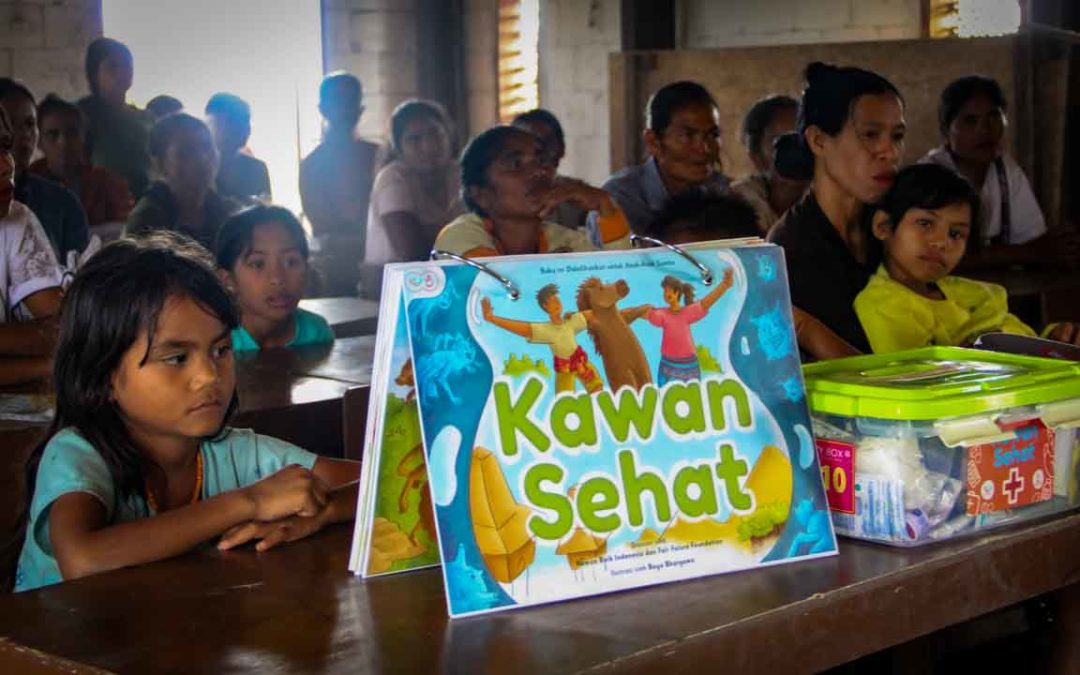
Primary medical care dedicated to children
Children in remote East Sumba learn simple daily habits that can reduce illness and injury where access to professional healthcare is limited.
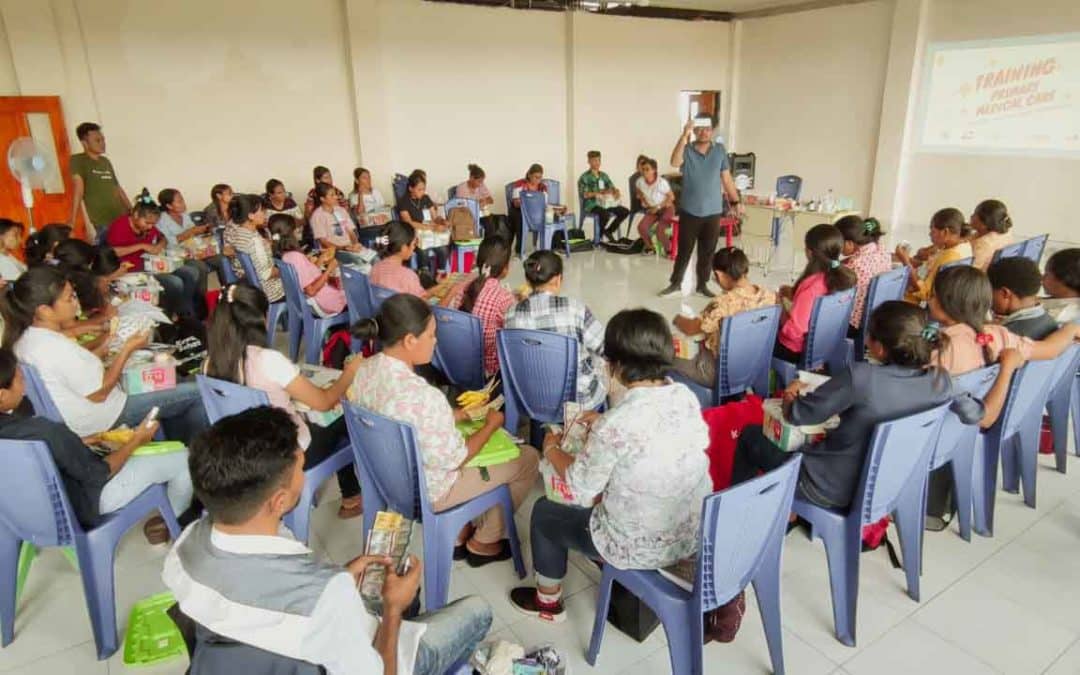
Learn how to provide Primary Medical Care
Teachers and community health workers learn practical first aid and primary medical care for villages where professional healthcare is hard to reach.

On-site Primary Medical Care Program Assessment
This primary medical care program in ultra-rural areas, which we initiated and started last year, is extraordinary, it saves lives. Since December 2022, the participants in the primary medical care program – who are the village teachers – have been providing first aid to children and villagers. They treat wounds, diseases, malaria, dengue fever.

Teachers provide primary medical care
The magic of this “Primary Medica Care” program? It’s just that it’s unique in the world and it works. The first batch of sixty teachers who have followed the training in primary medical care in rural areas, tell us about their “exploits” and their work as rescuers. They take confidence in themselves it is the most important, and we note it.

Primary medical care training for 60 teachers
Whether a minor skin injury or a severe life-threatening injury, all types of damage should be treated with first aid on the spot without delay, as it may save a life or a limb. Teachers in the poorest and most rural areas learn this with Fair Future’s medical teams.
Accountability
Community care must remain trained, supervised and reviewable
Trust is essential, but it cannot replace evidence. We document care, referrals, medicines, training, follow-up and field limitations. Cases can be reviewed, supplies can be traced and unsafe practices must be corrected.
