

Preparing Care…

More than 40,000 people reached with training

Every action counts—support us today
Select Page

Donate

Support Care

Programs

All projects

Quick News

Field updates

Stories

Field stories

Kawan Against Malaria

Let’s prevent malaria rather than cure it!

Let’s prevent malaria rather than cure it!

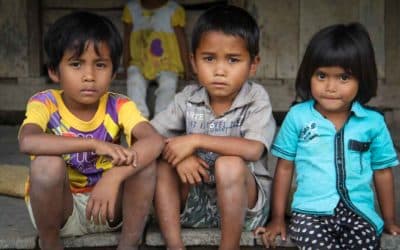
In this "Picture of the Day" shows you three children from Kabanda Village in East Sumba (read this post here), where the PMC program is in place. In this village, very far from everything, especially health centres, malaria is very active and wreaking havoc. We are talking about 80% of children under 12 are affected. It is, therefore, essential to prevent and train families. This is what we are doing here.

The daily observations concerning the causes of malaria are multiple here. These include, in particular, the lack of access to health care, information on prevention methods, the unavailability of health centres and sanitation, and the growing resistance to antimalarial drugs for regions with access to these treatments.

A reminder for all Kawans: Malaria is transmitted by female mosquitoes of the "Genus Anopheles", throughout the East Sumba region. These mosquitoes breed in standing water, such as rainwater storage tanks and open water sources, most of the time in rural and deprived areas of East Sumba.

As Fair Future has repeatedly seen and repeated for years, the consequences of malaria are serious if nothing is done to treat it: High fever, severe headache, nausea and vomiting. If not treated quickly, the disease can progress and lead to severe complications, including kidney failure, anaemia, seizures and death.

It is essential to train families and rural communities to protect themselves from this disease to reduce its transmission. Also, by learning how to prevent and treat Malaria, rural families and communities will reduce the economic and social burden of the disease. Malaria entails high costs for families and communities, particularly medical expenses (if they can access them), school absenteeism, and reduced productivity.

As we apply it with the Primary Medical Care Program (PMC), training families and rural communities to protect themselves from malaria contributes to strengthening the resilience of these populations in the face of epidemics of infectious diseases such as HIV, Tuberculosis, Gastroenteritis, cholera etc… 

Alexandre Wettstein from the Foundation’s Medico-Social Camp in East Sumba, Rumah Kambera, Lambanapu, on the 2nd of May 2023
read more
Fighting Malaria in Eastern Indonesia

Fighting Malaria in Eastern Indonesia

East Sumba, where we work at the time of writing this article, was experiencing a dramatic malaria epidemic. In the first quarter of 2023, there were more than 28,000 cases of Malaria, a significant increase from the previous year. A few months ago, Fair Future declared this life-threatening emergency. Despite our best efforts, Malaria cases are increasing. Here, when a child has a fever, it is more than 80% of the time a question of Malaria. We conduct health education campaigns to raise awareness of the importance of malaria prevention and early detection. Efforts to control the epidemic should include the distribution of mosquito nets, the provision of essential antimalarial drugs, as well as rapid diagnostic tests.

read more
Medical care for children affected by Malaria

Medical care for children affected by Malaria

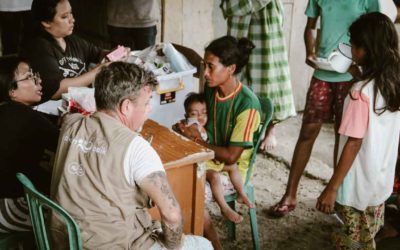
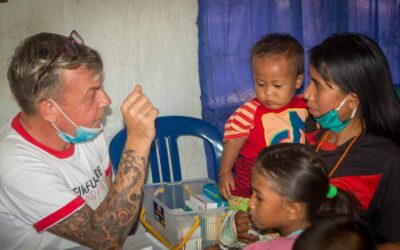
In this "Picture of the Day", Fair Future and Kawan Baik medical teams provide medical care to a child most likely affected by Malaria. He is less than two years old and has a fever of 40.6. Her symptoms fit this diagnosis of Malaria. We give him appropriate primary medical care to reduce his fever as quickly as possible. Then he will go for treatment tomorrow at the nearest health centre, more than three hours from the village.

Malaria is a severe public health problem, especially in the ultra-rural and impoverished areas where Fair Future and Kawan Baik Foundations work so hard. Malaria is a life-threatening disease caused by the Plasmodium parasite is transmitted to humans through the bites of infected female Anopheles mosquitoes. Children under five and pregnant women are also particularly vulnerable to Malaria, as their immune systems are less developed and may have more difficulty fighting infection. People suffering from chronic illnesses are also vulnerable (HIV, Hepatitis, malnutrition, etc.)

Ultra-rural and poor areas such as East Sumba are particularly vulnerable to the spread of Malaria due to factors such as lack of water or contaminated water, deplorable housing conditions, lack of access to healthcare health and preventive measures, inadequate sanitation… Moreover, here we do not have antimalarial drugs nor rapid tests to detect the disease. This makes our treatment and prevention work very difficult.

read more
List of drugs we need to buy

List of drugs we need to buy

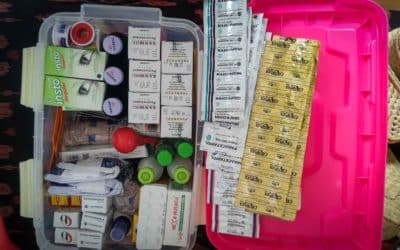
To make it simple and short, we urgently need a lot of medicines (see the list attached in the post) and sanitary equipment such as antiseptics, dressings and other small miscellaneous equipment. Indeed, friends, all our stocks are almost finished because we have prescribed or used everything, which is a good thing. On the other hand and from tomorrow, we can no longer treat patients except for simple problems that do not require medical treatment.

read more
We need anti-malaria drugs!

We need anti-malaria drugs!

Fair Future issues an intense red alert linked to the case of malaria, which is reaching a critical level here in East Sumba, Indonesia. For weeks, thousands of malaria cases have been recorded here in East Sumba. This figure is nevertheless to be taken conditionally because, in many villages, people do not have an identity card or a family book or do not have access to medical care, so they are sick in silence.

read more
Malaria outbreak in East Sumba, Indonesia

Malaria outbreak in East Sumba, Indonesia

Malaria is one of the most severe public health problems in the world. Here in Indonesia, and especially in the eastern regions, it is one of the leading causes of death and disease. Children under five years old and pregnant women are the most affected groups. The problem in East Sumba is the staggering rate of cases affecting families and the anti-malaria drugs that are unavailable or too expensive.

read more
Help us load the medical truck

Help us load the medical truck

As part of the project for access to primary medical care for children in rural areas of eastern Indonesia, the foundation needs you to balance its budget. We want to be able to load our medical truck as much as possible in order to reduce logistics costs. They will carry more than a ton of medical equipment, medicines, sterile equipment, and first-aid materials.

read more