

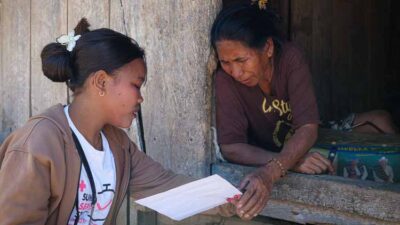
In 2024, Fair Future’s PMC Program significantly improved ultra-rural communities by offering essential healthcare services, education, and life-saving solutions. This initiative addresses the severe shortage of medical resources in remote areas with limited access to basic health facilities and trained personnel.
Kawan Sehat Agents

The Kawan Sehat Agents category documents the work of trained community health agents delivering primary medical care in ultra-rural areas with limited or no access to formal healthcare.
Articles describe their medical training, daily clinical activities, health education work, and coordination with referral systems. This approach follows WHO task-shifting principles, enabling safe, effective first-line care at community level. By strengthening local capacity, Kawan Sehat agents improve healthcare access, ensure continuity of care, and reduce preventable complications under real field conditions.
Latest field updates
A Book That Saves Lives in Rural Areas
The Primary Medical Care training book gives rural health agents practical guidance on first aid, common illnesses and urgent situations where professional medical care is far away.
New Narration Guide Enhances Kawan Sehat Book Impact
To enhance the impact of the Kawan Sehat book, we’ve created a narration guide for users. This method ensures its messages are effectively communicated to children, parents, and ultra-rural communities. The guide maximizes the book’s potential to inspire and educate, bringing valuable knowledge to those who need it most.
Kawan Sehat: Vital Medical Care in Tough Terrain
Rambu Veronika, a health agent with Kawan Sehat, courageously navigates steep and hazardous trails to deliver essential medical care to the remote villages of East Sumba. Her commitment underscores the remarkable efforts of volunteers who save lives daily despite challenging conditions.
Sharing Life-Saving Medical Advice Online and Offline
The Primary Medical Care program focuses on disseminating medical guidance. We offer straightforward, practical advice to Kawan Sehat agents, who then relay it to rural communities. Now, we’re also sharing this information on Instagram (@fairfuturefoundation) and our website. These tips have the potential to save lives—help us spread the word!
Ruth’s Smile: Healing Children with Primary Care
Ruth, a Kawan Sehat health agent in Lukukamaru, supports a sick child with local primary care in a village where professional medical services are difficult to reach.
Kawan Sehat Saves Boy’s Foot from Serious Infection
In Lahiru, Kawan Sehat agent Ibu Sarlota treats a boy’s serious foot injury early, showing why timely wound care and follow-up matter in remote villages.
Kawan Sehat: Health Workers Bring Care to Rural Indonesia
Kawan Sehat healthcare workers provide vital medical services and education to remote villages in Indonesia. Through photos showcasing their resilience and life-saving commitment, this article emphasizes their essential role in underserved communities and the impact of grassroots healthcare initiatives.
Kawan Sehat Agent Tirza Presents Life-Saving Field Work
Kawan Sehat agent Tirza presents the contents of her medical backpack and explains how community-based primary care supports remote East Sumba villages.
Kawan Sehat Health Agents: Lifesaving Work in Rural Areas
Kawan Sehat health agents deliver essential medical care in remote regions where healthcare access is unavailable. Armed with new medical kits, they provide vital first aid, treat common illnesses, and work to prevent infections in vulnerable communities.
Kawan Sehat App Revolutionizes Rural Health Care Access
The Kawan Sehat app helps rural health agents record patient data, consult medical resources and work offline in remote East Sumba communities with limited connectivity.
Kawan Sehat Health Agents Certified in Rural Sumba
In the remote communities of East Sumba, 20 new Kawan Sehat health agents have been certified through the Primary Medical Care program. These 19 women and one man are now essential providers of life-saving care in their villages, which lack formal healthcare facilities. Their dedication and increasing proficiency are crucial for the well-being of their communities, representing a significant milestone in rural healthcare.


