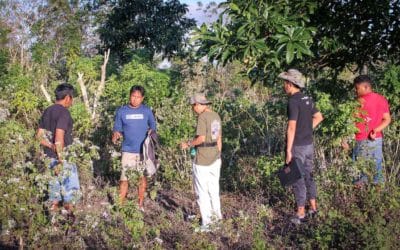


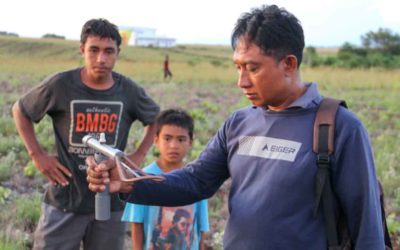

Through the Primary Medical Care program, Kawan Sehat health workers provide treatment for fevers, wounds, and malaria in villages lacking access to doctors. They carry essential medicines, adhere to established medical protocols, and refer emergency cases promptly to prevent delays in care.
Donate
Support Care
Programs
All projects
Quick News
Field updates
Stories
Field stories
Alex

About this author: Alex Wettstein is a health professional with 30 years of field experience in emergency medicine and social medicine. He is the founder of the Fair Future Foundation. Alex is the son of Axel Kahn, whose humanist values profoundly shaped his work.
Content type
Post
Page
Gallery
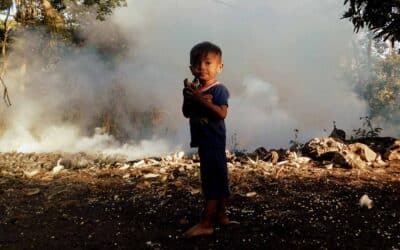
Explore Our Work: Fair Future’s Impact in Images
From night missions to extreme terrains, Fair Future’s picture galleries show our teams capturing real-life challenges and fieldwork in rural Indonesia. Every image is original, raw, and deeply human.
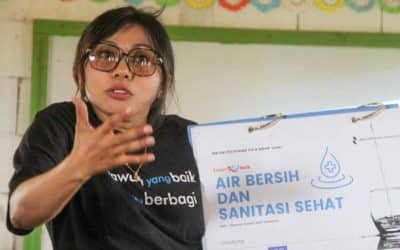
PMC Program – Learn to protect yourself from illness and injury
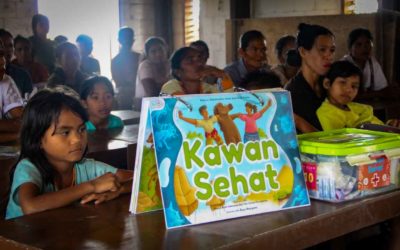
Primary medical care dedicated to children
This "Picture of the Day" shows children who, thanks to the "Primary Medical Care" programme, learn to protect themselves against illness and injury through simple gestures and habits. Children in these regions do not have access to health centres, and no doctors are present in these villages (apart from those from the Fair Future and/or Kawan baik Indonesia foundations). It makes prevention an essential component of their health and well-being. Children in ultra-rural areas can significantly reduce their risk of illness or injury by incorporating simple habits and actions into their daily routines. In addition, it is essential to make children and parents aware of the importance of these habits and gestures so that they become part of their daily lives.
Giving primary medical care is not insignificant. It usually is doctors and nurses who do this. This is what makes this program unique in terms of innovation. Those who provide care, life-saving drugs and cures for Malaria, for example, are the teachers of this isolated village in eastern Indonesia. Therefore, for us here on site, it is essential to assess the impact and effectiveness of this program regularly. We carry out surveys, and we meet to collect medical data. We, therefore, highlight the areas where we can make the necessary changes. If this primary medical care program is a huge success, it is because it involves the communities in the various planning and implementation processes.
Teachers and parents of ill or injured children provide us with essential information. This 100% medical emergency program is in the process of success. It requires multiple collaborations, adequate ongoing training, sharing of supported cases and regular evaluation to ensure its safety, effectiveness and sustainability.
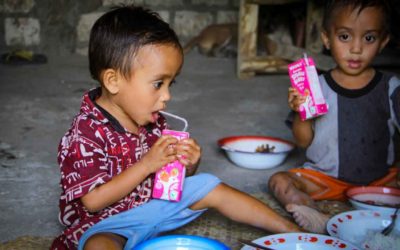
Malnutrition is taking its toll here where we are
This "Picture of the Day" shows children in East Sumba, where we are at work, as I post this Photo of the Day. Fair Future and Kawan Baik teams, as part of the #kawansehat #primarymedicalcare and #waterconnections projects, cook for children in the most rural and poor areas. In this image, some are drinking strawberry milk for the first time. They had never seen a straw before, and I remember all the kids asking us how to drink that kind of drink. We had to show them and help them plant the straw in the milk carton.
Malnutrition is an endemic problem here in all the rural villages of East Sumba. It is also the region with the highest rate of malnourished children in Indonesia. Here, clean water is absent from the houses, and the consumption of unclean water generates health problems and serious illnesses. And to cook, drink, and wash, you need water. And in order not to get sick, you also need water. Food production cannot occur without water, and families do not have enough income to buy food, rice and vegetables. On average, they live with less than two litres of water per person per day for everything: cooking, eating, drinking, drinking, bathing, going to the toilet and doing laundry. Have you ever tried?
Most children here are underweight and malnourished because they cannot eat enough. Meal frequency is one meal per day. Young children may be able to eat twice if all goes well. The menu will consist of rice and corn because more than rice alone is needed. In East Sumba, a kilo of rice costs three times more than in Java or Bali. Only a little salt and peppers accompany the meal to give flavour and taste.

We have a toilet for the first time in our life!
This "Picture of the Day" shows you an adorable couple from East Sumba, the village of #mbinudita -who are not used to being photographed-. Beneficiaries of the #waterconnections program who have had access to toilets at home for a few hours. But not only toilets: They can shower there, wash their clothes, and create a vegetable garden. And most importantly, eat and drink healthily. No more getting sick from the water. No more spending hours on the paths to fetch a few litres of dirty water.
East Sumba is one of the regions in the world with the highest rate of malnourished children. Infant mortality due to lack of clean water and toilets is staggering. Our medical teams still spend much of their time giving medical treatment and medicine to people and children who don't have clean water to swallow. Or how to treat a child who suffers from diarrhoea by giving him tablets that he will have to drink with inedible water, the source of his illness? Say to cook the water? It has no wood; frankly, when you're thirsty, you drink what's there.
But here, things have changed dramatically. Over thirty healthy sanitation facilities and over forty clean water tanks have been built for these almost 280 #rebuildmbinudita families. Every week we see new vegetable gardens created, many more children going to school, including young girls, and more mothers looking after their families instead of walking for hours to fetch five litres of dirty water.
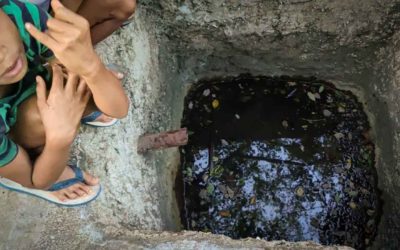
When only dirty water remains to try to survive
This "Picture of the Day" shows some children looking slightly disappointed at the edge of the well, which contains no water. There are only 30 to 50 centimetres of water left. This water is black and dirty, and it will surely make them sick. But they will bring some back because, as the villagers often tell me: "When you're thirsty, you don't have time to boil water or find clean water. You're thirsty, so you drink this that there is …".
Having clean water heals people, improves families' health and reduces disease. Water is the best medicine in the world.
Here in Laindatang, the community, its inhabitants, and the families have always maximized the use of rainwater for cooking, eating, and drinking. Washing or doing laundry is done simultaneously: People wash their bodies with detergents directly at the water source. Linked to the lack of water, the villagers wash only once a month – with the related health consequences – or at best, every two weeks.
It should be noted that these families have never had sanitary facilities. Peeing and pooping are done behind a tree with all the health issues. For menstruating women, the lack of water makes this time very complicated.
A sanitary emergency: We invite you to support the urgent program in the village of Laindatang, East Sumba, which consists of giving water as quickly as possible via a deep borehole, two healthy sanitary installations and two/three water tanks 6,750-litres of water to these several hundred people. Click on the button bellow.
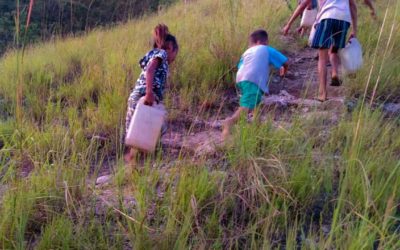
Kids here have to fetch water from the age of five!
This "Picture of the Day" shows you a five-year-old girl who, twice a day, descends the hill, steep and stony, without shoes to fetch water. She runs to go to the source, 500m away. Sometimes she falls, hurts herself, and comes back up with difficulty carrying a 5-litre jerrycan of not-so-clean water, which she and her friends have been looking for at the source.
In this village, like in many others here, people can only wash once a month, are all sick and don't have enough to eat and drink. Without access to this clean water, families – especially children – suffer from severe malnutrition, chronic respiratory and joint diseases and other illnesses linked to the consumption of dirty water and the absence of sanitation facilities. The fight against malaria, dengue fever and infectious diarrhoea also requires access to clean water and healthy water tanks. And to water that does not stagnate but circulates between the installations.
As we have already said, East Sumba is the poorest province in Southeast Asia, the region with the highest child malnutrition and associated mortality. Fait Future, therefore, wishes to act for these hundreds of people and give them access to clean and healthy water for their health.
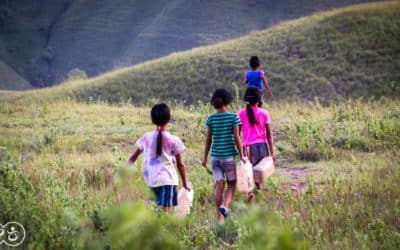
Clean water in East Sumba? It is extremely difficult to find

East Sumba, a village without clean water!
This "Picture of the Day" shows you a thrilled woman because when we last visited the "Water Connections – Laindatang" Project site, we brought – thanks to the Truck of Life – several jerry cans filled with drinking water, or about one hundred litres. So everyone is scrambling to get a little. We shared this water with the villagers.
The Water Connections project, Laindatang Site, is one for which we also seek help. Laindatang is a village without drinking water. People only wash once a month, are sick and don't have enough to eat and drink. All children are underweight, and so are adults. We must act for these hundreds of people and give them access to drinking water. The project consists of drilling a deep borehole, building healthy sanitary facilities and two clean water storage tanks, of the ferro-cement type, with a capacity of 6,500 litres each.
Here Malaria, Dengue fever and infectious diarrhoea linked to the problems of contaminated water are wreaking havoc. After carrying out the feasibility studies, we are now ready to implement this project this month. Indeed, we are on the site now and would like to start this necessary project for the hundreds of people suffering from a lack of water in the region.
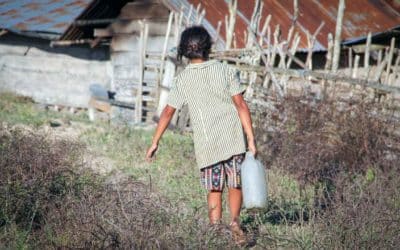
Water Connections project in Laindatang
The Water Connections project, Laindatang Site, is our current top priority. Laindatang is a village without water. Everyone is sick and does not have enough to eat and drink. Children are underweight, and so are adults. We must act for these hundreds of people and give them access to clean water. Here, malaria, dengue fever and infectious diarrhoea linked to contaminated water problems are taking their toll. After completing the feasibility studies, we are ready to implement this project this month. Indeed, we are there now and wish to start this necessary project for the hundreds of people suffering from the lack of water in the region.