

Thank You 2025…

Climate and health programs growing every year

From the field:help us deliver care
We provide medical & social assistance where it is most needed. Since 2008 we have helped thousands of people & talk about what they are going through.
Select Page
Logo of the Swiss Fair Future Foundation

Donate

Support Care

Programs

All projects

Quick News

Field updates

Stories

Field stories

We focus on primary care, treatment and prevention of diseases

Content type Post Page Gallery
Check blood pressure in rural areas

Check blood pressure in rural areas

Here in the ultra-rural and poor areas where Fair Future Foundation and Kawan Baik Indonesia work, populations tend to have a higher prevalence of high blood pressure than in urban and wealthier areas. This is mainly due to poor diet, excessive tobacco consumption, and poor hydration. Of course, poverty and limited access to resources will also contribute to higher stress levels, increasing blood pressure. An unhealthy lifestyle increases the risk of cardiovascular disease and other health problems. We teach some “Kawan Sehat” health workers participating in the primary medical care program to measure blood pressure and take the necessary measures.
read more
Check Blood Pressure as part of the PMC program

Check Blood Pressure as part of the PMC program

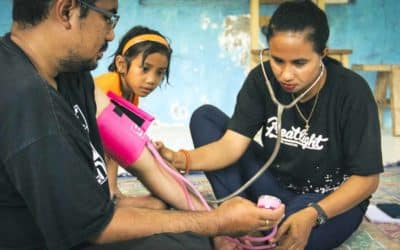
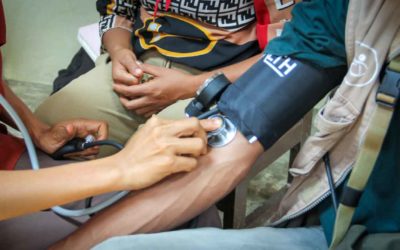
This new "Picture of the Day" shows you Mama Katerina, from the village of Lapinu, who is learning to take blood pressure with Dr Aldo. She knows what a systole is or a diastole is and from when and under what conditions there is hyper or hypotension. She will also learn to give appropriate medical treatment (Captopril) for high blood pressure.

As part of the Primary Medical Care program, Katerina and eight other "Kawan Sehat" health workers participate in this unique pilot experience. These women teachers can measure a patient's blood pressure and give appropriate medical treatment in case of hypertension.

It is a social and medical revolution, in our opinion. The fight and prevention of hypertension and cardiovascular diseases are essential here in the ultra-rural regions of eastern Indonesia. To be active and efficient, our medical teams provide knowledge and equipment (manual blood pressure measuring device, stethoscope) in each pilot village. They are five out of the thirty-five in which the PMC project is implemented.

This, for example, has led us to talk about active and passive smoking. To make it clear, tobacco is dangerous for your health, and it is also the cause of high blood pressure and, consequently, strokes, heart attacks, respiratory problems and a host of other related diseases at the cigarette shop.

read more
PMC program evaluation in Mbatapuhu

PMC program evaluation in Mbatapuhu

Non-professionals who give medical care and medicine to people, sick children, and injured. They do so through a unique and innovative medical care program. Because here, there are no doctors, no health centre, or else too far away. No one has a vehicle, and the roads that lead to these villages are often impassable. This program saves and preserves the lives of children as well as adults. Today, we are in Mbatapuhu.

read more
PMC – Teachers receive their training certificate

PMC – Teachers receive their training certificate

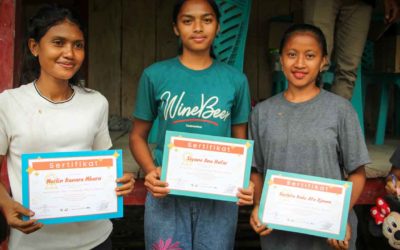
This new "Picture of the Day" shows three real heroes and three incredible women, Merlin, Siyane and Sarlota. In the ultra-rural and isolated village of Kabanda, the three participants and teachers in the primary medical care program received their first work and training certificate. 

This follows the teaching they received from the foundation's teams in December 2022. Complete medical training based on fifteen modules, which explain and demonstrate how to care for a sick or injured patient (adult or child ). This is in villages where no health centre, doctor, or health professional is present, available or accessible, and most of the time, like here in this village, where no road leads.

You must understand the situation, friends: These women come from Asia's most rural regions and perhaps even the world. Most have not been to school or received basic compulsory training. They were trained for three months in teaching in the ultra-rural areas by a partner association called Charis Sumba.

So you have to imagine their pride to have succeeded in becoming one of these health workers, the person in the village responsible for providing first aid in an emergency, the possibility of illness in the event of an injury, an adult or a child. So when they received this certificate, tears flowed. Their tears flowed ours too, and it was a moment of incredible strength, but above all, very emotional.

In principle, here, and related to local culture and traditions, a woman takes care of household chores, fetching water, cooking for the children, and caring for the family. These three female superheroes are not only teachers within the framework of Charis Sumba, but they are also now – and for more than four months – the health workers of the PMC program. They are the ones who can save a life in the absence of a medical centre, medical care or a doctor in the village. This is not anything in terms of enhancing the role of women in ultra-rural villages; this is immense and important progress.

read more
Evaluation of 8 Kawan Sehat agents, in Mbinudita

Evaluation of 8 Kawan Sehat agents, in Mbinudita

In the village where it all started for us: The #rebuildmbinudita program is the construction of a school, and the construction of a drinking water network for more than 2700 people, 60% of whom are children under 12 years old . It is really the (re)construction of an entire village or learning to live healthier, healthier all together, within the framework of the creation of innovative programs. Access to primary medical care is part of this program here in Mbinudita and it is only natural that we have included it in this Care program.

read more
PMC program pre-assessment in Mbinudita

PMC program pre-assessment in Mbinudita

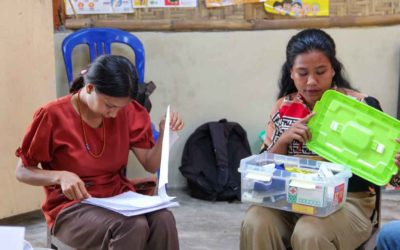
Fair Future teams examine and investigate more than two hundred cases of various illnesses or injuries treated under the primary medical care program by health workers. We also take stock of what will happen next week to accurately assess the supply of new equipment, drugs and medical devices. We also tell them that three will be part of a “test” screening program for high blood pressure and, in this case, the “prescription” of treatment and an appropriate medical procedure.

read more
Fair Future work in picture albums

Fair Future work in picture albums

Fair Future’s photo albums reveal true stories from the field—captured by our team, in action. See what healthcare, clean water, and human dignity look like in the heart of rural Indonesia.

read more
Inventing toys when you don’t have any

Inventing toys when you don’t have any

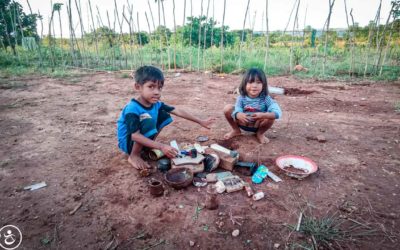
This "Picture of the Day"  shows two children from Tanah Mbanas, Sumba Tengah, who have created a kitchen with waste from the plastic they found around their houses made of earth and bamboo. They are playing cooking. Here, families do not have access to water and even less to clean water.

Here in Sumba, in these ultra-rural villages, it is not uncommon for children of all ages to invent toys and games from natural materials or objects from waste or old. In these areas, children rely on their creativity and ingenuity to find new forms of play and have fun.

For example, children can make their toys from natural materials such as sticks, pebbles and leaves. They can use these materials to create games like building forts or playing "tag" with modified rules. Likewise, old items like cans, tires, or ropes can be repurposed to create new toys, like a toy truck, makeshift soccer ball, or swing.

These types of imaginative play experiences are very beneficial for the development of children. They encourage creativity, problem-solving and social interaction as children work together to develop new ideas and adapt the rules of their games. Additionally, playing in nature can provide opportunities for physical activity and exploration, positively affecting physical and mental health.

read more
Primary medical care dedicated to children

Primary medical care dedicated to children

This "Picture of the Day"  shows children who, thanks to the "Primary Medical Care" programme, learn to protect themselves against illness and injury through simple gestures and habits. Children in these regions do not have access to health centres, and no doctors are present in these villages (apart from those from the Fair Future and/or Kawan baik Indonesia foundations). It makes prevention an essential component of their health and well-being. Children in ultra-rural areas can significantly reduce their risk of illness or injury by incorporating simple habits and actions into their daily routines. In addition, it is essential to make children and parents aware of the importance of these habits and gestures so that they become part of their daily lives.

Giving primary medical care is not insignificant. It usually is doctors and nurses who do this. This is what makes this program unique in terms of innovation. Those who provide care, life-saving drugs and cures for Malaria, for example, are the teachers of this isolated village in eastern Indonesia. Therefore, for us here on site, it is essential to assess the impact and effectiveness of this program regularly. We carry out surveys, and we meet to collect medical data. We, therefore, highlight the areas where we can make the necessary changes. If this primary medical care program is a huge success, it is because it involves the communities in the various planning and implementation processes.

Teachers and parents of ill or injured children provide us with essential information. This 100% medical emergency program is in the process of success. It requires multiple collaborations, adequate ongoing training, sharing of supported cases and regular evaluation to ensure its safety, effectiveness and sustainability.

read more
Kids here have to fetch water from the age of five!

Kids here have to fetch water from the age of five!

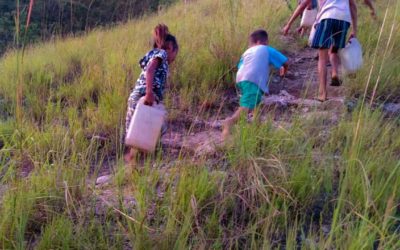
This "Picture of the Day" shows you a five-year-old girl who, twice a day, descends the hill, steep and stony, without shoes to fetch water. She runs to go to the source, 500m away. Sometimes she falls, hurts herself, and comes back up with difficulty carrying a 5-litre jerrycan of not-so-clean water, which she and her friends have been looking for at the source.

In this village, like in many others here, people can only wash once a month, are all sick and don't have enough to eat and drink. Without access to this clean water, families – especially children – suffer from severe malnutrition, chronic respiratory and joint diseases and other illnesses linked to the consumption of dirty water and the absence of sanitation facilities. The fight against malaria, dengue fever and infectious diarrhoea also requires access to clean water and healthy water tanks. And to water that does not stagnate but circulates between the installations.

As we have already said, East Sumba is the poorest province in Southeast Asia, the region with the highest child malnutrition and associated mortality. Fait Future, therefore, wishes to act for these hundreds of people and give them access to clean and healthy water for their health.

read more
Learn how to provide Primary Medical Care

Learn how to provide Primary Medical Care

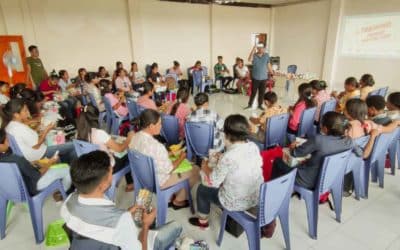
This "Picture of the Day" shows you one of the classes of brave women (and two or three men) who learn with our teams how to give first aid – Primary Medical Care which is the most important – to a person or a sick or injured child.

These first days of medical training welcomed around sixty participants from the most isolated and rural villages. To give you an idea, folks, none of these villages has access to clean or safe water, and only a few have access to some electricity. There is often no road leading there, but only paths that are often impassable. And, of course, no medical centre or health centre near the villages.

The participants are 95% women, and all are teachers in the school of their ultra-rural region. What they have been doing for a few months now is remarkable. They heal and undoubtedly save lives, see here some images taken with their mobile phone.

Aside from being most undoubtedly unique in the world, the magic of this "primary medical care" program is that it works. The first batch of about 60 teachers who have undergone training in rural primary medical care are now gaining more and more confidence, and hundreds of urgent medical care are being provided to the children of sick or injured adults. Lives are being saved.

In a few days, Fair Future Foundation with Kawan Baik Indonesia will evaluate this program directly from the villages, in the company of those who are its heroes, all these extraordinary women.

read more
Learning how to live healthier in rural areas

Learning how to live healthier in rural areas

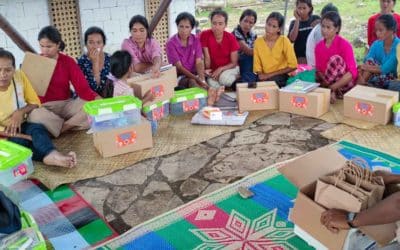
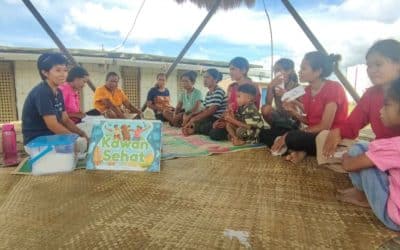
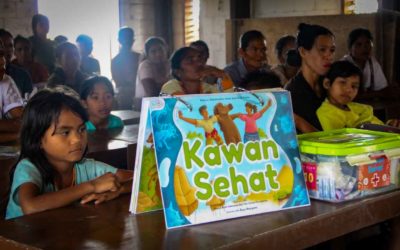
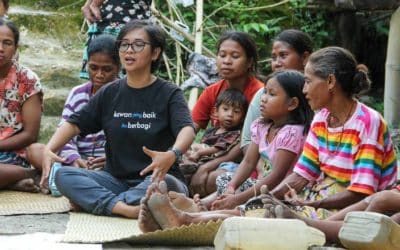
Thanks to the Fair Future & Kawan Baik teams on site and the various publications that our two foundations have produced for them, we share a few hours in each group of houses, in each village where Fair Future and Kawan Baik have carried out one or more projects related to access to drinking water and to toilets and other sanitary facilities. Together, we learn the means available to the villagers to have a healthier life, with fewer illnesses, to eat and drink better, to wash more, to take care of themselves and one’s families.

read more