



Malaria continues to pose a daily threat in this area. Through Kawan Against Malaria, we monitor cases, test all fevers, protect homes, and educate families. The use of bed nets, spraying, and prompt treatment turns statistical data into lives that endure quietly, rather than ending prematurely.
Donate
Support Care
Programs
All projects
Quick News
Field updates
Stories
Field stories
Welcome to the Fair Future News! Our teams have crafted each article, story, and update.
These pages showcase unique content reflecting our mission, work, and community interactions.
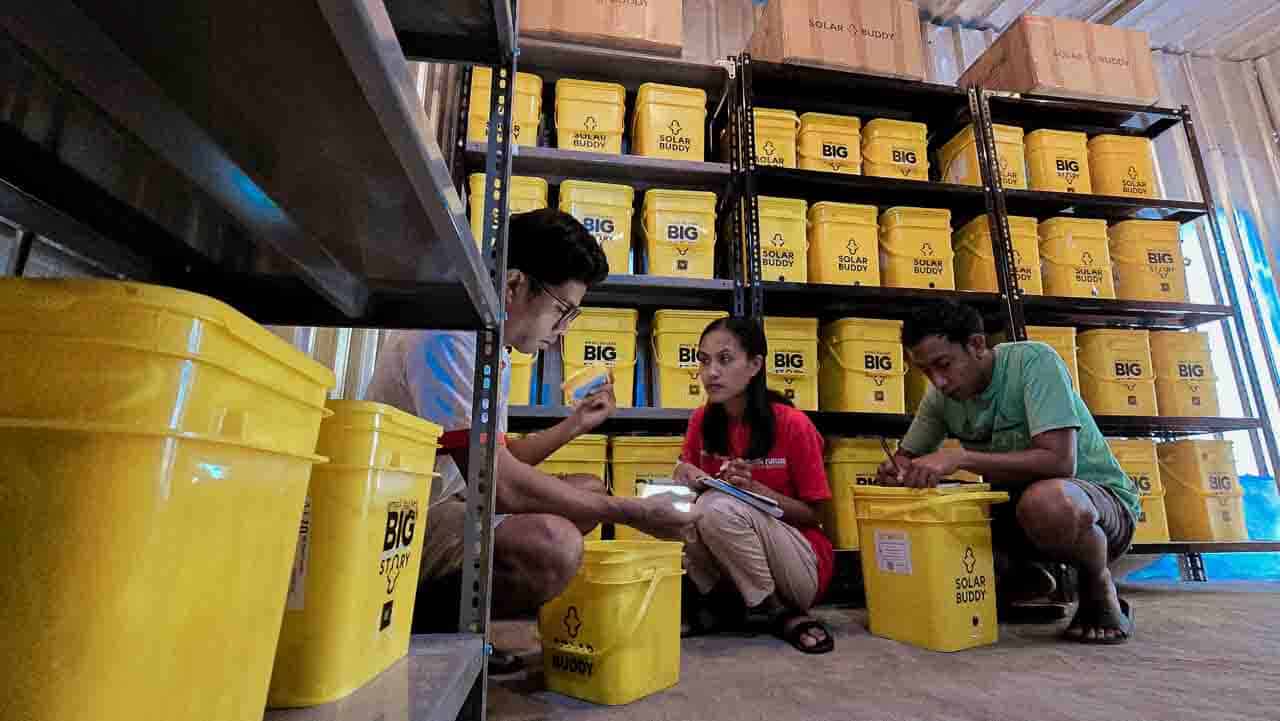
2,224 SolarBuddy lamps stored at Rumah kambera’s base, ready for distribution
True stories. Real people. Humanitarian action in motion.
Here you’ll find stories from the field—100% real, 100% original. Every article is written by us, by those who live these moments, walk these roads, and treat these illnesses. We write them by hand, after the long days, often from tents or remote villages, because we believe in showing what’s real.
The people, the lives, the wounds, the repairs—this is not fiction. This is our daily reality in ultra-rural Indonesia. Every photo is taken by us. Every word comes from those who act. From emergency responses and clean water to child health and malaria cases, these stories reflect both the daily struggles and the incredible strength of those we serve.
Our News page is more than just updates. It’s a record of direct action. A collection of emotions, medical cases, construction progress, and social encounters. We don’t write for clicks—we write for those who care, those who want to know, and those who support our mission.
It’s raw, human, sometimes difficult, but always true. Read them, share them, let them move you. This is how change begins—with knowledge, emotion, and connection.
Alex Wettstein – Fair Future Foundation – Updated in June 2025
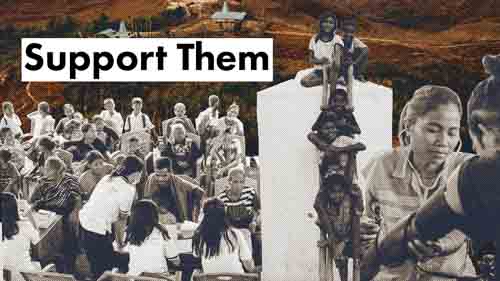
Your donation becomes real medical care
Help us reach the unreachable. Every franc you give funds medicines, dressings, tests, and clean water to prevent sickness. It powers solar lights for cold vaccines and night care. It keeps Kawan Sehat agents and Fair Future teams travelling hours to remote villages without doctors or clinics.
Our latest articles
Clean water in the house for the first time
Last December, while we were on site here in the village of Mbinudita, the Fair Future and Kawan Baik teams linked several infrastructures built for and around the Water Connections project by means of + /- 4000 meters of PVC HDPE pipes which we have now buried.
In doing so, we entered a significant number of houses, and for the first time in the history of these families, they had running water directly in the kitchens. You had to hear the cries of joy, the laughter too. And tears of joy for these families who suddenly have access to a source of clean water at home. Water connections create a clean and safe water network for families from rural areas in eastern Indonesia.
This image of the day shows you one of those very emotional moments, during which our teams entered one of the houses with a 1-inch pipe to connect it from the second deep borehole to the reservoir which is there and that we have built.
Women, children and water at home
Indonesian women play a vital role in water management due to their traditional responsibilities of collecting water, cooking, cleaning and raising children. These women from these ultra-rural areas of eastern Indonesia are strong. They represent tremendously well the strength and the courage it takes to survive here in this vast country. To fend for themselves most of the time, without the help of others, to meet the family’s most basic needs. Therefore, empowering women to increase water security is essential in the regions where we work. With climate change affecting water sources, it is vital to ensure that women are involved in water management decisions. This allows (we see this every day) families and local communities to improve their incomes and the health of family members, including their children.
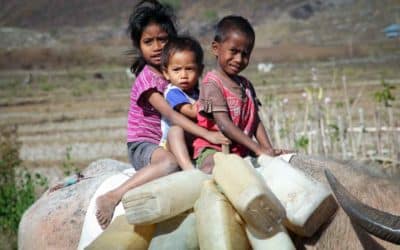
A Lifetime work: Collecting water for the family
When there is no water on-site, and you have to fetch it, it is mainly women and young girls who take up their time and miss out on opportunities.
For women, the opportunity costs of water collection are high and have far-reaching implications. Having to fetch water drastically reduces the time they can spend with their families and care for their children, do household chores or even enjoy hobbies. For both boys and girls, collecting water can interfere with studies, sometimes even preventing them from going to school altogether.
Collecting water can harm the health of the whole family, especially children. If there is no access to water at home, even if the water comes from a safe source, the fact that it is transported and stored increases the risk that it will be contaminated with faeces before it is used.
Water Connections: Our teams are changing that; for years, we have been designing, manufacturing and supplying water connections to villages in ultra-rural regions. Fair Future improves life for tens of thousands of people.
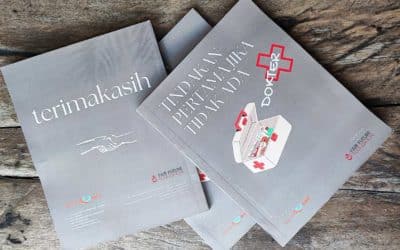
Primary Medical Care in Rural Areas – The book
“The first step when there is no doctor” includes fourteen modules of theoretical training and practical exercises explaining how to act in the event of a medical emergency. It is intended for teachers in rural schools of East Indonesia.
This book was entirely produced by the Fair Future and Kawan Baik foundations. It is based on the book "Where There Is No Doctor" by David Wegner.
From now on, it serves as a reference work for the training of teachers in the rural areas of eastern Indonesia. This book includes all the information on prevention, patient care, first aid and how to treat a wound, burn or bite. He learns to give essential drugs, cardiac massage and all the gestures that save a life.
You can see the work done by the foundation's medical teams here in the .PDF version we make available. Everything has been translated, revised, corrected and adapted to specific local compartments.
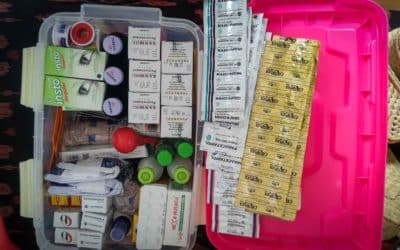
List of drugs we need to buy
To make it simple and short, we urgently need a lot of medicines (see the list attached in the post) and sanitary equipment such as antiseptics, dressings and other small miscellaneous equipment. Indeed, friends, all our stocks are almost finished because we have prescribed or used everything, which is a good thing. On the other hand and from tomorrow, we can no longer treat patients except for simple problems that do not require medical treatment.
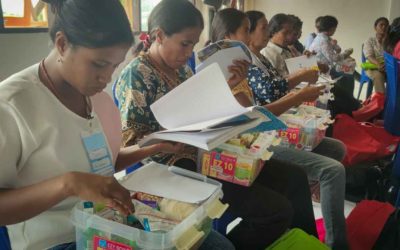
Primary medical care training for 60 teachers
Whether a minor skin injury or a severe life-threatening injury, all types of damage should be treated with first aid on the spot without delay, as it may save a life or a limb. Teachers in the poorest and most rural areas learn this with Fair Future’s medical teams. Since November 2022, Fair Future Switzerland has taken a new step in the primary medical care program for children in ultra-rural areas here in East Sumba. The first two training modules for rural school teachers took place during the second week of December. It was a considerable success since more than sixty teachers were present for this first session.
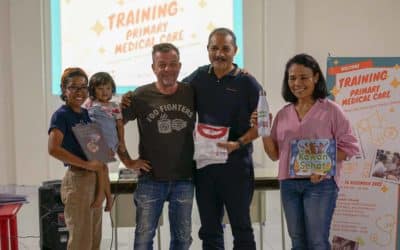
Primary Medical Care Training with the Bupati of Sumba Timur
The Regent is a good friend of the foundation; we have worked together for more than two years. Moreover, he is a personal friend of Alexandre Wettstein, the CEO of Fair Future.
As their plane from Kupang had just landed, the Regent and his wife came directly to visit us in the classroom. It was a great joy for us, as for all the teachers who took part in this first training day. A real honour too.
We could hear Khristofel Praing and his wife speak about this program with eloquent and laudatory words. The Regent told us that this program is sensational and beneficial. Indeed, as we have already explained, access to primary medical care here is almost impossible in eastern Indonesia's most rural and isolated regions.
In this image and from left to right are present: Ayu, Laras, Alex, Khristofel Praing and his wife, secretary general of the PKK Sumba Timur.
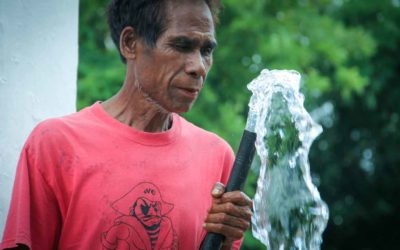
Clean water and healthy toilets for the first time
Clean and healthy water is distributed almost everywhere now here in Mbinudita, East Sumba. This clean and healthy water supplies more than thirty reservoirs and twenty healthy sanitary facilities. All for the benefit of more than 2,500 people, nearly 65% of whom are children.
People are happy, and It's a significant change in their life. They also have to get used to living with clean water to change their habits. Imagine: Having lived a life without having access to toilets, without having access to clean water, and being constantly sick… You have to get used to feeling better now and having more time for yourself. Change your habits? This is where the most significant challenge lies.
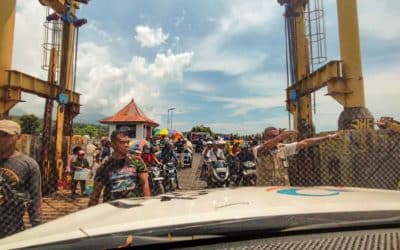
Aimere, the Truck of Life is ready to board for Waingapu
Port d'Aimere, Flores Nusa Tenggara Timur. After more than five days on the road, the Truck of Life, loaded like a real truck, is ready to embark for Waingapu. The last ferry out of five that we have already taken throughout this journey will take us to the foundation's medico-social base camp, Rumah Kambera, in East Sumba. The crossing between Forès and Sumba will take over eight hours in extreme conditions. From tomorrow, we will be working with the poorest families in Indonesia in the framework of the project of primary medical care for children in rural areas and medical care for malaria victims, which is raging here.
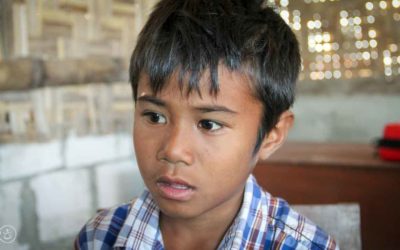
A 9-year-old child needs surgery quickly
This little boy’s name is Assaria, he’s nine years old. He has severe 3rd-degree burns to over 24% of his body and requires surgical attention. He is not well, and we have to find a solution together. He can barely walk because of terrible burns to his legs and back. The consequences while growing up are significant circulatory and neurological problems. If nothing is done, he risks a double amputation. Let’s help him get surgery for severe burns on both legs before his health deteriorates.
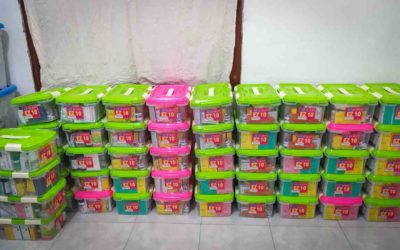
First aid kits are being prepared here in Sumba
What the foundation is setting up is innovative and ingenious and cannot be done without the help of nearly a hundred teachers from the poorest and rural areas of East Sumba. And yes, teachers, like everywhere in the world, are the most influential people in the villages.
During these three or four training days, they will learn how to treat a wound and give first aid to an injured or sick child so that his situation does not worsen and becomes much more severe. But also, above all, determining when to call a doctor or go to the nearest medical centre.
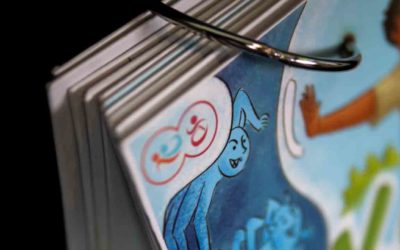
Kawan Sehat book is finished and printed
A simple picture is that of the book "Kawan Sehat", which means "the healthy friend", on which Kawan Baik and Fair Future have been working for a few months. We are happy because the book is now finished, printed and ready to be loaded into the Truck of Life, which will leave tomorrow evening (08.12.22) for a five-day journey towards our Rumah Kambera Base Camp.
As a reminder, this book features three characters around the themes of a healthier life, how not to get sick, avoid injuries, and everyday sores. It is aimed at children from the ultra-rural regions of eastern Indonesia, where we work. It is one of the tools set up as part of the program for access to primary medical care intended for children in ultra-peripheral regions.
We invite you to get to know "Kawan Sehat" in .PDF format, in its latest version, by clicking on this link. Happy reading, Kawan.