

Fair Future’s ZeroMalaria Report illuminates the organization’s impactful but ongoing battle against Malaria in East Sumba. The multi-faceted approach includes clean water infrastructure, community education, and empowerment. Learn how these efforts are making a tangible difference but also underscore the long journey ahead
After years of walking to find dirty water, villages like Laindatang, Hambarita or Mbinudita can now access clean water from community reservoirs they built themselves. Clean water reduces diarrhea, skin infections, and fear. This is a true reflection of dignity in daily life.
Donate
Support Care
Programs
All projects
Quick News
Field updates
Stories
Field stories
Empowering people to take control of their health and future through community-driven projects.
Zero Malaria: The Stickers That Save Lives in East Sumba
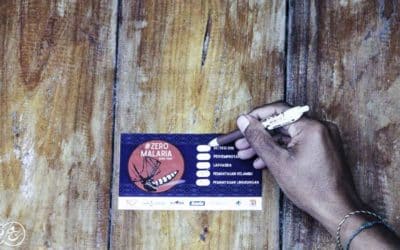
This New “Picture of the Day” highlights much more than a simple sticker; it reveals a crucial component of our ongoing fight against malaria. Within Fair Future’s #ZeroMalaria program, our social and medical teams dedicate their expertise and energy to affixing these stickers to the walls of homes in the villages and regions of East Sumba where we work. These stickers are not just markers but vital indicators in our overall approach to protecting and educating the most vulnerable communities.
In the remote villages of East Sumba, Indonesia, a simple sticker can mean the difference between life and death. As part of Fair Future’s Zero Malaria program, these stickers are affixed to the walls of homes, serving as a visual indicator of our comprehensive approach to malaria control.
In the battle against malaria, we don't overlook any details. From microscopic examinations to stickers on walls, every action is a step towards a malaria-free future. These stickers are not just adhesives; they are badges of education, prevention, and hope.
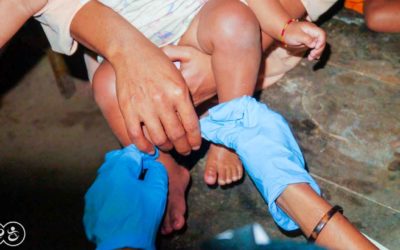
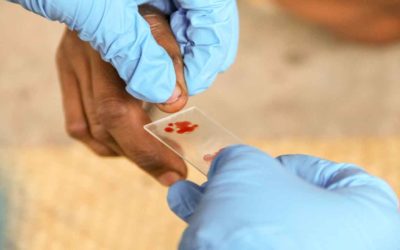
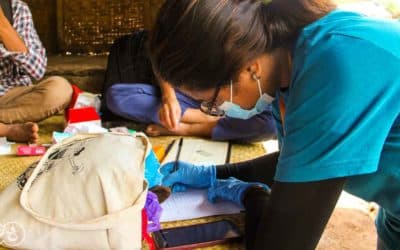
Family Member Detection: Early diagnosis is crucial in regions like East Sumba, where malaria is rampant. Our teams employ optical microscopic examinations to visualize plasmodia in patients' thick or thin blood smears. We also utilize Rapid Diagnostic Tests for Malaria (TDR).
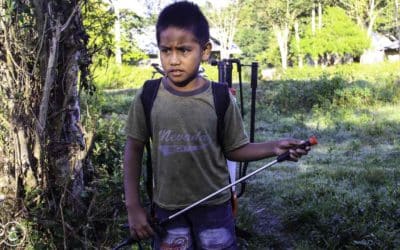
Indoor Residual Spraying (PID): We conduct Indoor Residual Spraying (PID) in every home across the villages. This involves the regular application of long-lasting chemical insecticides on the inner walls of houses. The insecticide remains effective for several months, killing mosquitoes that come into contact with it.
Larvicides: Regular application of microbial or chemical insecticides to water bodies or reservoirs is another crucial aspect. The goal is to reduce the adult mosquito population by killing the immature aquatic forms, thereby limiting their development into adults.
Bed Nets: The distribution of insecticide-treated bed nets (MII) is essential in our fight against malaria. These nets have proven highly effective in reducing malaria-related deaths and illnesses.
Environmental Surveillance: We also pay close attention to the living conditions in these areas. Factors like inadequate sanitation facilities, unsanitary conditions, stagnant water, and areas where animals like pigs and water buffaloes are kept can significantly contribute to mosquito proliferation.
This is why the sticker takes on such importance. It informs villagers whether a particular home has been treated, whether its inhabitants have undergone screening and whether they have been educated on protecting themselves from the disease.
Thank you very much for your support.
Alex Wettstein – Fair Future Foundation medico-social camp in East Sumba – Rumah Kambera, Lambanapu, 5th of October, 2023.
The #ZeroMalaria Mission: Testing East Sumba’s Population in Extreme Conditions
Embark on a journey with the Fair Future Foundation’s groundbreaking #ZeroMalaria program, aimed at eradicating malaria in East Sumba, Indonesia. This ambitious initiative seeks to test at least 87% of the local population, even in the most remote and challenging terrains. Discover how our specialized socio-medical teams navigate logistical hurdles, from electricity shortages to extreme weather conditions, to conduct tens of thousands of tests.
Behind the Scenes: Fair Future’s Anti-Malaria Effort in East Sumba
Fair Future Foundation, in collaboration with Kawan Baik and Sumba Volunteer, is taking bold steps to eradicate malaria in one of the world’s most affected regions—East Sumba, Indonesia. This comprehensive program aims to serve tens of thousands of people, focusing on early diagnosis and effective treatment. With more than 10 tons of medical equipment and a dedicated team, we are committed to this cause as a moral obligation. Read on to discover the intricate details of this life-changing initiative.
Rambu Mirna’s Battle: Fight against malaria in East Sumba’s Remote Areas
Embark on a profound journey alongside Rambu Mirna as she courageously battles malaria in the heart of remote East Sumba, where healthcare is a distant dream. Dive into the remarkable story of resilience and hope, and discover how Fair Future Foundation’s #ZeroMalaria initiative is not just saving lives but also transforming entire communities. Join us in this life-changing narrative of overcoming adversity and restoring futures in the most isolated corners of Indonesia.
Journey to Lasting Impact: An Immersive Insight into Fair Future’s Approach
At Fair Future, we don’t just initiate projects; we live them. Our approach, honed over 15 years, begins with in-depth feasibility studies and extends to immersive community interaction in East Sumba’s ultra-rural areas. We live, eat, and cook with local families to understand their real-life challenges, thereby ensuring that every program we launch has a lasting and balanced impact. Discover how Fair Future’s method sets a gold standard for meaningful and sustainable humanitarian work
East Sumba Pest Crisis: Human & Environmental Health At Stake
The pest crisis in East Sumba transcends agricultural ruin, posing a severe threat to human health, psychological well-being, and environmental integrity. Fair Future Foundation takes a deep dive into this grim humanitarian emergency, advocating for holistic solutions. From acute health risks to wildlife mortality, this article sheds light on the critical need for a united front. Explore our data-driven insights and learn how you can contribute to developing ethical, effective solutions.
Crucial Preparation for Malaria Eradication in Sumba East
“In the heart of Sumba East, a coalition of heroes united for an epic battle against malaria. They embarked on a journey fueled by hope, dedication, and unwavering commitment. However, what set the stage for their triumph was the meticulous preparation that underpinned every step. Discover why this groundwork is not just a step but the very foundation of our mission to eliminate malaria and save lives in the remote and underserved regions of Sumba East. Join us as we explore the monumental role of preparation in our heroic quest.
The #ZeroMalariaSumbaTimur program has been successfully implemented
In a concerted effort to fight the endemic scourge of malaria, the Swiss Fair Future Foundation has embarked on an extraordinary mission – the #ZeroMalariaSumbaTimur program. This groundbreaking initiative is taking place in the heart of Southeast Asia, specifically in the remote and underserved eastern expanse of Indonesia known as East Sumba.
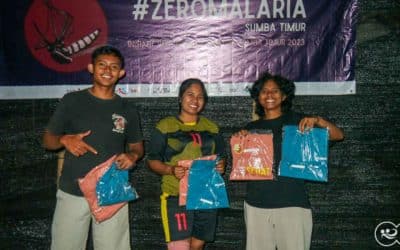
Having already screened and treated 2500 individuals across three severely malaria-affected villages in East Sumba, our undertaking is underscored by a tangible impact. This formidable feat, orchestrated through the synergy of committed individuals such as Alandio, Ino, Elthon, Alex, Ayu, Annisa or Ayu, resonates as a testament to unwavering dedication. Over seventy staunch contributors, bolstered by fifty fervent volunteers from diverse corners of Indonesia, assemble with a shared sense of purpose.
Collectively, we have curated a multi-disciplinary team of skilled nurses, physicians, and laboratory specialists, amplifying our medical outreach. This coalition is complemented by clever logistics and data management, facilitated by an innovative application collaboratively developed by the Fair Future and Kawan Baik Foundations.
The core of our effort extends beyond the simple detection of malaria; our priority lies in education and prevention. Empowering communities with knowledge and awareness is our ultimate goal. We disseminate vital information about this dangerous disease through immersive workshops and interactive sessions. Armed with this understanding, individuals cannotntify the symptoms of malaria but also take quick and informed action to avoid potential complications and even death, safeguarding their well-being and others—their relatives.
The tangible impact of this initiative ripples through the lives we touch. Early identification and effective malaria management have resulted in life savings. Additionally, our efforts extend to enlightening local healthcare providers, equipping them with the essential tools and resources for a decisive battle against this relentless disease.
Yet our journey is not free of challenges. Negotiating the region's labyrinthine topography, working with limited resources, and transcending language barriers requires inventive methodologies and a deep sensitivity to indigenous cultures. Establishing a foundation of trust within our communities is an indispensable facet, fostering the adoption of preventive measures and a tendency to seek prompt medical intervention when needed.
We invite you to join our collective effort in the fight against malaria. Hand in hand, we can create a transformative impact, save lives and shape a radiant tapestry of possibility for everyone.
Primary Medical Care Progress Report
The Primary Medical Care (PMC) program has made a remarkable difference in the rural communities of East Sumba, providing over a thousand treatments that offer critical medical assistance to those in need. Through their unwavering dedication and hard work, the women of the region have been empowered to take control of the health and welfare of their ultra-rural communities. By providing them with the essential knowledge, resources and tools, we have successfully equipped them to face all the socio-medical challenges that come their way. Over nearly five months, Fair Future and Kawan Baik, our partners, all participants, and teams collaborated to go above and beyond in reaching the most challenging areas and evaluating the impact of the field program. The results are awe-inspiring, leaving no doubt that the Primary Medical Care program is the definitive solution to ensure everyone can access emergency medical assistance.
Helping ultra-rural families to have a healthier life
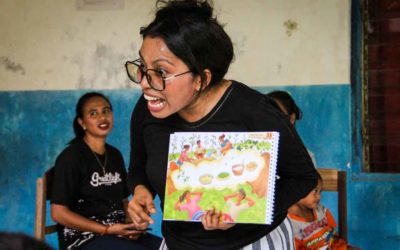
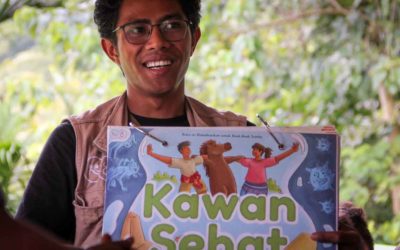
This new "Picture of the Day" features Kawan Ino, one of the Fair Future team members in Sumba (Rumah Kambera Leader), talking to health workers and the village community of Kabanda. To do this, he uses the "Kawan Sehat" book we produced at the end of 2022 for children in these regions. This book is an integral part of the program of access to primary medical care for children in ultra-rural areas.
We spend two days here, and you can read what we have done in Kabanda. This village is genuinely one of the most isolated I have ever seen. Getting it is difficult, even dangerous, at times. No road leads to this village; only extremely steep or steep stony paths allow us to go there. Kawan Ino explains how to have a healthier life thanks to implementing specific things in everyday life. This includes physical and mental health, body and home hygiene, daily habits and women empowerment.
Thanks to the Kawan Sehat program, we see a significant improvement in the health and well-being of rural populations. It is truly heartening to see healthy habits being encouraged and access to health care increasing. It is vital that everyone has access to quality health care, and we are happy that this program allows more people to receive the care they need.
Here, when a person is sick or injured while a woman is due to give birth, one of the only ways for her to receive medical attention is to carry her on people's backs for several hours or even a whole day until the nearest health centre. This person also does not know if he will arrive in time at the medical centre, called "Puskesmas or Pustu", as we have seen on several occasions.
This is why this book is necessary: “Kawan Sehat” is intended for schools and teachers. It's an amazing teaching aid for them, and kids love it. Nothing is done here to give children the means to learn from an early age how to wash themselves, eat healthier, use soap, and learn not to pollute or brush their teeth etc… In the classrooms here in East Sumba, the book“Kawan Sehat” is the only one available for children; there are no others.
Strong women representing a strong nation
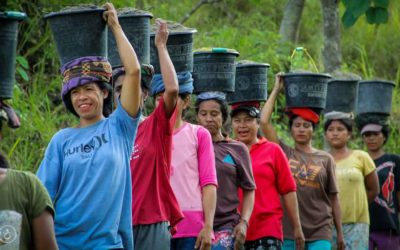
These women play a major role in the rural economy of their village. They are the ones who transport sand for the construction of a new drinking water reservoir on the Mbinudita site. They sing traditional songs to give themselves courage, because it takes a lot. They are the ones who are in charge of helping us, in what is certainly the most difficult work. Yes, strong women represent a strong nation.