

Reaching Villages…

Door-to-door training, every day

Every action counts—support us today
Select Page

Donate

Support Care

Glossary

Medical terms

Quick News

Field updates

Stories

Field stories
Updated Kawan Sehat Manual for Health Agents

Updated Kawan Sehat Manual for Health Agents

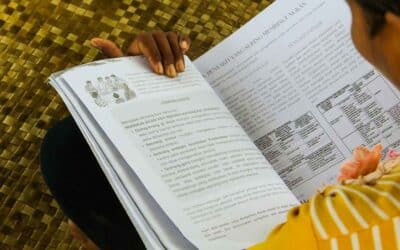
The training manual for Kawan Sehat health agents in the #PrimaryMedicalCare program, containing 14 modules over 150 pages, will be reprinted after revisions and additions. New modules will enhance the training to ensure these agents can fully address the needs of those who lack access to medical care in their remote areas.

read more
Four Pillars for a Healthier Life in Ultra-Rural Areas

Four Pillars for a Healthier Life in Ultra-Rural Areas

Four Pillars for Healthy Living” serves as Fair Future’s guide for ultra-rural communities, emphasizing balanced lifestyle pillars: physical activity, nutrition, hygiene, and rest. This guide encourages daily exercise, a diet rich in fresh foods, regular washing with soap and water, and adequate rest for mental and physical health, aiming to enhance individual and community well-being.

read more
Improving Nutrition with #WaterConnections in Laindatang

Improving Nutrition with #WaterConnections in Laindatang

#WaterConnections here in Laindatang was established for various reasons. Firstly, to improve the living conditions of the residents, promote better health, and combat issues of malnutrition and infectious diseases such as malaria, dengue, cholera, hepatitis, polio, and others.

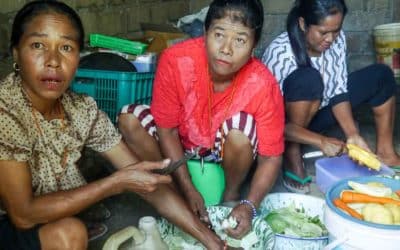
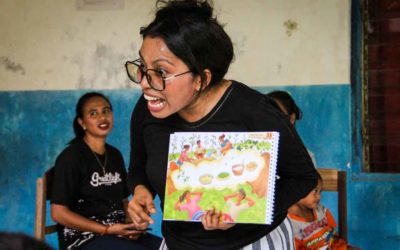
But to combat malnutrition and unhealthy eating habits, it is essential to provide adequate knowledge. The residents here have no concept of what it means to eat healthily. As part of this program, for several months, Fair Future and Kawan Baik cook on-site, not only for our team of workers but also for the village workers, about 30 to 50 people each day. We categorically refuse to prepare unhealthy meals.

Instead, we educate them on new tastes, showing them what fresh vegetables like carrots, potatoes, cabbage, green vegetables, and corn look like, cooked in different ways. It is crucial for children's growth to have a healthy diet. Many of them travel kilometres to get to school, arriving tired, exhausted, and unable to concentrate.

Most of the time, they haven't eaten before leaving home. Additionally, they lack access to water. For us, nutrition is therefore one of the key pillars of this program, along with the prevention of infectious diseases.

Throughout the duration of the project, we focus on nutrition, in addition to preventing infectious diseases. We spend much time cooking for the villagers and teaching them the basics of a healthy diet. The #WaterConnections program is there for them, to offer them a better future and better health, as we believe that it is through clean water that we can accomplish almost anything.

Growing vegetables, generating income through their sale, this is what awaits us in the coming weeks as we cook for the school children every day, helping them adopt better eating habits. This is crucial for them because they represent the future generation, those who will outlive us.

Alex Wettstein – Fair Future Foundation medico-social camp in East Sumba – Rumah Kambera, Lambanapu – The 3rd of March 2024

read more
Empowering Women in Rural Areas with #PrimaryMedicalCare

Empowering Women in Rural Areas with #PrimaryMedicalCare

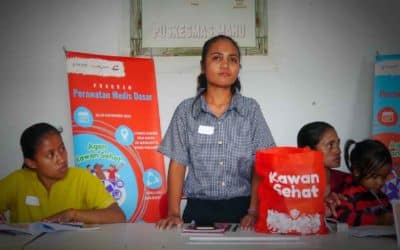
In the news "Picture of the Day," a Kawan Sehat agent stands with assurance and determination. Facing our healthcare teams, she shares her experience as a care agent in her village of Kabanda. Her gaze, filled with resolve, speaks of her firm decision to progress, contribute to her community's evolution, and help as many as she can. An embodiment of empowerment and social transformation, this image captures the spirit of these extraordinary women who, through their training and commitment, are redefining their role in ultra-rural societies and becoming pillars of change and inspiration.

#PrimaryMedicalCare: The Renaissance of Women in Ultra-Rural Societies of Southeast Asia

In the ultra-rural communities of Southeast Asia, a remarkable change is taking place. Thanks to the #PrimaryMedicalCare program by the Fair Future Foundation and Kawan Baik Foundation, over 50 women, primarily teachers, are redefining their societal role. These women, traditionally confined to the roles of child educators and homemakers, are now gaining confidence and autonomy, becoming undeniable pillars of their community.

Their comprehensive medical training has opened previously closed doors, allowing them to take on responsibilities beyond traditional education. By becoming Kawan Sehat health agents, they have acquired essential life-saving skills and achieved a new social status. Their role has transformed from background figures to leading actors in the health and well-being of their villages.

This evolution is significant as it is a model and inspiration for other women in these regions. These health agents now represent the possibility of a fulfilled life, demonstrating that improvement in living conditions and personal achievement is within reach for all. They are breaking traditional barriers and redefining what it means to be a woman in societies previously limited by rigid norms.

Their growing assurance is a living testimony to the positive impact of education and training on women's empowerment. By transforming their status within the community, they are creating a future where women are not just caregivers and educators but also leaders and innovators.

Fair Future Foundation is committed to continuing its support for these modern heroines, recognizing the crucial importance of their role in health care delivery and building a more equitable and inclusive society. Our work with these remarkable women is a step towards a future where every woman can play an active and respected role in her community.

#WomenEmpowerment #HealthcareHeroes #RuralHealth #CommunityLeaders #FemaleEducation #SocialChange #InnovativeHealthcare #SustainableDevelopment #EqualityForAll

Alex Wettstein – Fair Future Foundation medico-social camp in East Sumba – Rumah Kambera, Lambanapu, on the 8th of January 2024.

read more
Eastern Indonesia’s Teachers Become First Responders in Critical Rural Healthcare

Eastern Indonesia’s Teachers Become First Responders in Critical Rural Healthcare

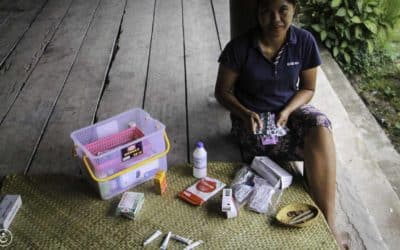
In ultra-rural eastern Indonesia, the idea of prompt medical care is often a distant dream. Enter Fair Future’s Kawan Sehat agents—a team of over 60 women transforming this grim reality. Equipped with first-aid essentials and life-saving drugs, they’re not just healthcare providers; they’re community saviors

read more
Transforming Rural Healthcare Through Local Teachers

Transforming Rural Healthcare Through Local Teachers

In Eastern Indonesia’s most isolated regions, the closest hospital might as well be on another planet. Who then comes to the rescue? Not medics from distant cities, but local teachers. Trained by Fair Future, these teachers transform into frontline health agents, acting as the first line of defense against life-threatening diseases like malaria, tuberculosis, and polio. This isn’t the future; this is now. Join us in this radical shift in community healthcare.

read more
Breaking Water Barriers for Women and Girls in East Sumba

Breaking Water Barriers for Women and Girls in East Sumba

In this news "Picture of the Day", under the terrible heat of East Sumba, a mother and her daughter trudge forward, carrying five empty jerry cans. Their feet tread on arid ground, strewn with stones and brush. The day started a few hours ago and the journey is far from over. They have travelled more than five kilometres on foot and have as much ahead of them to reach their destination: Kullups, holes dug by hand in the rock of a hill. (Ref. Read this article here)

In this part of the world, kullups are more than mere rainwater reservoirs; they represent a vestige of human ingenuity against near-chronic water scarcity. Rainwater, channeled by soil and rock, seeps in to feed these small stone basins at the foot of a hill. It's a source of life, but also a source of heart-wrenching dilemmas. For every precious drop, there is a hidden cost, measured not in money but in lost opportunities, compromised health, and uncertain futures.

Consider the mother. Each trip for water represents hours when she can't work, maintain her home, or care for her family. What about her daughter? With every step she takes toward the kullup, she moves further from an education that could unlock doors to a better future. The thirst for learning is there, but it is weighed against a more immediate, more vital thirst.

Against this backdrop, the teams from Fair Future and Kawan Baik step in, armed with the will to make a difference and the tools and expertise needed to do so. The #WaterConnections program doesn't merely supply water; it aims to redefine these communities' relationship with this essential resource. By installing water collection and filtration systems, educating on hygiene best practices, and encouraging community participation, Fair Future and Kawan Baik aim to break the vicious cycle of poverty and disease.

Waterborne diseases like Malaria, Dengue, diarrhea and cholera are commonplace in these areas. But their impact doesn't stop at the individual. A sick mother cannot provide for her family. A sick daughter cannot attend school. And a cycle of suffering and poverty perpetuates, generation after generation.

The work of Fair Future and Kawan Baik isn't completed in a day or even a year. It's a long-term commitment, an investment in the future of these communities. But every installed water system, every educational session, and every assisted family represents a step toward a future where this mother and daughter won't have to choose between the present and the future, between thirst and the thirst for learning.

In a world where clean water is often taken for granted, it's easy to forget that for some, it's a luxury that comes at a high price. By working on the ground alongside those who live this reality every day, Fair Future and Kawan Baik remind us that behind every drop of water, there's a human story, a struggle, and an opportunity for change.

Alex Wettstein – Fair Future Foundation medico-social camp in East Sumba – Rumah Kambera, Lambanapu, 17th of October, 2023.

read more
Volunteers: The Cornerstone of Zero Malaria Initiative in East Sumba

Volunteers: The Cornerstone of Zero Malaria Initiative in East Sumba

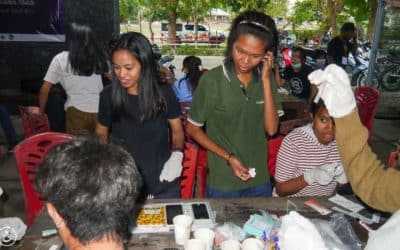
In the fight against malaria in East Sumba, volunteers stand at the front lines, embodying hope, dedication, and community-driven action. Discover how these everyday heroes, contributing to Fair Future Foundation’s #ZeroMalaria initiative, are changing the landscape of public health. Their hands administer life-saving treatments, their voices educate vulnerable communities, and their efforts are the cornerstone of a better, healthier future.

read more
The #WaterConnections project in Laindatang has started!

The #WaterConnections project in Laindatang has started!

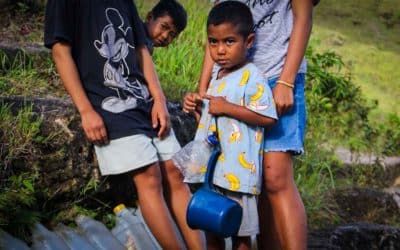
In this new "Picture of the Day", we witness the difficulties faced by young children in East Sumba as they search for clean water. These children must travel quite a distance from their homes to reach the kullups (small stone basins dug directly into the rocky terrain by villagers to collect and hold rainwater in rural areas). Unfortunately, it is unlikely to rain for the next nine months, and the children must walk over ten kilometres to obtain just a few litres of water to sustain themselves; kullups are dry now.

Presently, families in Laindatang endure arduous journeys, spanning miles and lasting over 10 hours, to obtain meagre quantities of drinking water. With a daily allocation of fewer than 2 litres per person, individuals must make profound sacrifices as this limited supply must accommodate drinking, eating, personal hygiene, and sanitation needs.

Malaria ravages the village, exacerbating the adverse effects of infectious diseases, particularly among children under five. The urgency of the health crisis necessitates immediate intervention. In collaboration with Kawan Baik and local authorities, Fair Future is committed to launching a comprehensive Water Connections project, addressing the pressing need for clean water in the village with utmost urgency.

Commencing at the end of June 2023, Fair Future embarks on an extraordinary #waterconnections project in Laindatang. This initiative heralds a transformative change and instils immense pride within our organization. 

Laindatang residents rely on rainwater collection during the rainy season to meet their clean water requirements. However, limited knowledge and resources impede this method, significantly contaminating water reservoirs. During the dry season, their options are limited to accessing water from the Kuluban artificial pool nestled within a rock formation—or purchasing tank water from a select few companies.

Regrettably, accessing water becomes increasingly challenging throughout the year, with only a handful of companies willing to deliver to the village. Transport obstacles frequently result in spilt water, further diminishing the already scarce supply upon arrival in Laindatang.

For the villagers, access to clean water is a matter of survival. They currently store rainwater in unclean, contaminated, and hazardous tanks. Though this remaining water sustains them for drinking, eating, and survival, it will be depleted within weeks as the dry season commences. Tragically, this water is tainted, infected, and carries life-threatening diseases such as Malaria, Cholera, Dengue, Typhoid fever, Hepatitis A, and Guinea worm disease. Additionally, prevalent diarrheal diseases like E. coli and rotavirus, caused by contaminated water, pose a severe risk, particularly to children, leading to dehydration and even death.

You have the power to help us realize this vital project, which is indispensable for hundreds of families. If you desire, your generous donation dedicated to the #waterconnections project in the village of Laindatang would be warmly welcomed. We extend our heartfelt gratitude and appreciation to all those willing to contribute. With your support, we can bring love, hope, and clean water to the deserving community of Laindatang.

To access information about our implementation, you can download and read the presentation in PDF format by clicking this link.

read more
Primary Medical Care Progress Report

Primary Medical Care Progress Report

The Primary Medical Care (PMC) program has made a remarkable difference in the rural communities of East Sumba, providing over a thousand treatments that offer critical medical assistance to those in need. Through their unwavering dedication and hard work, the women of the region have been empowered to take control of the health and welfare of their ultra-rural communities. By providing them with the essential knowledge, resources and tools, we have successfully equipped them to face all the socio-medical challenges that come their way. Over nearly five months, Fair Future and Kawan Baik, our partners, all participants, and teams collaborated to go above and beyond in reaching the most challenging areas and evaluating the impact of the field program. The results are awe-inspiring, leaving no doubt that the Primary Medical Care program is the definitive solution to ensure everyone can access emergency medical assistance.

read more
Access to clean water is vital for human health

Access to clean water is vital for human health

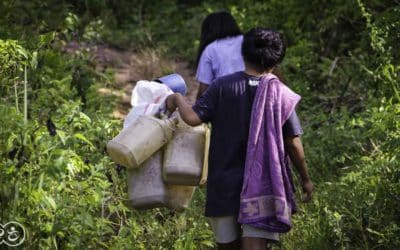
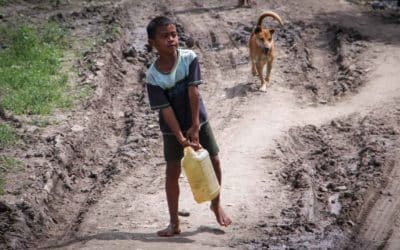
This "Picture of the Day" shows young children's struggles in East Sumba. The jerry cans are heavy and sometimes more prominent than the children themselves. With limited access to drinking water sources, the kids who live there (here in these images in the villages of Kabanda, Mahu, Laindatang, and Tana Mbanas) are forced to walk long distances to fetch water. Water in rivers or wells which are also contaminated. It takes up a lot of their time and puts them at risk of injury or illness by carrying heavy loads of water. Lack of access to clean water also contributes to poor hygiene and sanitation practices, further compounding the health problems of those East Sumba communities where Kawan Baik and Fair Future work so hard. Together, we are taking action to improve access to clean water sources, in these areas where no roads lead, to ensure the health and well-being of young children and their families. In addition to the physical hardship of fetching water, and as explained in this post, children in rural areas of East Sumba are often deprived of education and other opportunities because of this task. It is widespread (like in this picture of the day) that they miss school or other activities to help collect water, which affects their academic progress and social development.

Here people mainly only have access to contaminated water. This leads to many diseases, including gastrointestinal infections, skin diseases, parasitic diseases and other infectious diseases such as Malaria, Dengue Fever, Cholera, typhoid fever, hepatitis A or diarrhoea. Children and the elderly are particularly vulnerable to illnesses caused by contaminated water, a significant cause of infant mortality here.

In conclusion, ensuring access to clean water through a program like the #waterconnections project is our top priority that cannot be overlooked. Access to clean water is essential to sustaining life and maintaining good health for everyone here. Water plays a vital role in preventing the spread of the diseases mentioned above, ensuring people can lead healthier lives. Whether for drinking, cooking or cleaning, clean water is essential for everyday life. Without access, communities in the ultra-rural areas of East Sumba suffer from a lack of sanitation and hygiene, leading to various health problems.

Therefore, we must do everything we can to ensure that clean water is available to everyone who needs it.

read more
×