


Donate
Support Care
Articles & News
Field stories
Glossary
Field guides
WHO WE ARE · WHY WE WORK HERE
Healthcare where access ends. Local capacity that lasts.
Fair Future Foundation is a Swiss medical non-profit working year-round in East Sumba, Indonesia. Here, distance, poverty and limited infrastructure can turn treatable illness into an emergency.
With local health agents and community partners, we provide primary medical care, disease prevention, clean water, nutrition support and health education. Field logistics help us reach isolated villages. Training helps communities continue this work locally.
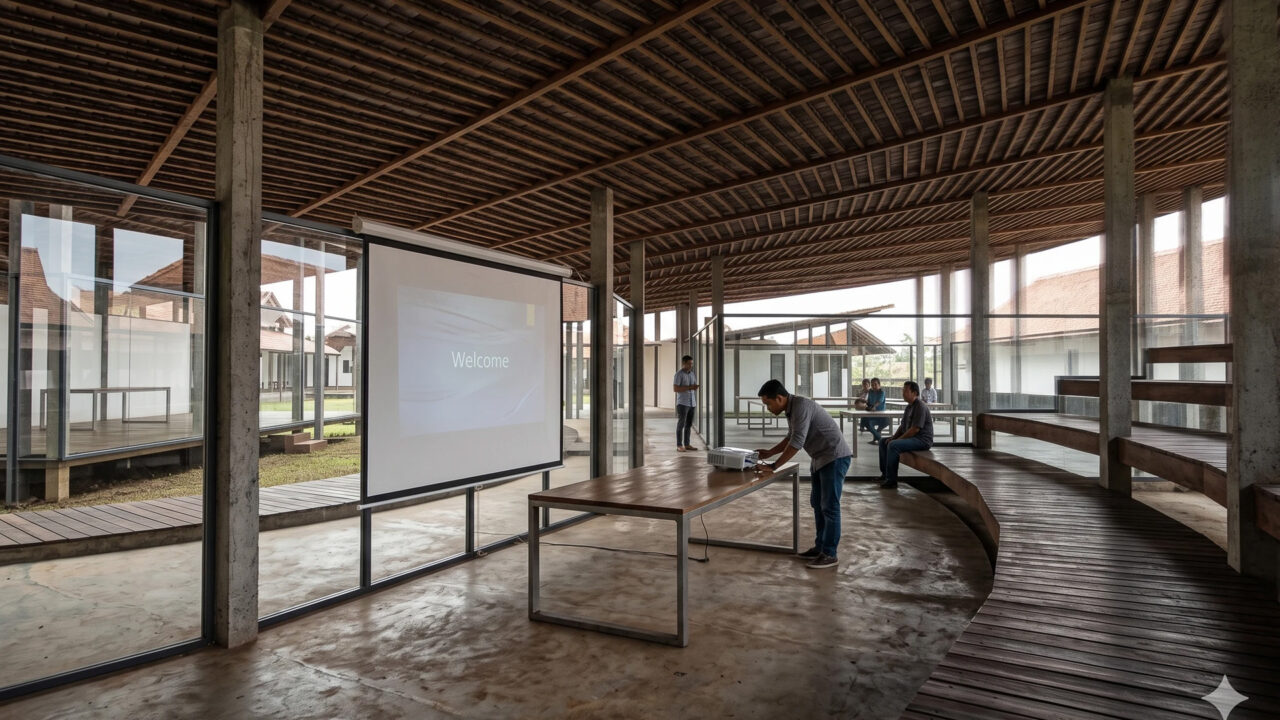
Rumah Kambera Community Center is our next step: a permanent socio-medical base in Kawangu. It will bring together care, training, a pharmacy, diagnostics, logistics and community education.
Our goal is stronger local capacity. Earlier care and practical knowledge help communities protect their own health.
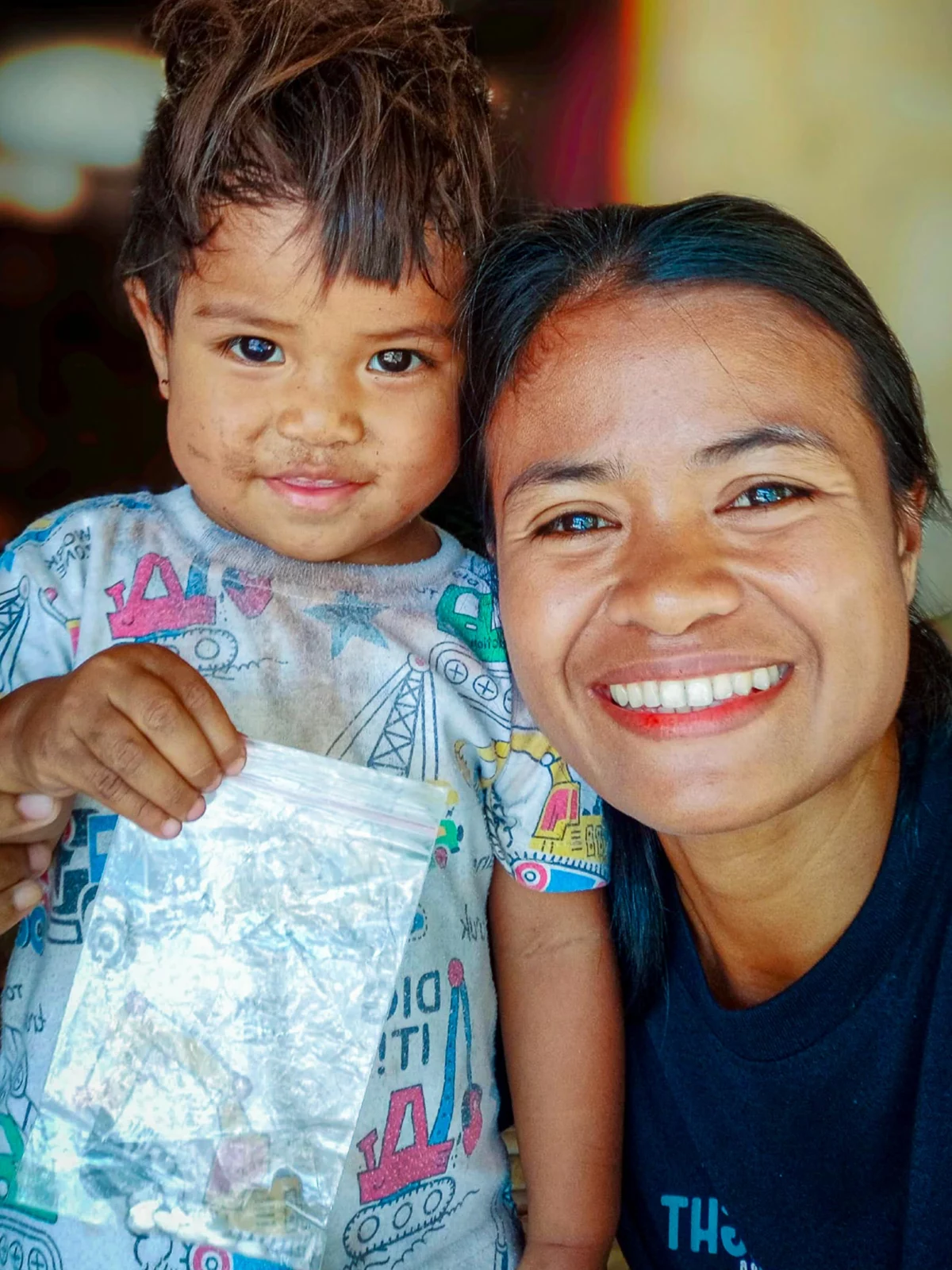
Put care within reach.
Your contribution helps keep medicines, primary care, clean water, prevention and field logistics moving towards communities where access remains difficult.
Direct expenditure allocated to field action in the latest audited annual accounts.
One-time or monthly donation. Amount, programme and payment are completed securely on the donation page.
OUR NEXT CHAPTER
The future of health is built with communities
Rumah Kambera Community Center is the next step in how we work in East Sumba: primary care, training, prevention, education, logistics and field innovation brought together in one permanent socio-medical center.
We build with local communities, not for them. Sustainable systems, local skills, clean water, nutrition and practical health education are how we turn short-term assistance into lasting capacity, resilience and greater independence.
Care that stays · Knowledge that spreads · Systems communities can own
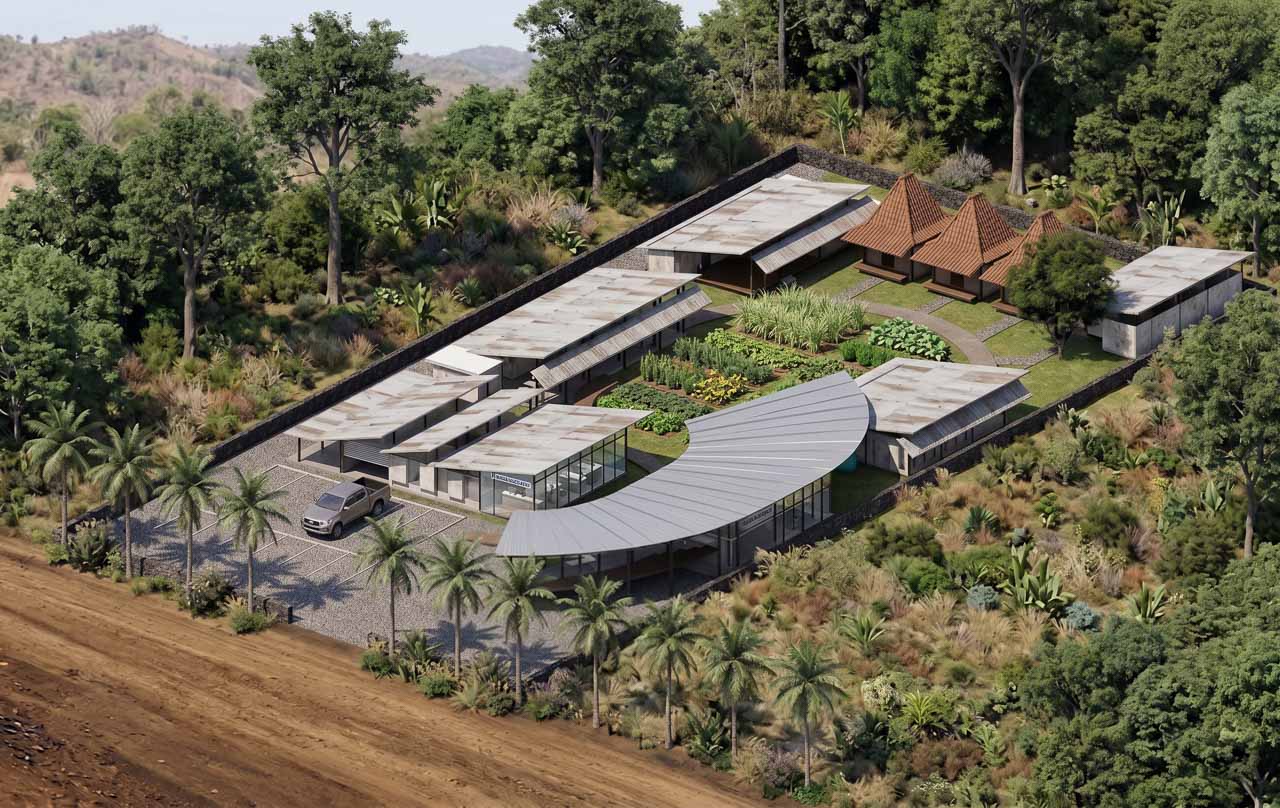
RUMAH KAMBERA · COMMUNITY SOCIO-MEDICAL CENTRE
Explore Rumah Kambera before the first building rises.
The project now has its own website, with an interactive 3D model, architectural views and construction updates from Kawangu.
Site preparation continues on our 4,200 m² site in Kawangu. We now hope to begin Phase 1 before the end of 2026, funding permitting. The first building is planned to bring together a small medical centre, a secure pharmacy, a small laboratory, a workshop and storage. Additional parts of the centre will follow as funding allows.
Project document: EnglishFrançais
The dedicated Rumah Kambera website follows the project from site preparation to construction, with new architectural views, field updates and the interactive 3D model.
WHAT WE ARE DOING NOW
Recent medical care, clean water, prevention and field operations across East Sumba.
These are not reports. They are recent moments from the field: patients treated, water systems built, health agents trained, and teams reaching isolated communities.
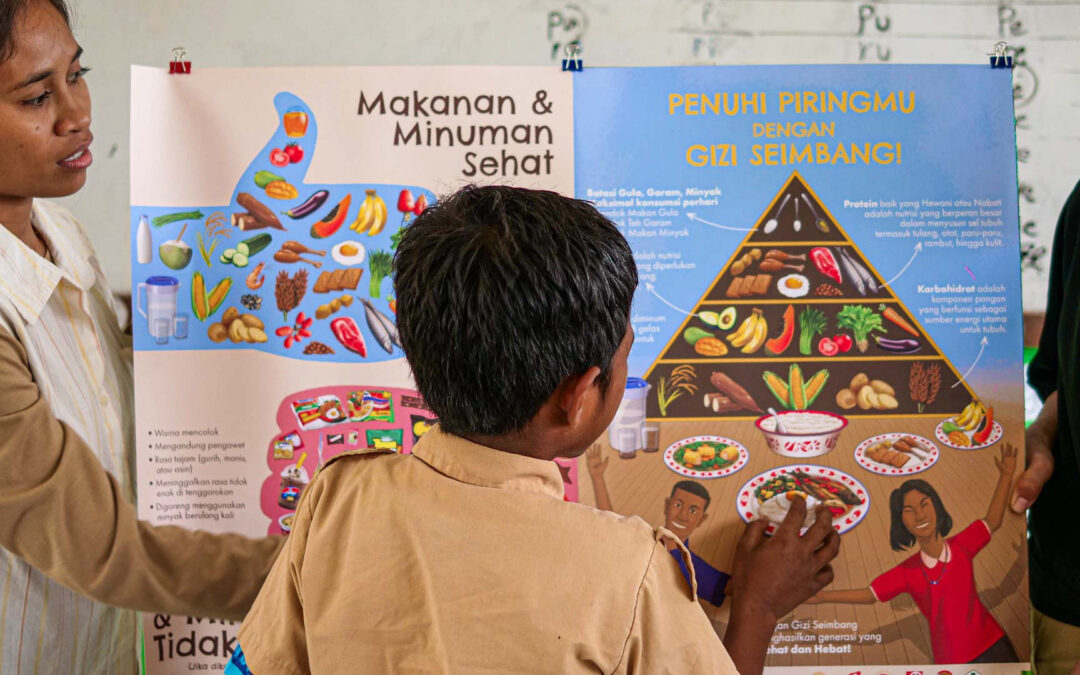
Learning What Belongs on the Plate
At SDN Ndata, a little boy explores an illustrated meal with our volunteers Rambu Maris and Umbu Kenzi. Two posters open a conversation about food, cost and variety, linking classroom learning with local produce, vegetable gardens and the water families need to grow more of their own food.
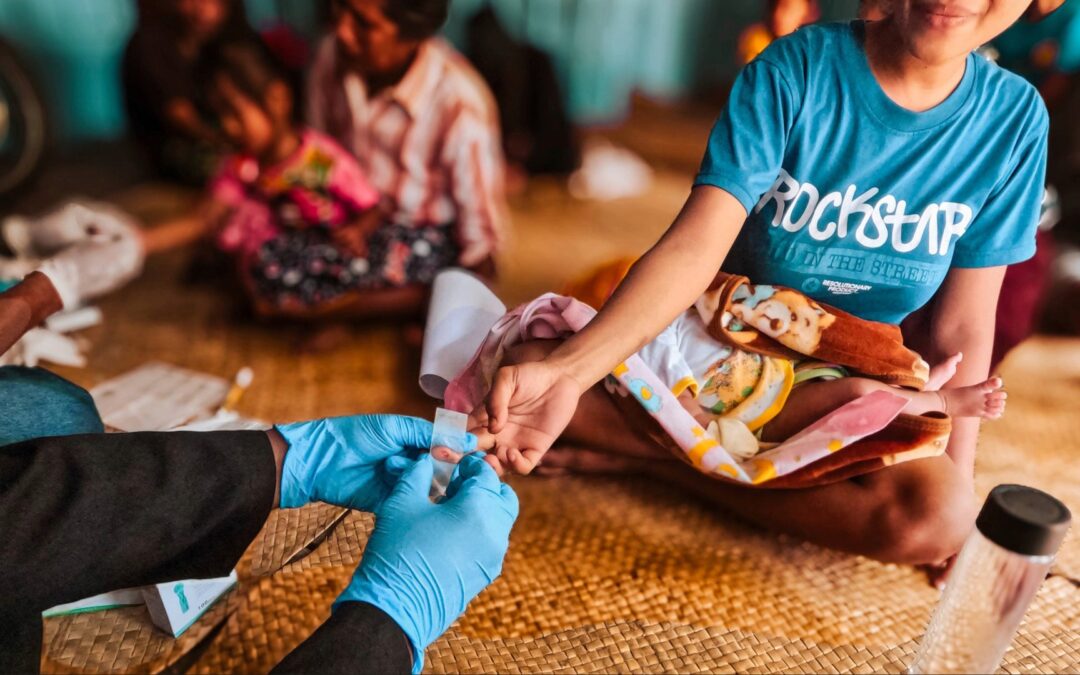
A Small Blood Sample, a Moment of Care
A mother holds her infant as our team takes a blood sample. In eastern Indonesia, malaria screening sits alongside year-round prevention. Before the rains, our Kawan Sehat workers use two illustrated posters to discuss symptoms, mosquito protection and when families need to seek care.
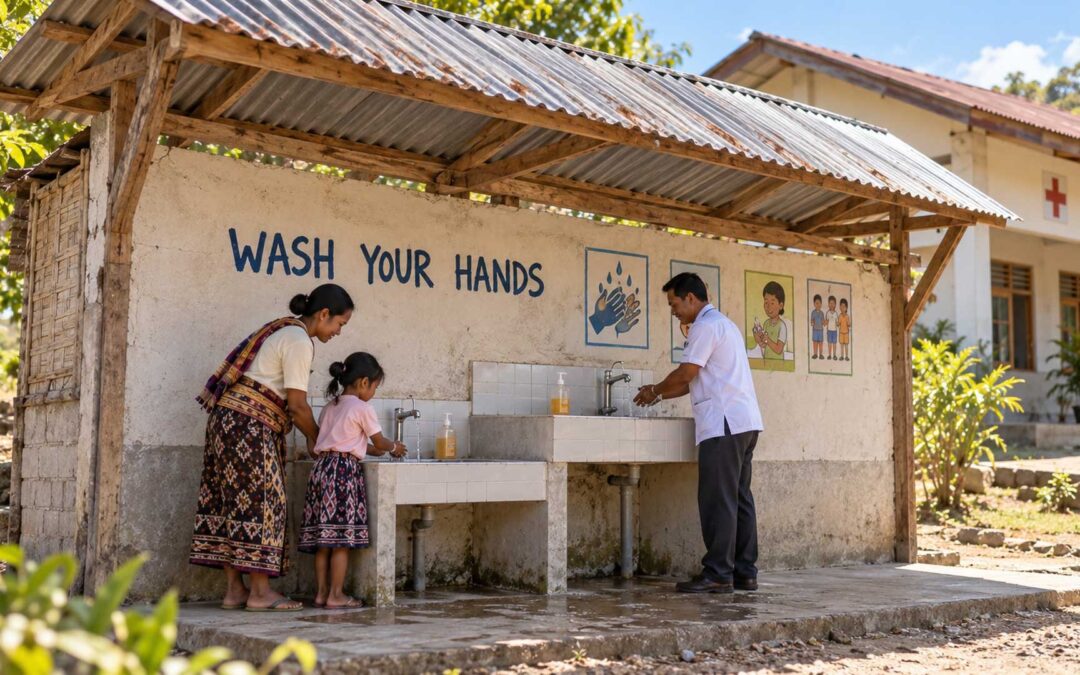
Handwashing at Rumah Kambera Starts with Careful Planning
Rotary Australia, the Rotary Club of Mandurah Districts and John Kevan support planned handwashing facilities at the new Rumah Kambera. Accessible basins and hygiene education will serve children and adults. Installation is planned for 2027, with locations, plumbing and costs still to define.
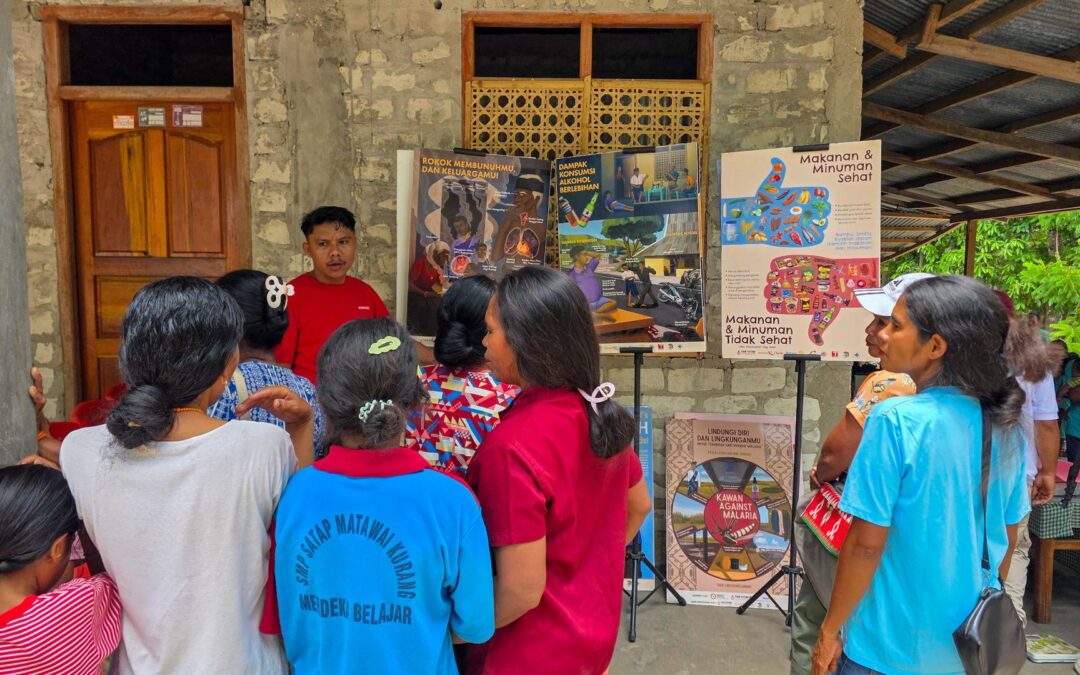
Where a Poster Becomes a Conversation
In Bidi Hunga, Erwin gathers residents around our original health posters. Tobacco, alcohol, food and malaria become subjects for questions and role-play. These workshops make prevention part of community care, with practical explanations that respect daily realities and complement treatment.
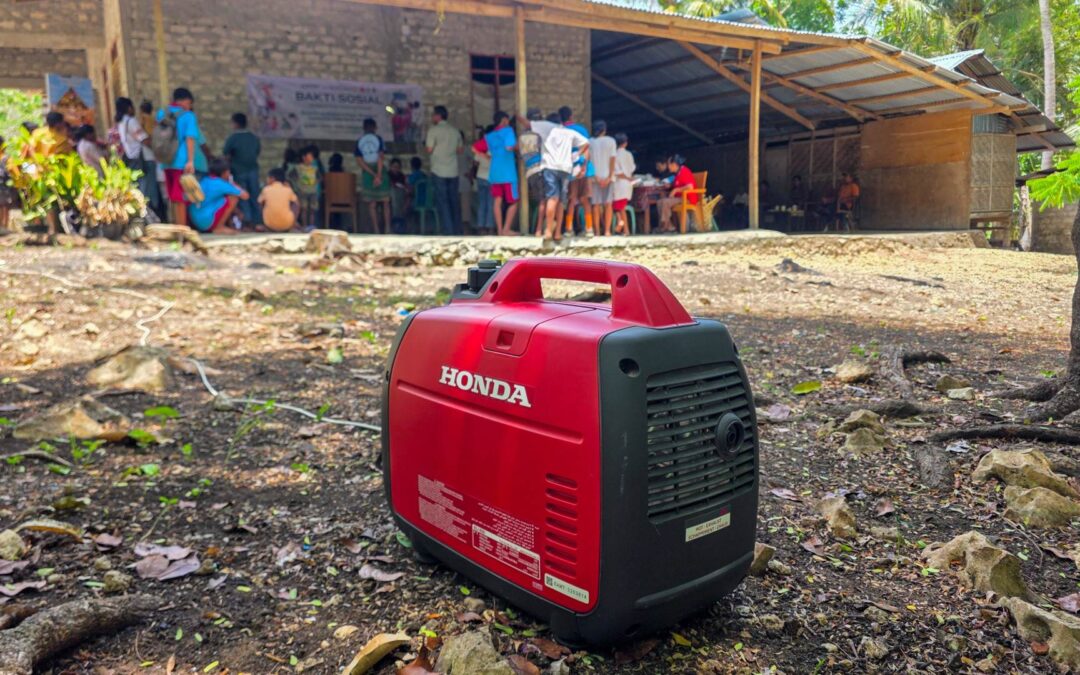
A Honda EU22i Generator Helps Bring Care Beyond the Power Grid
A Honda EU22i generator donated by Rotary friends in Mandurah, Australia, with John Kevan’s help brings power to community-care days in East Sumba. It supports medical equipment, microscopy when needed, device charging and education. Thank you for helping our teams care where electricity is scarce.
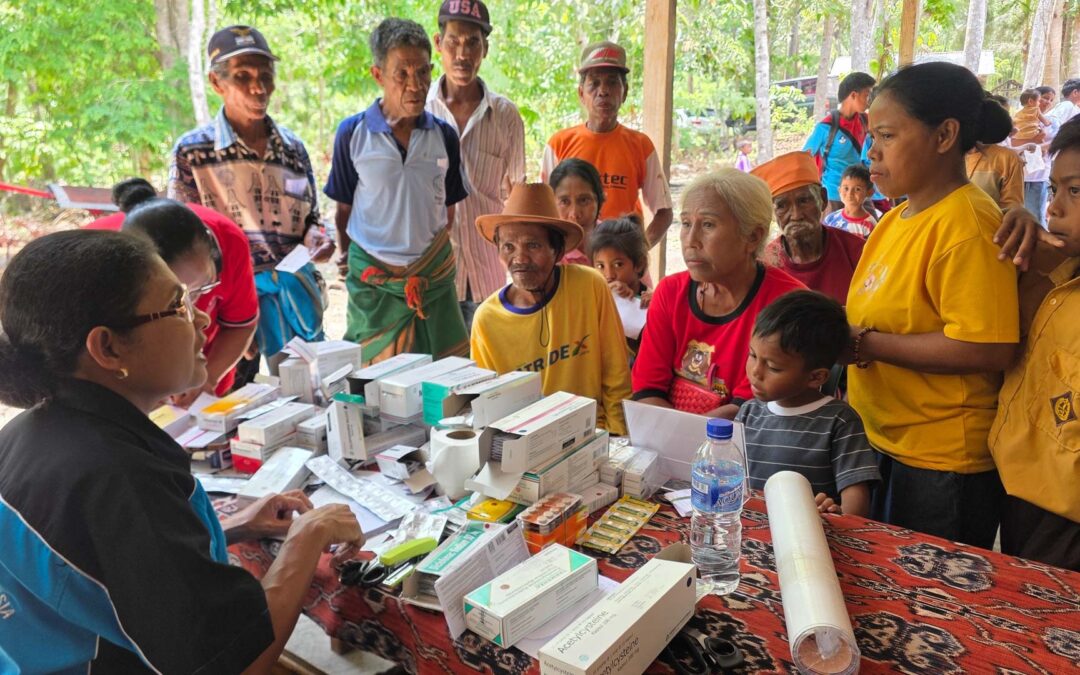
Community Care in Bidi Hunga: What Patients Can Take Home Beyond Medicines
On 24 October, our team saw around 100 patients in Bidi Hunga, three hours from Rumah Kambera. Sixteen health cards in Bahasa Indonesia helped connect clinical assessment and appropriate medicines with practical actions at home, warning signs and the need for continuing professional care.
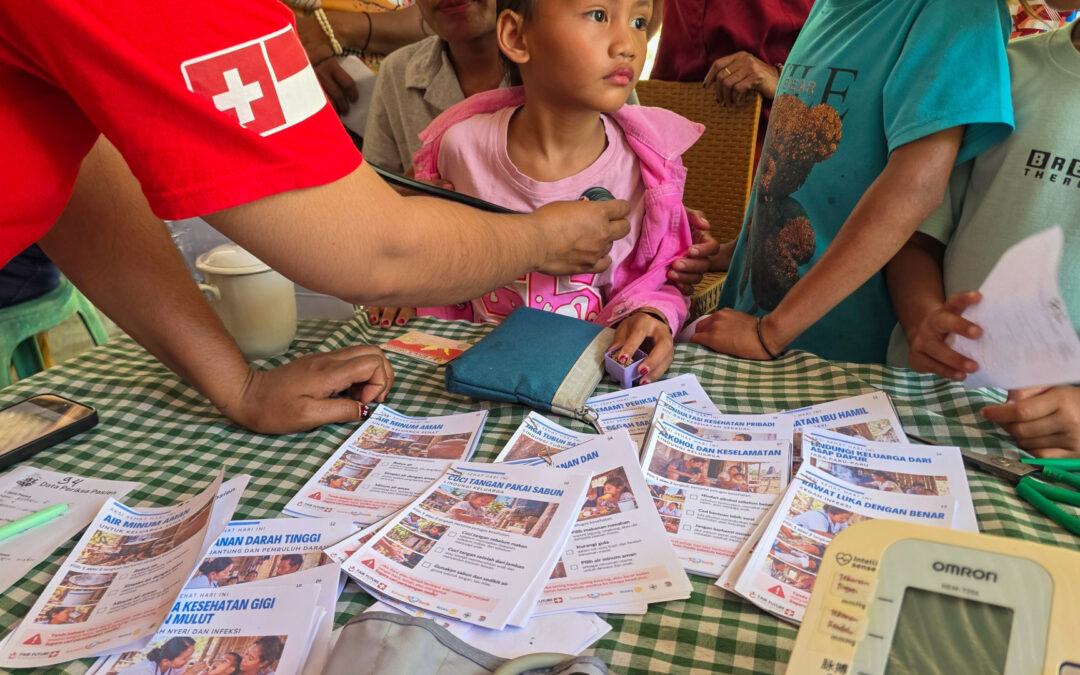
A Stethoscope, Sixteen Cards and Care to Take Home
In Bidi Hunga, a doctor examines a child beside our new health cards. Around one hundred patients attended the 24 October care day. The cards help families choose practical steps for daily health, extending the consultation without replacing medicines or further care when they are needed.
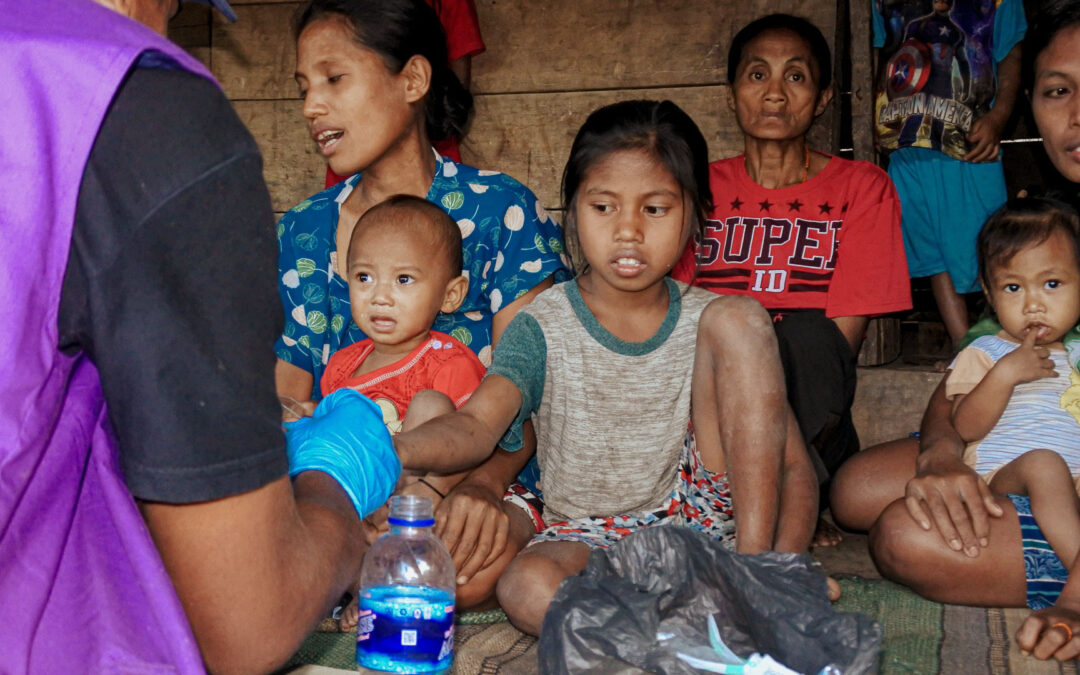
The Faces Behind a Malaria Test
A girl watches the hands supporting her own during a rapid malaria test. Women and young children sit close behind. In East Sumba, our work connects this careful clinical gesture with clear advice, timely treatment and the practical challenge of reaching the next important stage of care.
2025 · EAST SUMBA & EASTERN INDONESIA
What the work delivered in 2025
These figures come from field records, programme monitoring and our annual reporting — not from projections.
Primary care
13,000+
Consultations and treatments delivered in remote communities during 2025.
Explore this work →
Clean water
350,000 L
Clean water storage secured across multiple sites during 2025.
Explore this work →
Health & prevention
≈400,000
People reached through malaria, hygiene and disease-prevention campaigns.
Explore this work →
Solar light
3,000–4,000
Children with access to solar lighting for study and safer daily life.
Explore this work →
Where your donation goes
According to our latest audited annual accounts, 98.3% of funds were allocated directly to field action. This percentage is recalculated from actual audited expenditure and may therefore change from one financial year to another.
98.3%
LATEST AUDITED FIELD ALLOCATION
Direct expenditure allocated to Fair Future’s field programs according to the latest audited annual accounts.
AUDITED
INDEPENDENT ANNUAL ACCOUNTS
The figure comes from audited expenditure, not from a fixed internal formula or a marketing estimate.
ANNUAL
RECALCULATED EACH FINANCIAL YEAR
The allocation can change as programs, emergencies and operating needs evolve from one financial year to the next.
Stories from the Field
Documentary films from East Sumba, made inside the work itself. Healthcare, clean water, energy, education and daily life, filmed with the people and communities we work beside.
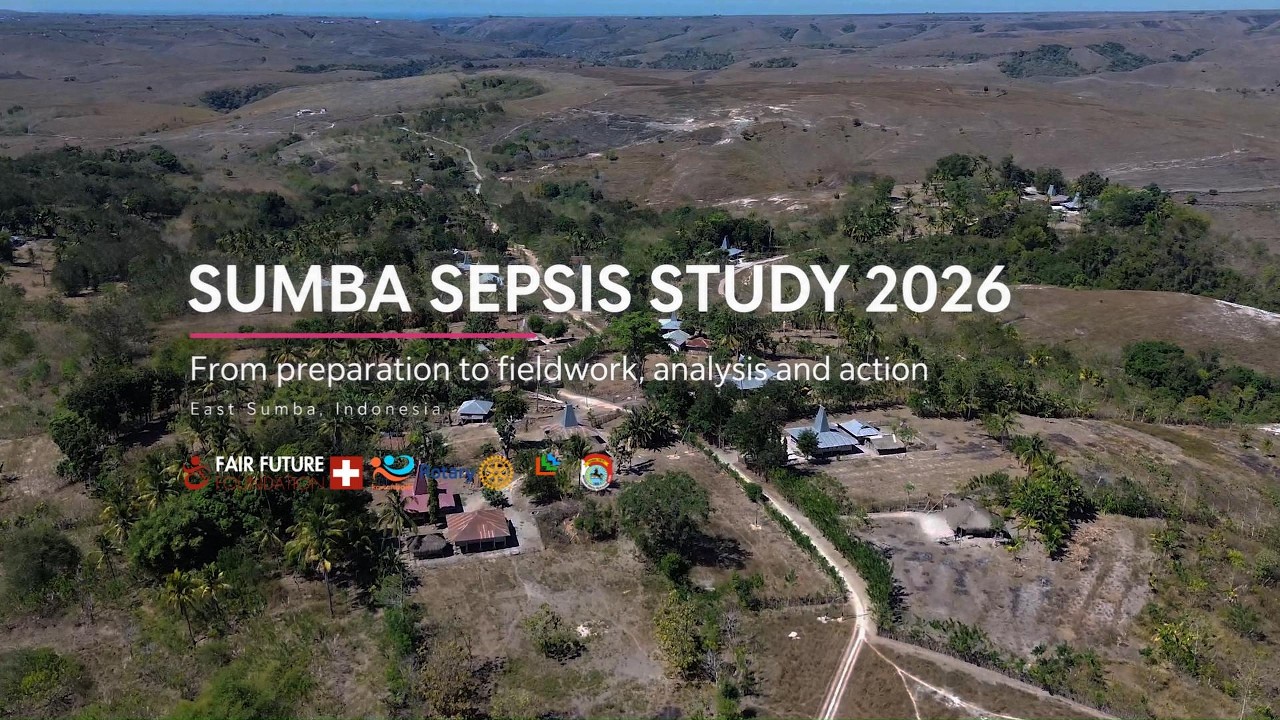
Sumba Sepsis Study 2026
In East Sumba, severe infection can become a race against distance, delayed recognition and limited access to care. This field film follows the people behind our 1,001-household study and why early action matters.
Watch the film on YouTube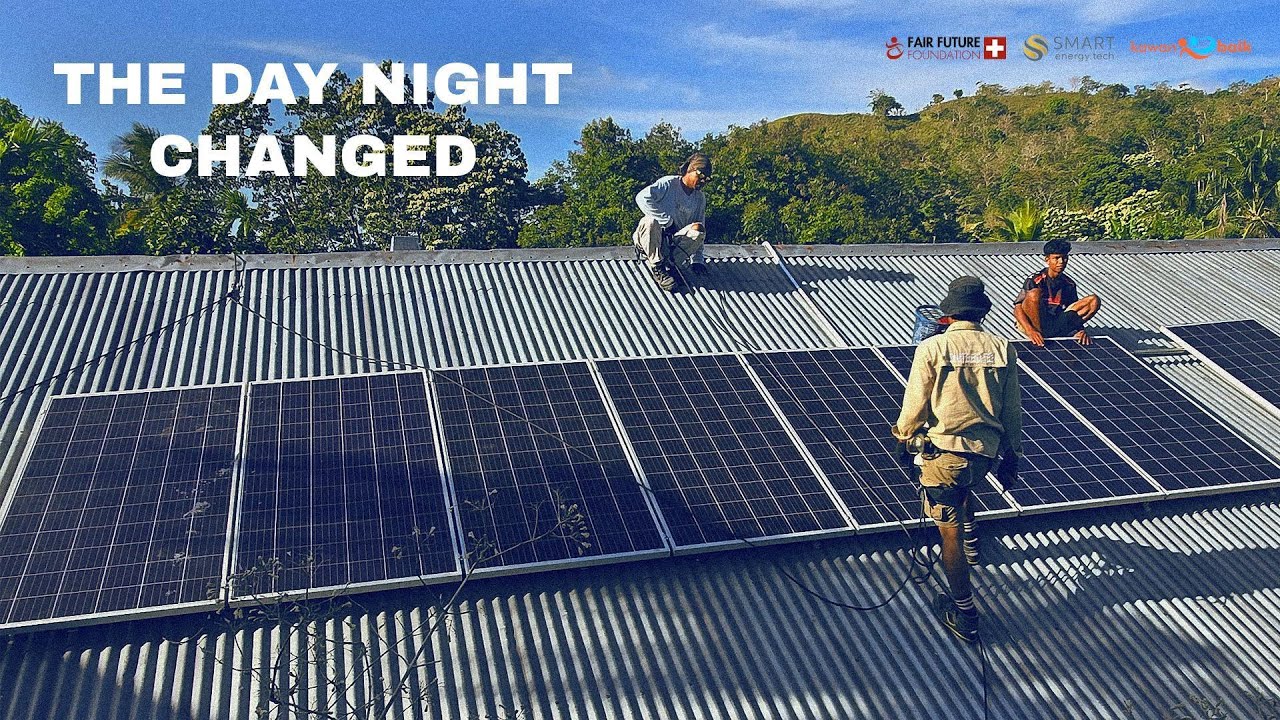
The Day Night Changed
At Mbajik School in East Sumba, electricity arrived for the first time after five days of work with Smart Energy Tech and the village. The film follows the people, the build and Haray’s first cinema night.
Watch the film on YouTube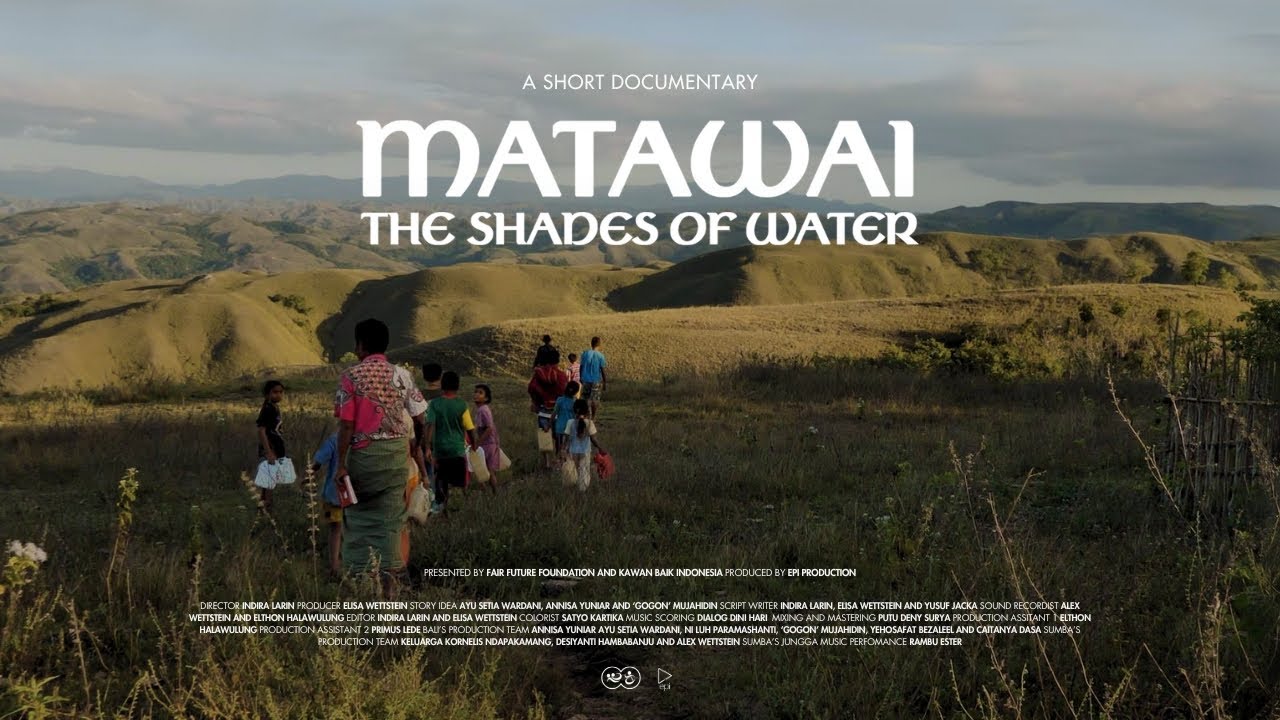
Matawai, The Shades of Water
In East Sumba, water scarcity shapes health, work and childhood every day. This 15-minute documentary follows the people behind Matawai and the practical impact of the Water Connections programme.
Watch the film on YouTubeThe field, in pictures.
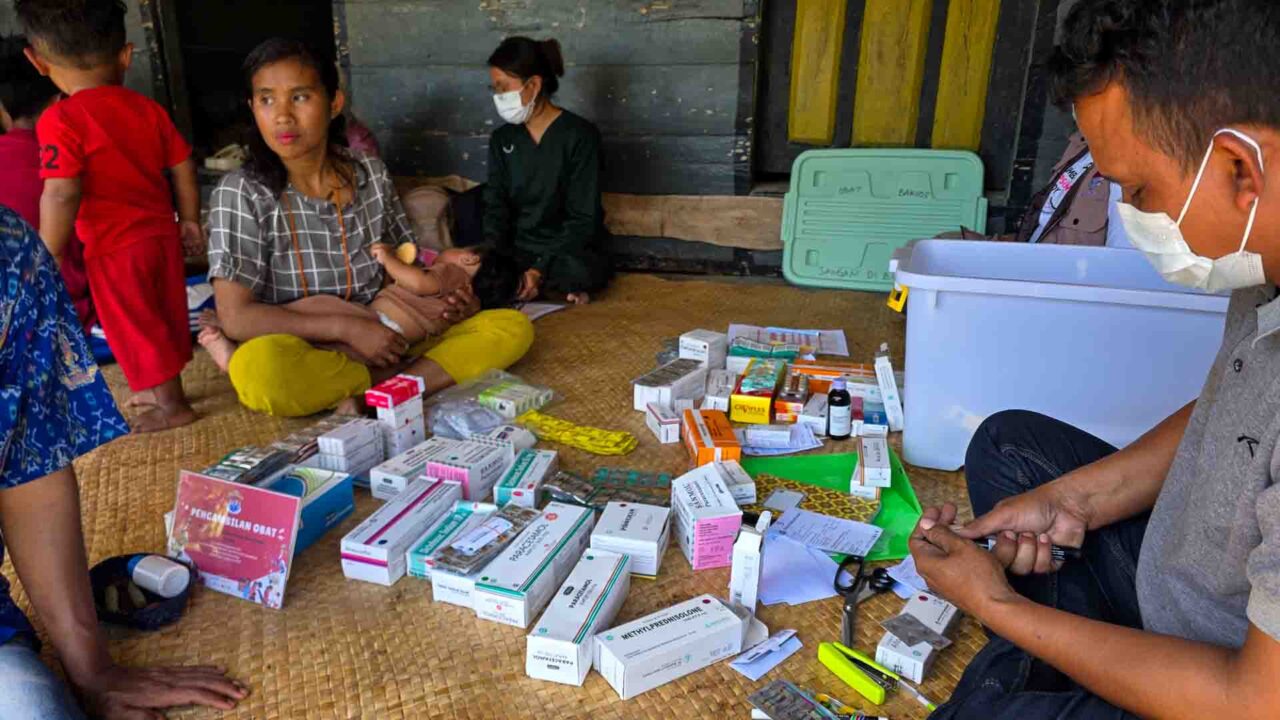
Medical care, water, construction and daily life, photographed by our teams in East Sumba. These are direct visual records of the places, people and work behind our programmes.

LIVE FROM EAST SUMBA
From the field, as it happens
Daily moments from our medical, water, education and community work in East Sumba. Patients treated, teams on the road, systems being built, people learning, working and solving problems together. Nothing staged. Just the work as it happens.
