

Water On The Way…

Dozens of ultra-rural villages visited each month

From the field:help us deliver care
Select Page
Logo of the Swiss Fair Future Foundation

Donate

Support Care

Programs

All projects

Quick News

Field updates

Stories

Field stories

Transforming Lives in Laindatang village with the Water Connections Project

Water and sanitation are crucial in the fight against malaria

Water and sanitation are crucial in the fight against malaria

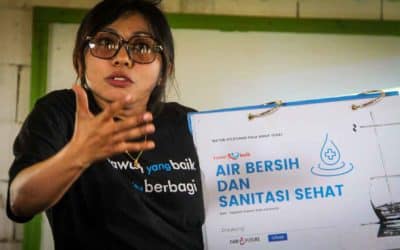
Check out the latest addition to our "Photo of the Day" collection featuring our colleague Kawean Essi. In the village of Mbinudita (East Sumba), Kawan Essi teaches a hundred villagers of all ages, including children, about the importance of clean and safe water and how it can lead to a healthier life. The "Water Connections" program is a practical approach to fight against various infectious diseases, such as malaria.

In the fight against malaria, it's essential to acknowledge the progress made. However, we must also recognize the crucial role of hygiene, clean water, and sanitation in eliminating this disease. This is why the Water Connections program exists – to provide access to these necessities. 

At Fair Future, we understand that improving these fundamental aspects of daily life can significantly prevent malaria transmission and ultimately save lives. Addressing issues such as hygiene, water, and sanitation is crucial in the fight against malaria because they directly impact mosquito breeding, access to clean water, hygiene practices, and vector management.

We prioritize these issues in all our activities, particularly in implementing the "Malaria Prevention Initiative Sumba Timur 2023" program, which we aim to start as soon as possible as part of the PMC, Primary Medical Care program.

Together, we can dramatically reduce malaria transmission and improve the health and well-being of affected communities. We must prioritize these efforts to save lives, prevent unnecessary suffering, and move towards a significant decrease in malaria cases, especially here in Sumba, where we currently are.
read more
Kullup is a hole in the rock to collect rainwater

Kullup is a hole in the rock to collect rainwater

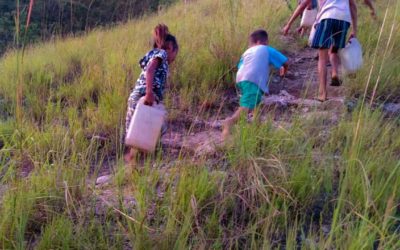
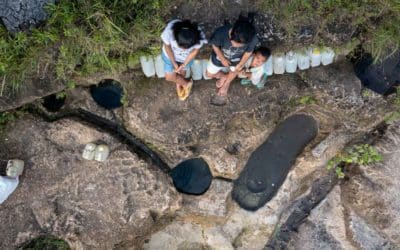
This new "Picture of the Day" shows you kids from the village of Laidatang, who fetch water far from home in the "Kullup" of the village. Elthon, responsible for documentation (with the black t-shirt), and Alex, from the medical staff, are also present in this photo. With the kids and one or two adults accompanying us, we walk more than an hour to reach this place in the middle of a high hill. You must descend a steep path to access these hand-dug holes in the rock. In 30 minutes, we will have to go up the hill and walk back. But this time, loaded with several jerrycans filled to the brim.

The Fair Future and Kawan Baik teams spend two days with the families of the ultra-rural and isolated village of Laindatang to get to know them even better. In this village, we have the project to create a #WaterConnections project. I let you read here the articles related to this project and here to see what your want to do to save their lives,

In Laindatang, families only have access to rainwater. It's for everything: eating, drinking, cooking, bathing, washing clothes, drinking water, caring for children, sick people or watering animals. Therefore, one of the ways for women and young girls to have water at home to live on is to walk several kilometres to find the "Kullup".

Kullup, what is it? These are small stone basins, directly dug into the rock by the villagers, used to collect and store rainwater in rural areas. When it rains, the water seeps into the ground at the top of the hill and then is filtered through the earth and the basements. It flows drop by drop in these stone basins, the "Kullup". Then the villagers come to fill their jerrycans with five or ten litres.

The "Kuluk" are an essential water source for the local communities. But the quality of stored water can be affected by bacterial contamination, chemicals, animal waste or debris. Therefore, regularly cleaning these small holes in the rock is essential to maintain water quality. It is important to note that the "kuluk" is only a temporary solution to the water crisis in areas with limited access to drinking water. Indeed, the "kuluks" cannot fill up correctly without rain. They dry out about ten days after the last rains and remain dry for almost nine months. To find water, young girls, women and children, sometimes under five, will have to walk even further and longer.

Our two organizations work with local communities to implement longer-term solutions, such as constructing water supply networks using deep boreholes and sealed and healthy rainwater cisterns. The Water Connections program offers innovative and sustainable solutions. It includes promoting water conservation practices with “Kawan Sehat” and self-sustaining access to Primary Medical Care through the PMC program.

read more
Access to clean water is vital for human health

Access to clean water is vital for human health

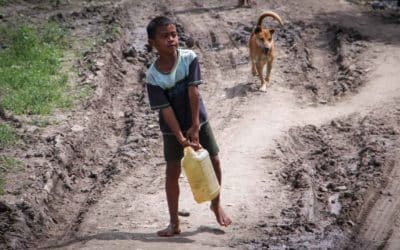
This "Picture of the Day" shows young children's struggles in East Sumba. The jerry cans are heavy and sometimes more prominent than the children themselves. With limited access to drinking water sources, the kids who live there (here in these images in the villages of Kabanda, Mahu, Laindatang, and Tana Mbanas) are forced to walk long distances to fetch water. Water in rivers or wells which are also contaminated. It takes up a lot of their time and puts them at risk of injury or illness by carrying heavy loads of water. Lack of access to clean water also contributes to poor hygiene and sanitation practices, further compounding the health problems of those East Sumba communities where Kawan Baik and Fair Future work so hard. Together, we are taking action to improve access to clean water sources, in these areas where no roads lead, to ensure the health and well-being of young children and their families. In addition to the physical hardship of fetching water, and as explained in this post, children in rural areas of East Sumba are often deprived of education and other opportunities because of this task. It is widespread (like in this picture of the day) that they miss school or other activities to help collect water, which affects their academic progress and social development.

Here people mainly only have access to contaminated water. This leads to many diseases, including gastrointestinal infections, skin diseases, parasitic diseases and other infectious diseases such as Malaria, Dengue Fever, Cholera, typhoid fever, hepatitis A or diarrhoea. Children and the elderly are particularly vulnerable to illnesses caused by contaminated water, a significant cause of infant mortality here.

In conclusion, ensuring access to clean water through a program like the #waterconnections project is our top priority that cannot be overlooked. Access to clean water is essential to sustaining life and maintaining good health for everyone here. Water plays a vital role in preventing the spread of the diseases mentioned above, ensuring people can lead healthier lives. Whether for drinking, cooking or cleaning, clean water is essential for everyday life. Without access, communities in the ultra-rural areas of East Sumba suffer from a lack of sanitation and hygiene, leading to various health problems.

Therefore, we must do everything we can to ensure that clean water is available to everyone who needs it.

read more
Giving life to the village of Laindatang

Giving life to the village of Laindatang

The current priority in this village is to give them clean, safe water and sanitation. Here, families must walk for miles, sometimes more than 10 hours, to bring a few litres of clean water home. People here have less than 2 litres per day and a person to drink, eat, go to the toilets, and wash. So you have to make sacrifices. Malaria is taking its toll here, just like infectious diseases that considerably weaken families' health, especially those of children under five. This is a critical situation for us on a health level. Still, on a social level, Fair Future and Kawan Baik, in collaboration with the local authorities, wish to start a simple Water Connections project in this village as soon as possible.

read more
What does a kitchen look like without food or water

What does a kitchen look like without food or water

This new "Picture of the Day" shows you what the kitchen of an East Sumba family is like. A kitchen like there are tens of thousands here. One of the elements we always see is the presence of five-litre jerry cans. They are the ones that serve as a container for the water that the girls and women have to fetch from afar. We also notice the absence of food, including no rice, only corn. Rice is expensive, and nobody can buy it here in Laindatang, East Sumba: No electricity, running water, and sink.

Just a hearth that will be used once a day only to prepare corn porridge mixed with vegetables and roots that the women have been looking for in the forest. Salt and red peppers. That will be all for the day and the whole family, including dogs and cats.

Families here live without clean or potable water, yet access to potable water is crucial for survival and maintaining good health. Without clean water, families in the areas where Fair Future and Kawan Baik work are forced to drink contaminated water, which leads to waterborne diseases such as cholera, typhoid fever and dysentery.

This has an immense impact on daily life and livelihoods. Women and children must walk long distances to fetch water, which takes up much time and interferes with other activities such as work or education.

read more
Kids here have to fetch water from the age of five!

Kids here have to fetch water from the age of five!

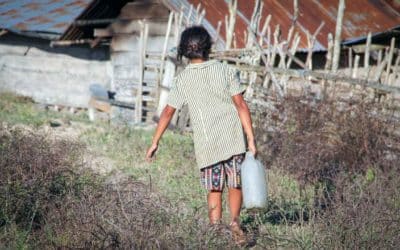
This "Picture of the Day" shows you a five-year-old girl who, twice a day, descends the hill, steep and stony, without shoes to fetch water. She runs to go to the source, 500m away. Sometimes she falls, hurts herself, and comes back up with difficulty carrying a 5-litre jerrycan of not-so-clean water, which she and her friends have been looking for at the source.

In this village, like in many others here, people can only wash once a month, are all sick and don't have enough to eat and drink. Without access to this clean water, families – especially children – suffer from severe malnutrition, chronic respiratory and joint diseases and other illnesses linked to the consumption of dirty water and the absence of sanitation facilities. The fight against malaria, dengue fever and infectious diarrhoea also requires access to clean water and healthy water tanks. And to water that does not stagnate but circulates between the installations.

As we have already said, East Sumba is the poorest province in Southeast Asia, the region with the highest child malnutrition and associated mortality. Fait Future, therefore, wishes to act for these hundreds of people and give them access to clean and healthy water for their health.

read more
East Sumba, a village without clean water!

East Sumba, a village without clean water!

This "Picture of the Day" shows you a thrilled woman because when we last visited the "Water Connections – Laindatang" Project site, we brought – thanks to the Truck of Life – several jerry cans filled with drinking water, or about one hundred litres. So everyone is scrambling to get a little. We shared this water with the villagers.

The Water Connections project, Laindatang Site, is one for which we also seek help. Laindatang is a village without drinking water. People only wash once a month, are sick and don't have enough to eat and drink. All children are underweight, and so are adults. We must act for these hundreds of people and give them access to drinking water. The project consists of drilling a deep borehole, building healthy sanitary facilities and two clean water storage tanks, of the ferro-cement type, with a capacity of 6,500 litres each.

Here Malaria, Dengue fever and infectious diarrhoea linked to the problems of contaminated water are wreaking havoc. After carrying out the feasibility studies, we are now ready to implement this project this month. Indeed, we are on the site now and would like to start this necessary project for the hundreds of people suffering from a lack of water in the region.

read more
Water Connections project in Laindatang

Water Connections project in Laindatang

The Water Connections project, Laindatang Site, is our current top priority. Laindatang is a village without water. Everyone is sick and does not have enough to eat and drink. Children are underweight, and so are adults. We must act for these hundreds of people and give them access to clean water. Here, malaria, dengue fever and infectious diarrhoea linked to contaminated water problems are taking their toll. After completing the feasibility studies, we are ready to implement this project this month. Indeed, we are there now and wish to start this necessary project for the hundreds of people suffering from the lack of water in the region.

read more
Deep drilling project in Laindatang

Deep drilling project in Laindatang

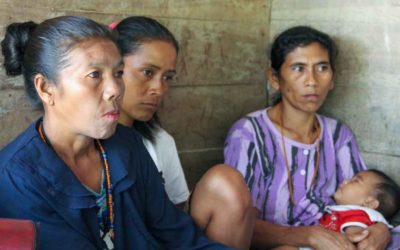
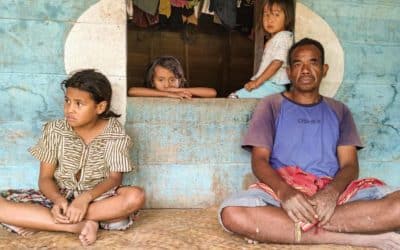
This "picture of the day" shows you a family from the village of Mabtakapidu/Laindatang, which like all the others, lives in the greatest destitution and extreme poverty. Malnutrition and infant mortality are high here.

Yes, this is one of the situations we want to act on as quickly as possible here. Fair Future and Kawan Baik are trying to help this community by offering them the possibility of having clean water in quantity in the village. We have the project to drill on-site at nearly 80m deep and build two or three reservoirs. We have found a water source close to the houses; only the funding is missing for the drilling. We have already received the submersible pump and solar panels for the site, and this is thanks to a private company in Europe.

The families of the village of Laindatang have a tough life, which is a euphemism. They do not eat every day, never meat, rarely vegetables. Rice is expensive, so they mix it with corn when they still have it and pests haven't destroyed it. To wash in the sense of "taking a shower" is maybe once a month for everyone. Her life is organized with less than two litres of water per person per day

To get poor-quality water here, the nearest well is a ten-hour walk there and back. You have to leave in the evening to return in the morning with only a few 5-10 litre jerrycans.

Read more here Kawan's.

read more
Water Connections from the sky – 04 October 2022

Water Connections from the sky – 04 October 2022

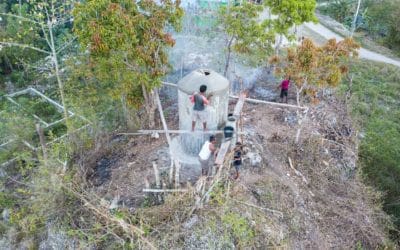
The health burden of poor-quality water is enormous, and providing clean water to such a large population is a considerable challenge. Indonesia, particularly the east of this immense country, is characterized by a non-uniformity in the level of awareness and socio-economic development. Therefore, our two foundations do what they can. These few images are taken from the sky and show you what this major project consists of, Water Connections: Drinking water and sanitation for 2,500 people.

read more
We carried out our first deep drilling with our own machine

We carried out our first deep drilling with our own machine

Until last week, the 264 students of this school in East Sumba had no water in their school. As you can imagine, this posed unexpected sanitary problems for all the children, the teachers and the houses in the surrounding area. Fair Future has therefore decided to drill a deep well at the back of the school, and we have, thanks to our detection tools, found clean and clear water at a depth of almost 40 meters. A massive change for this community and the people who live nearby. Indeed, they will also be able to come and get water from this new deep well.

read more