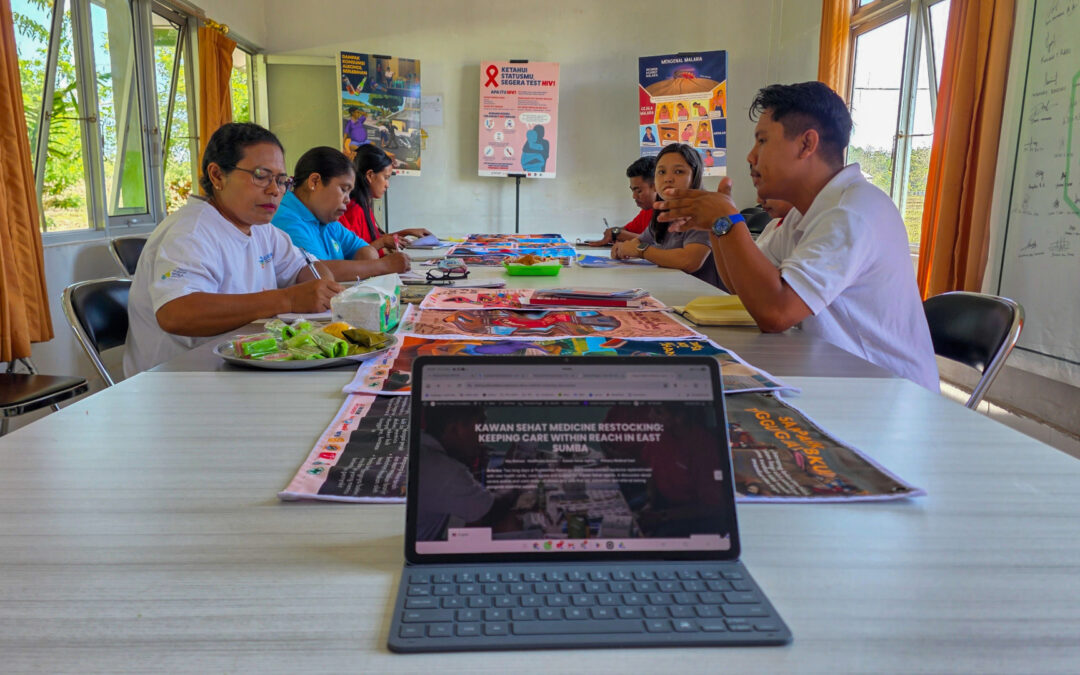
At Puskesmas Lewa, our team joined staff and two new Kawan Sehat agents for nearly three hours of questions and exchange. Fabric posters and foundation books supported a practical discussion about care in distant villages, limited resources and the people keeping that care connected.
Stories & Communication

The Stories & Communication category translates field medicine into clear, truthful narratives.
It shares case realities, community voices, and operational context behind our programs, without sensationalism. Articles explain why prevention, logistics, and long-term follow-up matter, using simple language grounded in clinical facts. This section supports health education, transparency, and trust, aligning communication with WHO principles on risk communication and community engagement. Every story is built from observed events, verified data, and respect for patients and families, including what worked and what failed.
Latest field updates
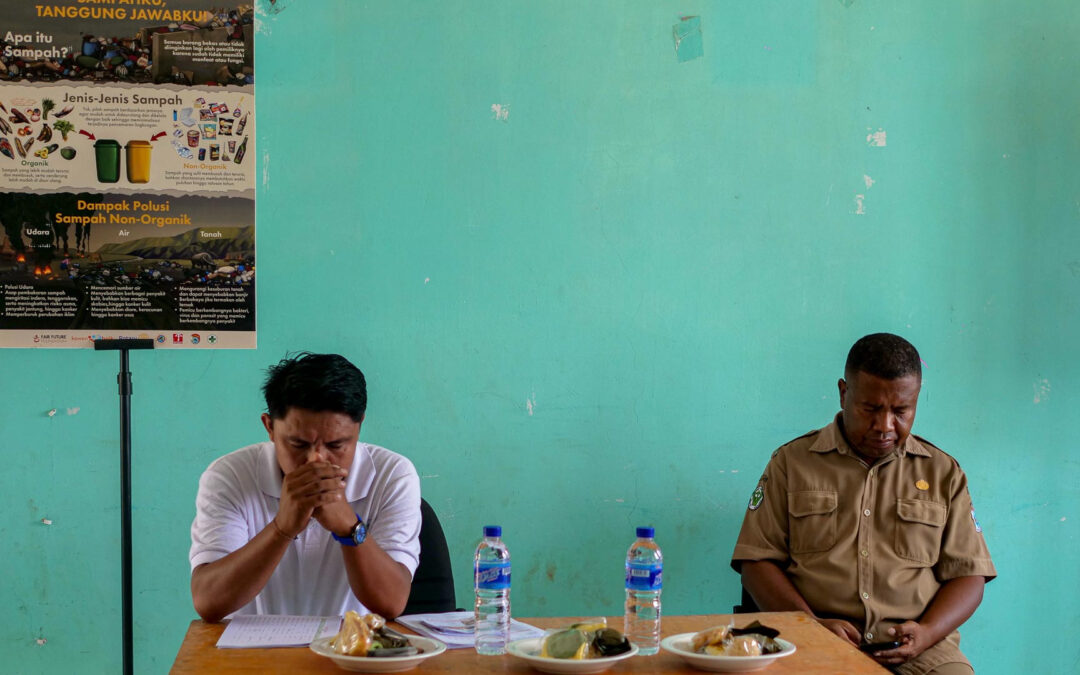
East Sumba Waste Crisis and a Prayer for Public Action
Two bowed heads beside a waste-sorting poster bring the East Sumba waste crisis into focus. Fair Future billboards and Kawan Sehat agents explain prevention in towns and villages. Alex asks why communities must keep waiting for public services to meet their responsibility to protect health.
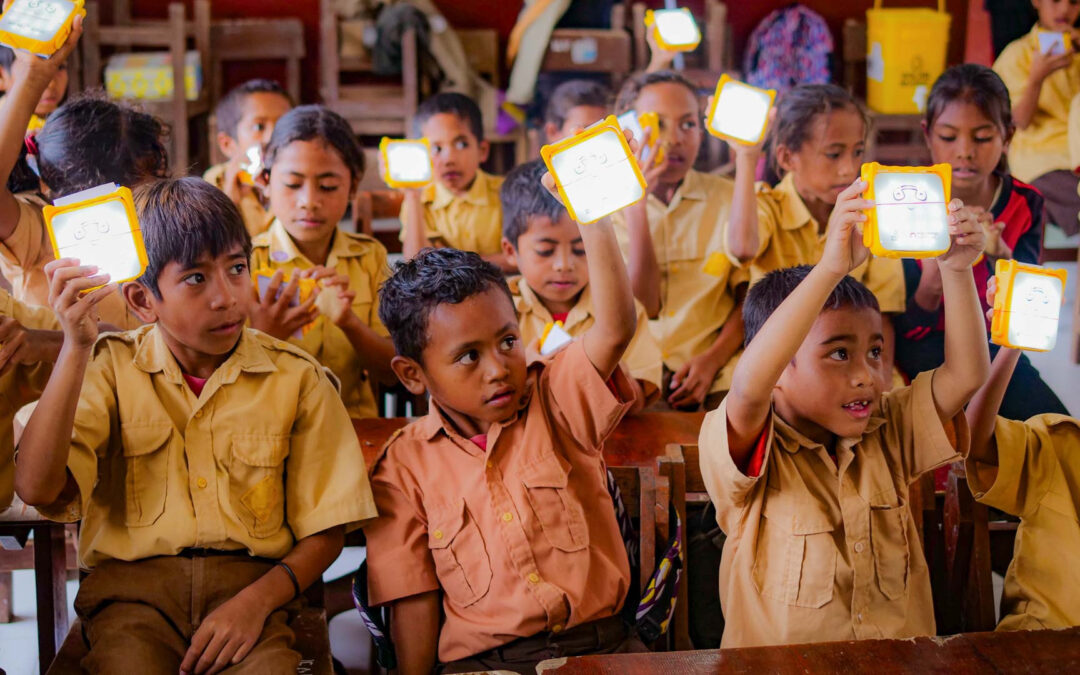
The Light They Can Take Home, and the Children Still Waiting
Children in East Sumba lift their SolarBuddy lamps above classroom desks. These gifts can help with homework and movement after dark. We look at what portable light means at home, the schools still without electricity, and the administrative obstacles facing our next import of lamps.
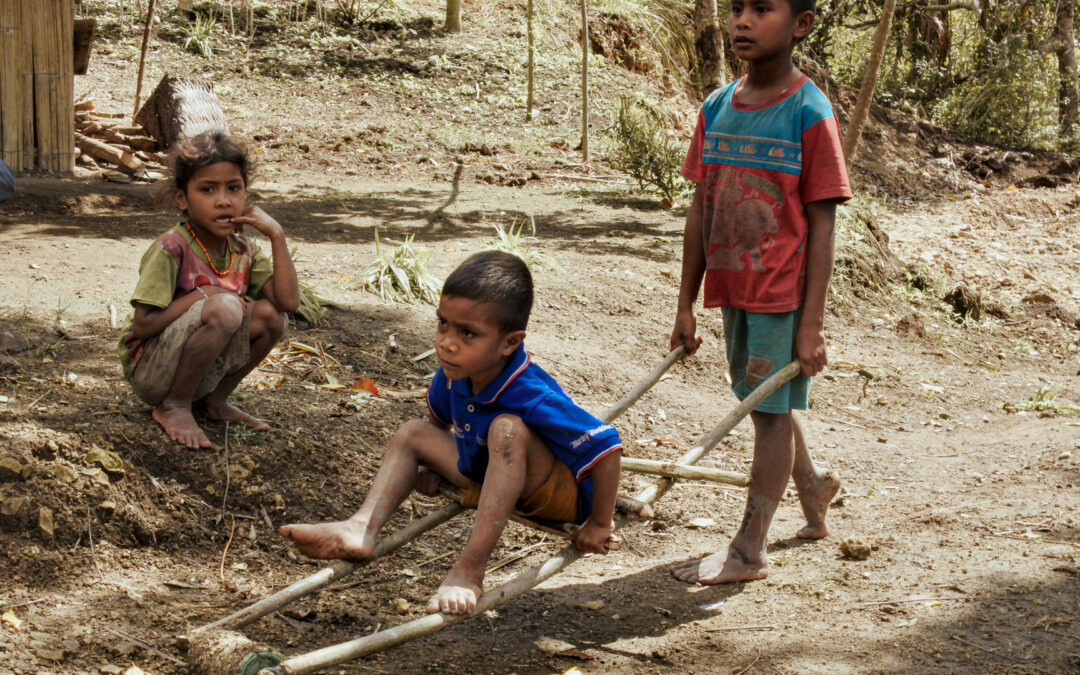
A Place for Joy, Made by Their Own Hands
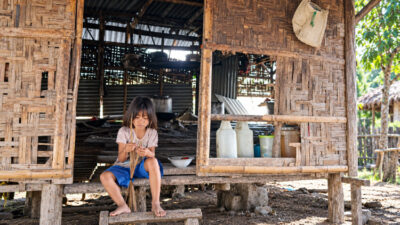
In Haray, three children share a toy made from branches. We photographed them while installing electricity at a school and providing medical care. Their joy belongs in the story, alongside scarce water, fragile health and family means that put bought toys and birthday cakes out of reach.
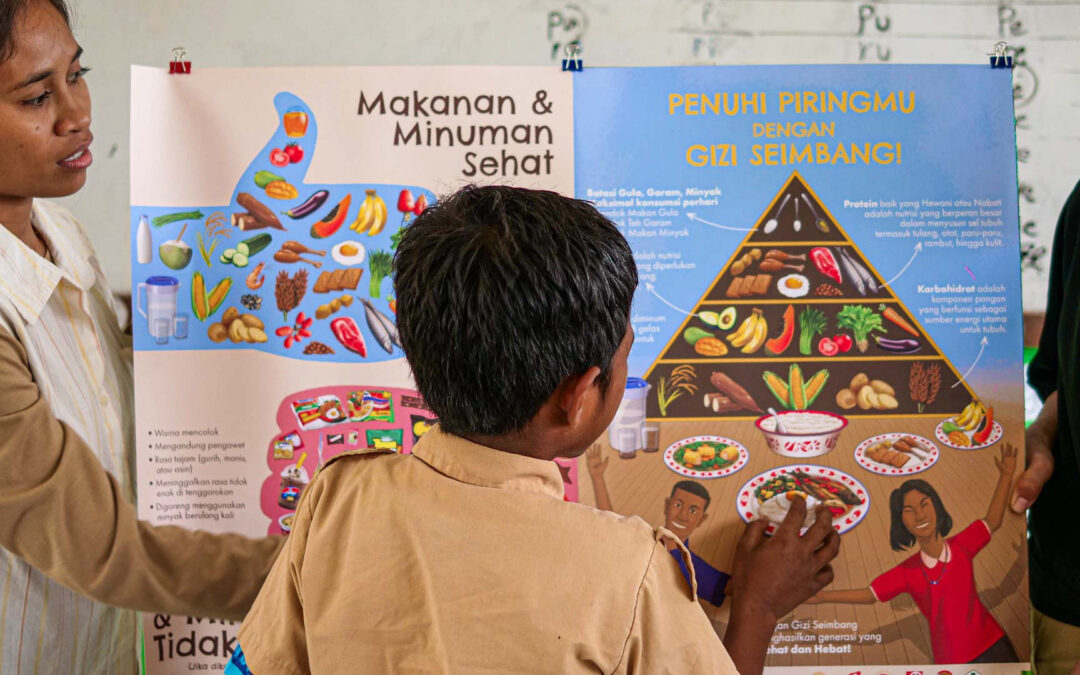
Learning What Belongs on the Plate
At SDN Ndata, a little boy explores an illustrated meal with our volunteers Rambu Maris and Umbu Kenzi. Two posters open a conversation about food, cost and variety, linking classroom learning with local produce, vegetable gardens and the water families need to grow more of their own food.
A Small Blood Sample, a Moment of Care
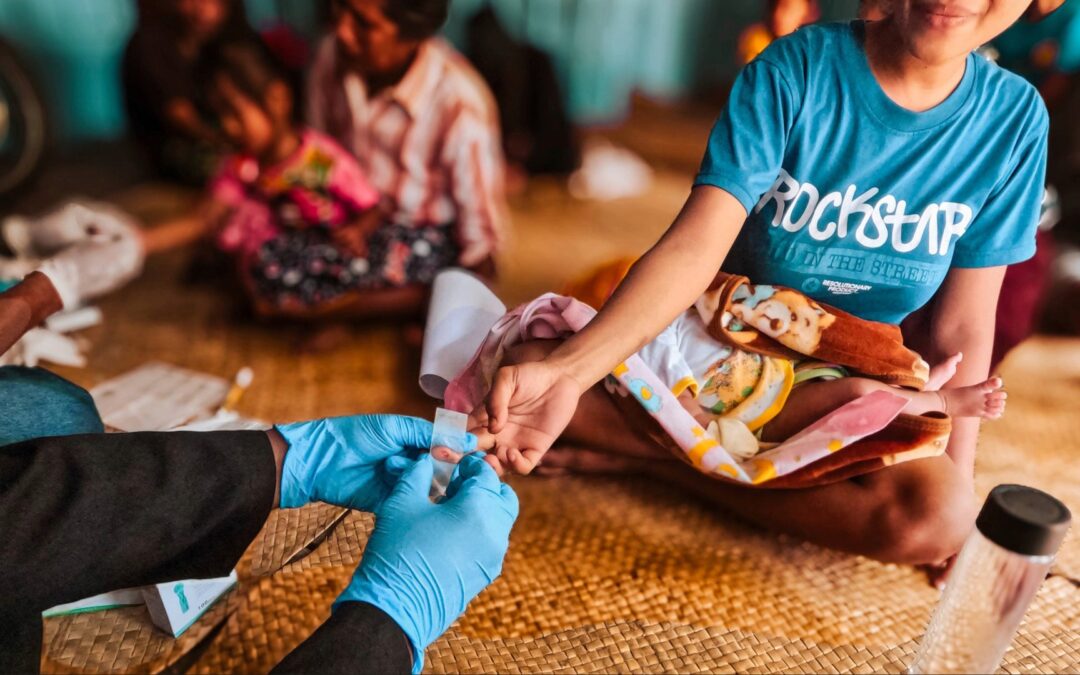
A mother holds her infant as our team takes a blood sample. In eastern Indonesia, malaria screening sits alongside year-round prevention. Before the rains, our Kawan Sehat workers use two illustrated posters to discuss symptoms, mosquito protection and when families need to seek care.
Where a Poster Becomes a Conversation
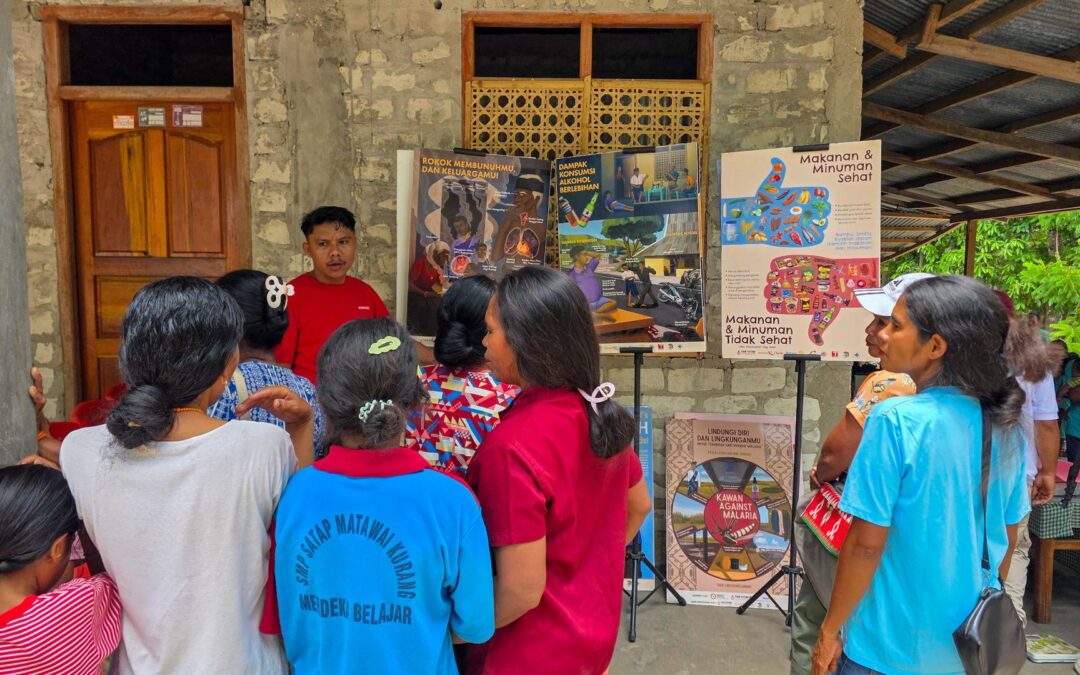
In Bidi Hunga, Erwin gathers residents around our original health posters. Tobacco, alcohol, food and malaria become subjects for questions and role-play. These workshops make prevention part of community care, with practical explanations that respect daily realities and complement treatment.
A Stethoscope, Sixteen Cards and Care to Take Home
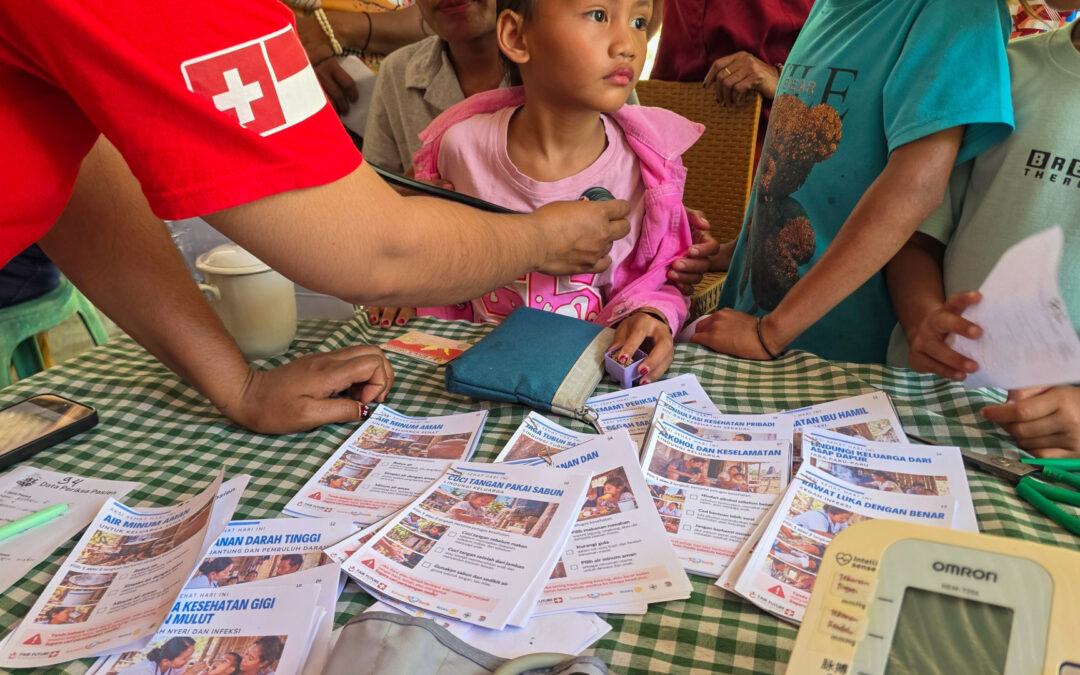
In Bidi Hunga, a doctor examines a child beside our new health cards. Around one hundred patients attended the 24 October care day. The cards help families choose practical steps for daily health, extending the consultation without replacing medicines or further care when they are needed.
The Faces Behind a Malaria Test
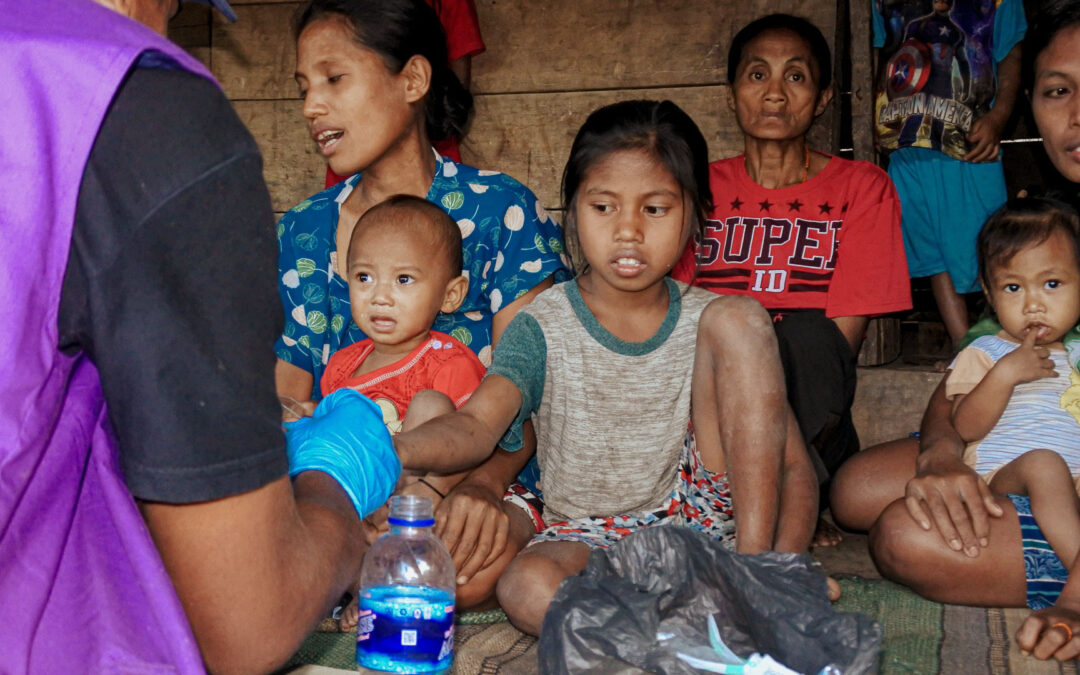
A girl watches the hands supporting her own during a rapid malaria test. Women and young children sit close behind. In East Sumba, our work connects this careful clinical gesture with clear advice, timely treatment and the practical challenge of reaching the next important stage of care.
Where Waingapu Comes to Run, Health Questions Find a Place
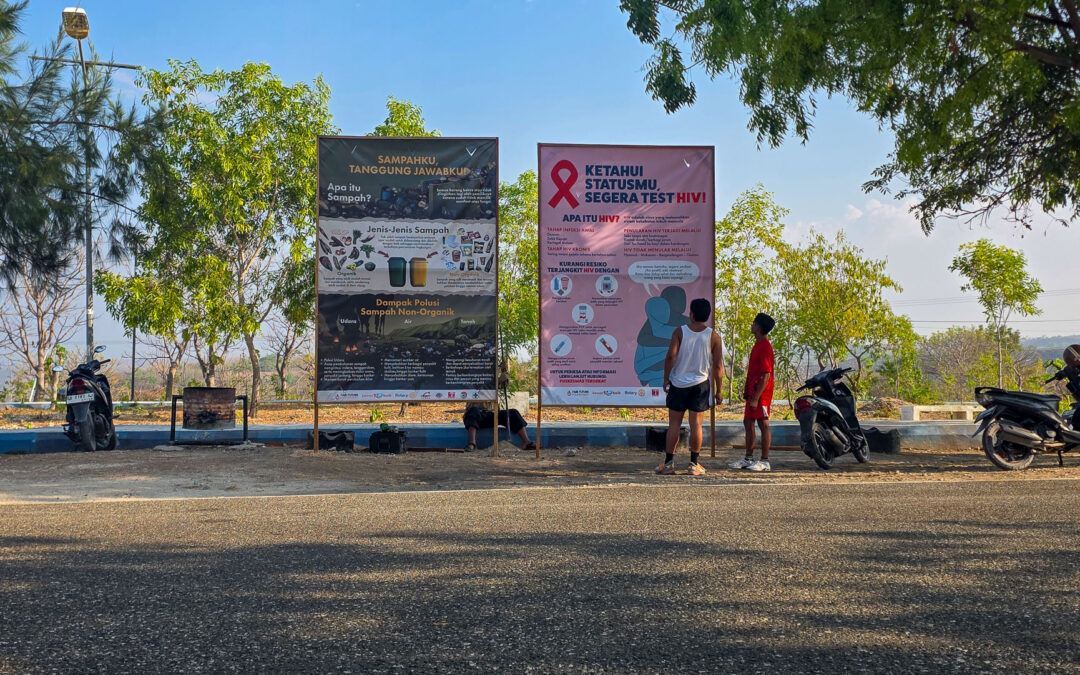
Beside a popular jogging trail in Waingapu, our new HIV and waste billboards meet people during their evening routine. Some young people thanked the team. Alex walked three kilometres here, reflecting on how public health messages can open a conversation without demanding a personal disclosure.
World Food Day in East Sumba, Where a Healthy Meal Needs More Than Food
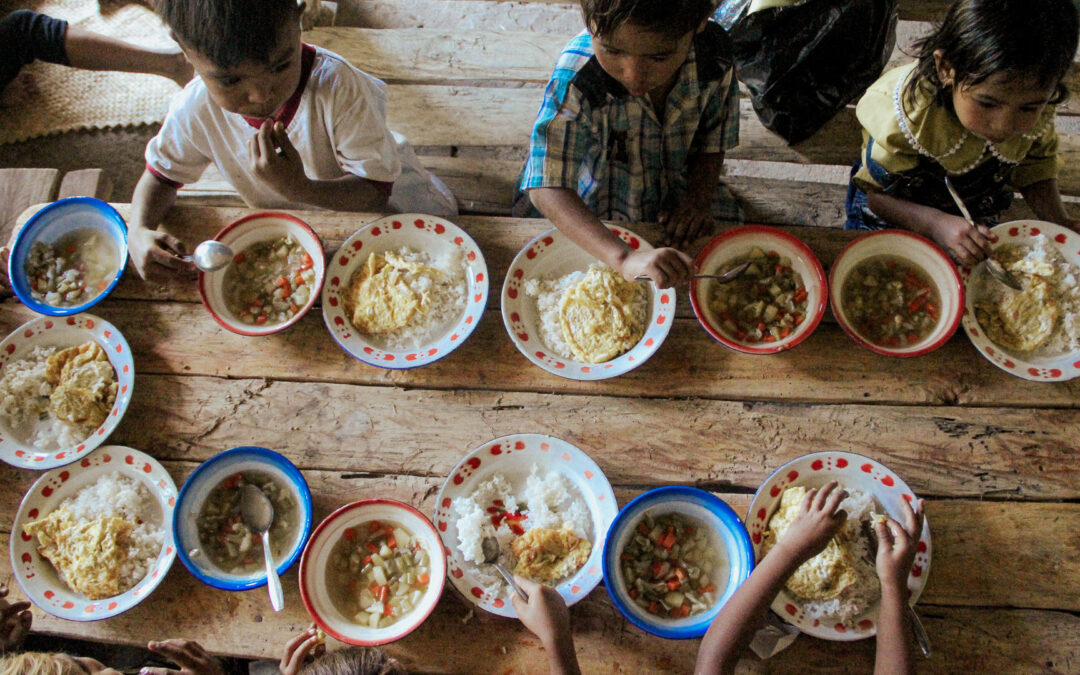
For World Food Day, a shared village meal in East Sumba brings us back to what children need every day. Fair Future connects nutrition education for children and parents with safe water, sanitation and local care, while recognising the pressures of poverty and a changing climate.
Three Children on a Kerbau and the Daily Journey for Water in East Sumba
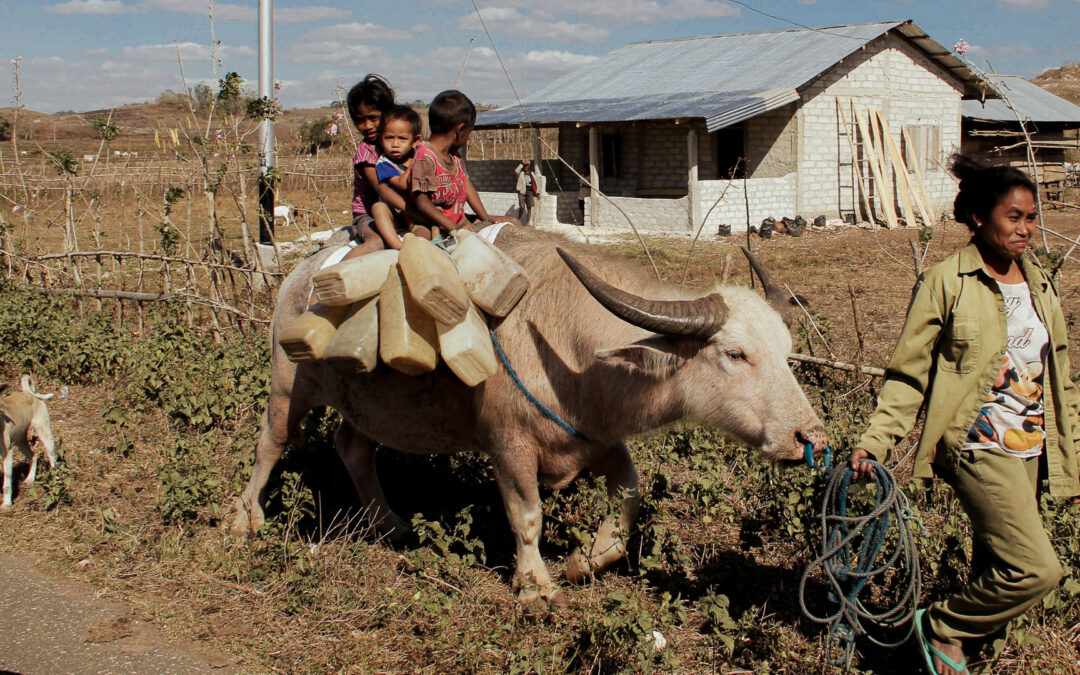
Three children ride a kerbau as their mother leads it to collect water in East Sumba. Alex reflects on the limited quantities some families can obtain, bathing without running water, and the place of reliable water access in health, hygiene, menstrual dignity and everyday childhood.