Discover the remarkable progress in our ongoing construction and repair efforts on the road to Laindatatang village in East Sumba. The Fair Future Foundation has been at the forefront, meticulously coordinating and overseeing this significant project for months.
We have compiled a list of articles and pages for this topic
The Fair Future Foundation in East Indonesia combats social and medical injustice and aims to ensure everyone has access to healthcare, clean water, and education. Join us in making a difference.
The province of Nusa Tenggara Timur, home to some of Indonesia’s most remote and underserved communities.
Beyond Borders, Fighting Malaria Together in Eastern Indonesia
Beyond Borders: Fighting Malaria Together in Eastern Indonesia. This new "Picture of the Day" shows three kids between 8 and 12 years old. Children are among the most vulnerable malaria victims in Indonesia, especially in the east of the country and of course here, where we work with Fair Future, Kawan Baik foundations and all our partners and friends.
The health and well-being of children in eastern Indonesia are threatened by malaria, which hinders their growth, development, and quality of life. Our organizations have a deep understanding of the urgency to address this issue, and we are working hard on our disease control program, which is of utmost importance. We have a strong track record of working in these regions where the epidemic affects about 80% of children. Collaborative efforts are underway to combat malaria and prioritize the welfare of children in these areas.
Young children are at a higher risk of contracting malaria due to their underdeveloped immune systems. Living in rural and poor areas with limited access to preventive measures only exacerbates the severity of symptoms if infected. A contributing factor is that young children typically haven't been exposed to the malaria parasite enough times to build up immunity* against it.
It can be challenging for young children in our regions to communicate or identify the symptoms of malaria, and their parents may not be familiar with them either. As a result, affected children may display non-specific symptoms like fever, tiredness, loss of appetite, irritability, and vomiting, which could easily be mistaken for other common childhood illnesses like drinking contaminated water. Consequently, this can cause delays in diagnosing and treating malaria accurately
*Some additional explanation: People living in malaria-endemic areas gradually develop acquired immunity, which reduces their susceptibility to severe infections in the future.
Community Health Education | Learning in East Sumba
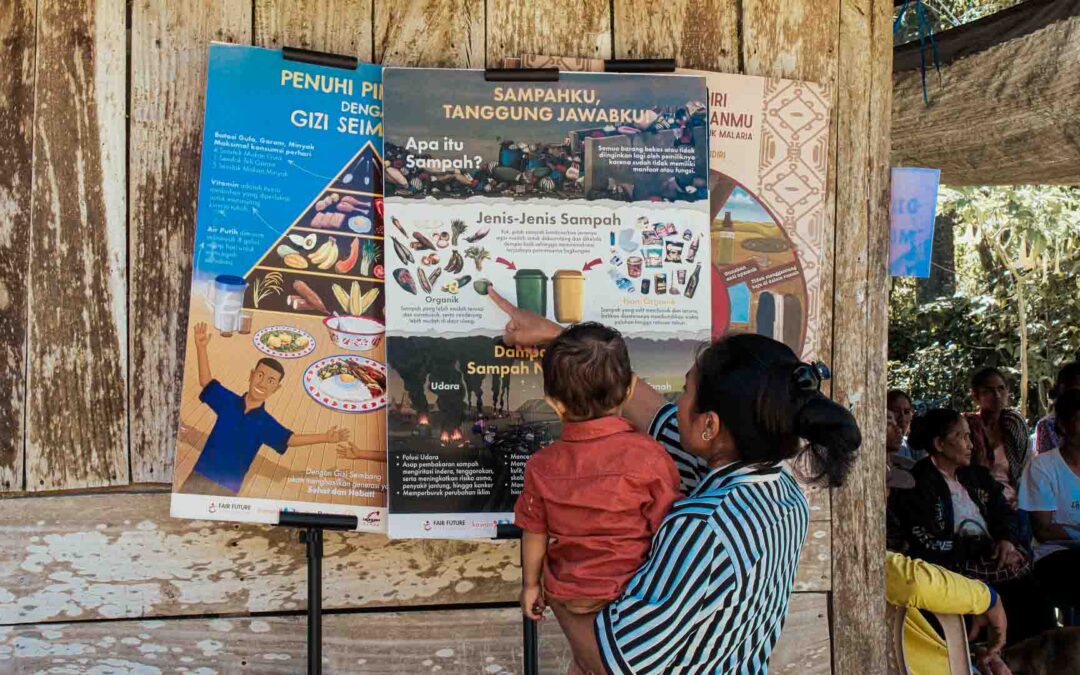
During a remote care day in East Sumba, a mother returned to our posters with her child after the workshop ended. This simple moment shows community health education moving from a formal session into family life, linking waste management, nutrition, malaria prevention and primary care.
Malaria Program – Preparing and Mobilizing Resources
As we mentioned in last week’s newsletter, Fair Future Foundation, Kawan Baik Indonesia, and Sumba Volunteer are joining forces to launch a crucial health and medical operation to combat malaria in the Mahu region of East Sumba, Indonesia. The “Malaria Prevention Initiative 2023 – Sumba Timur 2023” aims to prevent, detect, and treat this…
Final Report: Laindatang Water Connections Phase 2
After completing Phase 2 of the Laindatang Water Connections, we have successfully provided clean water and improved health in Laindatang. This initiative has significantly upgraded their quality of life by reducing infectious diseases and promoting healthier lifestyles.
The two huge reservoirs located in Desa TanaMbanas
In this news "Picture of the Day," we invite you to take a bird's-eye view of a remarkable transformation unfolding in the heart of Sumba Tengah, Indonesia. The image captured from above reveals two immense reservoirs, each with a staggering capacity of 20,000 litres. These reservoirs are not just structures but lifelines for a community in need. Join us as we delve into the inspiring journey behind this transformative project in TanaMbanas.
Majestic Reservoirs and Tireless Dedication: A Glimpse into TanaMbanas – In the heart of Sumba Tengah, where arid landscapes stretch as far as the eye can see, lies the village of TanaMbanas. It's a place that has witnessed a remarkable transformation, and today, we take you on a journey to explore the heart of our #WaterConnections project.
As you gaze upon the aerial view of TanaMbanas, your eyes are immediately drawn to two colossal reservoirs, each boasting a capacity of 20,000 litres. These reservoirs are not mere structures; they are lifelines for the community, resulting from tireless dedication and unwavering commitment.
The journey to bring these reservoirs to life was no easy feat. It spanned over three months, filled with challenges and triumphs. Much like the upcoming project in Laindatang, these reservoirs represent the epitome of our mission – to harness the power of rainwater to benefit rural communities.
In the photo, you'll also glimpse our dedicated Fair Future team alongside the trusty "Truck of Life." They are the heart and soul of our #WaterConnections program, working diligently to ensure access to clean water becomes a reality for these communities.
This image captures the magnitude of the #WaterConnections project in TanaMbanas and serves as a testament to our enduring commitment to improving lives. It's a reminder that despite adverse weather conditions and logistical challenges, we remain resolute in our mission.
As we prepare to embark on the next phase of our journey in Laindatang, we reflect on our incredible impact so far. Together, we will continue to change lives, one drop of clean water at a time.
Stay tuned for more updates and stories from the frontlines of our mission to make clean water accessible to all.
#CleanWaterForAll #CommunityTransformation #FairFutureFoundation #WaterSecurity #SumbaTengah #ImpactfulProjects #SustainableSolutions
Alex Wettstein – Fair Future Foundation medico-social camp in East Sumba – Rumah Kambera, Lambanapu, on the 5th of January, 2024.
Transforming Lives with Innovative Rainwater Solutions
In the arid Tanambanas region, a remarkable transformation is taking place. The #WaterConnections project, led by Fair Future and Kawan Baik, is rewriting the water scarcity narrative. Thanks to innovative rainwater solutions, every drop is transformed into hope, health and happiness.
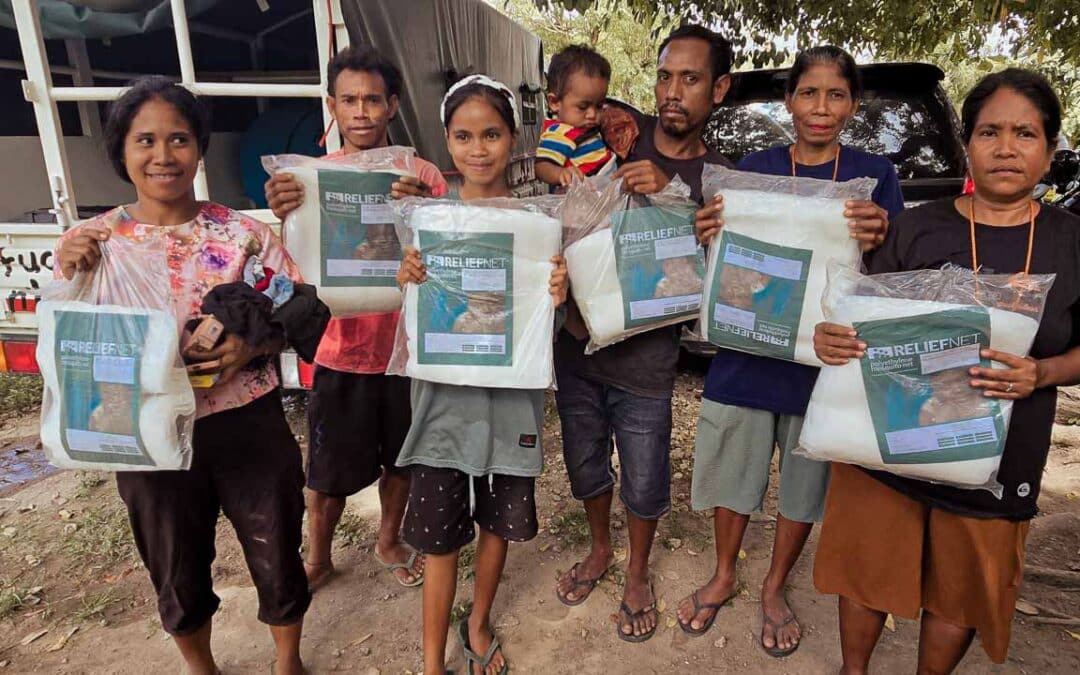
Mosquito nets save lives every single night
Families in remote East Sumba receive mosquito nets designed to reduce malaria exposure at night, as part of Fair Future’s wider prevention, education and care work.
Courage and Determination at Laindatang Water Connections
Phase 3 drilling in Laindatang reaches a promising water source after difficult fieldwork, a key step toward expanding clean-water access in this remote East Sumba community.
Sumba Malaria Prevention Program 2023
Discover how the East Sumba Malaria Prevention Initiative we are presently executing is combatting this destructive ailment. By implementing preventive measures like distributing mosquito nets treated with insecticides and raising awareness on eliminating mosquito breeding sites, this initiative strives to diminish the occurrence of malaria in…
Behavioral Impacts on Spread of Malaria
Beyond Borders: Fighting Malaria Together in Eastern Indonesia. This new "Picture of the Day" shows a young girl from Lapinu village who appears unwell. Taken in 2020, Alex examined her and used a stethoscope to listen to her heartbeat. In April 2023, we revisited the village as part of the Primary Medical Care program. Unfortunately, the girl contracted malaria and suffered from high fever, body pains, and poor overall health. However, after receiving treatment and giving advice to her mother, the little girl has shown significant improvement after just one month.
Our organisation is dedicated to promoting public health in ultra-rural regions of Indonesia (like here in East Sumba), and we're deeply concerned about the impact of malaria on vulnerable communities, as you know already. Sadly, malaria remains a leading cause of illness and death in Indonesia, particularly in East Sumba, where we are based.
Some little history: The word "malaria" originates in Italian. It comes from the expression "mal'aria", which translates as "bad air". This term was used historically to describe the belief that disease was caused by inhaling polluted or stale air in swampy areas. The Plasmodium parasite is responsible for causing malaria, and research suggests that it has been affecting humans for at least 4,000 years.
Several human behaviours contribute irreparably to the spread or persistence of malaria. Here are some of the factors that lead to an increase in malaria cases:
Failure to prevent mosquito bites, poor waste management, inadequate housing and sanitation, deterioration of hygienic conditions, deforestation, alterations to natural habitats, movement of people, drug resistance*** and misuse, limited access to health services, higher illiteracy rates among younger populations, and lack of community involvement and awareness can all lead to an increase in malaria cases… And this, among other examples!
As a result, many people, particularly children and pregnant women, continue to suffer from this preventable and treatable disease. Our program aims to tackle these issues head-on by implementing various activities to strengthen malaria control efforts in the region. It is crucial to highlight that combatting malaria demands a unified strategy encompassing preventive and therapeutic measures. It also involves initiatives to enhance the environment and living standards of communities affected by the disease.
***The problem of self-medication and the consequent development of resistance to antimalarial drugs are two interconnected challenges that significantly hinder the effective management and control of malaria.
Truck of Life Repairs Boost Rural Health Aid
The Truck of Life, essential for reaching rural areas, has undergone major upgrades, including new solar panels, a 75-liter vaccine storage unit, and a redesigned layout, turning it into a mobile clinic. These improvements enhance its ability to provide vital healthcare services, addressing the challenges of accessing medical care in remote areas…