
Care in Motion…

9 active health campaigns

Every action counts—support us today
Select Page

Donate

Support Care

Glossary

Medical terms

Quick News

Field updates

Stories

Field stories
PMC program evaluation in Lapinu

PMC program evaluation in Lapinu

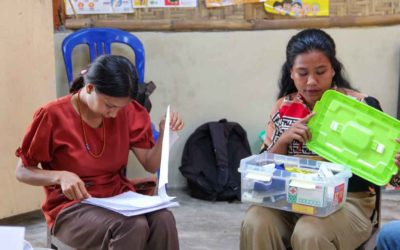
These women linked to the PMC program devote part of their lives to saving others. These unsung heroines work tirelessly to keep people from the danger of illness and injury. They put their lives on the line to ensure others can live to see another day. Teachers trained in primary medical care, these women are the backbone of these ultra-rural communities in East Sumba. They exemplify true bravery and selflessness, and we are eternally grateful for their service. Therefore, we express our deep gratitude to all women who save lives. Thanks for what you’re doing for the others.
read more
PMC program evaluation in Kabanda

PMC program evaluation in Kabanda

Kabanda is genuinely one of the most isolated I have ever seen. Getting it is difficult, even dangerous, at times. No road leads to this village; only extremely steep or steep stony paths allow us to go there. It took us over six hours to get there, including four hours of absolute terrain with the Truck of Life, a 4×4 medical truck specially designed for this journey. Kabanda is no exception; so many villages are in the same situation: That is to say, they have no road leading there. This raises – among other things – the question of access to health care, of course. And it is for these types of communities that Fair Future exists, and together with our friends from Kawan Baik, Sumba Volunteer and Charis Foundation, we have created this primary medical care program.

read more
PMC program evaluation in Mbatapuhu

PMC program evaluation in Mbatapuhu

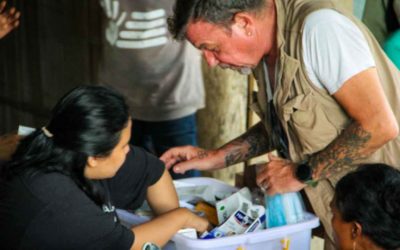
Non-professionals who give medical care and medicine to people, sick children, and injured. They do so through a unique and innovative medical care program. Because here, there are no doctors, no health centre, or else too far away. No one has a vehicle, and the roads that lead to these villages are often impassable. This program saves and preserves the lives of children as well as adults. Today, we are in Mbatapuhu.

read more
Evaluation of 8 Kawan Sehat agents, in Mbinudita

Evaluation of 8 Kawan Sehat agents, in Mbinudita

In the village where it all started for us: The #rebuildmbinudita program is the construction of a school, and the construction of a drinking water network for more than 2700 people, 60% of whom are children under 12 years old . It is really the (re)construction of an entire village or learning to live healthier, healthier all together, within the framework of the creation of innovative programs. Access to primary medical care is part of this program here in Mbinudita and it is only natural that we have included it in this Care program.

read more
PMC program pre-assessment in Mbinudita

PMC program pre-assessment in Mbinudita

Fair Future teams examine and investigate more than two hundred cases of various illnesses or injuries treated under the primary medical care program by health workers. We also take stock of what will happen next week to accurately assess the supply of new equipment, drugs and medical devices. We also tell them that three will be part of a “test” screening program for high blood pressure and, in this case, the “prescription” of treatment and an appropriate medical procedure.

read more
Primary medical care dedicated to children

Primary medical care dedicated to children

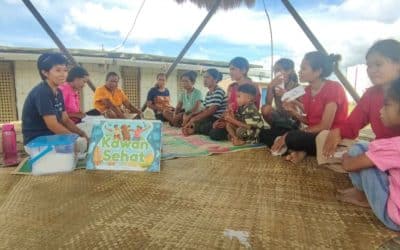
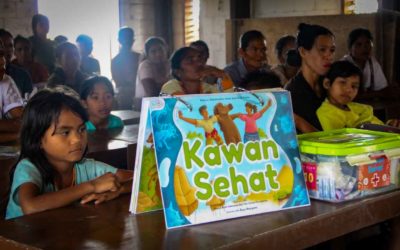
This "Picture of the Day"  shows children who, thanks to the "Primary Medical Care" programme, learn to protect themselves against illness and injury through simple gestures and habits. Children in these regions do not have access to health centres, and no doctors are present in these villages (apart from those from the Fair Future and/or Kawan baik Indonesia foundations). It makes prevention an essential component of their health and well-being. Children in ultra-rural areas can significantly reduce their risk of illness or injury by incorporating simple habits and actions into their daily routines. In addition, it is essential to make children and parents aware of the importance of these habits and gestures so that they become part of their daily lives.

Giving primary medical care is not insignificant. It usually is doctors and nurses who do this. This is what makes this program unique in terms of innovation. Those who provide care, life-saving drugs and cures for Malaria, for example, are the teachers of this isolated village in eastern Indonesia. Therefore, for us here on site, it is essential to assess the impact and effectiveness of this program regularly. We carry out surveys, and we meet to collect medical data. We, therefore, highlight the areas where we can make the necessary changes. If this primary medical care program is a huge success, it is because it involves the communities in the various planning and implementation processes.

Teachers and parents of ill or injured children provide us with essential information. This 100% medical emergency program is in the process of success. It requires multiple collaborations, adequate ongoing training, sharing of supported cases and regular evaluation to ensure its safety, effectiveness and sustainability.

read more
Learn how to provide Primary Medical Care

Learn how to provide Primary Medical Care

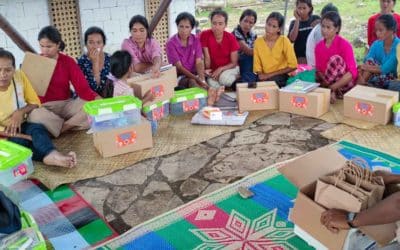
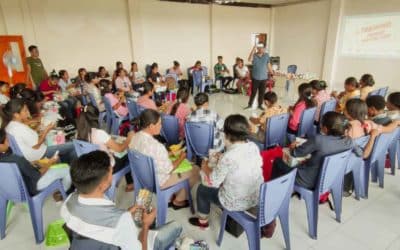
This "Picture of the Day" shows you one of the classes of brave women (and two or three men) who learn with our teams how to give first aid – Primary Medical Care which is the most important – to a person or a sick or injured child.

These first days of medical training welcomed around sixty participants from the most isolated and rural villages. To give you an idea, folks, none of these villages has access to clean or safe water, and only a few have access to some electricity. There is often no road leading there, but only paths that are often impassable. And, of course, no medical centre or health centre near the villages.

The participants are 95% women, and all are teachers in the school of their ultra-rural region. What they have been doing for a few months now is remarkable. They heal and undoubtedly save lives, see here some images taken with their mobile phone.

Aside from being most undoubtedly unique in the world, the magic of this "primary medical care" program is that it works. The first batch of about 60 teachers who have undergone training in rural primary medical care are now gaining more and more confidence, and hundreds of urgent medical care are being provided to the children of sick or injured adults. Lives are being saved.

In a few days, Fair Future Foundation with Kawan Baik Indonesia will evaluate this program directly from the villages, in the company of those who are its heroes, all these extraordinary women.

read more
A prayer for water around a well in East Sumba

A prayer for water around a well in East Sumba

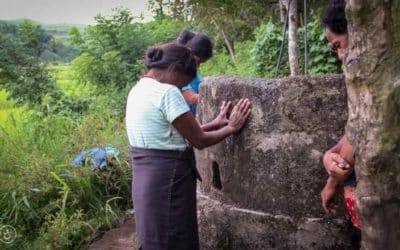
With a few friends from Kawan Baik and Fair Future, we had the privilege and emotion to experience a touching moment, thanks to the strong words of villagers living in a very isolated region of eastern Indonesia. We felt that these brave people had hope that time and the Lord might bring them a better life. For that, we have no choice but to help them.

read more
Strong women representing a strong nation

Strong women representing a strong nation

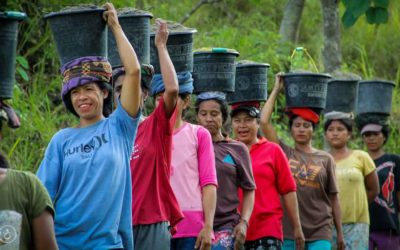
These women play a major role in the rural economy of their village. They are the ones who transport sand for the construction of a new drinking water reservoir on the Mbinudita site. They sing traditional songs to give themselves courage, because it takes a lot. They are the ones who are in charge of helping us, in what is certainly the most difficult work. Yes, strong women represent a strong nation.

read more
×