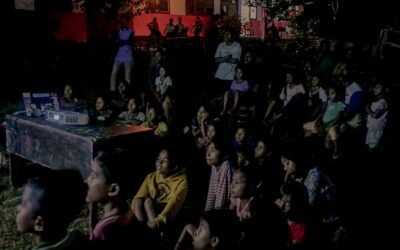

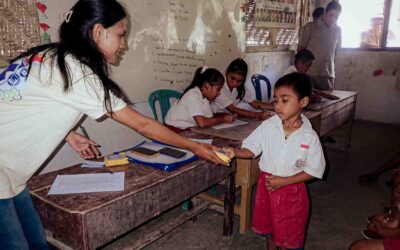
This new picture of the day shows solar light for children delivered through patience and care. In an ultra-rural classroom, a lamp is not simply handed over. Time is taken to explain, to show, to ensure understanding. For children living without electricity, light means safety, learning, and dignity once the sun goes down.
Field Visual Reports from the Ground
Visual field reports documenting medical care, disease prevention, water access, logistics and emergency response in ultra-rural Indonesia. Photos and short films produced by our teams show real conditions, methods and measurable health impact, aligned with WHO principles and community-based care.
The Stories & Communication category translates field medicine into clear, truthful narratives. It shares case realities, community voices, and operational context behind our programs, without sensationalism. Articles explain why prevention, logistics, and long-term follow-up matter, using simple language grounded in clinical facts. This section supports health education, transparency, and trust, aligning communication with WHO principles on risk communication and community engagement. Every story is built from observed events, verified data, and respect for patients and families, including what worked and what failed.
Kawan Sehat Ultra-Rural Medical Care in Eastern Indonesia
In eastern Indonesia, ultra-rural medical care depends on people who walk where vehicles cannot go. In regions cut off from roads, electricity, and doctors, Kawan Sehat health agents provide first-line treatment, prevention, and education. Their work fills the growing gaps left by under-equipped Puskesmas and overstretched hospitals.
Water Reservoir Graduation Scale Protecting Community Health
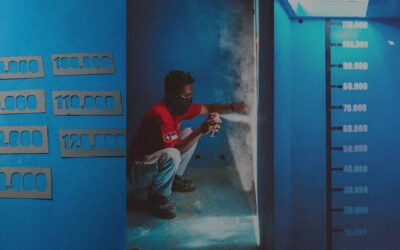
Inside the Laindatang reservoir, a graduation scale measures every ten-thousand litres of stored water. This precise tool allows safe monitoring, controlled use, and long-term protection of clean water. In ultra-rural villages, measuring water accurately is not technical detail. It is prevention and survival.
Laindatang Water Filtration System | Preventive Health
Before water reaches the tank in Laindatang, it is filtered by hand. Custom-built filtration modules remove debris, organic matter, and insects, reducing contamination risks. This system turns rainwater harvesting into preventive medicine for families living far from any medical infrastructure.
Clean Water Roof in Laindatang | Medical Water Safety
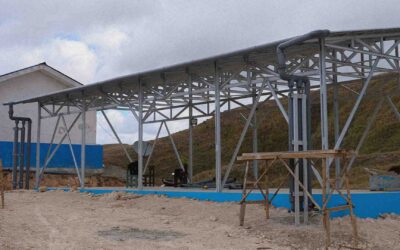
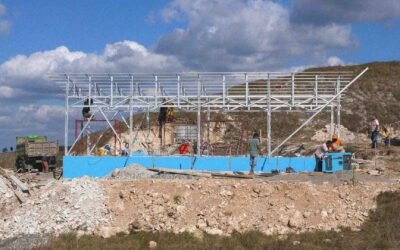
A light steel roof now protects the Laindatang reservoir, shielding filtered rainwater from heat, light, and contamination. Built with villagers by Fair Future and Kawan Baik Indonesia, this structure turns rainfall into safe drinking water and prevents avoidable disease.
Film gallery on field medical and social work
This film gallery humanitarian work shares nine essential films documenting our field actions. Each one captures medical care, water access, education, and community resilience in remote Indonesian villages. These stories explain the daily challenges and the solutions built together.
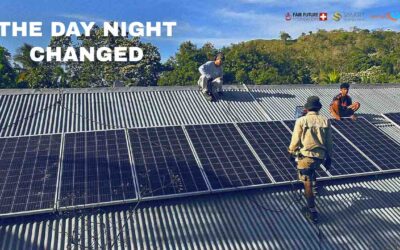
The Day Night Changed – Solar Light for Mbajik School
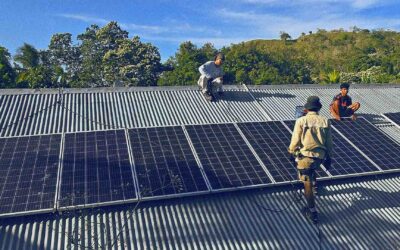
For five days, we lived and worked in Haray to create The Day Night Changed, a film showing how electricity reached Mbajik School for the first time. This is the story of before, during, and after, in a district where over 100 schools still wait for power.
Electrification of Mbajik School the Movie
For five days we worked to complete the electrification of Mbajik School the movie, carrying heavy equipment, wiring every room, and sleeping in the village. This project brings light to 80 children and 12 residents, in a district where over 100 schools still have no electricity.
Who are the Kawan Sehat health agents?
In this article you finally discover who are Kawan Sehat health agents, not as numbers but as people. Through portraits and short testimonies they explain who they are, where they live, the patients they care for and why they chose to become the first line of medical care in remote East Sumba hills every day.
Kawan Sehat wound care in remote villages saves lives
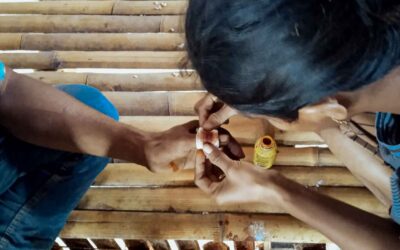
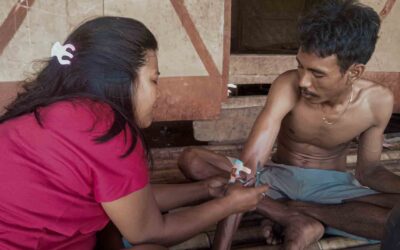
In this image Kawan Sehat wound care happens on a bamboo floor where clinics are days away. The agent irrigates, debrides if needed, applies a sterile dressing, checks tetanus, and teaches danger signs. Early care stops infection before it spreads to the blood. This is how primary medicine prevents funerals.
Hambarita water reservoir plaques – eight named tanks
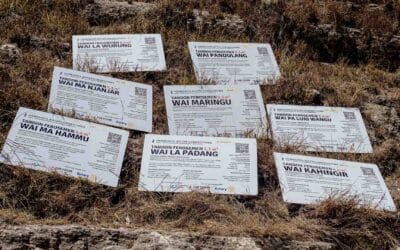
This picture shows Hambarita water reservoir plaques resting on the grass moments before installation. Each plate carries a local name because water is treated like kin. When a tank is called by name, people maintain it, clean gutters, and guard the lid. Eight new reservoirs will store rain, cut disease, and return time to families.
SolarBuddy lamps East Sumba – quality control to classrooms
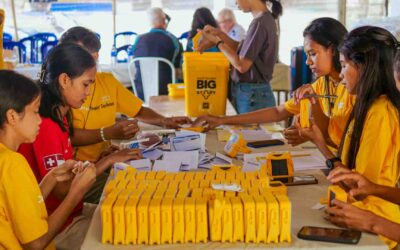
At Rumah Kambera we checked 2,224 SolarBuddy lamps East Sumba one by one. Volunteers, Rotary, Fair Future and Kawan Baik tested brightness, panels, switches and batteries, fixed faults, logged QR codes, and packed each unit for long journeys to schools with no electricity. Light prevents injuries, improves study, and protects health.