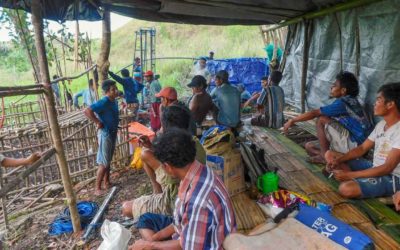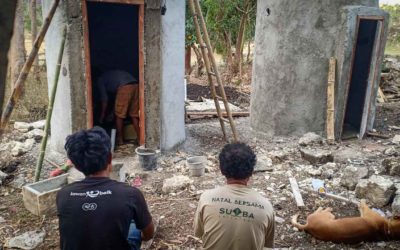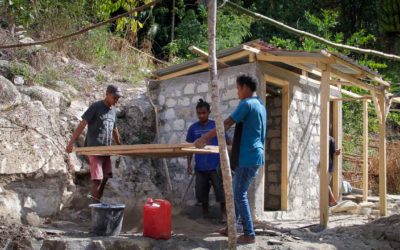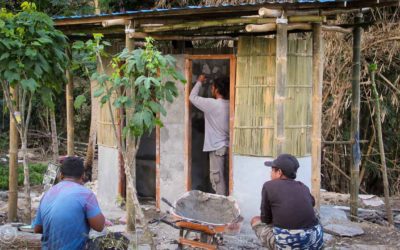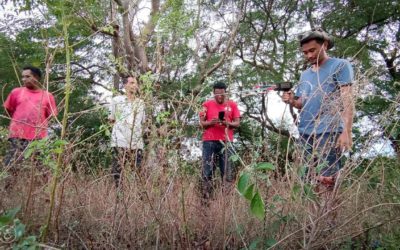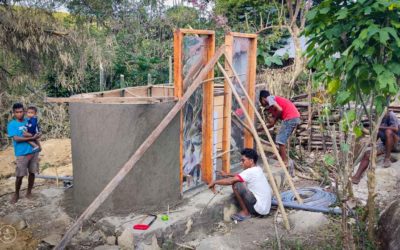


In these few images, the teams of Kawan Baik Indonesia and Fair Future Foundation, with the help of volunteers from the village, are building two new Ferro-cement tanks of more than 6000 litres, which in a few weeks will provide clean water to a group of houses. In all, a good thirty families here in the village of #Mbinudita, where our #sdmbinudita school is located.
The Water, Nutrition & Survival category addresses core public health determinants that directly affect morbidity and mortality in ultra-rural settings. Articles document how limited access to safe water, adequate nutrition, and basic sanitation increases the risk of waterborne disease, malnutrition, dehydration, and infection. Interventions follow WHO public health standards, combining water infrastructure, food support, hygiene promotion, and community education. This category highlights field-based actions that stabilize health, prevent avoidable disease, and support survival where resources and healthcare access remain critically limited.
Fighting Malnutrition Through Food and Nutrition Programs
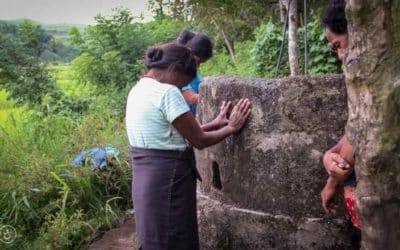
A prayer for water around a well in East Sumba
With a few friends from Kawan Baik and Fair Future, we had the privilege and emotion to experience a touching moment, thanks to the strong words of villagers living in a very isolated region of eastern Indonesia. We felt that these brave people had hope that time and the Lord might bring them a better life. For that, we have no choice but to help them.
The drilling of the first well in Mbinudita, East Sumba
The procedure for drilling the first well in Mbinudita as part of the Water Connections project. A work of Titan in insane conditions. Three weeks of life on site in the rain, working around the clock to reach a relatively deep water table since clean, clear and healthy water is found at a depth of just over 60m.
Living without toilets and without water, Fair Future is changing that
We are in the process of completing new clean water tanks and new sanitation facilities in Mbinudita. Our teams are on-site with the help of the entire local community, women, men and children who help us in this work. These infrastructures are made of Ferro-cement, like all the others, with the difference that we give the possibility to the villagers to choose the type of construction. Once again, this type of collaboration works wonders on site because it allows everyone to learn and work.
Benefits of Clean Water in life
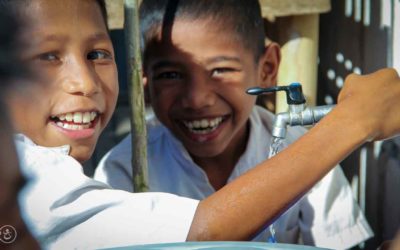
The Benefits of Clean Water Influence the Daily Lives of Children and Adults and Impact the Quality of Life in a Community for Generations to Come. Fair Future sees a change in the habits of families who benefit from the Water Connections program. Without drilling deep wells here, families will not be able to access clean water and will have to continue walking for miles and hours to fetch dirty, unsanitary water. Most of the time, women and children are assigned to this exhausting task. Access to better health has always been the foundation’s primary mission, and healing people simply by giving them water is incredible for us. It is the only possible solution.
Drinking and eating better thanks to water connections
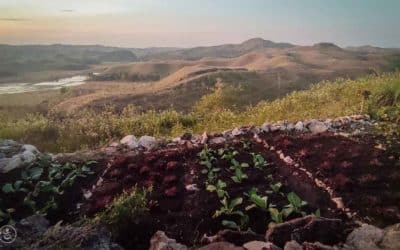
For months, Fair Future has noticed a fundamental change in habits in families who benefit from the “Water Connections” program. Gardens are created. People eat better, drink more, have more energy and are less ill. This observation fills us with joy and comforts us in our choices and decisions. Access to better health has always been the foundation’s primary mission, and healing people just by giving them water is incredible for us.
Strong women representing a strong nation
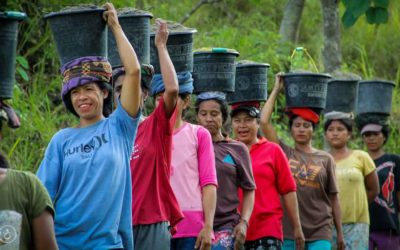
These women play a major role in the rural economy of their village. They are the ones who transport sand for the construction of a new drinking water reservoir on the Mbinudita site. They sing traditional songs to give themselves courage, because it takes a lot. They are the ones who are in charge of helping us, in what is certainly the most difficult work. Yes, strong women represent a strong nation.
The 2nd sanitary facility of the village is almost finished
Although access to clean water continues to be a problem, it isn’t easy to ensure it is safe. In this sense, Fair Future is putting in place measures to ensure that it is sustainable. By tests, of course, filtration systems that use elements present in nature. But also, and above all, the education of users on “how to keep the installation clean and in optimal working order” is part of the “water Connections” program. On the other hand, it should be noted that individual practices also play an essential role in determining the quality of the water that we make available to the villagers here in East Sumba.
We create water connections, look…
The first idea was to treat people at the source of their health problems because our medical teams and us allow the expression: “-We were a little tired of giving medicine with a glass of inedible water. …”. And as we have told you many times before, the vast majority of patients who come to us are primarily because of the poor quality of the water they use. But also because they simply don’t have enough or no water.
The 1st toilets of the village are almost finished
Sanitary facilities, showers, toilets, a wastewater collection tank… This was a pilot project for the foundation. Today it is something normal. How do we build healthy, ecological, environmentally friendly sanitary facilities using mainly local materials (apart from sand, iron and cement)? How not to waste the water we found by drilling so deep here in Mbinudita? Where had drilling never been attempted? How to reuse wastewater to be able to water the gardens, the plants, and the vegetables that do so much good to and improve the lives of everyone here? It was a challenge, but it is now a reality.
Assist with access to clean water in Praiwora
As part of the #waterconnections project, the Fair Future and Kawan Baik foundations have received several requests for help related to socio-medical projects, including a significant number related to access to clean water from local communities and rural villages. Some of these requests come to us directly from local authorities in East Sumba. For this Kambajawa – Praiwora project, Fair Future received this request now from our friend, the Regent of East Sumba, Mr Khristofel Praing. Kawan Khris asked us to see what we could do to help this village and these families in Praiwora who have not had access to water for almost five years.
Building healthy sanitation facilities in rural areas
We are building safe and healthy sanitation facilities for these reasons: Ending defecation in the open rather than in toilets will have “transformational benefits” for the most vulnerable people in East Sumba. Open defecation is when people defecate in the open -for example, in fields, forests, bushes, lakes and rivers rather than toilets. We find that of the hundreds of thousands of people who practice open defecation, 91% live in rural areas. An increase in the population of the regions in which we work leads to a localized increase in open defecation.