


Malaria community education in Marada
Clinical prevention built with families
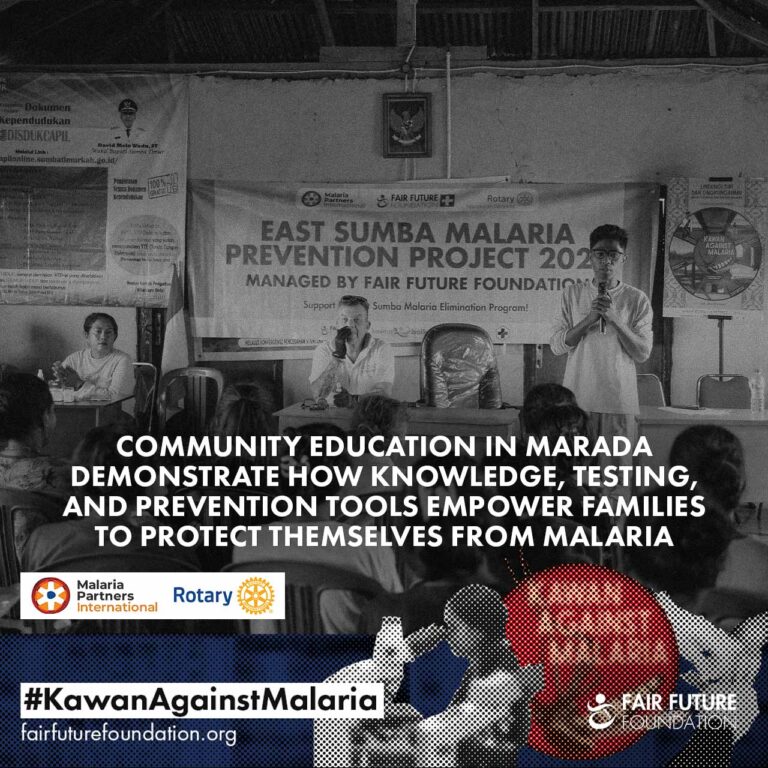
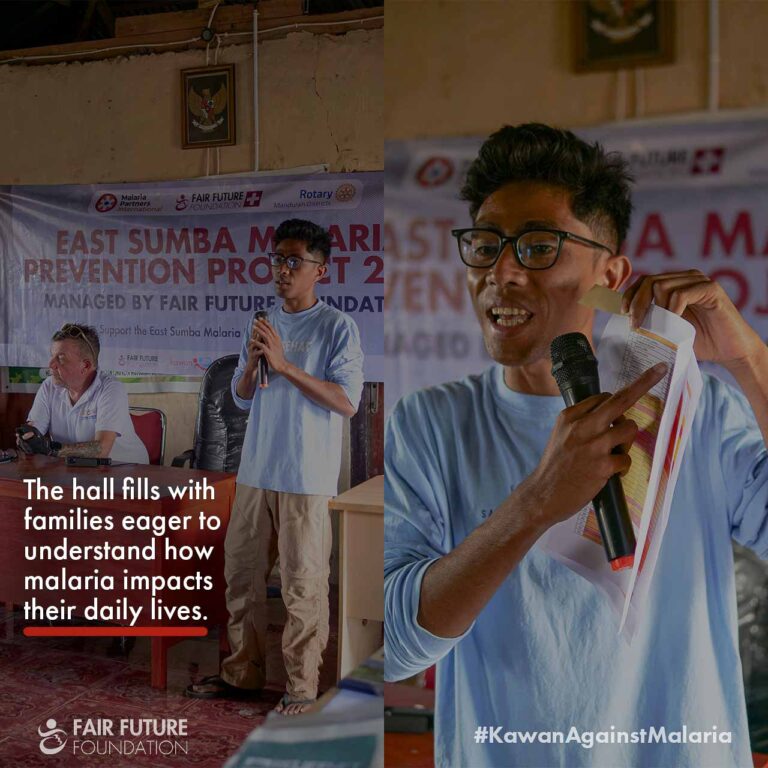
Community malaria education sessions in Marada are designed as clinical interventions rooted in prevention, early detection, and behavioural change. In this ultra-rural area of East Sumba, malaria remains a daily risk driven by stagnant water, limited access to care, and delayed diagnosis.
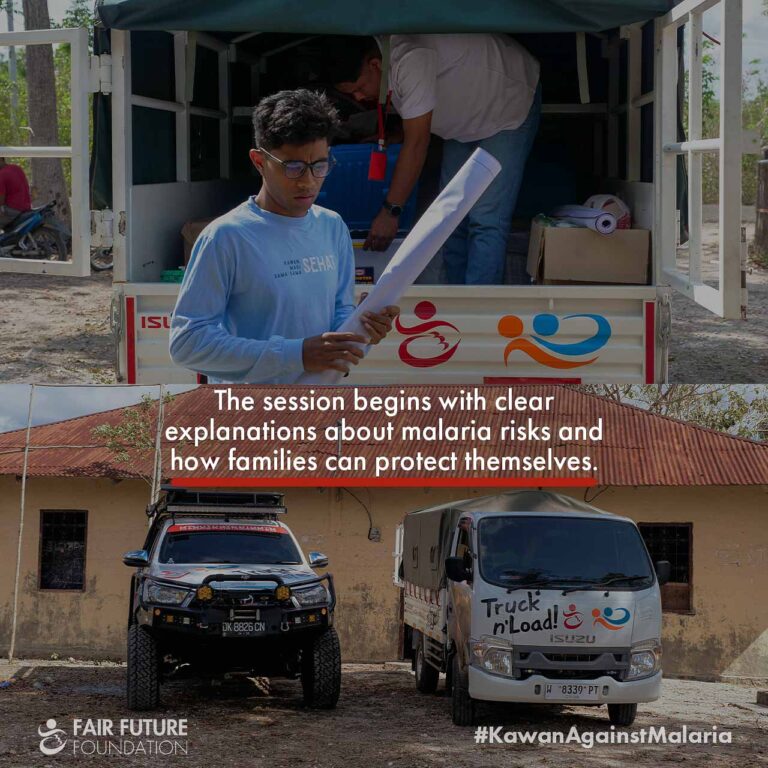
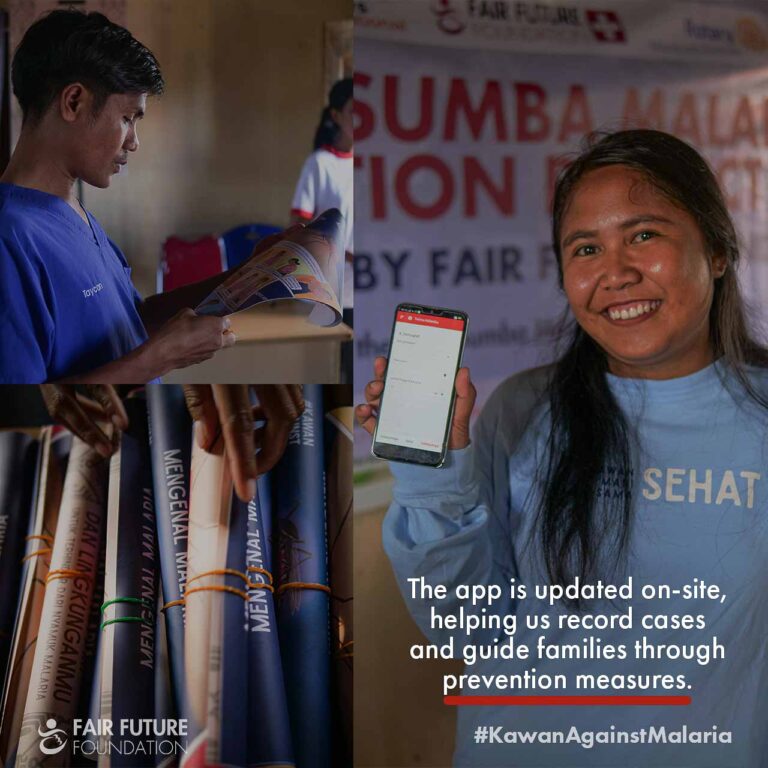
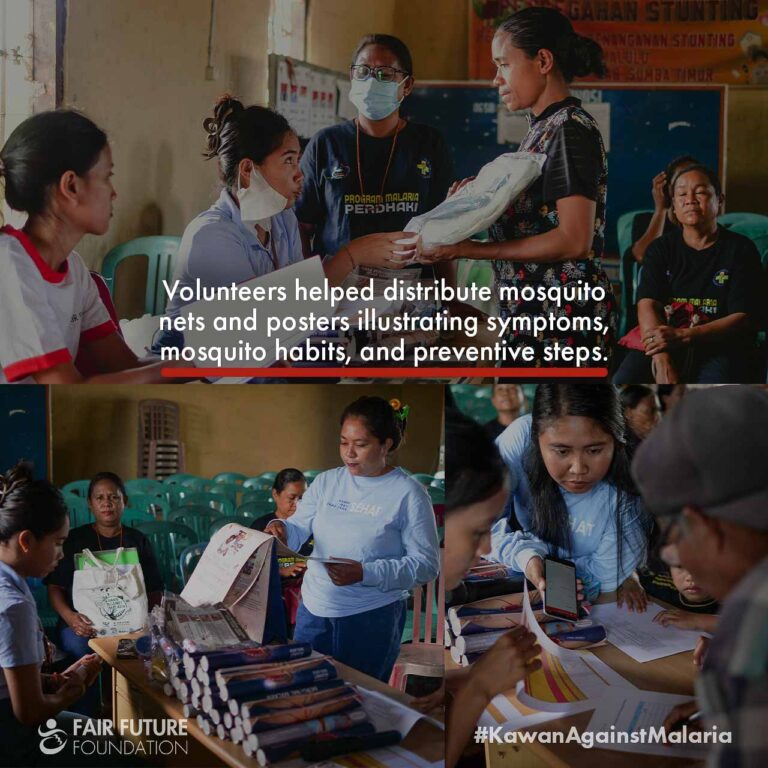
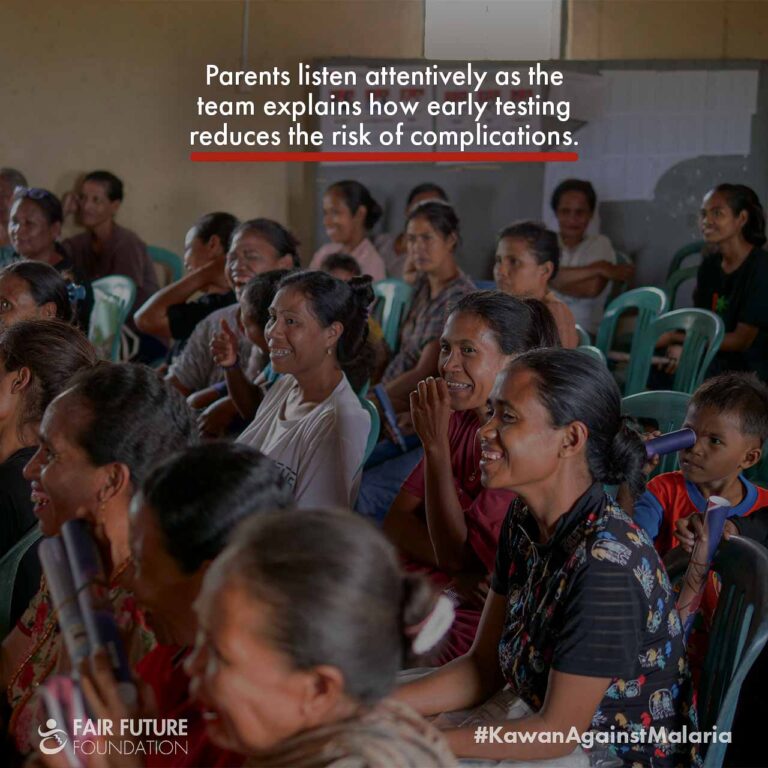
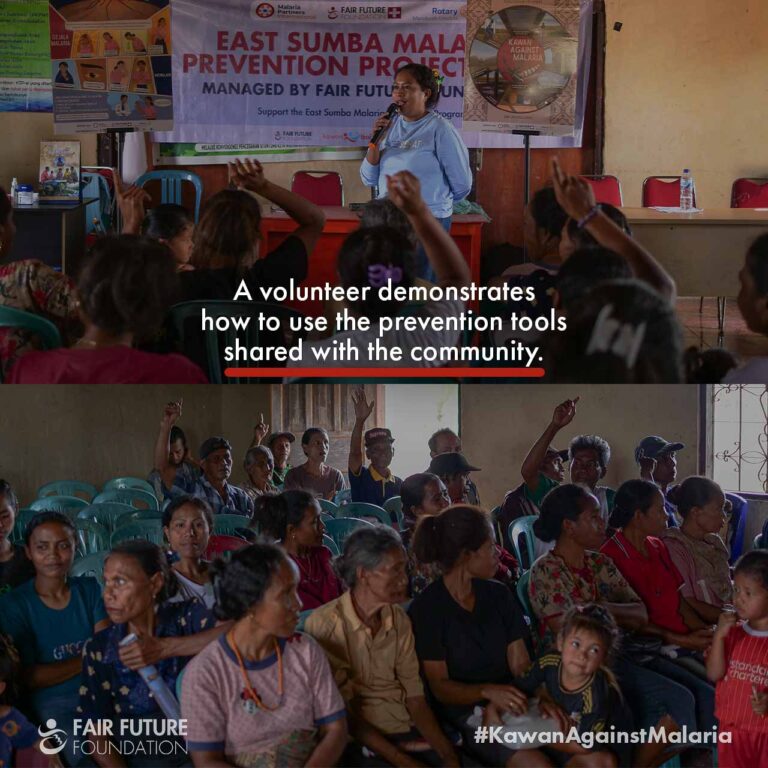
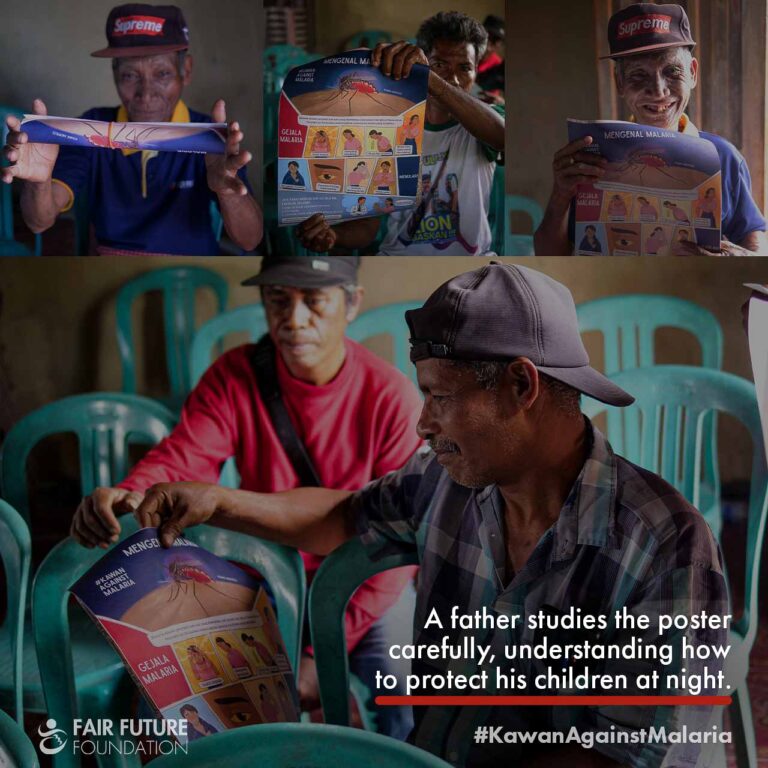
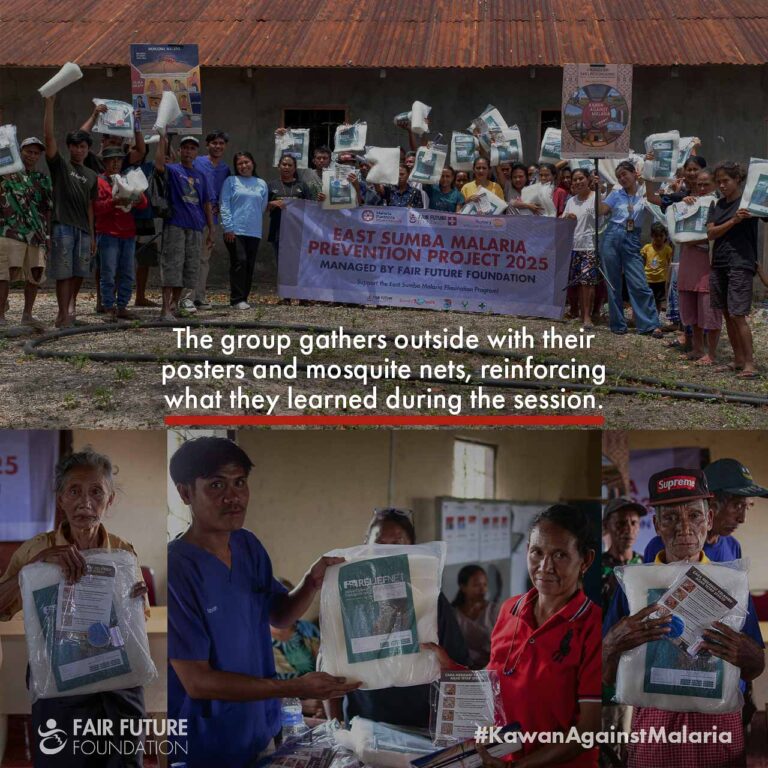
During each session, Fair Future Foundation teams work alongside Kawan Baik Indonesia field staff to explain malaria transmission, recognise warning signs, and demonstrate practical prevention tools. Posters from the Kawan Against Malaria programme are reviewed in detail to help families visualise symptoms, mosquito behaviour, and night-time protection strategies. Children actively participate, reinforcing prevention messages within households.
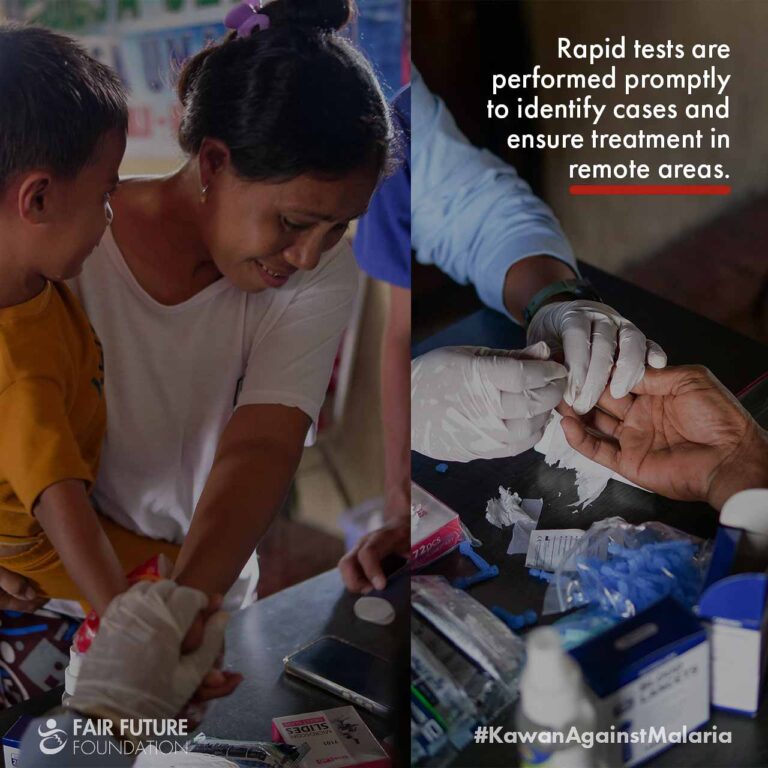
Rapid diagnostic tests are performed on site under strict hygiene protocols. In regions where distance to medical facilities can turn a fever into a life-threatening condition, early testing enables immediate referral, treatment initiation, and follow-up. Each test is handled carefully, respecting both medical standards and community trust.
Posters are distributed to every household as a permanent reference. These sessions are repeated throughout the year, creating continuity rather than one-off interventions. Education, testing, and data recording through the malaria app form a single system embedded in daily life.
Malaria control in ultra-rural settings is slow, precise work. When knowledge becomes routine, families reduce risk, protect children, and actively participate in disease prevention.
Alex Wettstein – Fair Future Foundation medico-social camp in East Sumba – Rumah Kambera, Lambanapu – the 3rd of February 2025