


Malaria Indoor Residual Spraying in Rural Homes
Vector control where malaria never rests
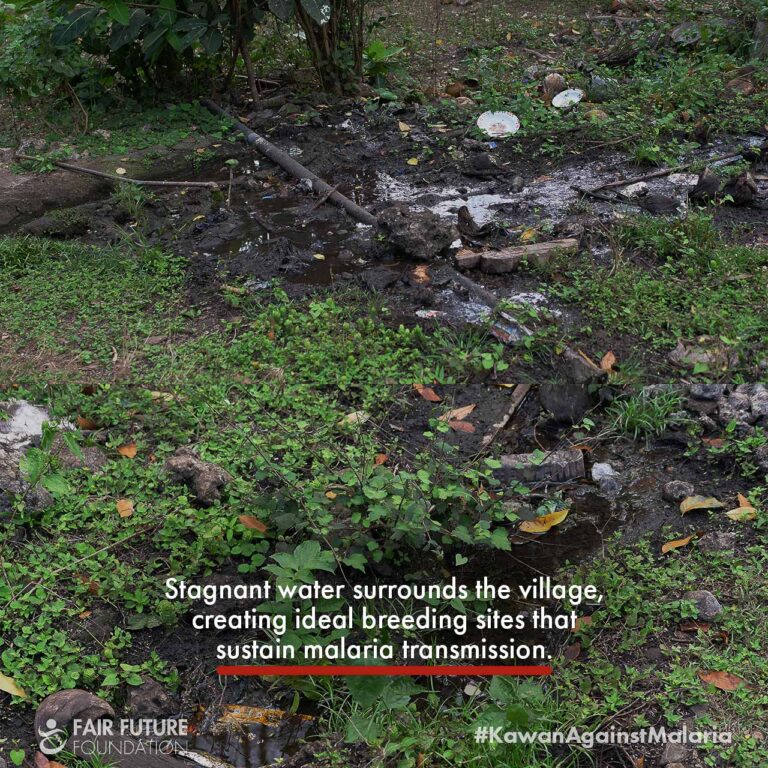
Indoor Residual Spraying is one of the most effective malaria prevention tools in ultra-rural Indonesia, yet it is also one of the most demanding. In East Sumba, stagnant water surrounds homes built from bamboo, wood, and earth, creating ideal conditions for Anopheles mosquitoes. Malaria transmission is constant, silent, and deadly if left unchecked.
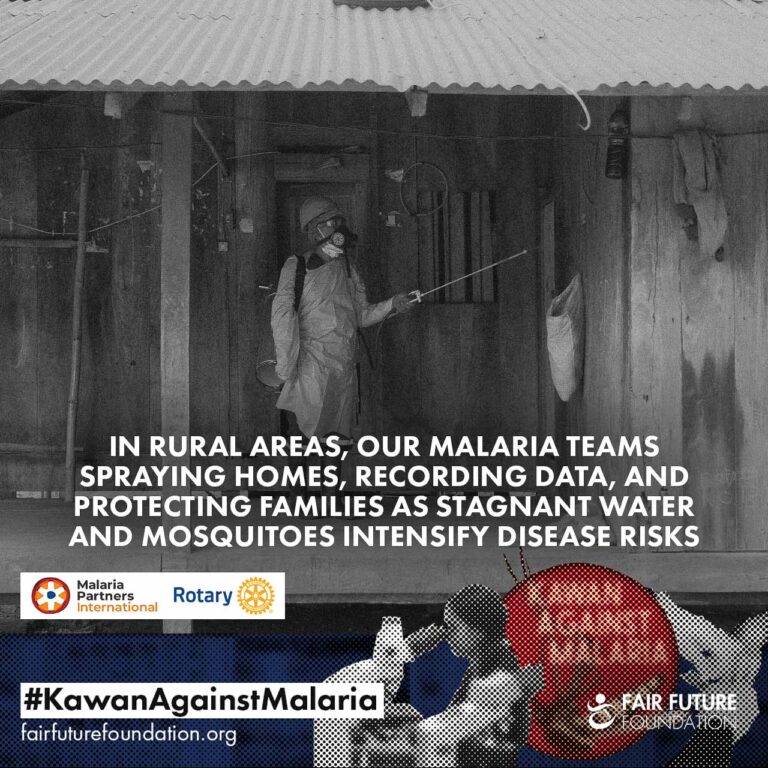
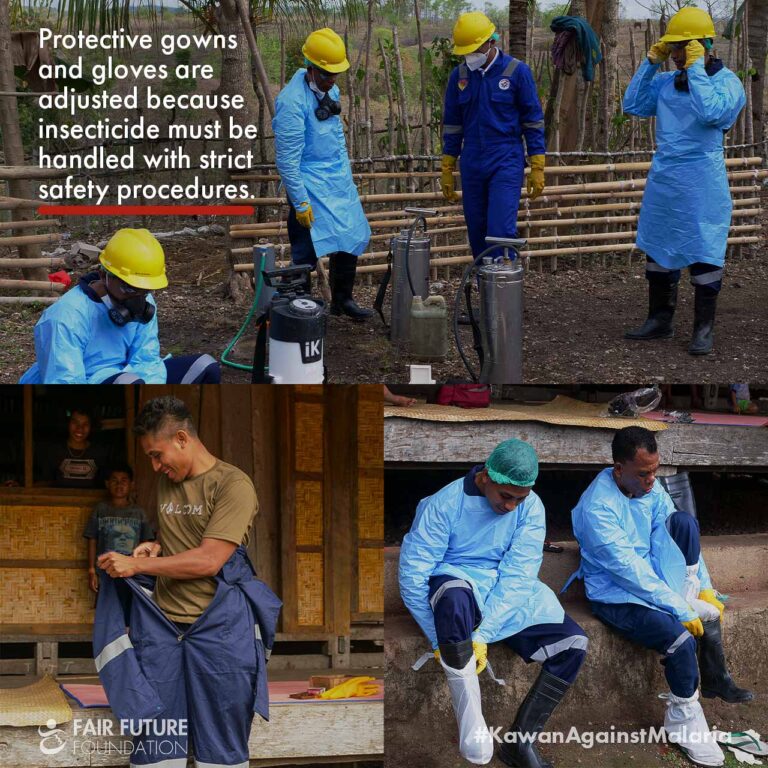
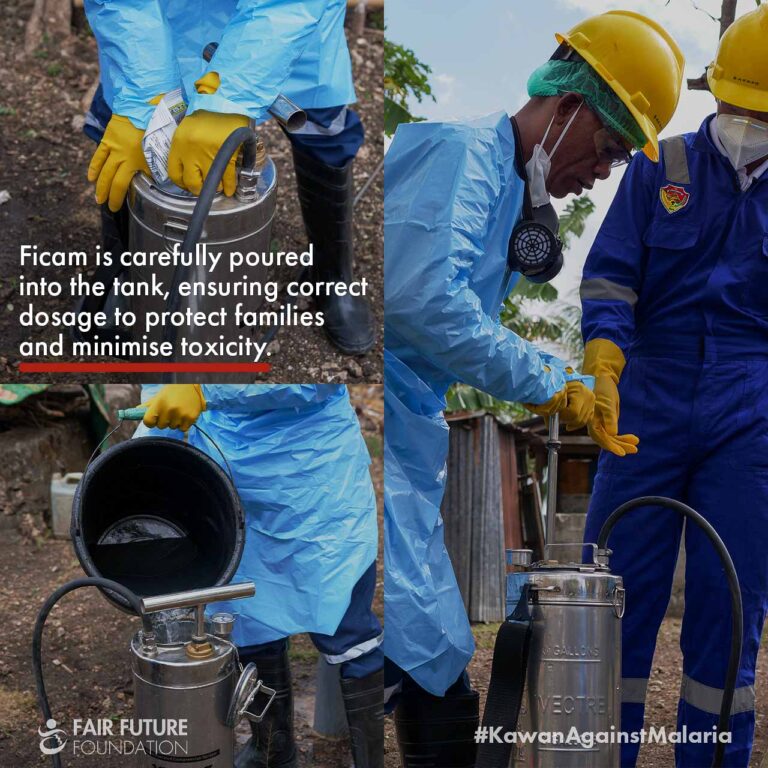
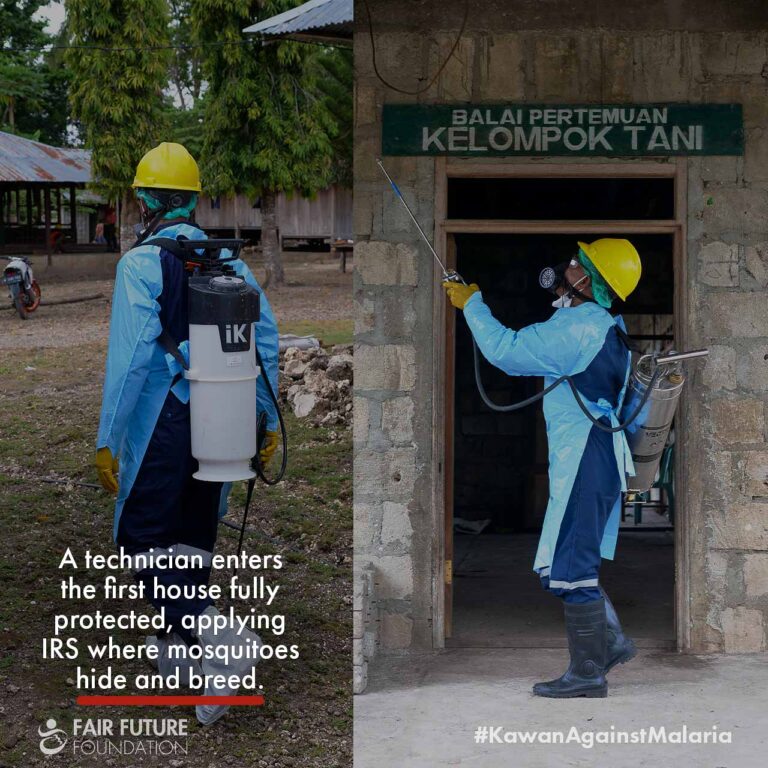
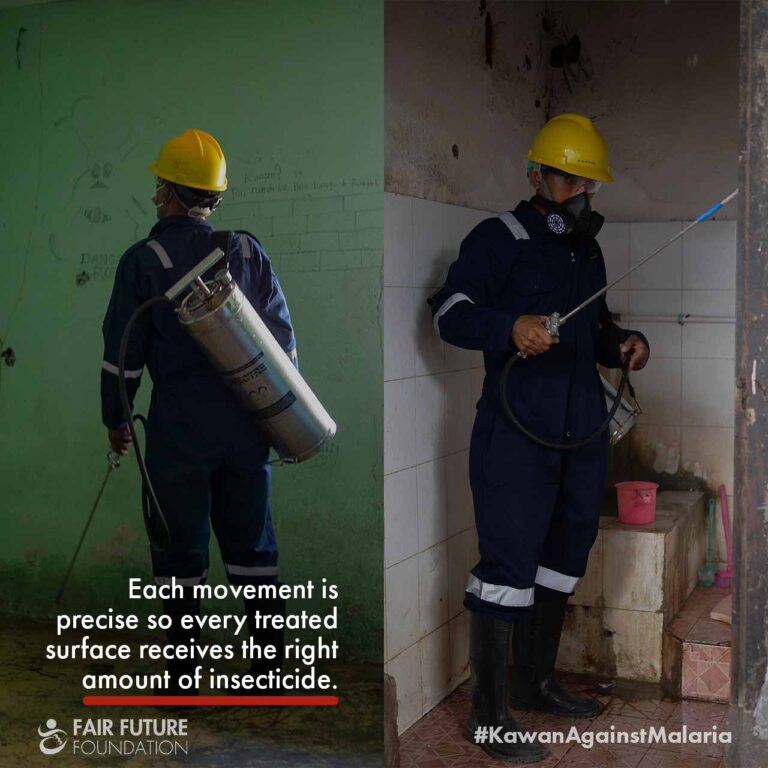
Fair Future teams, working side by side with Kawan Baik field officers and Kawan Sehat health agents, enter these environments wearing full protective equipment. The insecticide used is effective but toxic. Dilution is calculated precisely, sprayers are checked repeatedly, and every surface is treated with controlled movements. There is no room for improvisation.
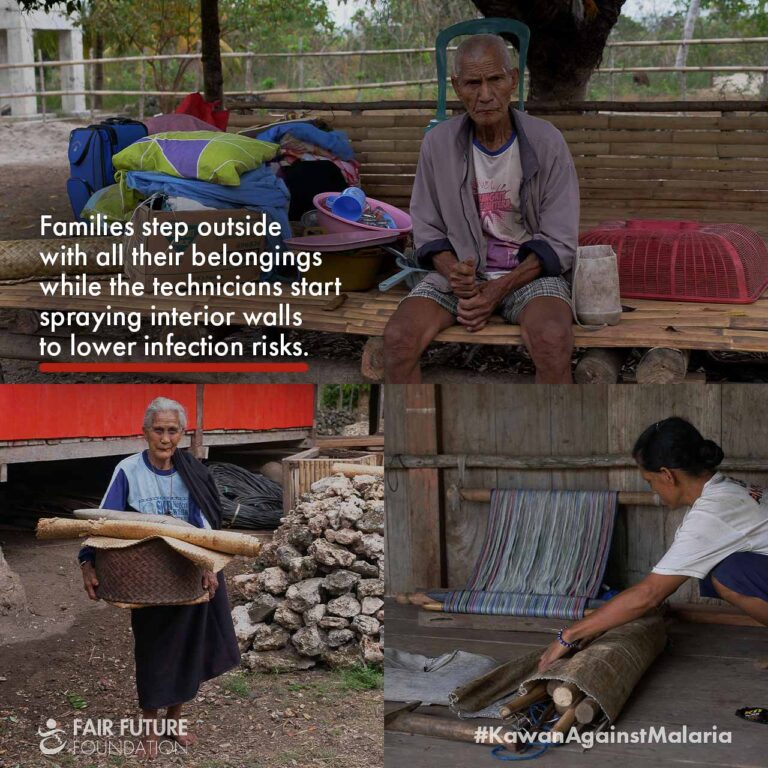
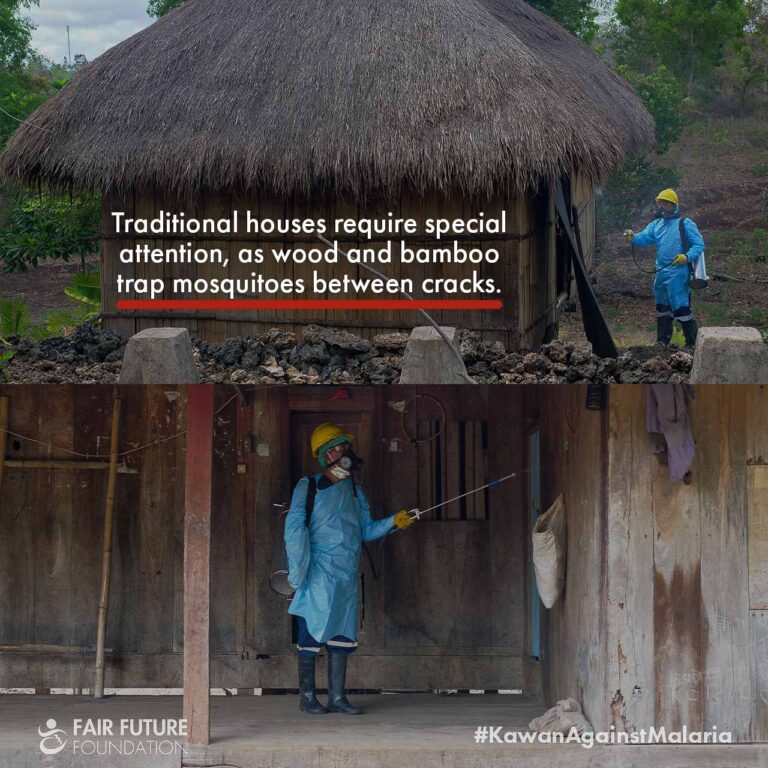
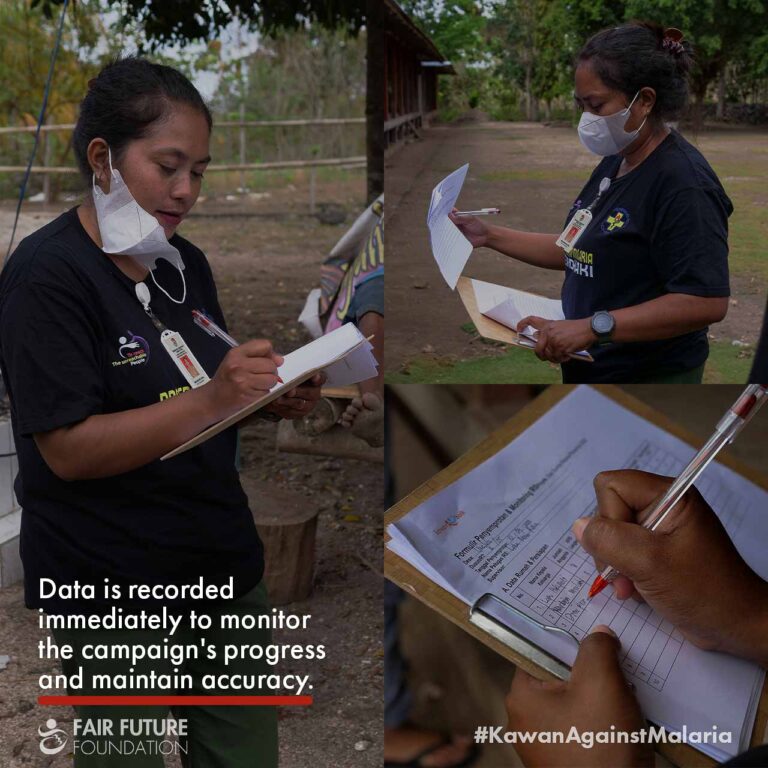
Families temporarily leave their homes while interior walls are sprayed, especially dark, humid areas where mosquitoes rest after feeding. Traditional housing requires slow, deliberate work, as cracks in wood and bamboo provide countless hiding places. Each house is documented, each intervention recorded, and each family informed about post-spray safety.
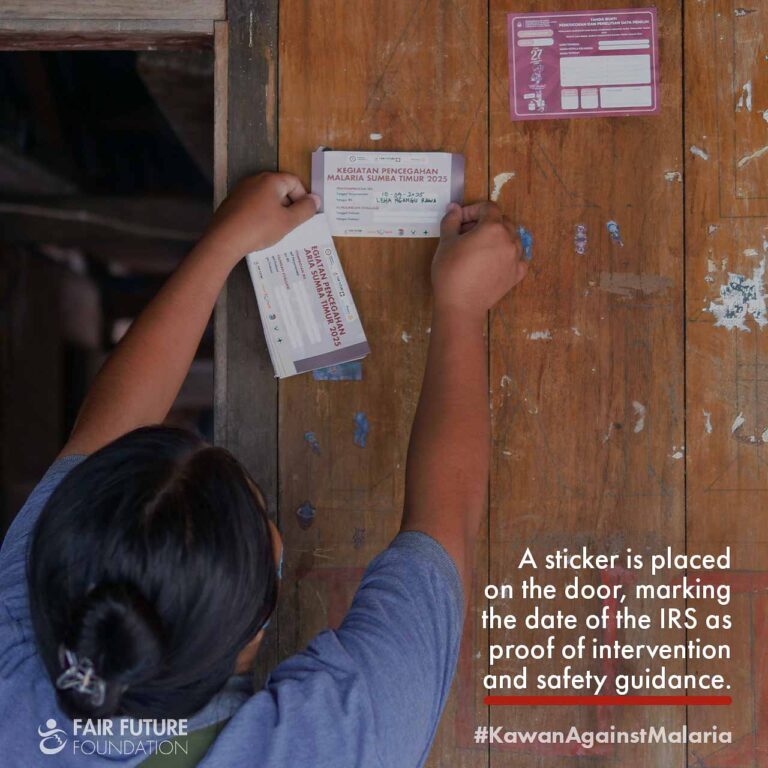
Beyond spraying, this work is public health in practice. Data collection, household verification, and follow-up ensure scientific rigour and accountability. A sticker placed on the door marks the intervention, not as a symbol but as traceable proof of protection.
This is how malaria prevention becomes tangible. Presence, precision, and continuity. For Fair Future and Kawan Baik teams, malaria control is not an abstract concept. It is daily fieldwork, carried out with dis
Alex Wettstein – Fair Future Foundation medico-social camp in East Sumba – Rumah Kambera, Lambanapu – the 2nd of February 2025