


Malaria Prevention IRS Preparation in East Sumba
Clinical preparation before village deployment
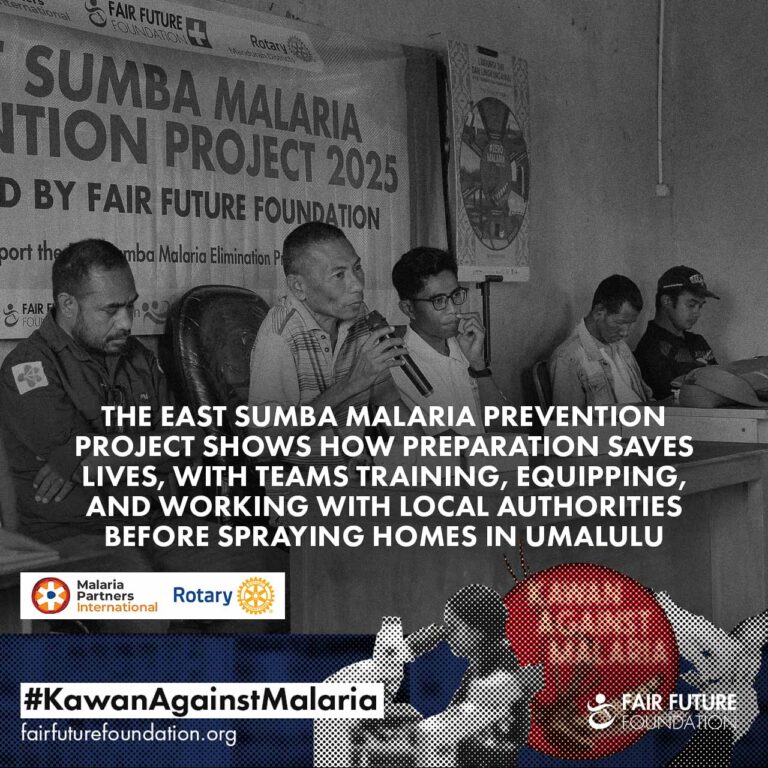
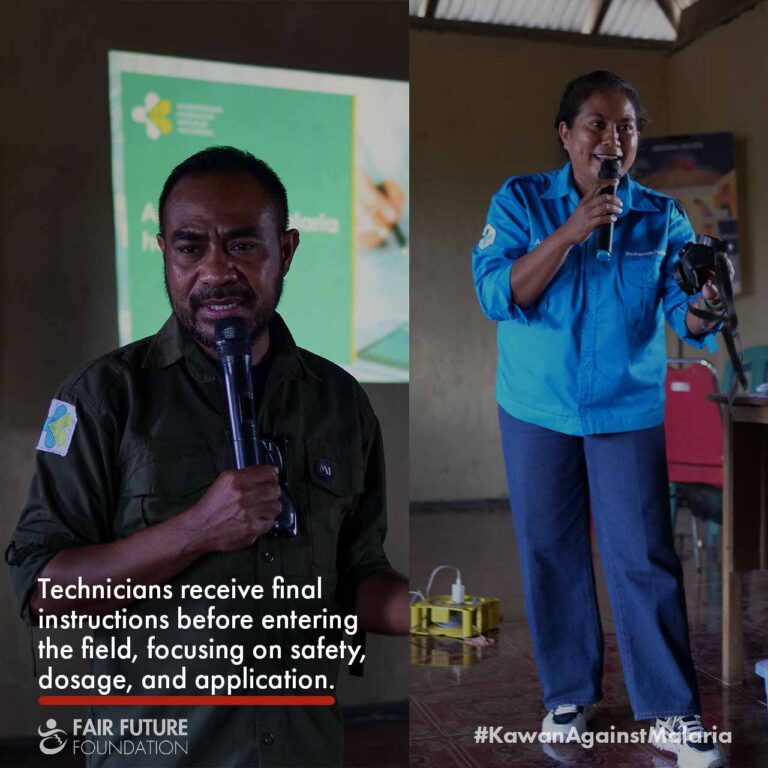
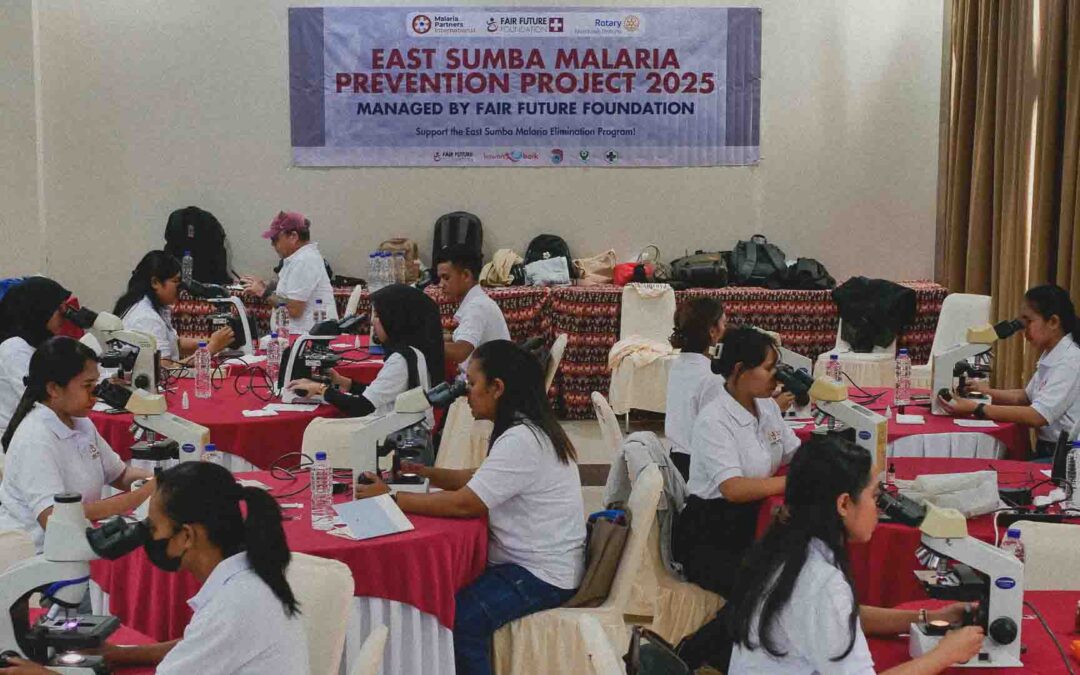
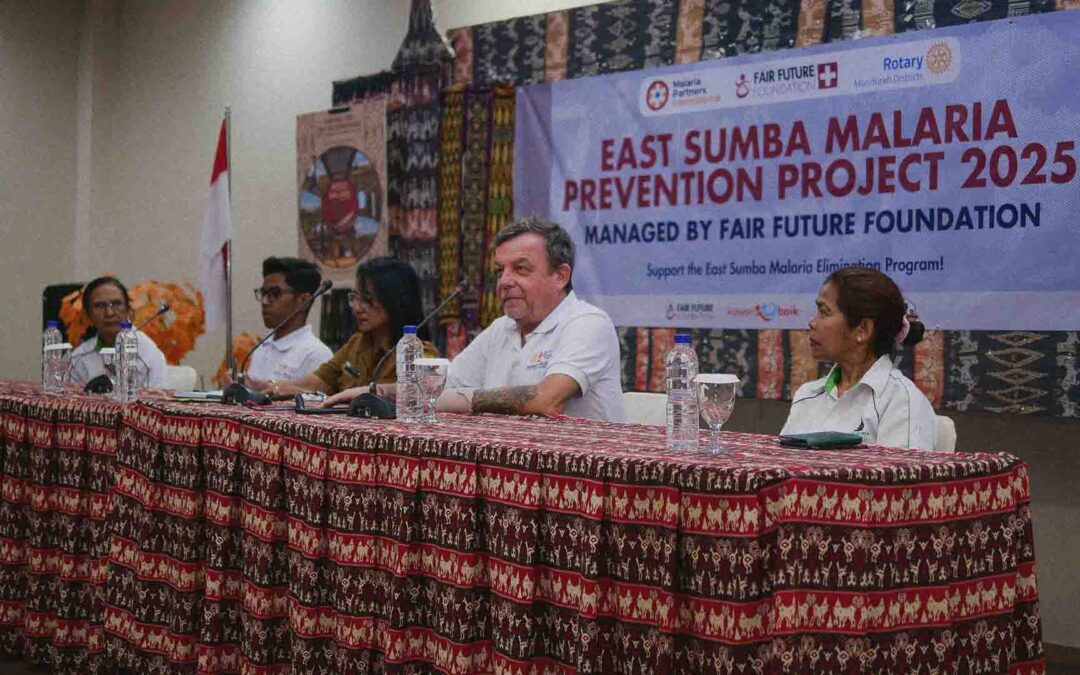
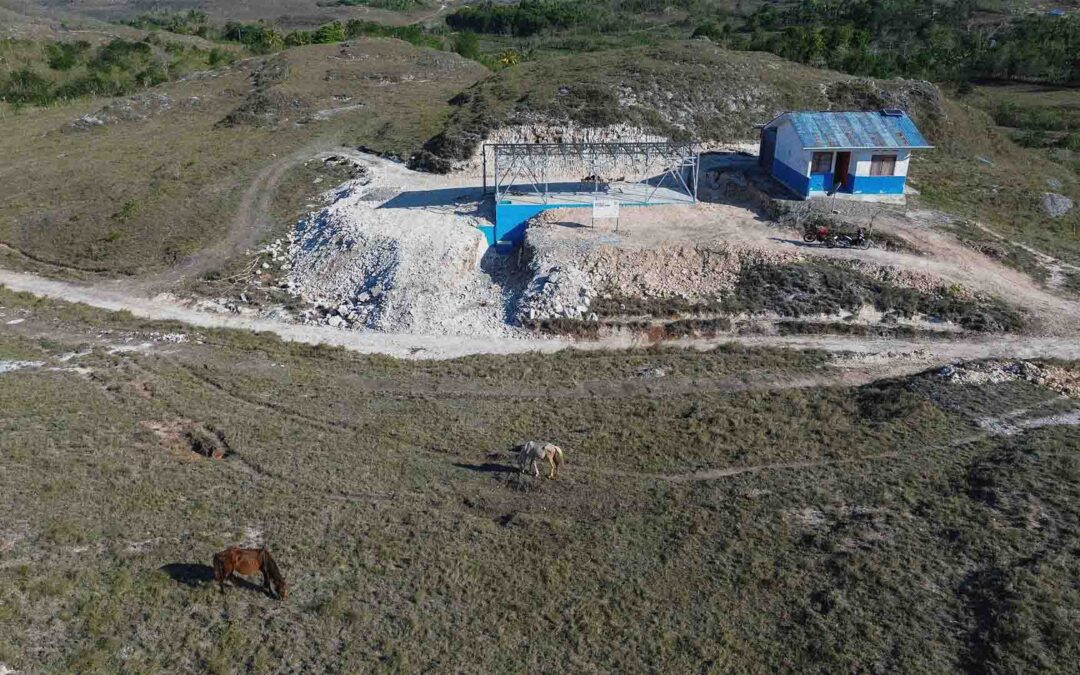
In the remote villages of Umalulu, malaria remains a daily medical risk, particularly for children, pregnant women, and the elderly. Preventing transmission requires precision, planning, and trust long before the first wall is sprayed. This image gallery documents the preparatory phase of an Indoor Residual Spraying campaign in East Sumba, conducted by Fair Future teams alongside Kawan Baik field staff and local health authorities.
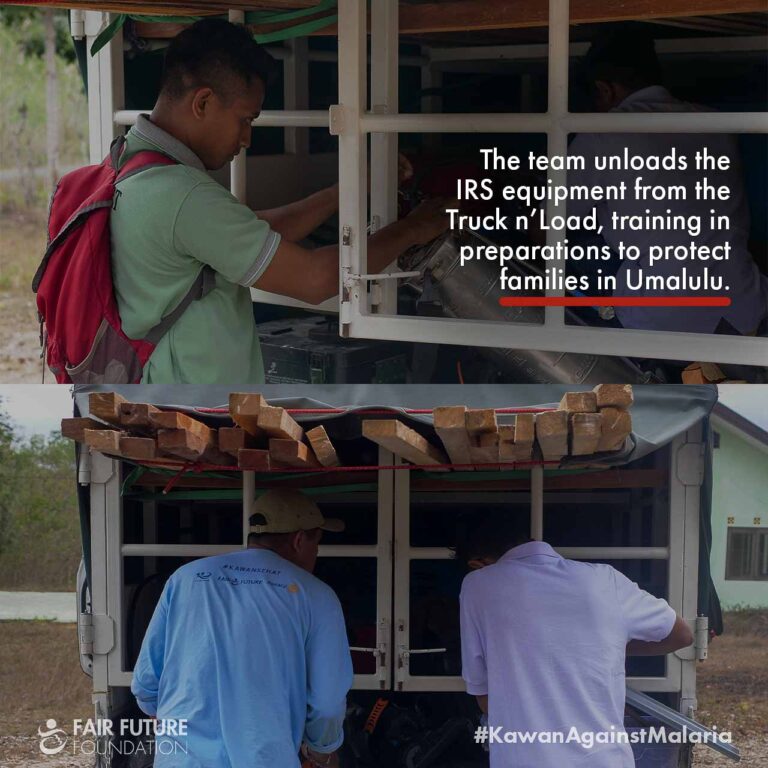
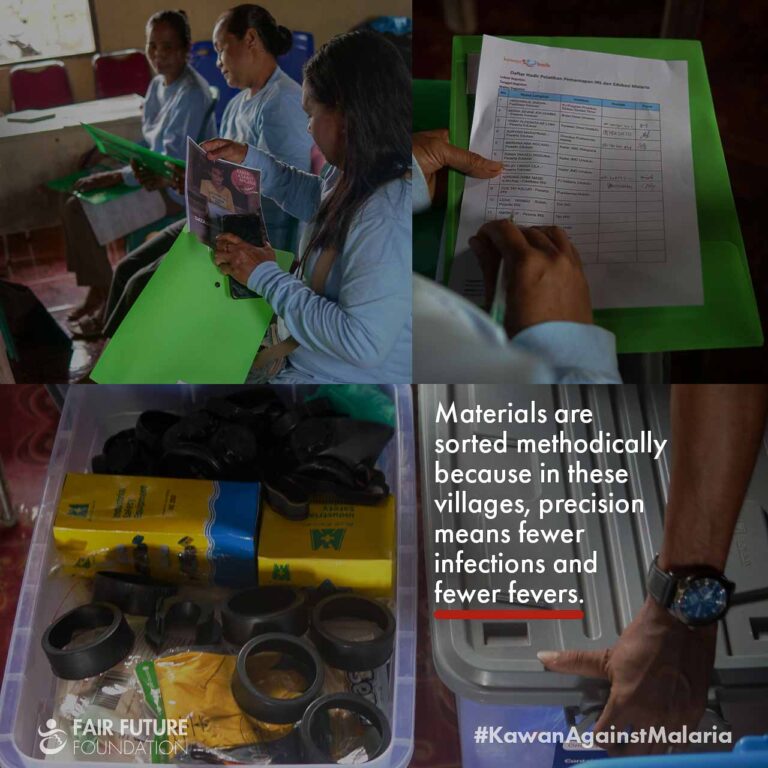
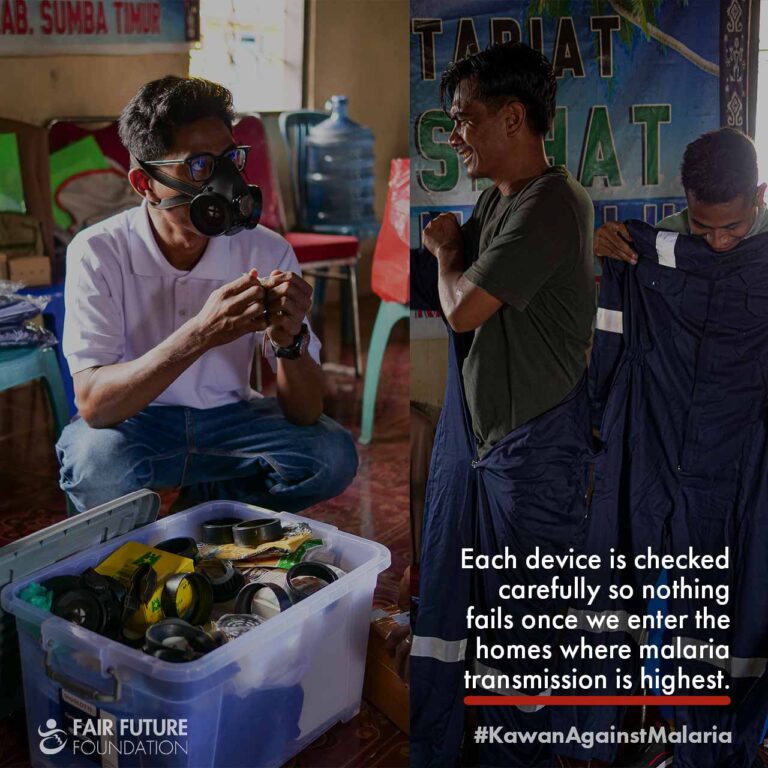
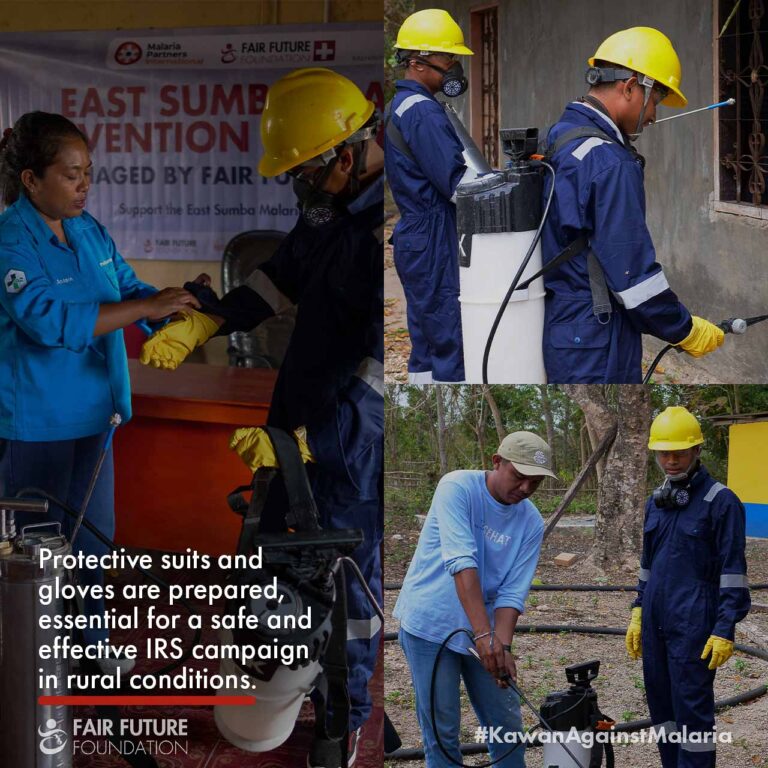
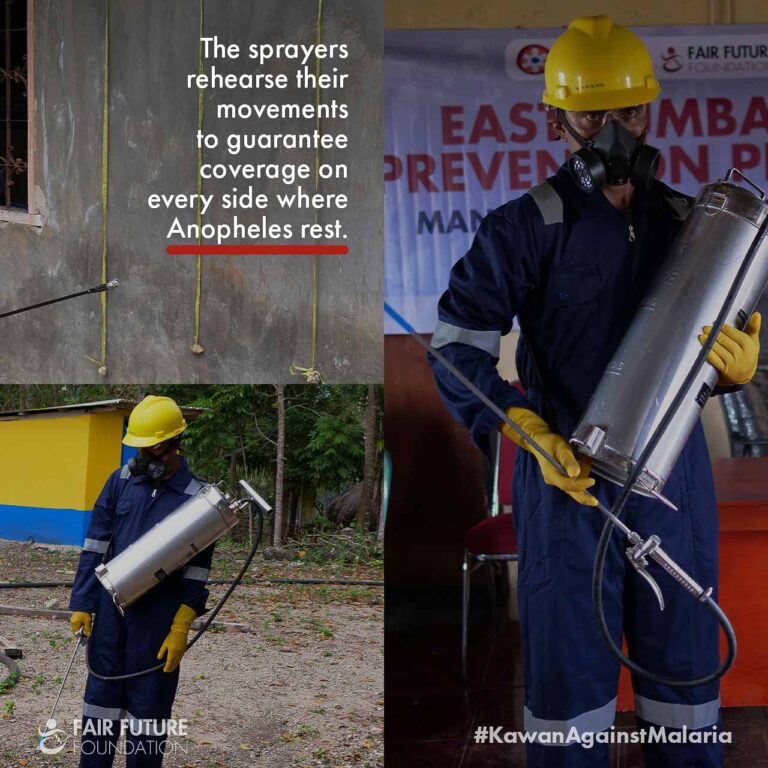
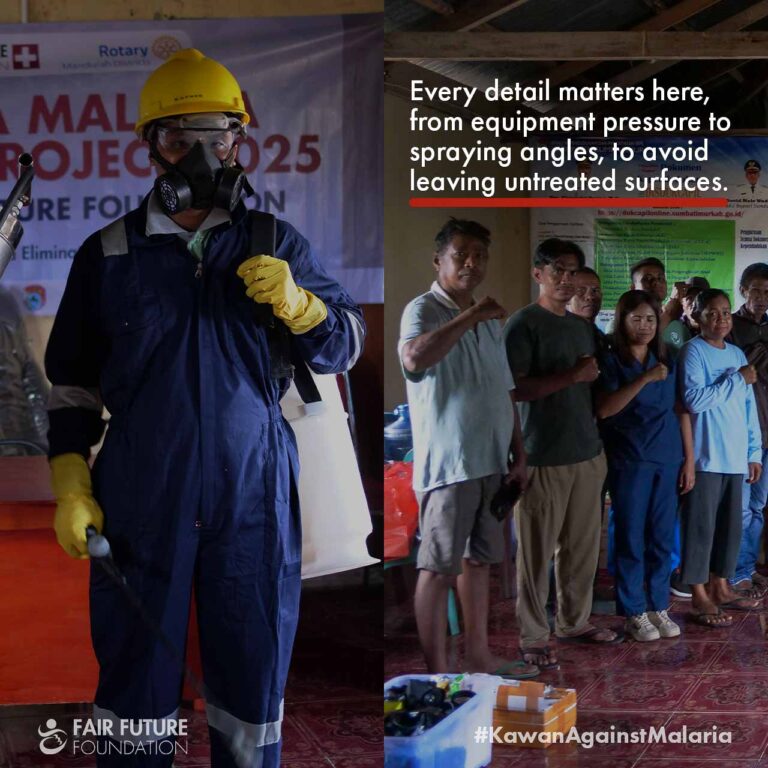
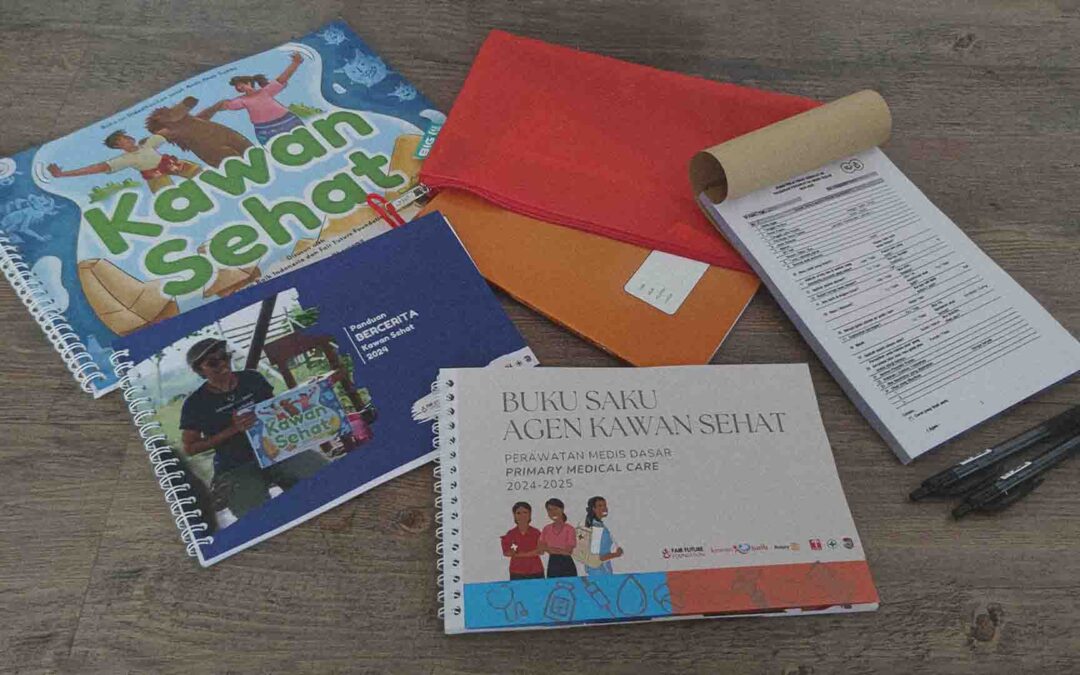
Before entering a single home, every element is checked. Sprayers are calibrated, insecticide dilution verified, protective equipment inspected, and household registers reviewed. Ficam insecticide is prepared according to strict medical protocols to ensure family safety while targeting Anopheles mosquitoes resting on interior walls. These steps are not mere formalities. In ultra-rural settings, preparation determines whether an intervention prevents illness or fails silently.
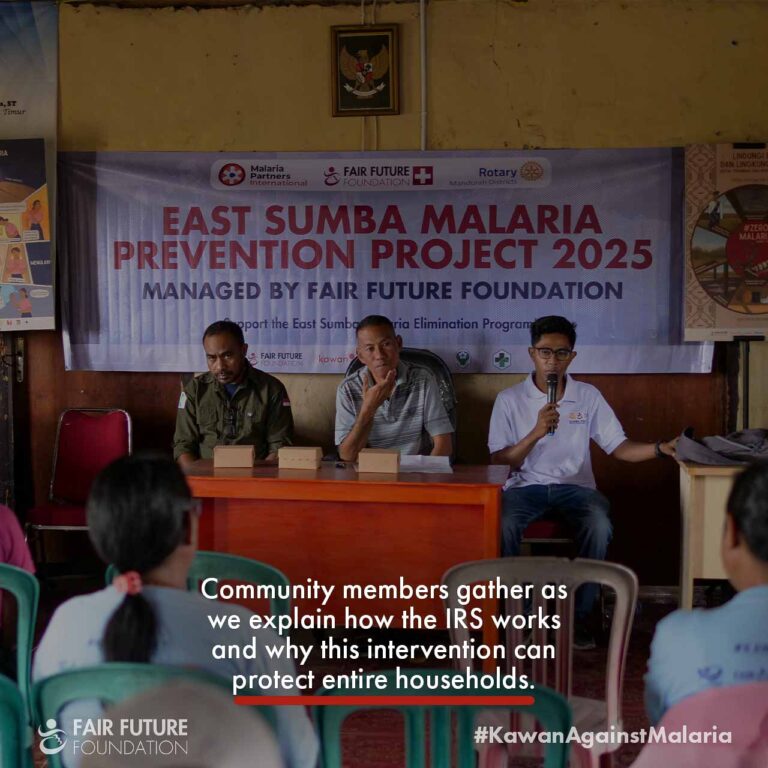
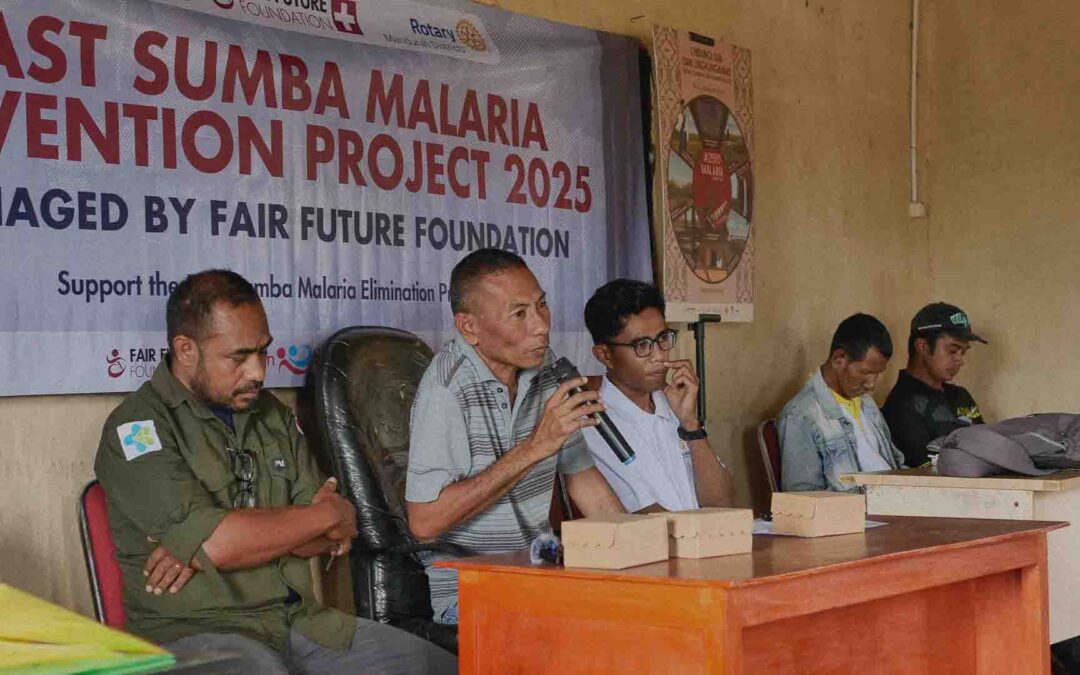
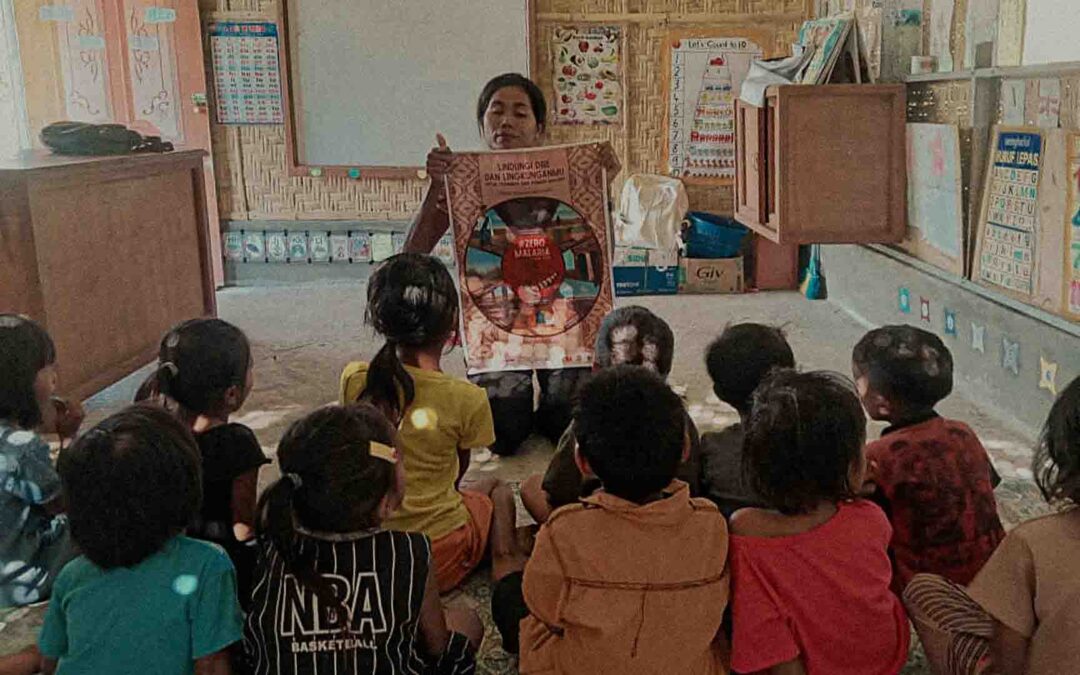
Community briefings explain how Indoor Residual Spraying works, why walls are treated, and how protection lasts for several months. This dialogue builds adherence and enables families to become active participants in disease prevention rather than passive recipients.
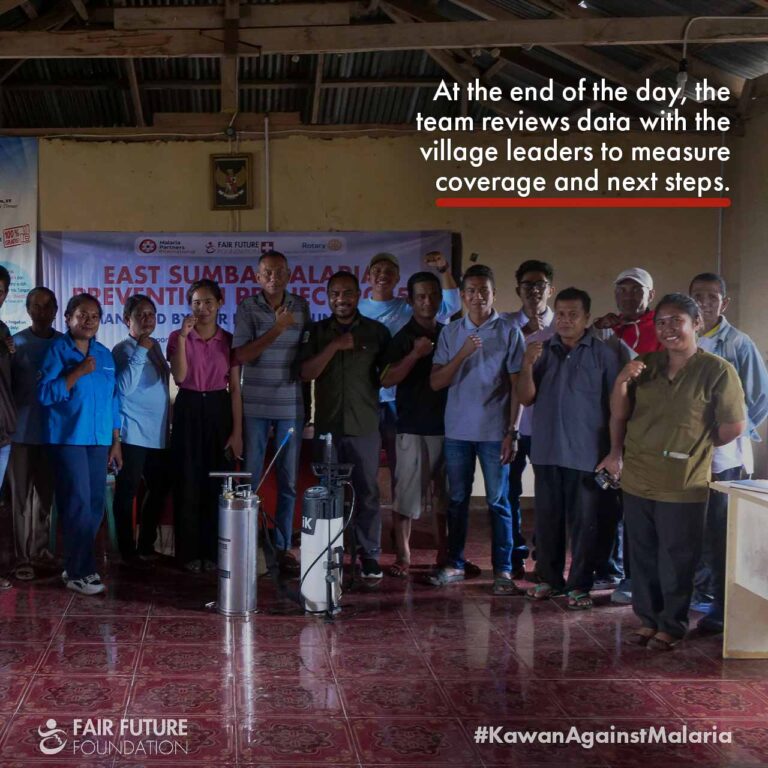
Fair Future and Kawan Baik teams move house to house with the same discipline used in hospital infection control. Coverage is documented, data are reviewed with village leaders, and adjustments are planned immediately. This is not an emergency response. It is preventive medicine applied at the village scale, where logistics, medical accuracy, and human respect converge to sustainably reduce malaria transmission.
Alex Wettstein – Fair Future Foundation medico-social camp in East Sumba – Rumah Kambera, Lambanapu – the 28th of January 2025