


Malaria prevention in the Pahomba community action
Clinical education adapted to rural life
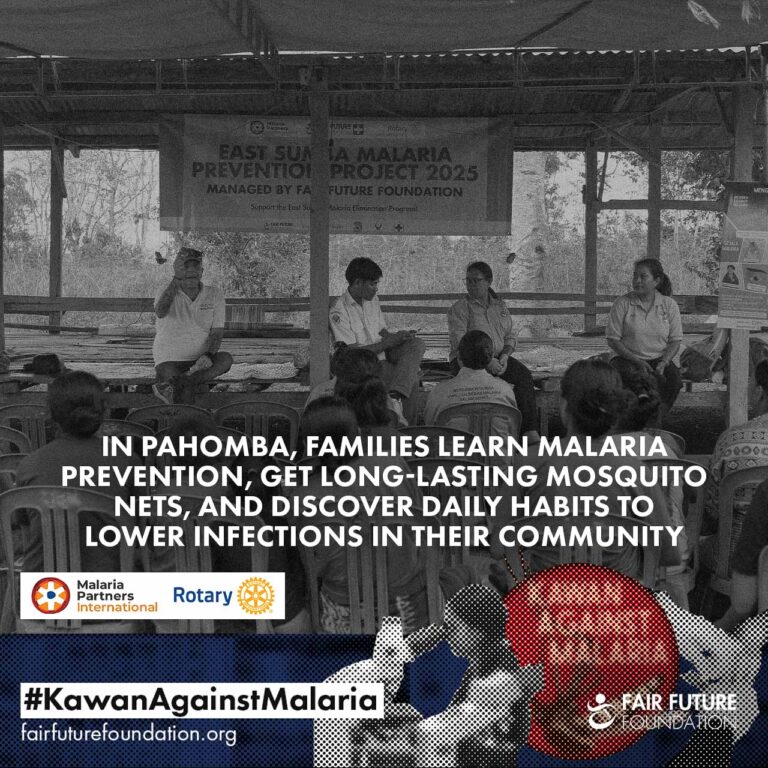
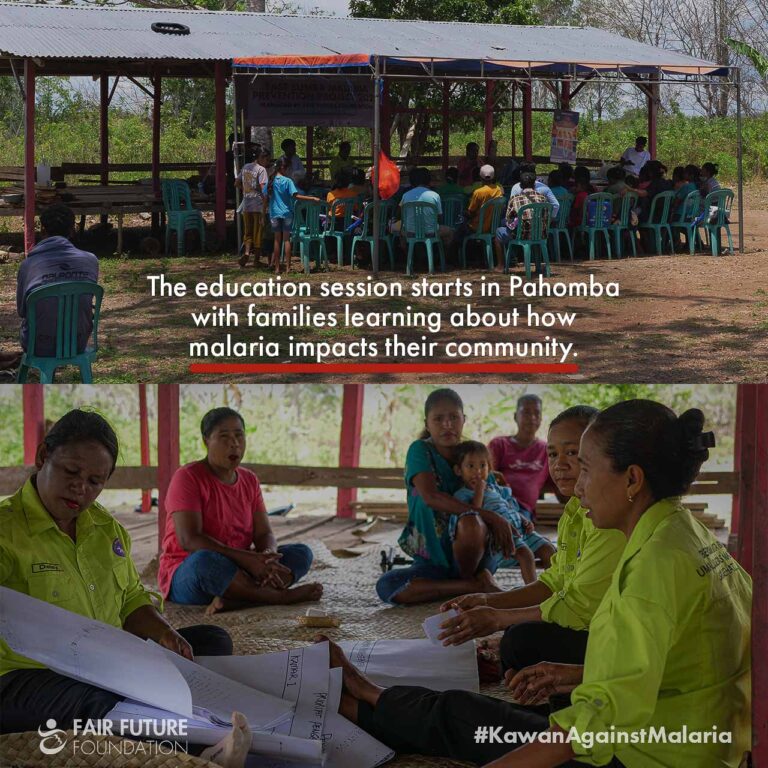
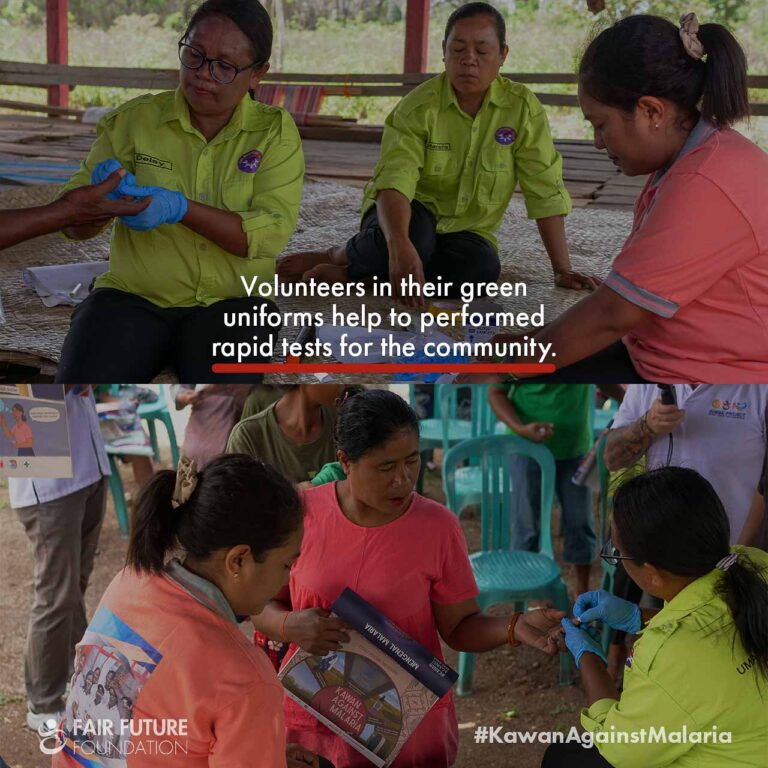
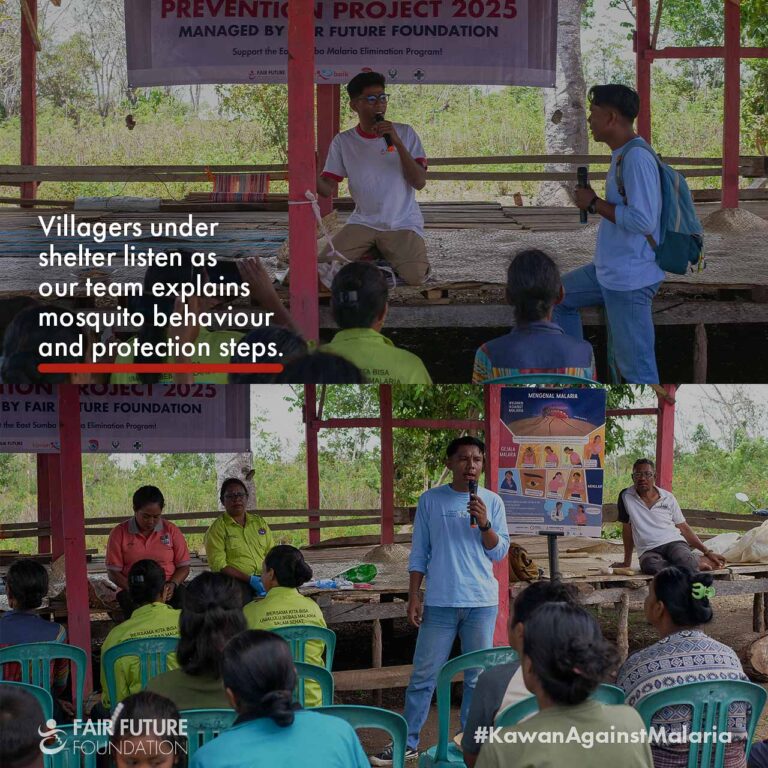
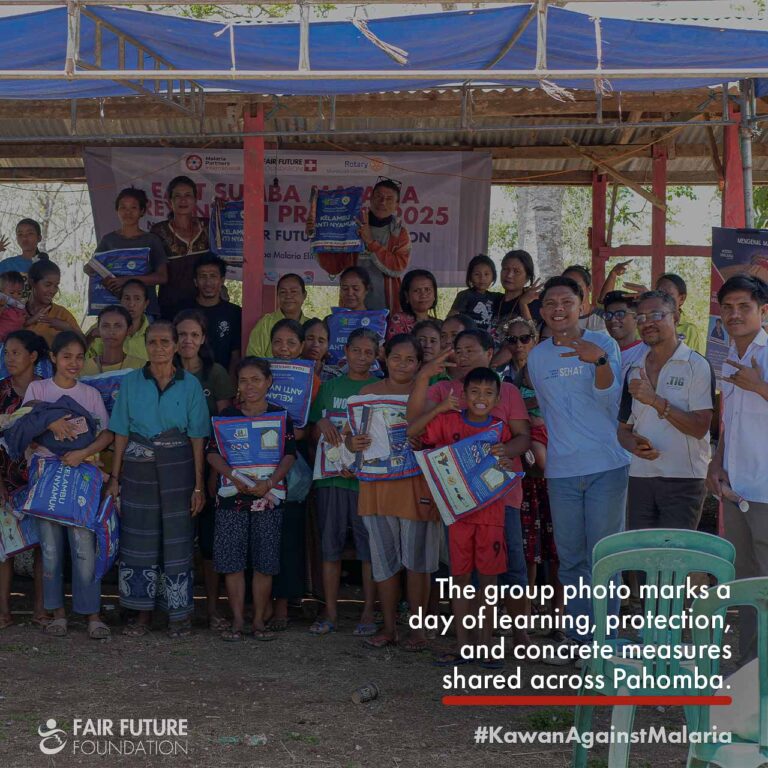
In Pahomba, malaria prevention is not delivered as theory but as practice, shared face-to-face with families living with constant exposure to mosquito-borne disease. Fair Future teams, working alongside Kawan Baik Indonesia field staff, conduct structured community sessions to understand transmission, early symptoms, and concrete protective actions tailored to daily rural life.
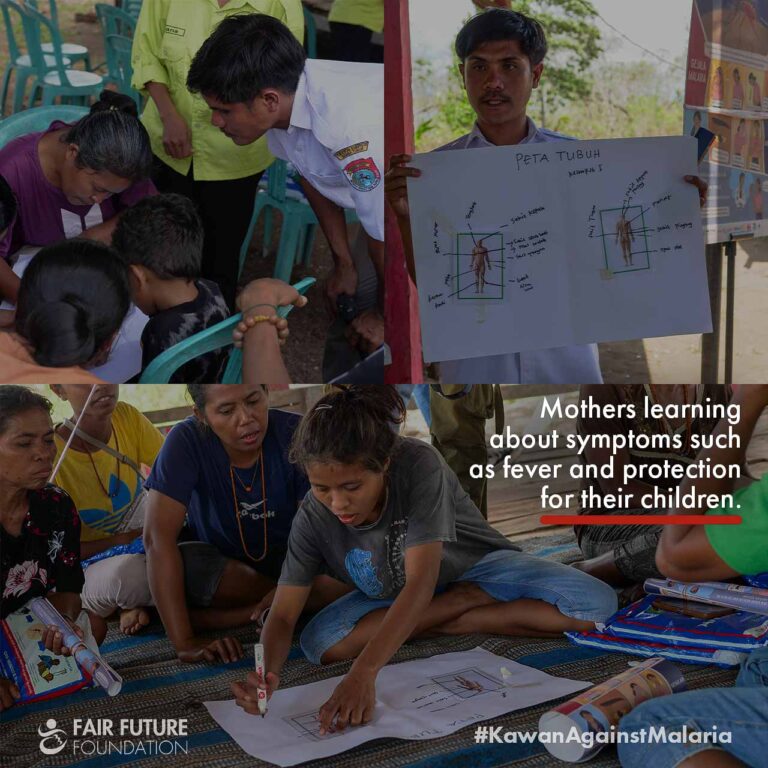
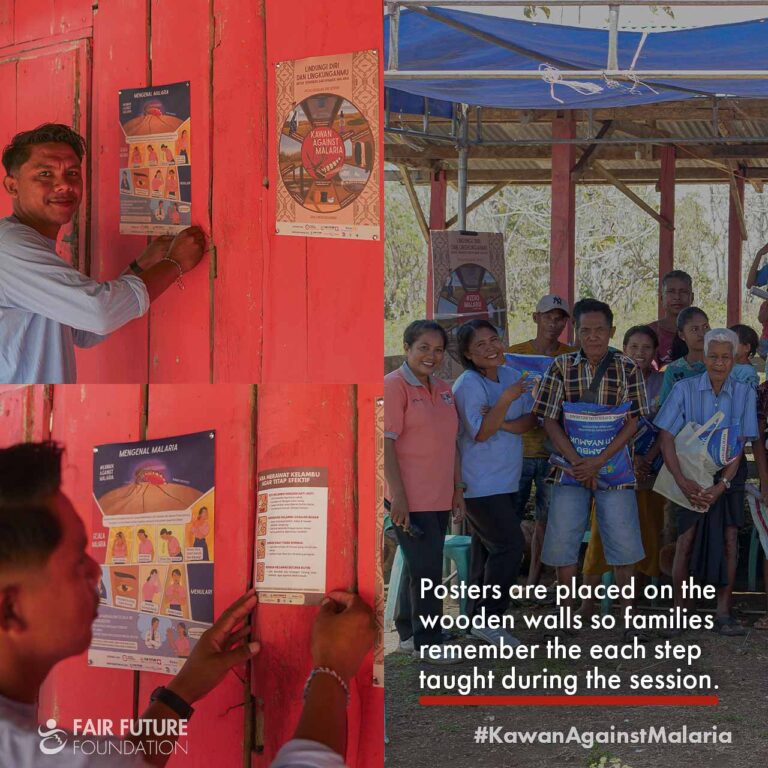
Under a simple shelter, adults and children learn about Anopheles mosquitoes, why bites occur mainly at night, and how household environments influence infection risk. Posters serve as visual medical tools, explaining fever detection in children, warning signs that require referral, and the importance of protecting sleeping areas. Education is practical, repetitive, and designed for long-term retention in villages where access to care is distant and delayed treatment can be fatal.
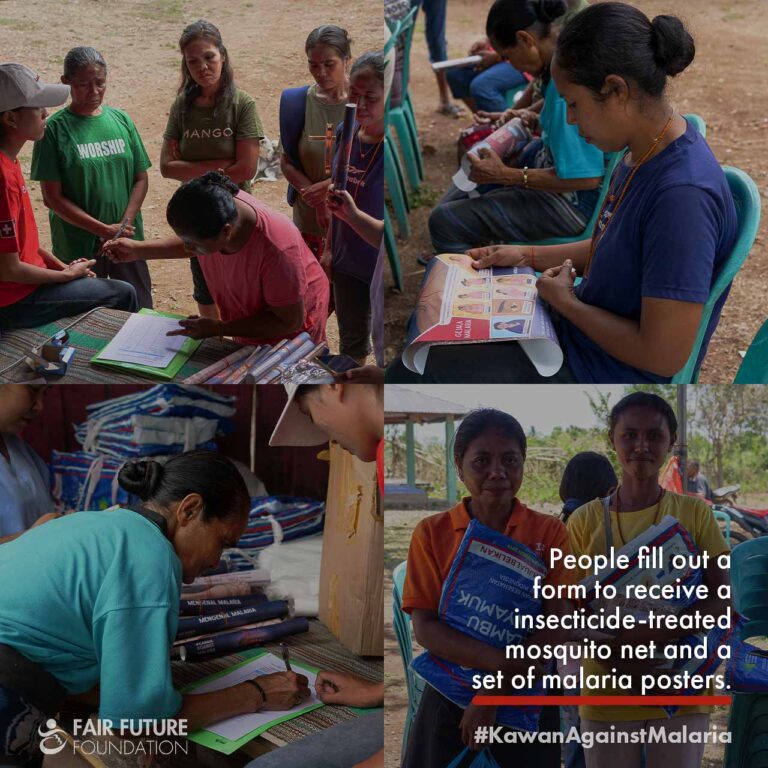
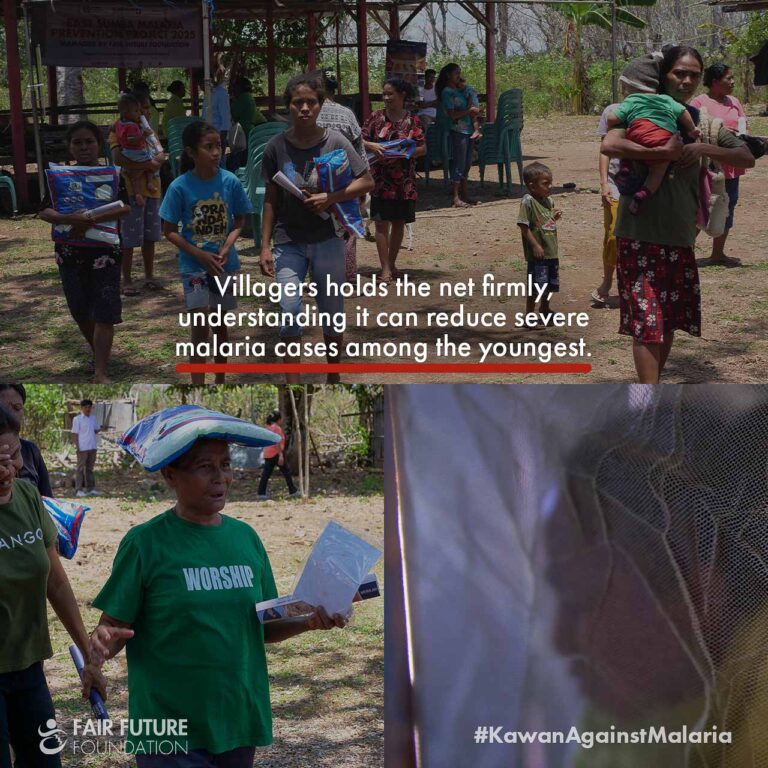
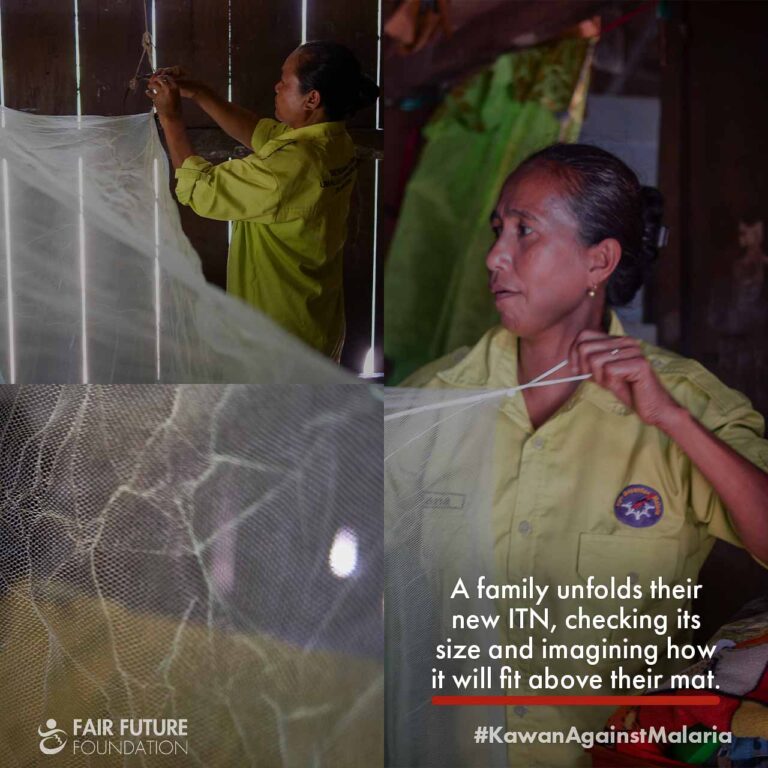
During the session, long-lasting insecticide-treated mosquito nets are distributed and demonstrated. Families learn proper installation, daily use, and maintenance, ensuring protection during peak transmission hours. These nets are a proven medical intervention, reducing malaria incidence and preventing severe outcomes in young children.
Walls serve as prevention supports, with posters remaining in homes, reinforcing messages long after the teams leave. This work reflects Fair Future’s clinical approach to community health, combining prevention, education, and local engagement. In Pahomba, malaria control becomes shared responsibility, built village by village through trust, medical knowledge, and consistent field presence.
Alex Wettstein – Fair Future Foundation medico-social camp in East Sumba – Rumah Kambera, Lambanapu – the 8th of February 2025