


This image is in 1920×1080 resolution. Click on it to enlarge and view at full size.
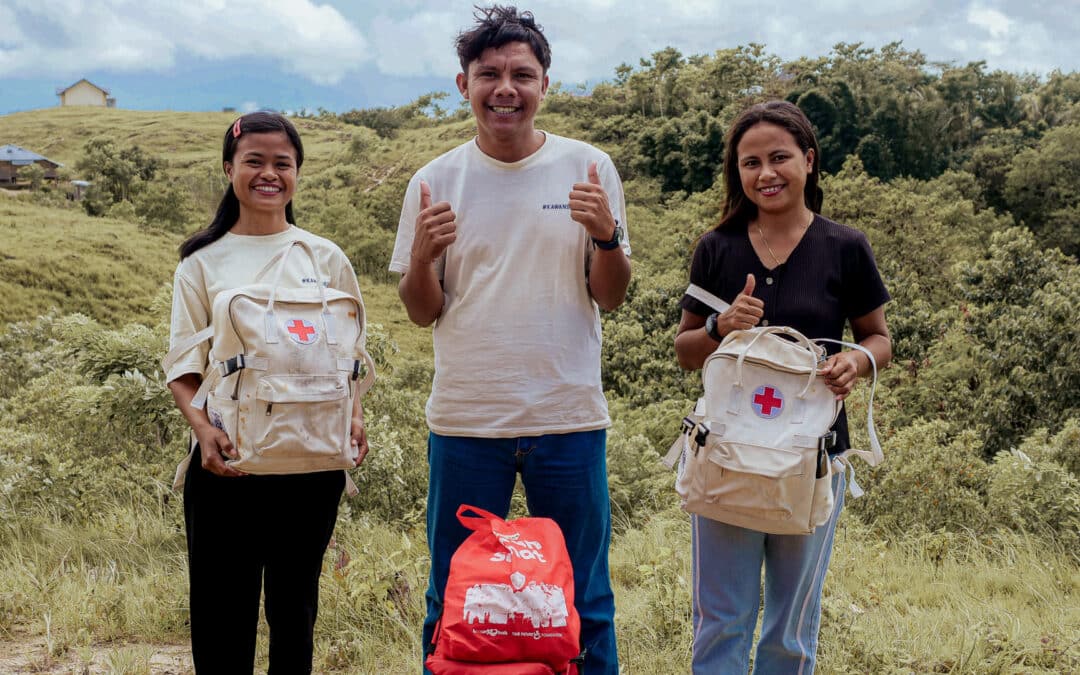
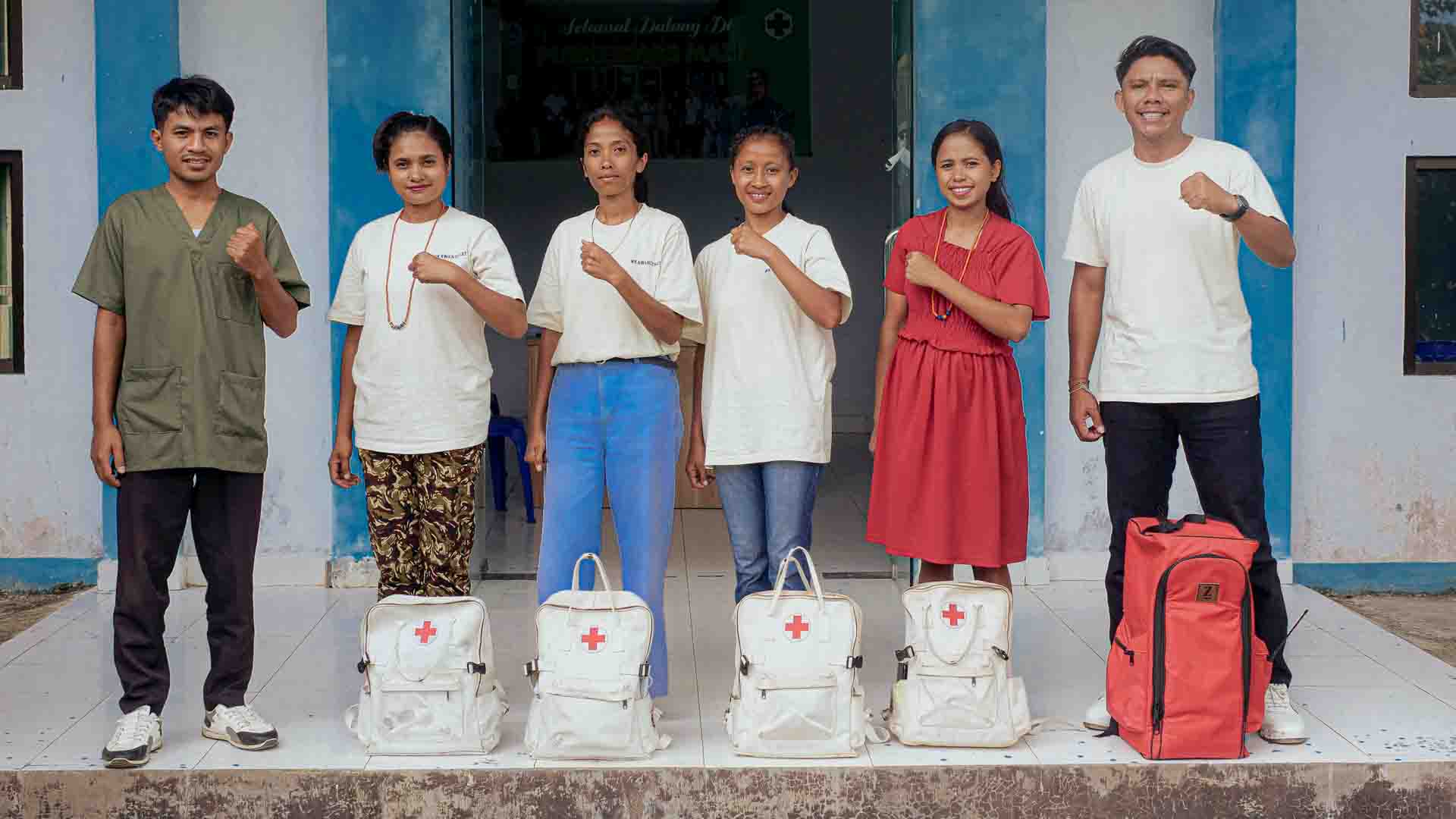
Frontline health agents equipped with medicines and tools at Mahu Puskesmas.
This new picture of the day shows a quiet moment that carries a heavy reality. We are at the local Puskesmas in Mahu. In this image, four Kawan Sehat health agents, women who live and work in some of East Sumba’s most isolated areas, stand alongside the fifth person who matters just as much: the regional nurse coordinator of Mahu. He works full-time in this medical centre and is one of our closest partners on the ground. What we do here is not parallel medicine. It is cooperation, built on trust, shared limits, and shared responsibility.
From their villages to this health centre, the distance is not measured in kilometres alone but in effort. On average, people must walk more than twelve kilometres to reach care. There are no roads, no scooters, no four-wheel drives: only steep paths, heat, rain, and time. For many families, reaching a Puskesmas means losing a full day, sometimes more.
This is why the Kawan Sehat health agents are indispensable.
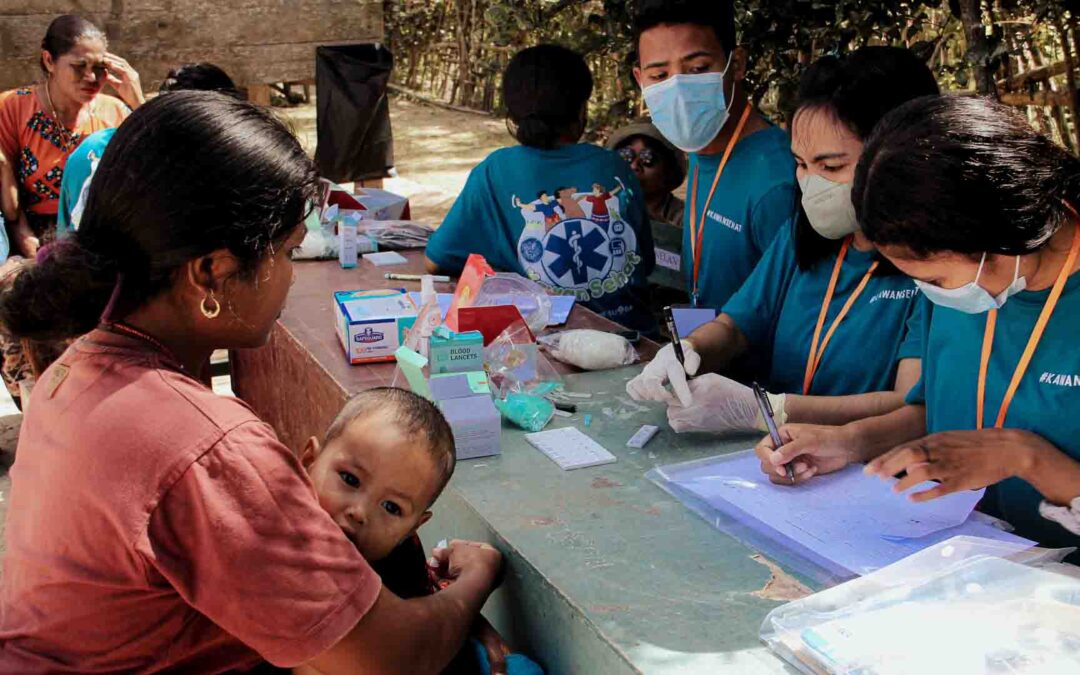
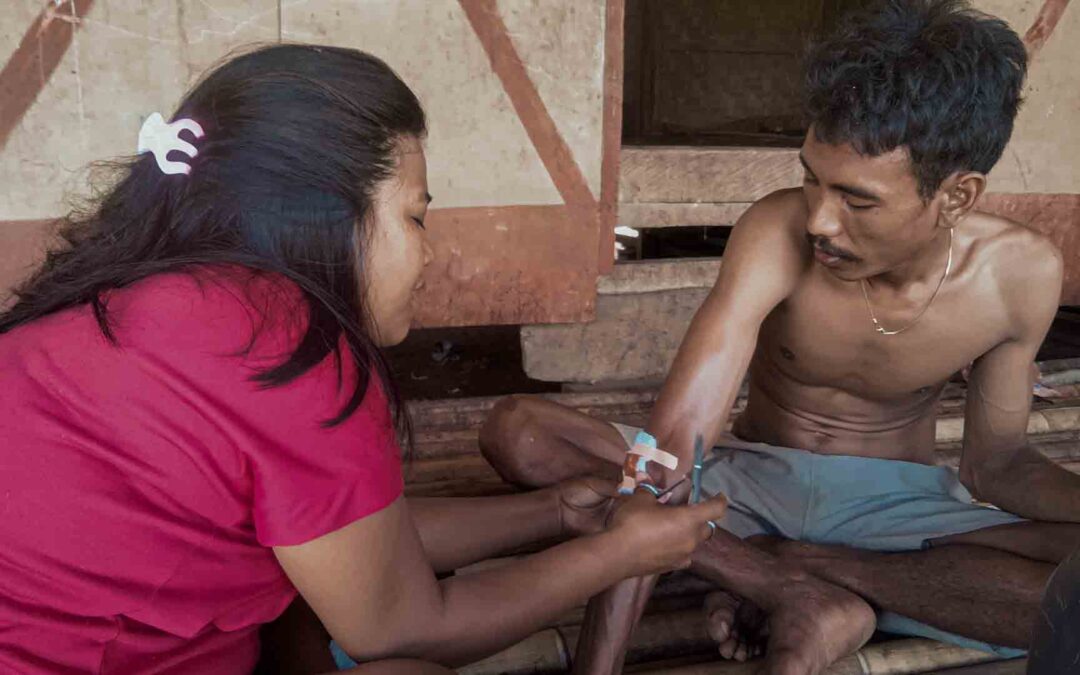
Inside their medical backpacks is not symbolism but survival. They provide wound care, infection prevention, treatment for common diseases, antibiotics when needed, and the tools to prevent minor injuries from becoming fatal. In places without doctors, untreated infections turn into septicemia. Here, prevention is medicine.
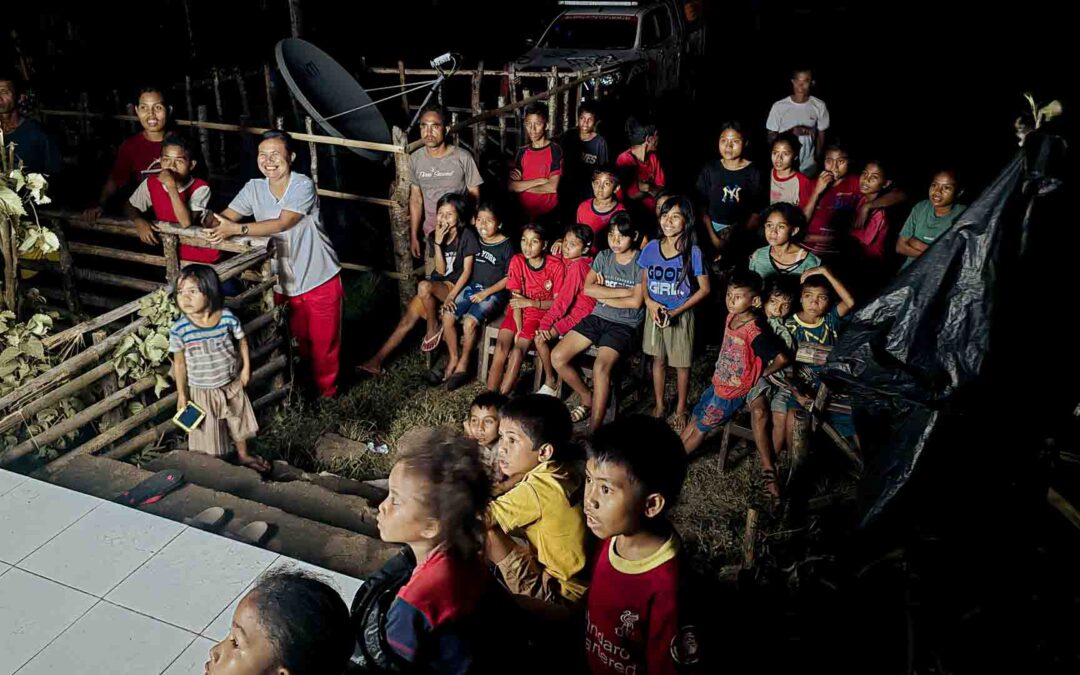
They also carry knowledge. Nine educational posters, soon ten, including HIV prevention, are printed on fabric to survive rain, dust, and daily use. These posters are explained, discussed, and reused, village by village. Education walks where vehicles cannot.
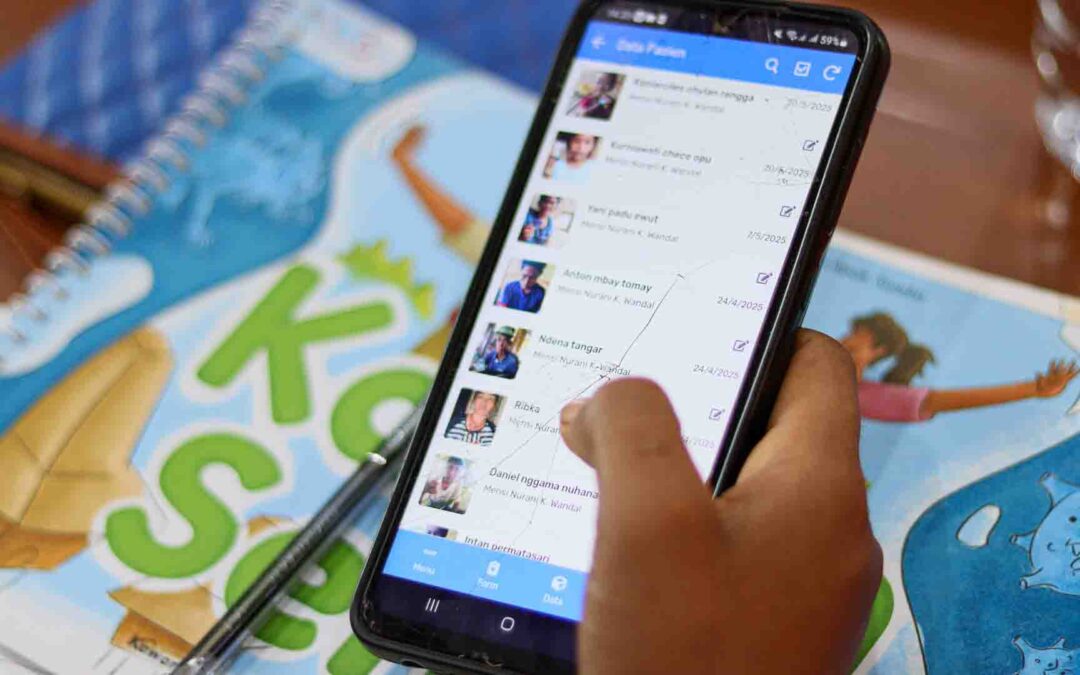
Each agent uses the Kawan Sehat application to document cases, follow patients, and transmit data. It works so well that even Indonesian authorities openly acknowledge its value. Data, when appropriately collected, saves lives.
On the right stands Erwin, the field coordinator of our Primary Medical Care programme. With his off-road scooter and large red backpack, he ensures continuity. He delivers medicines, restocks supplies, supports agents, and maintains safety across the territory. Here, logistics is healthcare.
It must also be said clearly: many Puskesmas, and even hospitals in ultra-rural regions, have little or no medication left. The shortage of doctors and qualified staff is severe. Some centres still lack electricity or clean water. Under these conditions, medical care collapses.
One Puskesmas director (Nggaha Ori Anggu Puskesmas) recently told us something uncomfortable but honest: “-Today, our teams are treating more patients than some health centres themselves”.
This photo is not a celebration. It is a diagnosis.
Today, the 18th of December 2025 – Alex Wettstein
- Explore the case gallery, featuring over 100 photos taken by Kawan Sehat health agents during actual treatments.
- Discover how the Primary Medical Care programme functions, with protocols and measurable impacts across East Sumba.
- Meet the Kawan Sehat health agents, learn about their training, tools, and the villages they serve.
External Links
List of Related Organisations with Hyperlinks
- World Health Organisation: Global authority on health systems strengthening and primary healthcare.
- UNICEF Health Programs: Supports child and maternal health in underserved regions worldwide.
- Doctors Without Borders: Provides emergency medical care in fragile and remote environments.
- Primary Health Care Performance Initiative: Works on strengthening primary healthcare systems globally.
- Global Health Workforce Network: Focuses on shortages of qualified medical personnel in rural areas.
- International Federation of Red Cross and Red Crescent Societies: Delivers community-based healthcare and emergency medical response.