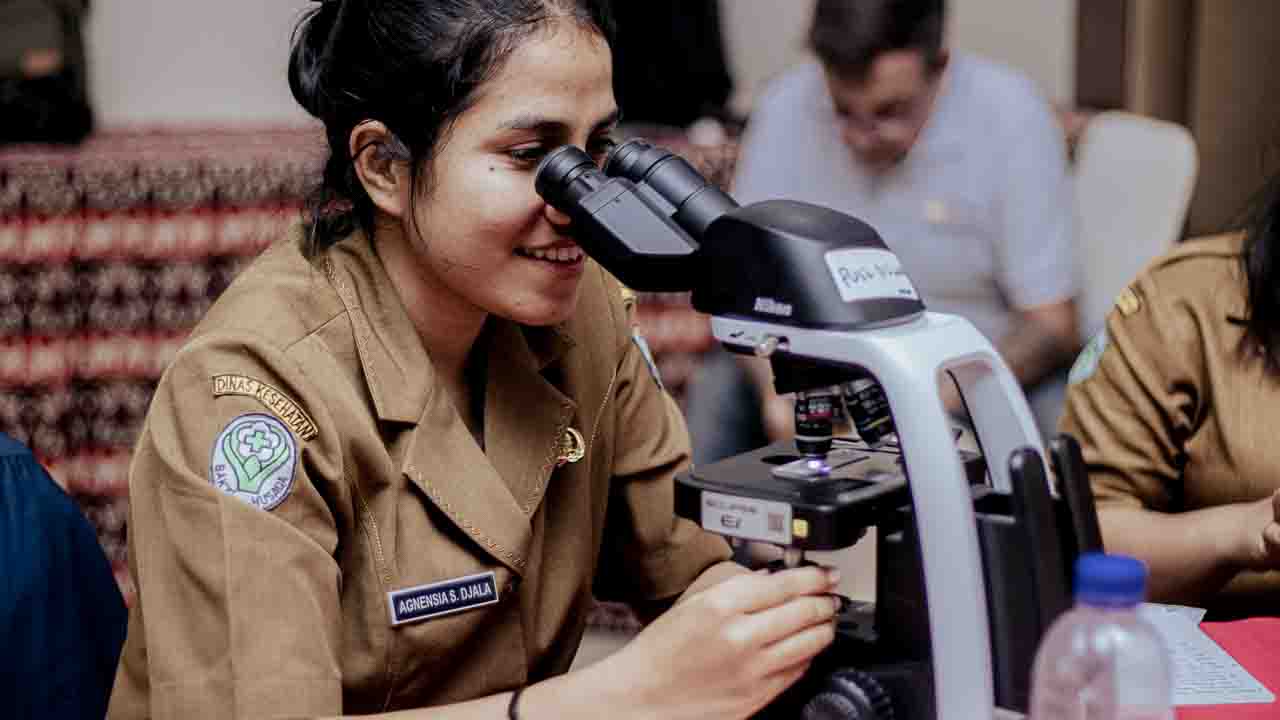



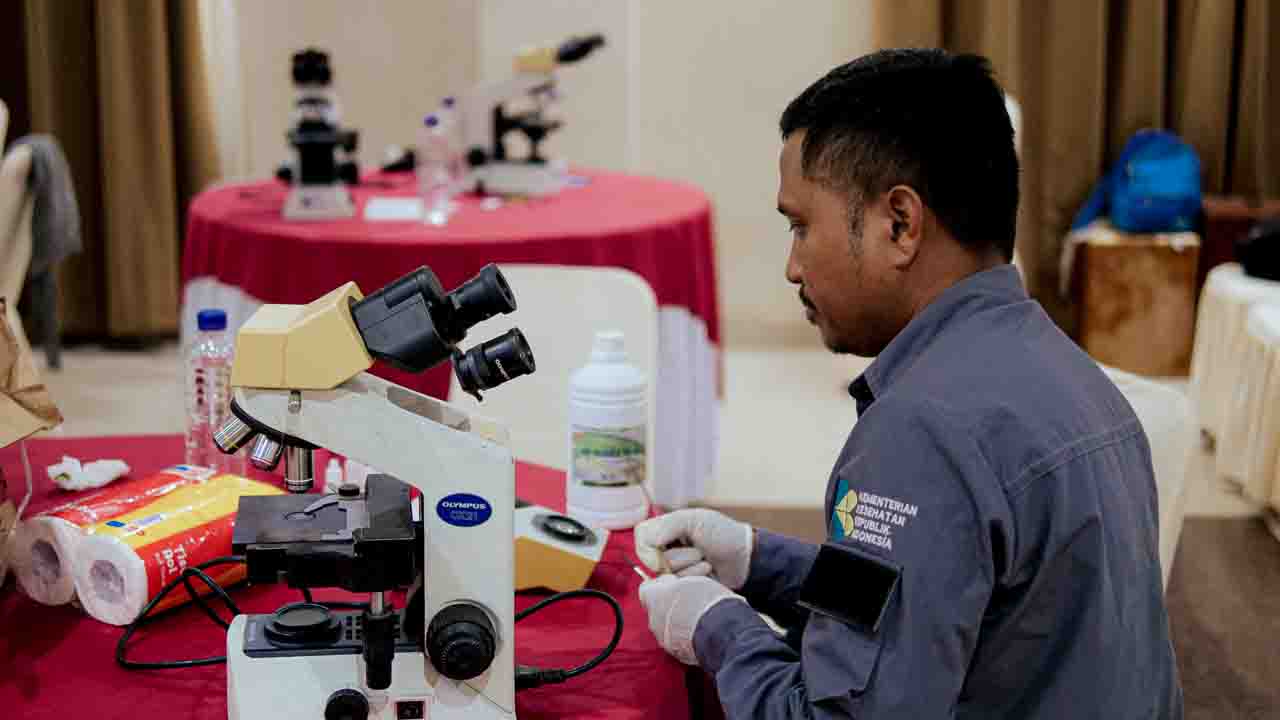
Day two of malaria microscopy training, validating diagnostic accuracy under real field conditions in East Sumba.
When diagnosis becomes a responsibility
Malaria microscopy training reaches its most critical stage on the second day. In East Sumba, where hospitals are distant and laboratory support is minimal, diagnostic accuracy is not theoretical. This evaluation phase of the malaria microscopy training confirms whether analysts can safely identify parasites, guide treatment, and prevent severe outcomes in isolated health centres (puskesmas).
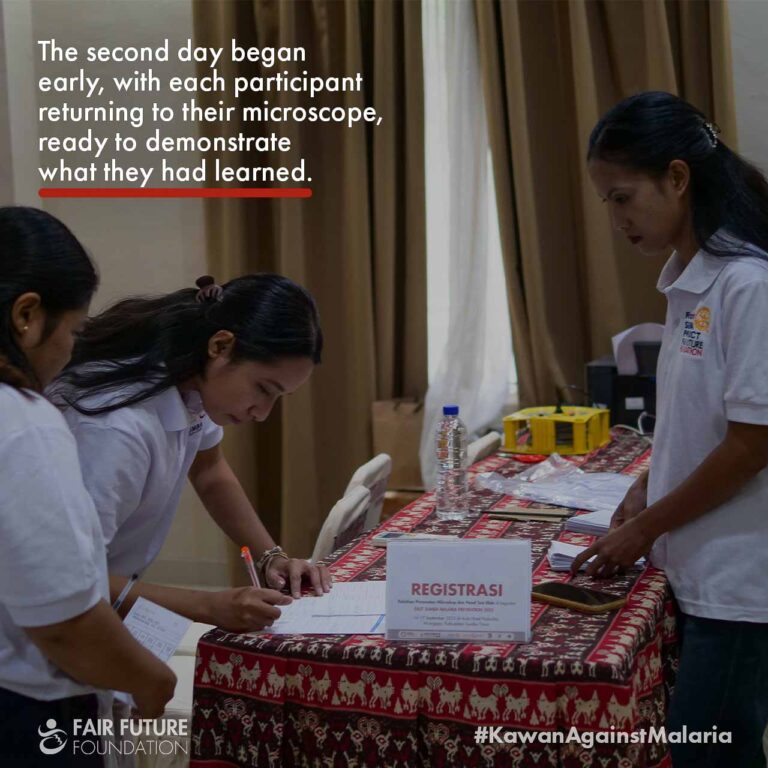
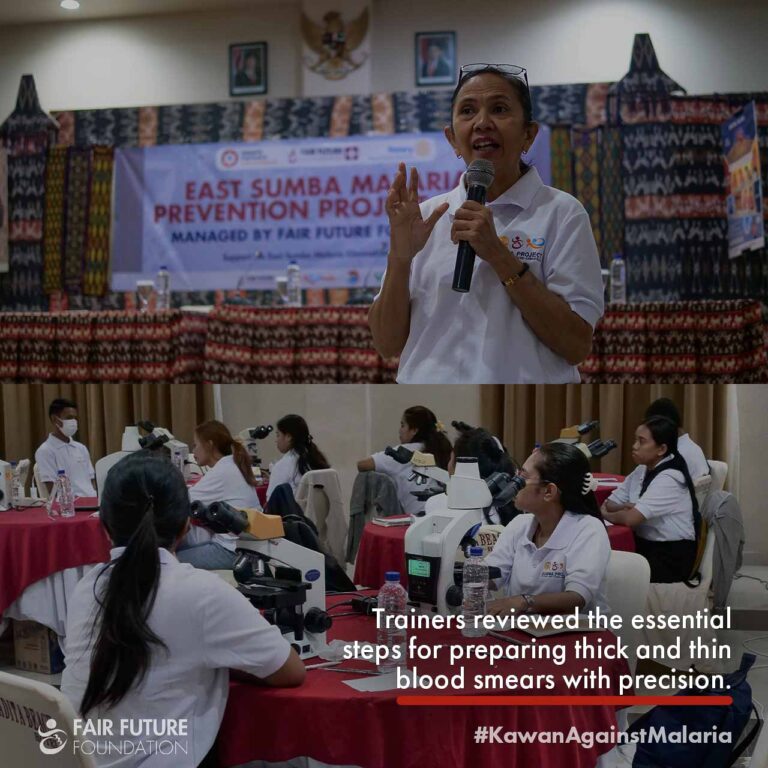
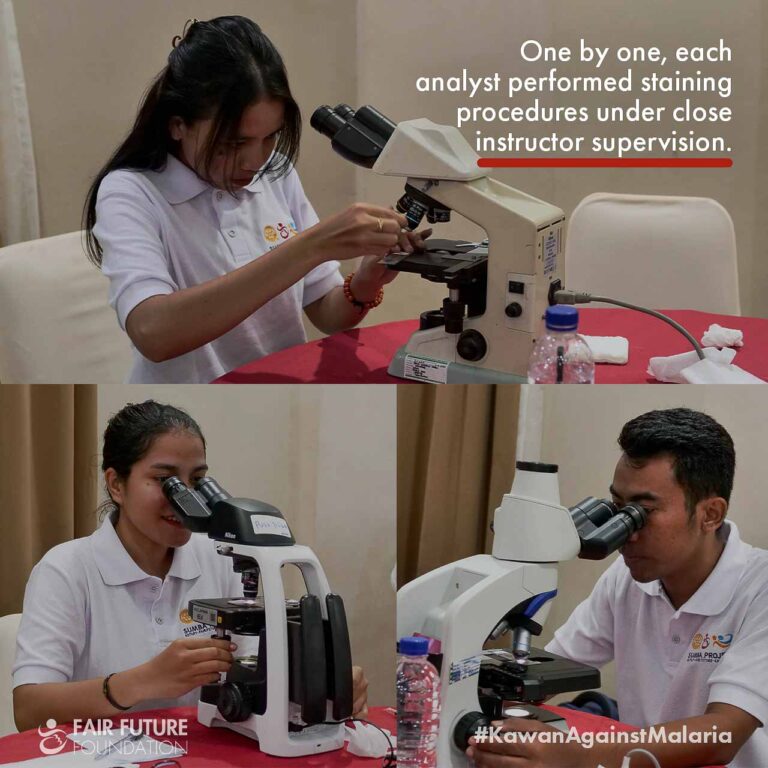
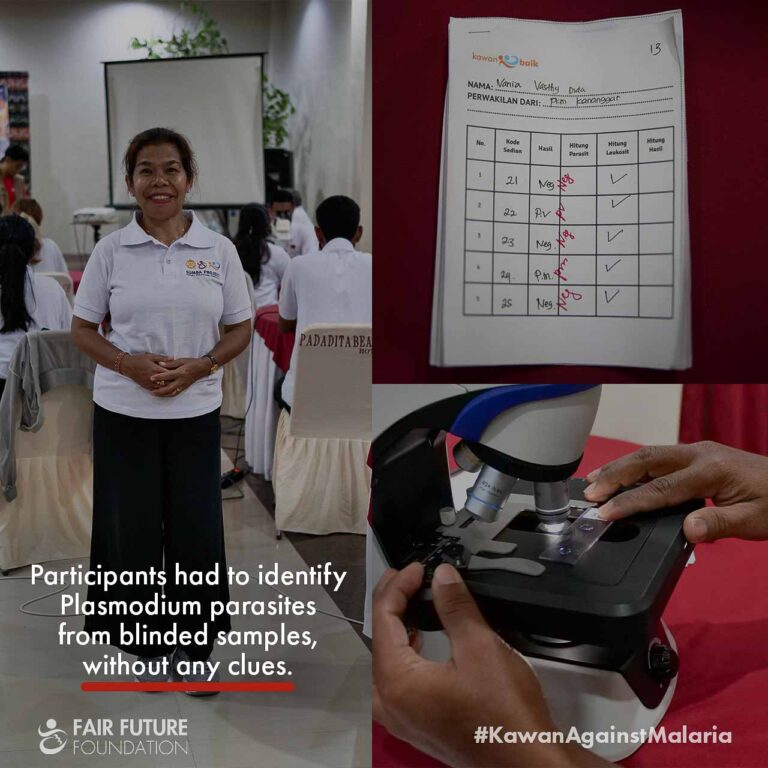
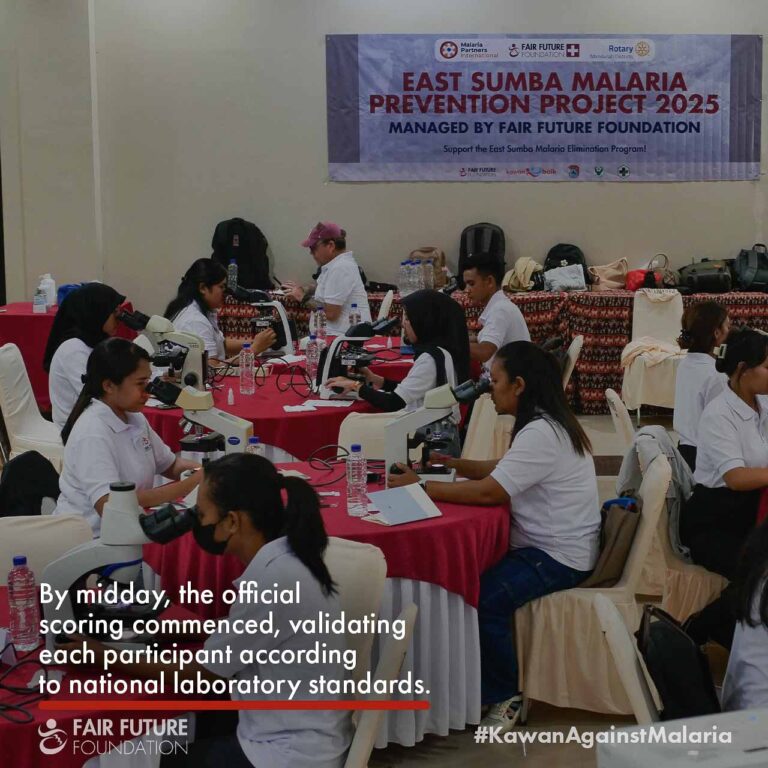
The second day began early, with silence replacing discussion. Each participant returned to their own microscope, knowing this was no longer a learning exercise. Thick and thin blood smears were prepared under supervision, stains applied with precision, and blinded slides examined without guidance. Every step reflected daily reality in remote Puskesmas, where errors have direct clinical consequences.
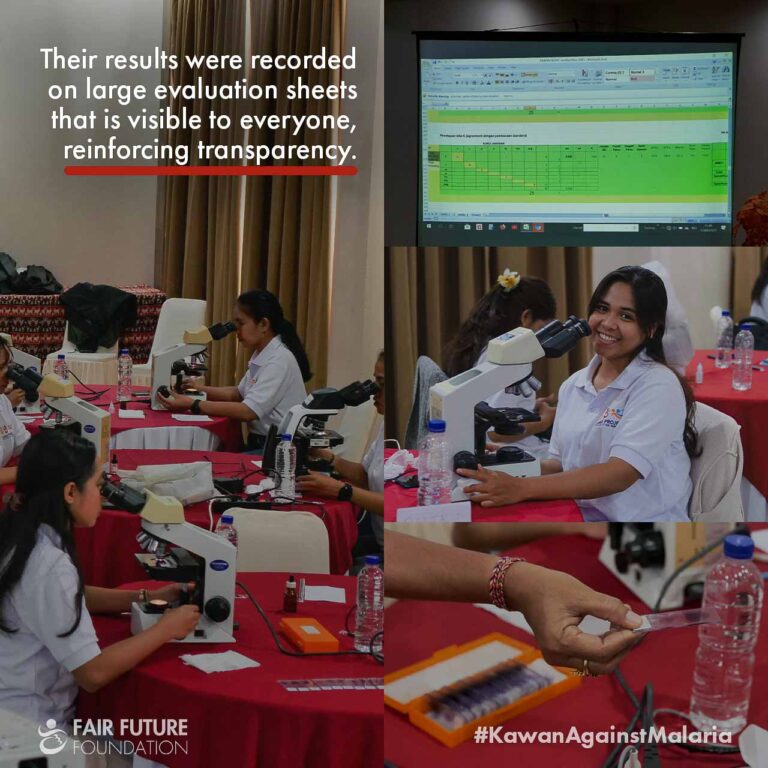
Trainers from Kupang worked closely with medical staff from Fair Future Foundation, supported by Kawan Baik Indonesia field teams. Techniques were corrected, habits refined, and reasoning questioned. Beyond identifying Plasmodium parasites, participants were assessed on their ability to estimate parasite density and on their discipline in reporting. Transparency was central. Results were recorded openly, reinforcing accountability and trust.
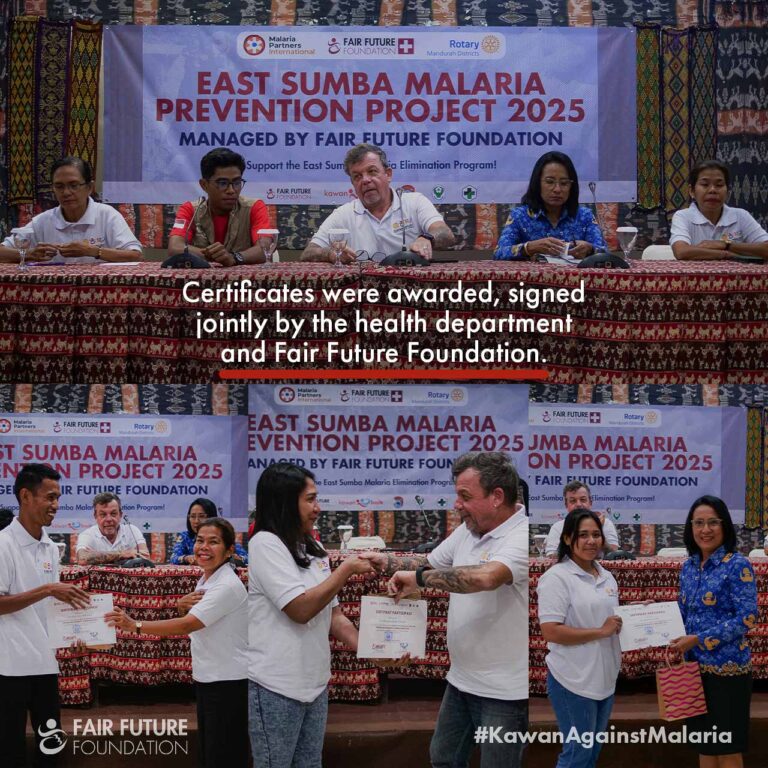
By midday, official scoring began in accordance with national laboratory standards. Local health authorities joined the process, recognising that reliable diagnostics are a cornerstone of malaria control in endemic regions. Certification followed. These documents do not reward attendance. They validate competence, responsibility, and the ability to protect lives using science in places where no alternative exists.
Today, the 28th of January 2026 – Alex Wettstein
In Short | When precision becomes protection
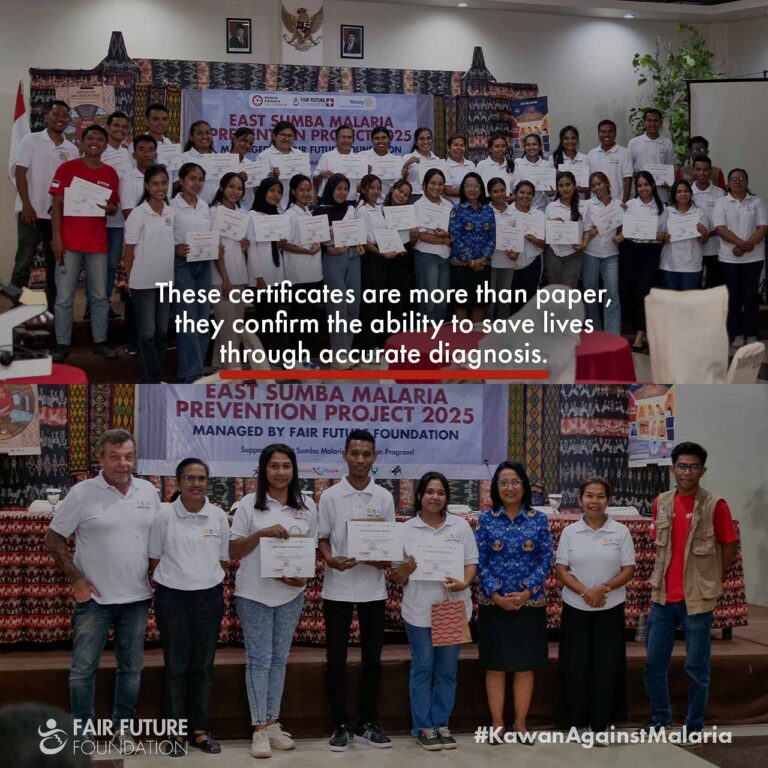
On day two, the room was quiet. No explanations, no guidance, only microscopes and responsibility. Each slide represented a real patient from a remote village, where delays and mistakes have consequences. This evaluation confirms more than technical skill. It confirms discipline, accountability, and the capacity to protect lives through accurate diagnosis when no hospital is available.
Malaria microscopy training day two
Malaria microscopy training and certification
Validated diagnostics for remote health centres
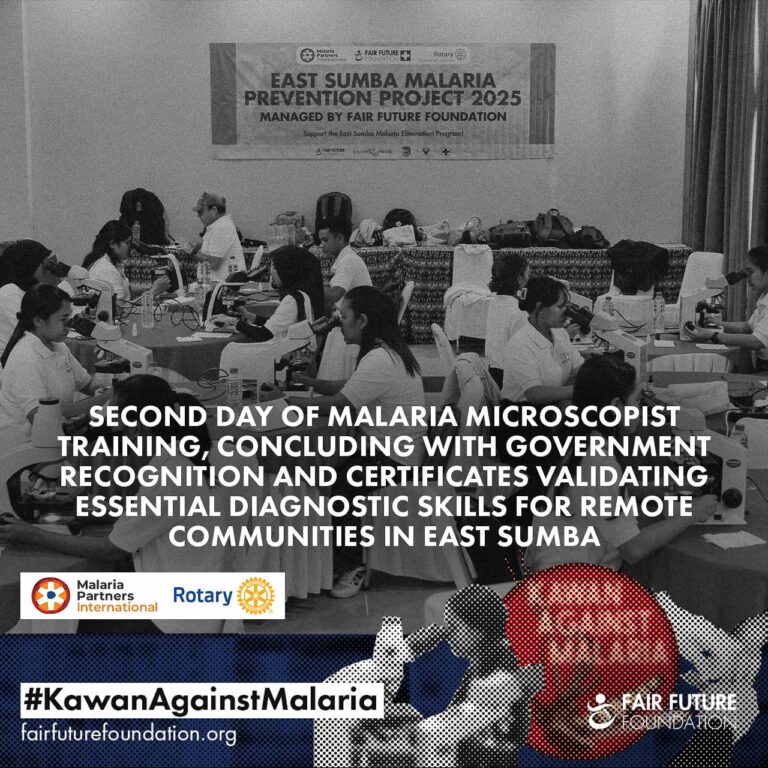
The second day of malaria microscopist training in East Sumba focused on evaluation, precision, and responsibility. In a region where hospitals and advanced laboratories are absent, accurate malaria diagnosis is often the only barrier between early treatment and severe disease. Each participant returned to their microscope to demonstrate the skills required for safe diagnostics in remote Puskesmas health centres.
Under strict supervision, analysts prepared thick and thin blood smears, applied staining protocols, and examined blinded samples to identify Plasmodium parasites and assess parasite density. Results were recorded transparently, reinforcing laboratory discipline and accountability. Trainers from Kupang worked alongside medical staff from Fair Future Foundation, supported by Kawan Baik Indonesia’s field teams, to correct techniques and ensure each participant met national diagnostic standards.
Beyond technical accuracy, the training emphasised clinical consequences. A misread slide can delay treatment, increase transmission, or cost a child’s life. By midday, official scoring validated each participant’s competence against government laboratory criteria. Local health authorities joined the closing session, formally recognising the role of accurate diagnostics in controlling malaria in endemic villages.
Certificates were awarded and co-signed by Fair Future Foundation and the East Sumba health department. These documents confirm more than attendance. They certify the ability to diagnose malaria reliably, reduce complications, and protect vulnerable populations using science, discipline, and field-based medical expertise.
Alex Wettstein – Fair Future Foundation medico-social camp in East Sumba – Rumah Kambera, Lambanapu – the 28th of January 2025



List of Related Organisations with Hyperlinks
- Malaria Partners International: Their mission is to launch an international Rotarian campaign to eradicate malaria.
- WHO Global Malaria Programme: Coordinates international strategies for malaria diagnosis and control.
- UNICEF Health Programmes: Supports child health and infectious disease prevention worldwide.
- Médecins Sans Frontières: Provides medical care and laboratory diagnostics in crisis settings.
- FIND Diagnostics: Develops diagnostic solutions for infectious diseases in low-resource contexts.
- PATH Malaria Program: Advances malaria diagnostics and laboratory capacity globally.
- Roll Back Malaria Partnership: Global coordination platform for malaria control efforts.