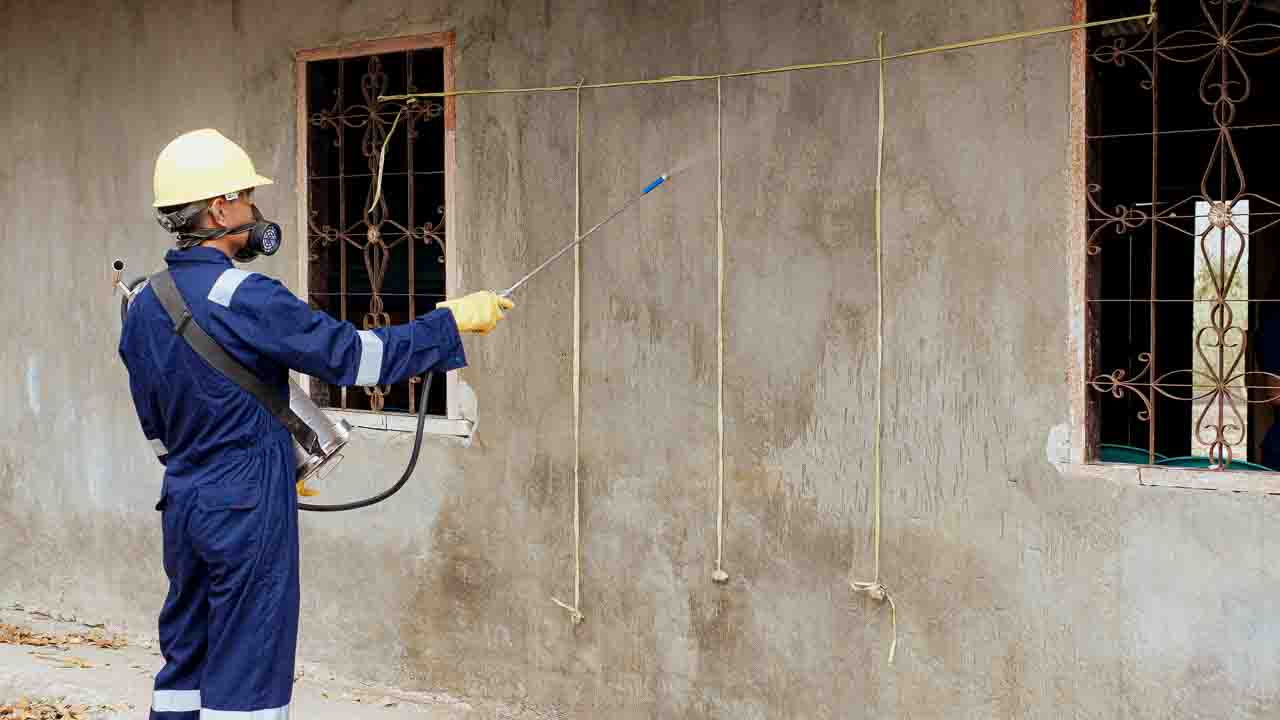



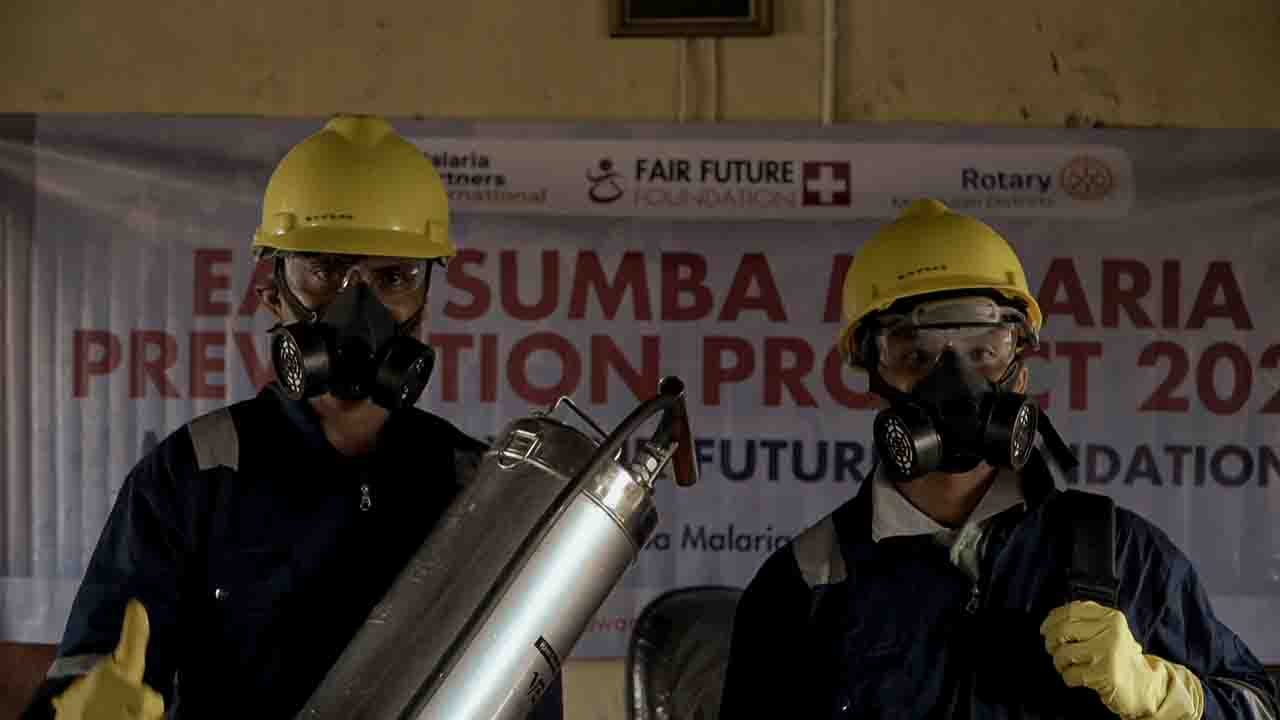
Field teams undergo IRS training to ensure safe and effective malaria prevention in Umalulu villages.
Preparation before spraying saves lives
In Umalulu, malaria is not an abstract disease. It is a daily clinical reality that shapes childhood, pregnancy, and survival. Preventing transmission in such settings requires more than products or protocols. It requires preparation, discipline, and trust built house by house, long before the first wall is treated.
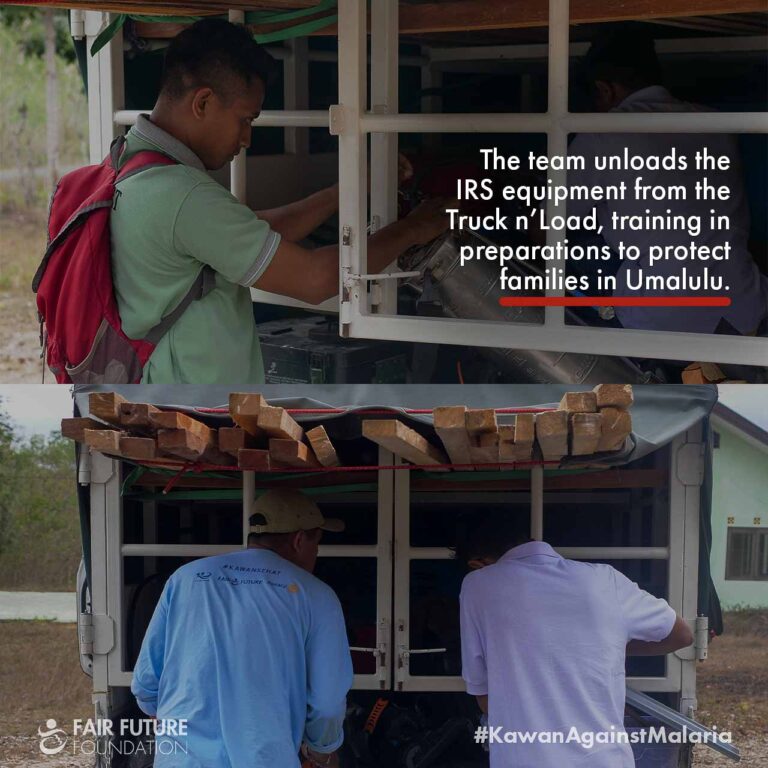
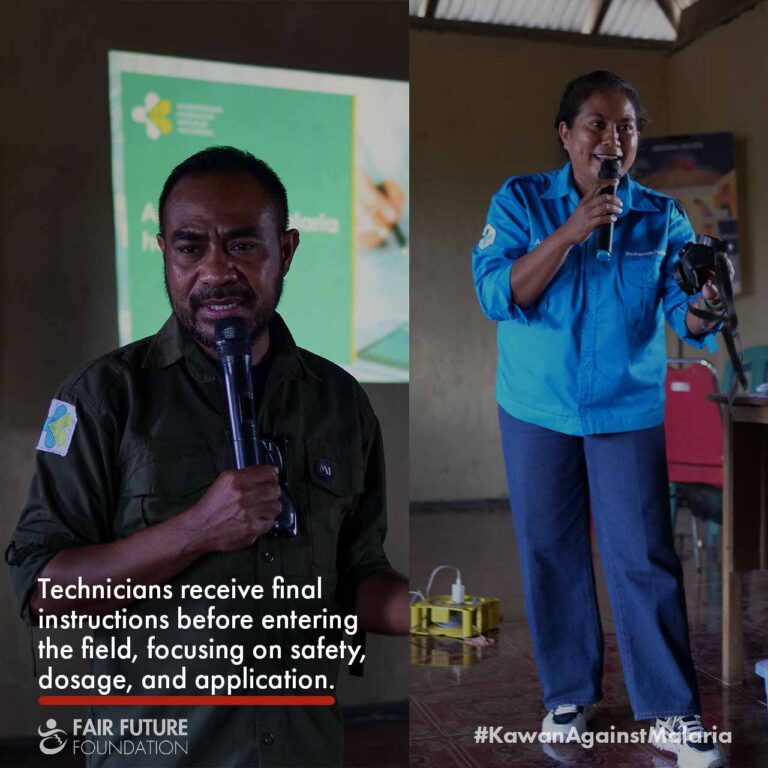
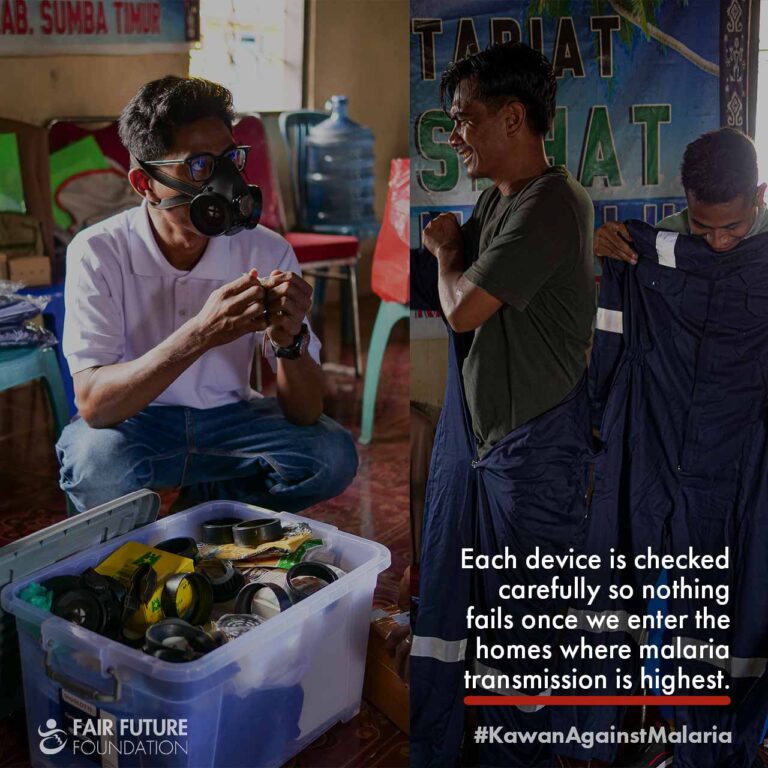
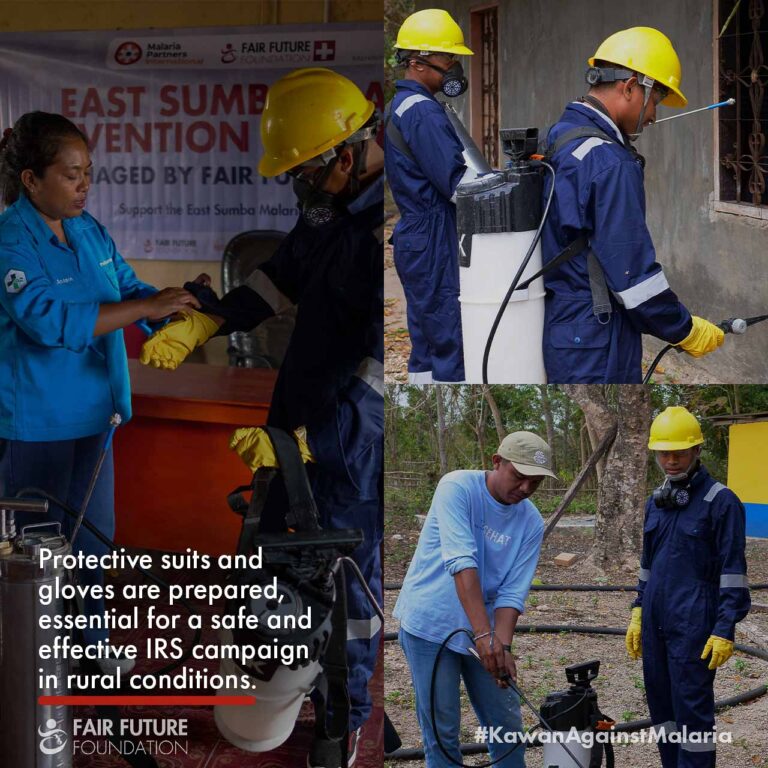
This IRS training phase documents how Fair Future teams, working side by side with Kawan Baik field staff, prepare an Indoor Residual Spraying campaign in one of the most remote areas of East Sumba. Every step follows strict medical logic adapted to ultra-rural conditions. Equipment is unpacked from the Truck n’Load and inspected in detail. Tanks are tested, nozzles are calibrated, pressure is checked, and insecticide dilution is verified. Protective gear is prepared not as a formality but as a guarantee of safety for both technicians and families.
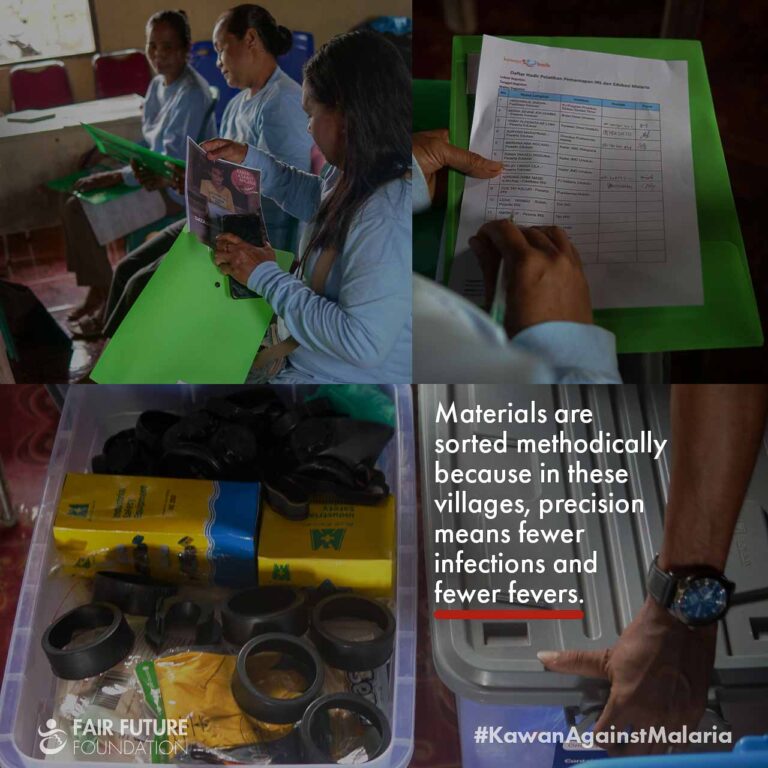
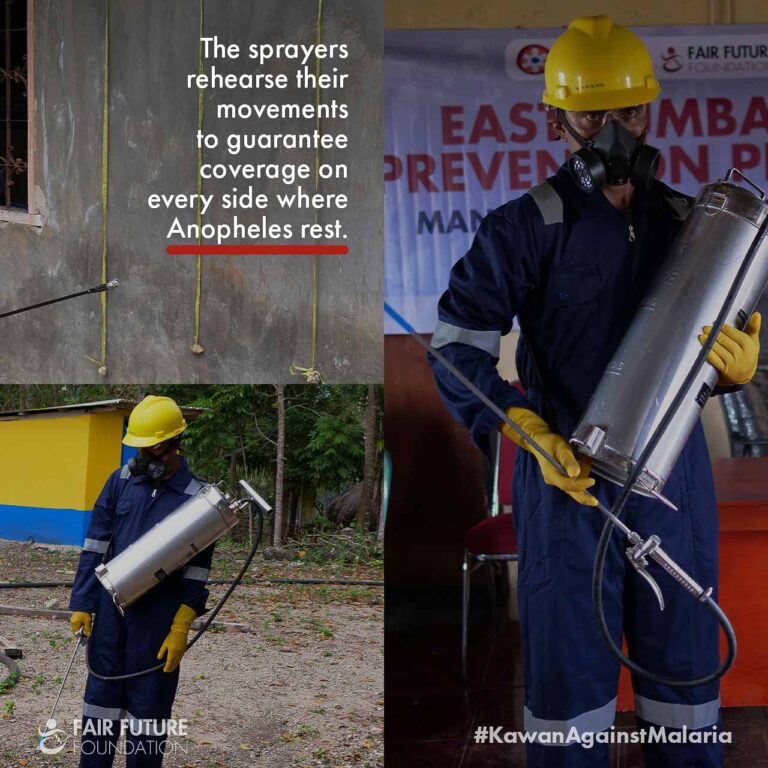
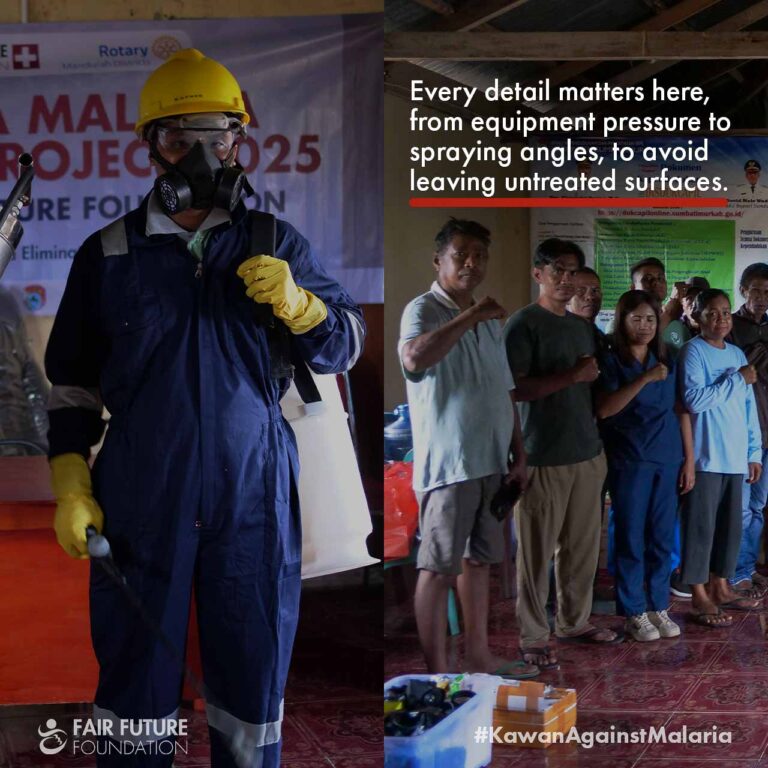
Indoor Residual Spraying targets Anopheles mosquitoes resting on interior walls. When applied correctly, it creates a residual barrier that reduces malaria transmission for several months. When applied poorly, it fails silently. This is why training matters. Sprayers rehearse movements, angles, and coverage to avoid untreated surfaces. Registration sheets are reviewed to ensure every household is visited equally, without omission.
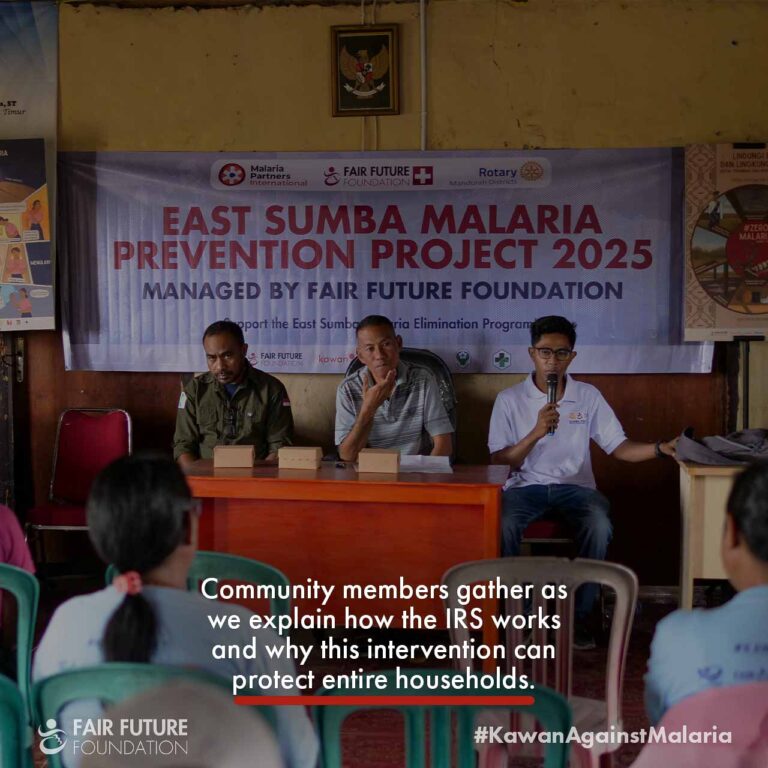
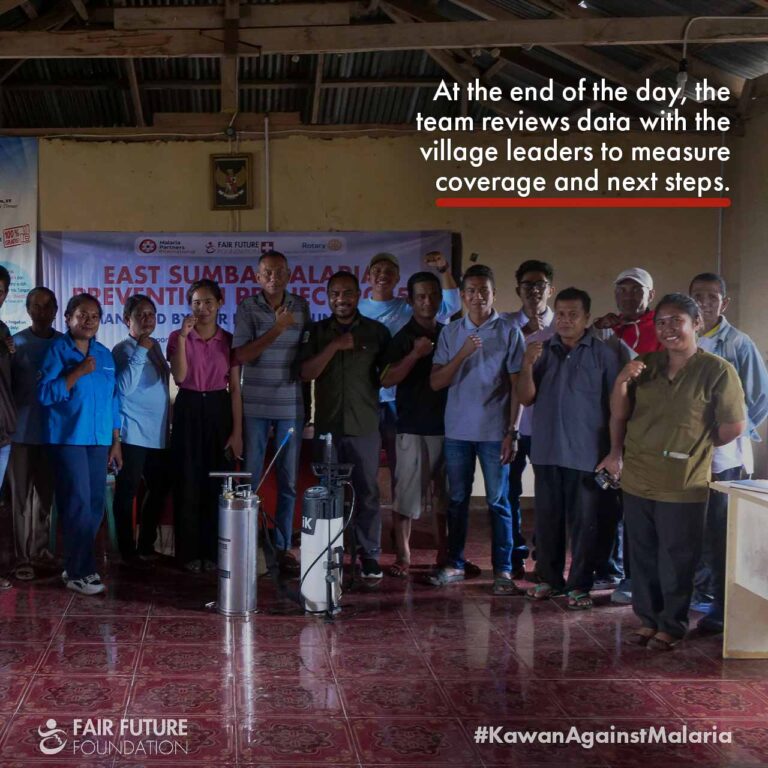
Community engagement is central to this work. Families are informed about why walls are sprayed, how the product works, and what protection it provides. This dialogue transforms an intervention into shared prevention. Data are reviewed with village leaders at the end of each day, allowing immediate adjustments.
This is preventive medicine applied at the village scale. It reflects sixteen years of Swiss medical expertise translated into practical field action by Fair Future and Kawan Baik teams, where preparation is not optional but lifesaving.
Today, the 28th of January 2026 – Alex Wettstein
In Short | Training Before Treatment
Before a single wall is sprayed, malaria prevention depends on training, precision, and trust. In Umalulu, IRS teams prepare equipment, verify dosages, rehearse movements, and engage with families to ensure safe and effective protection. This preparatory work is the foundation of prevention, turning technical accuracy into months of reduced transmission for entire communities.
Malaria Prevention IRS Training
Malaria Prevention IRS Preparation in East Sumba
Clinical preparation before village deployment
In the remote villages of Umalulu, malaria remains a daily medical risk, particularly for children, pregnant women, and the elderly. Preventing transmission requires precision, planning, and trust long before the first wall is sprayed. This image gallery documents the preparatory phase of an Indoor Residual Spraying campaign in East Sumba, conducted by Fair Future teams alongside Kawan Baik field staff and local health authorities.
Before entering a single home, every element is checked. Sprayers are calibrated, insecticide dilution verified, protective equipment inspected, and household registers reviewed. Ficam insecticide is prepared according to strict medical protocols to ensure family safety while targeting Anopheles mosquitoes resting on interior walls. These steps are not mere formalities. In ultra-rural settings, preparation determines whether an intervention prevents illness or fails silently.
Community briefings explain how Indoor Residual Spraying works, why walls are treated, and how protection lasts for several months. This dialogue builds adherence and enables families to become active participants in disease prevention rather than passive recipients.
Fair Future and Kawan Baik teams move house to house with the same discipline used in hospital infection control. Coverage is documented, data are reviewed with village leaders, and adjustments are planned immediately. This is not an emergency response. It is preventive medicine applied at the village scale, where logistics, medical accuracy, and human respect converge to sustainably reduce malaria transmission.
Alex Wettstein – Fair Future Foundation medico-social camp in East Sumba – Rumah Kambera, Lambanapu – the 28th of January 2025
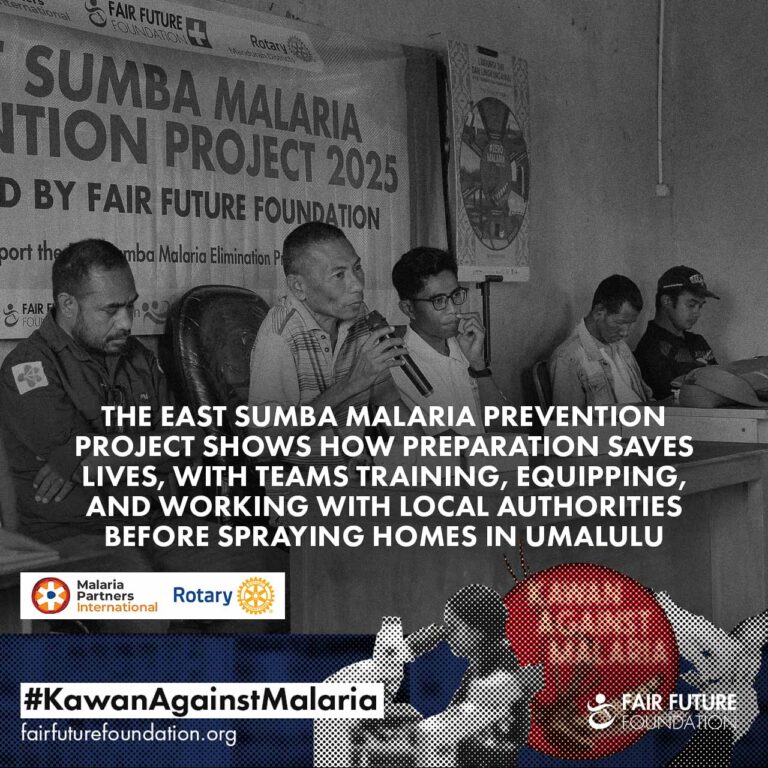


List of Related Organisations with Hyperlinks
- Rotary International: Supports community-based health interventions and malaria prevention programmes worldwide.
- Malaria Partners International: Their mission is to launch an international Rotarian campaign to eradicate malaria.
- UNICEF Health Programmes: Works on child health and malaria prevention for vulnerable populations.
- Global Fund: Finances malaria prevention and treatment initiatives globally.
- Save the Children Health Programmes: Focuses on child survival and disease prevention.
- Roll Back Malaria Partnership: Coordinates global malaria control strategies.