Today at the Laindatang Water Connections site, we met with the 78 schoolchildren, each receiving a bamboo cotton t-shirt with a drawing of 13-year-old Eben, a local child. The artwork symbolises our completed water supply project for the village, which includes tanks, toilets and access to clean water. The children were delighted not only to have clean water but also to receive these unique t-shirts!
We have compiled a list of articles and pages for this topic
The Fair Future Foundation in East Indonesia combats social and medical injustice and aims to ensure everyone has access to healthcare, clean water, and education. Join us in making a difference.
East Sumba—where Fair Future implements life-saving programs for clean water, health care, and community resilience.
We are testing the Laindatang drilling
We purchased a pump to test at the Laindatang drilling site for the Water Connections Phase 3 project. Over the past three days, we’ve been testing the pump to determine if the water flow is sufficient for 600 people after six months of drilling.
Bringing Clean Water and Health Education to Rural Areas
In ultra-rural villages where access is challenging, Fair Future brings clean water and vital health education. The dedicated teams teach residents and school staff about hygiene, nutrition, and disease prevention. This #WaterConnections project benefits nearly 800 people, including 60% children, highlighting the transformative power of clean…
Donate now: Aid #ZeroMalaria with two New Microscopes
Join us in an urgent initiative that tackles the deadly malaria epidemic head-on in Eastern Indonesia. Learn how Olympus Trinocular Microscopes serve as a linchpin in diagnosing this disease accurately and why they’re indispensable. Your financial contribution can purchase these crucial devices, directly impacting the reduction of mortality rates…
Sumba Malaria Prevention Program 2023
Discover how the East Sumba Malaria Prevention Initiative we are presently executing is combatting this destructive ailment. By implementing preventive measures like distributing mosquito nets treated with insecticides and raising awareness on eliminating mosquito breeding sites, this initiative strives to diminish the occurrence of malaria in…
Behavioral Impacts on Spread of Malaria
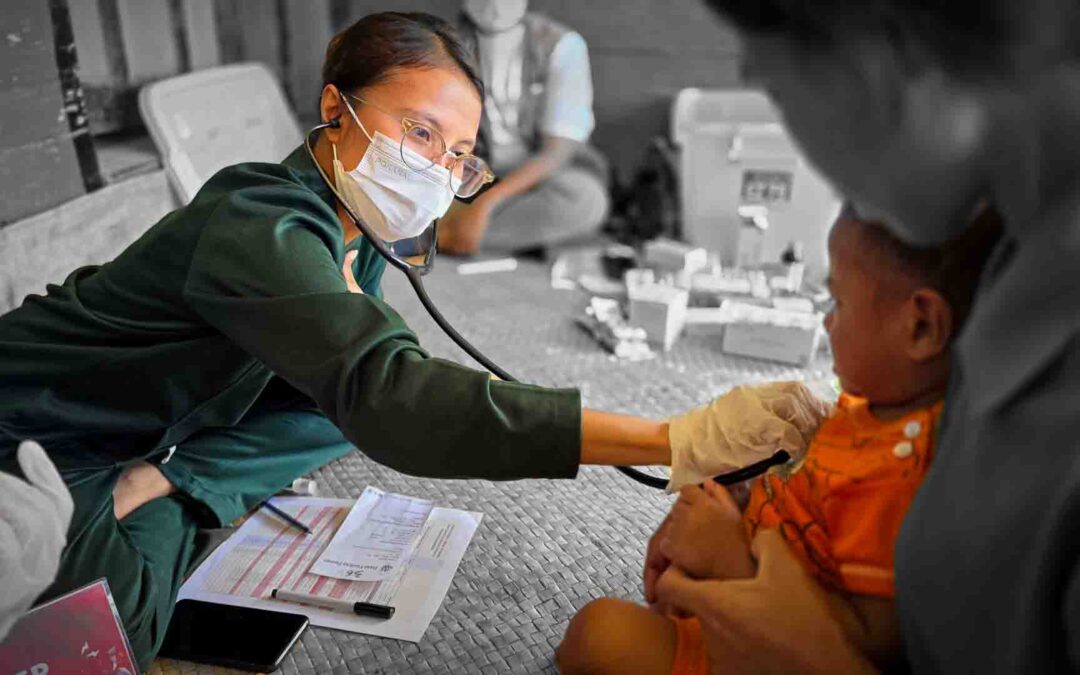
Beyond Borders: Fighting Malaria Together in Eastern Indonesia. This new "Picture of the Day" shows a young girl from Lapinu village who appears unwell. Taken in 2020, Alex examined her and used a stethoscope to listen to her heartbeat. In April 2023, we revisited the village as part of the Primary Medical Care program. Unfortunately, the girl contracted malaria and suffered from high fever, body pains, and poor overall health. However, after receiving treatment and giving advice to her mother, the little girl has shown significant improvement after just one month.
Our organisation is dedicated to promoting public health in ultra-rural regions of Indonesia (like here in East Sumba), and we're deeply concerned about the impact of malaria on vulnerable communities, as you know already. Sadly, malaria remains a leading cause of illness and death in Indonesia, particularly in East Sumba, where we are based.
Some little history: The word "malaria" originates in Italian. It comes from the expression "mal'aria", which translates as "bad air". This term was used historically to describe the belief that disease was caused by inhaling polluted or stale air in swampy areas. The Plasmodium parasite is responsible for causing malaria, and research suggests that it has been affecting humans for at least 4,000 years.
Several human behaviours contribute irreparably to the spread or persistence of malaria. Here are some of the factors that lead to an increase in malaria cases:
Failure to prevent mosquito bites, poor waste management, inadequate housing and sanitation, deterioration of hygienic conditions, deforestation, alterations to natural habitats, movement of people, drug resistance*** and misuse, limited access to health services, higher illiteracy rates among younger populations, and lack of community involvement and awareness can all lead to an increase in malaria cases… And this, among other examples!
As a result, many people, particularly children and pregnant women, continue to suffer from this preventable and treatable disease. Our program aims to tackle these issues head-on by implementing various activities to strengthen malaria control efforts in the region. It is crucial to highlight that combatting malaria demands a unified strategy encompassing preventive and therapeutic measures. It also involves initiatives to enhance the environment and living standards of communities affected by the disease.
***The problem of self-medication and the consequent development of resistance to antimalarial drugs are two interconnected challenges that significantly hinder the effective management and control of malaria.
Snakebite management in rural Indonesia | Fair Future
Snakebites are a significant threat in East Sumba and similar areas where access to healthcare is limited. This guide provides crucial steps to manage snakebites, prevent complications and save lives. Learn how to identify symptoms, administer first aid effectively and avoid common mistakes in this essential medical advice article.
Kawan Sehat Expands with New Anti-Smoking Campaign Page
Kawan Sehat is expanding! We’re excited to introduce a new page in our children’s book promoting healthy living. This new section focuses on the dangers of smoking, especially secondhand smoke, which harms non-smokers, including children. This new page will be added to our Kawan Sehat book. Smoking is not healthy—smoking kills. Don’t smoke.
Truck of Life Repairs Boost Rural Health Aid
The Truck of Life, essential for reaching rural areas, has undergone major upgrades, including new solar panels, a 75-liter vaccine storage unit, and a redesigned layout, turning it into a mobile clinic. These improvements enhance its ability to provide vital healthcare services, addressing the challenges of accessing medical care in remote areas…
Rumah Kambera: Championing Health, Sustainability, and a Smoke-Free Future
At Rumah Kambera, we are on a mission to prioritize the health and safety of non-smokers, particularly children, by establishing a 100% smoke-free environment. We’re unveiling the dangers of passive smoking and confronting both active and passive smoking, recognizing their severe health threats.
Medical Outreach East Sumba | Care in Madutolung
After a six-hour journey, our teams reached Kampung Madutolung to provide consultations, blood tests, malaria screening, medicines, and prevention to more than 115 villagers. It was one long day of practical medicine in a place where care remains far away.
Happy to have water without going far to get it
This new "Picture of the Day" shows you a 12-year-old kid named Yaspan. He was born in a tiny village in East Sumba where Fair Future and Kawan Baik have worked for over four years. We built a new school for him a few years ago, #sdmbinudita, and now he and his family have clean water reaching his house, which was not the case before. Yaspan and all his friends from the Village of Mbinudita are lucky because children struggle to get water everywhere else. They have to find it very far on foot; to do this, they miss school, get injured, and fall ill.
There's something inexplicably satisfying about the heavy rains in ultra-rural East Sumba, especially when you live in a water-scarce area: The sound of raindrops hitting the roof is soothing, and the smell of wet earth is refreshing; plus, you feel good because you know that this rain will help the family. When it rains a lot, kids and families here can't help but be happy knowing that their water tanks will be filled and they won't have to worry about running out of water for a moment.
"-It's a small blessing for which I am grateful, and I always make sure to take advantage of the rain while it lasts…" a friend from the village told me last month.
Heavy rains like the ones we experienced last month in one of the ultra-rural villages in East Sumba, where we work with Fair Future and Kawan Baik Indonesia foundations, are also an opportunity to celebrate as these kids wade through the water. They are the first to be happy because they won't have to walk for hours to fetch water far from home.
With those heavy rains comes plenty of water and the relief of much-needed hydration. The floods will provide much-needed food for crops, wash livestock and provide villagers with general water and sanitation assistance. With the bonus of increased economic activity and improved social well-being from the new abundance of water, these small floods are becoming the opportunity of a lifetime for the villages of Sumba. With increased water storage, a healthier environment and better living conditions, small floods caused by heavy rains are the perfect way to improve the lives of villagers in these areas where water is absent.
It's interesting to consider that what may be a challenge for many of us is a helpful solution for these families.