
In rural villages in eastern Indonesia, where we work, toilets are very rare. This is particularly a problem in rural areas where a third of the population must continually defecate in the open air. For Bapak Rinto, it is a relief and a great pride that his family finally has a toilet, thanks to the support of Fair Future and Kawan Baik Indonesia.
We have compiled a list of articles and pages for this topic
The Fair Future Foundation in East Indonesia combats social and medical injustice and aims to ensure everyone has access to healthcare, clean water, and education. Join us in making a difference.
Building toilets and promoting sanitation to improve health and dignity in ultra-rural communities.
Water Connections from the sky – 04 October 2022
The health burden of poor-quality water is enormous, and providing clean water to such a large population is a considerable challenge. Indonesia, particularly the east of this immense country, is characterized by a non-uniformity in the level of awareness and socio-economic development. Therefore, our two foundations do what they can.
Building two new Water Tank – East Sumba, Mbinudita
In these few images, the teams of Kawan Baik Indonesia and Fair Future Foundation, with the help of volunteers from the village, are building two new Ferro-cement tanks of more than 6000 litres, which in a few weeks will provide clean water to a group of houses.
Building healthy sanitation facilities in rural areas
We are building safe and healthy sanitation facilities for these reasons: Ending defecation in the open rather than in toilets will have “transformational benefits” for the most vulnerable people in East Sumba. Open defecation is when people defecate in the open -for example, in fields, forests, bushes, lakes and rivers rather than toilets.
Drinking and eating better thanks to water connections
For months, Fair Future has noticed a fundamental change in habits in families who benefit from the “Water Connections” program. Gardens are created. People eat better, drink more, have more energy and are less ill. This observation fills us with joy and comforts us in our choices and decisions.
The 2nd sanitary facility of the village is almost finished
Although access to clean water continues to be a problem, it isn’t easy to ensure it is safe. In this sense, Fair Future is putting in place measures to ensure that it is sustainable. By tests, of course, filtration systems that use elements present in nature.
We create water connections, look…
The first idea was to treat people at the source of their health problems because our medical teams and us allow the expression: “-We were a little tired of giving medicine with a glass of inedible water. …”. And as we have told you many times before, the vast majority of patients who come to us are primarily because of the poor quality of the…
The 1st toilets of the village are almost finished
Sanitary facilities, showers, toilets, a wastewater collection tank… This was a pilot project for the foundation. Today it is something normal. How do we build healthy, ecological, environmentally friendly sanitary facilities using mainly local materials (apart from sand, iron and cement)?
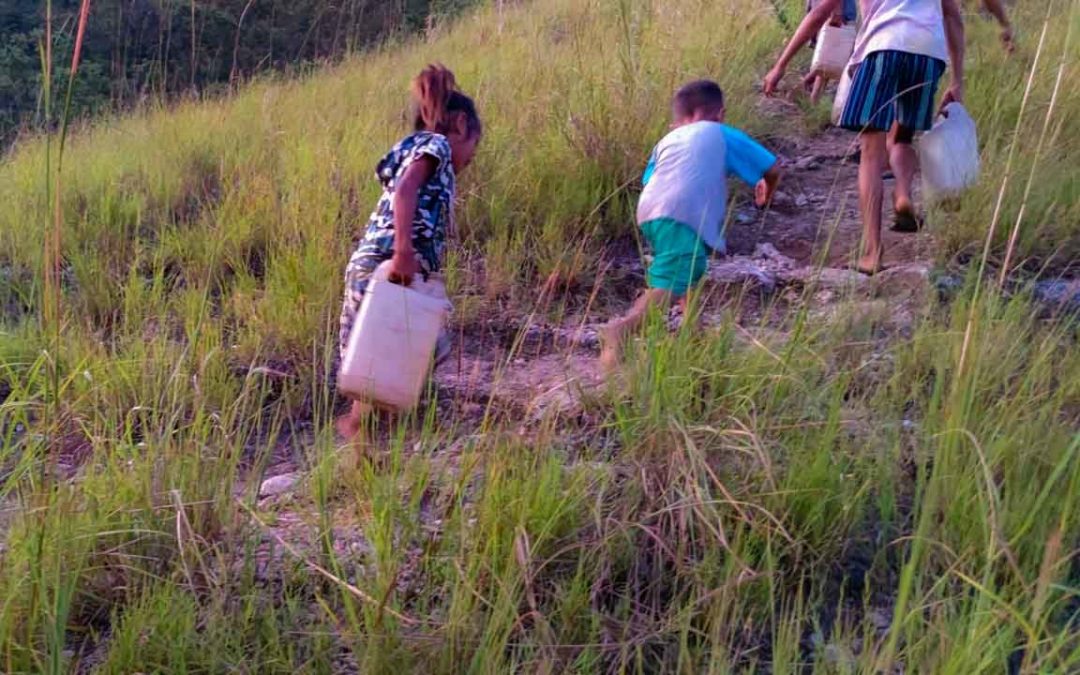
Carrying Water Up the Hill
The return from the water source follows a steep path through grass and stones. Children carry white jerrycans uphill in this March 2023 photograph, which records the household journey behind plans to bring water closer to home.
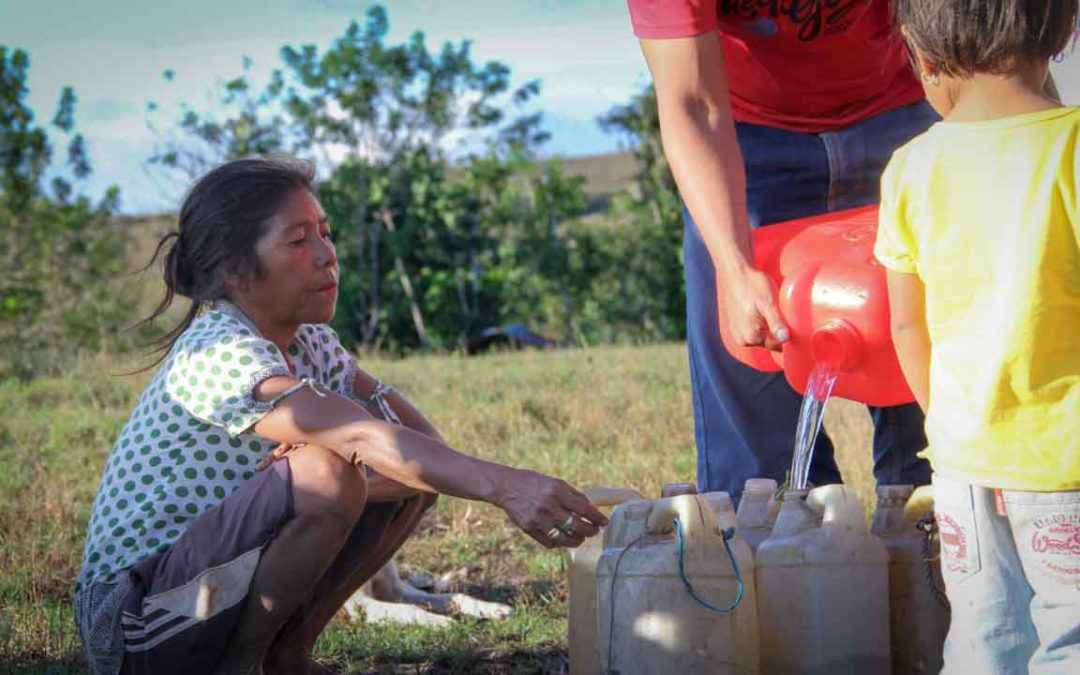
A Water Delivery in Laindatang
A red jerrycan fills the containers gathered on the ground in Laindatang. We brought drinking water with the Truck of Life on this March 2023 visit, helping with an immediate need while preparing the longer water project.
Women, children and water at home
Indonesian women play a vital role in water management due to their traditional responsibilities of collecting water, cooking, cleaning and raising children. These women from these ultra-rural areas of eastern Indonesia are strong. They represent tremendously well the strength and the courage it takes to survive here in this vast country.
Water Connections, look at all we’ve done!
Look at what has been done in the last 20 months, it’s simply extraordinary because doing this in this region was a priori impossible, but we did it. We are at the end of the line in the Water Connections project, we have “only” a few things left to build, including a huge 25,000-liter tank.