

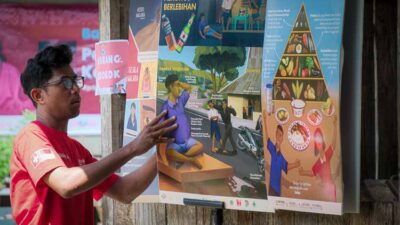
For months, Fair Future has noticed a fundamental change in habits in families who benefit from the “Water Connections” program. Gardens are created. People eat better, drink more, have more energy and are less ill. This observation fills us with joy and comforts us in our choices and decisions.
Water, Nutrition & Survival
Clean water is the foundation of everything. Without it, there can be no nutrition, no sustainable health. By ensuring access to water, we protect children, prevent disease, and enable communities to survive, grow, and thrive over the long term.

The Water, Nutrition & Survival category addresses core public health determinants that directly affect morbidity and mortality in ultra-rural settings.
Articles document how limited access to safe water, adequate nutrition, and basic sanitation increases the risk of waterborne disease, malnutrition, dehydration, and infection. Interventions follow WHO public health standards, combining water infrastructure, food support, hygiene promotion, and community education. This category highlights field-based actions that stabilize health, prevent avoidable disease, and support survival where resources and healthcare access remain critically limited.
Latest field updates
Strong women representing a strong nation
These women play a major role in the rural economy of their village. They are the ones who transport sand for the construction of a new drinking water reservoir on the Mbinudita site. They sing traditional songs to give themselves courage, because it takes a lot.
The 2nd sanitary facility of the village is almost finished
Although access to clean water continues to be a problem, it isn’t easy to ensure it is safe. In this sense, Fair Future is putting in place measures to ensure that it is sustainable. By tests, of course, filtration systems that use elements present in nature.
We create water connections, look…
The first idea was to treat people at the source of their health problems because our medical teams and us allow the expression: “-We were a little tired of giving medicine with a glass of inedible water. …”. And as we have told you many times before, the vast majority of patients who come to us are primarily because of the poor quality of the…
The 1st toilets of the village are almost finished
Sanitary facilities, showers, toilets, a wastewater collection tank… This was a pilot project for the foundation. Today it is something normal. How do we build healthy, ecological, environmentally friendly sanitary facilities using mainly local materials (apart from sand, iron and cement)?
Assist with access to clean water in Praiwora
As part of the #waterconnections project, the Fair Future and Kawan Baik foundations have received several requests for help related to socio-medical projects, including a significant number related to access to clean water from local communities and rural villages. Some of these requests come to us directly from local authorities in East Sumba.
Building healthy sanitation facilities in rural areas
We are building safe and healthy sanitation facilities for these reasons: Ending defecation in the open rather than in toilets will have “transformational benefits” for the most vulnerable people in East Sumba. Open defecation is when people defecate in the open -for example, in fields, forests, bushes, lakes and rivers rather than toilets.
Building a 6,500-litre Ferro-cement tank
Building a water storage tank is something simple but complicated at the same time. Working day and sometimes night too, sleeping under challenging conditions, eating little and walking a lot… This is the life of the Fair Future and Kawan Baik teams in the field, every day for months with the support and unconditional support of the villages where we are setting up a new program. We are very involved in all the constructions, be it the reservoirs but also the healthy sanitary installations, the water connections, the filtration systems, and so many other things which, put together, create infrastructures which make them more useful, simpler life.
Clean water and sanitation for a magic trick
For a few months -thanks to the Water Connections program–, the families are feeling healthier, happier and have much more energy. The villagers, who are 100% farmers, are much less sick, and they are in better health. Vegetable gardens are created, and an economy is built.
For the past two months, we have been on the Mbinudita site
Our teams have been on the SD Mbinudita site for two months for the Water Connections project, clean, safe and clean water for all. The Mbinudita school is the centre of life for an entire region, where more than 2,500 people live, divided into nearly 250 families, the vast majority of whom are children.
Lukukamaru Sumba. A tremendous job to do here
East Sumba is full of villages that I believe we have to call “very poor”, where eating or drinking enough, taking a simple shower, and earning enough to buy a little rice is almost impossible. These villages are isolated from everything and everyone. We go there as often as possible, currently every day.
Shortage of clean, safe drinking water
All these people, we meet every day. When we ask them what their biggest dream is, all without exception answer us this: To have clean water, some not dangerous for their health and that of children, and pregnant women. To have access to it here, close to home. To be able to water and cultivate a garden, eat better, shower, and wash.


