

Non-professionals who give medical care and medicine to people, sick children, and injured. They do so through a unique and innovative medical care program. Because here, there are no doctors, no health centre, or else too far away. No one has a vehicle, and the roads that lead to these villages are often impassable. This program saves and preserves the lives of children as well as adults. Today, we are in Mbatapuhu.
Malaria continues to pose a daily threat in this area. Through Kawan Against Malaria, we monitor cases, test all fevers, protect homes, and educate families. The use of bed nets, spraying, and prompt treatment turns statistical data into lives that endure quietly, rather than ending prematurely.
Donate
Support Care
Programs
All projects
Quick News
Field updates
Stories
Field stories
Holistic Education and Social Empowerment
At Fair Future Foundation, we believe education is the key to transforming communities. Our holistic approach integrates schooling with clean water access, primary healthcare, and nutrition, ensuring that vulnerable communities thrive. By actively involving local communities, we create sustainable solutions that address real needs, paving the way for a brighter future in the ultra-rural regions we serve
The Community Education category documents field-based education initiatives designed to improve health knowledge, prevention practices, and informed decision-making in ultra-rural settings. Articles focus on health education, disease prevention, hygiene, nutrition awareness, and practical skills adapted to local realities. These actions align with WHO health promotion principles, recognizing education as a key driver of behavior change and risk reduction. This category highlights how continuous, community-level education strengthens prevention, supports safer daily practices, and contributes to long-term health resilience where access to formal healthcare is limited.
Education is not just about learning; it’s about empowering communities
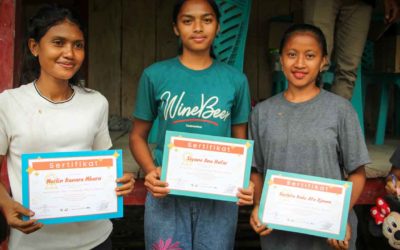
PMC – Teachers receive their training certificate
This new "Picture of the Day" shows three real heroes and three incredible women, Merlin, Siyane and Sarlota. In the ultra-rural and isolated village of Kabanda, the three participants and teachers in the primary medical care program received their first work and training certificate.
This follows the teaching they received from the foundation's teams in December 2022. Complete medical training based on fifteen modules, which explain and demonstrate how to care for a sick or injured patient (adult or child ). This is in villages where no health centre, doctor, or health professional is present, available or accessible, and most of the time, like here in this village, where no road leads.
You must understand the situation, friends: These women come from Asia's most rural regions and perhaps even the world. Most have not been to school or received basic compulsory training. They were trained for three months in teaching in the ultra-rural areas by a partner association called Charis Sumba.
So you have to imagine their pride to have succeeded in becoming one of these health workers, the person in the village responsible for providing first aid in an emergency, the possibility of illness in the event of an injury, an adult or a child. So when they received this certificate, tears flowed. Their tears flowed ours too, and it was a moment of incredible strength, but above all, very emotional.
In principle, here, and related to local culture and traditions, a woman takes care of household chores, fetching water, cooking for the children, and caring for the family. These three female superheroes are not only teachers within the framework of Charis Sumba, but they are also now – and for more than four months – the health workers of the PMC program. They are the ones who can save a life in the absence of a medical centre, medical care or a doctor in the village. This is not anything in terms of enhancing the role of women in ultra-rural villages; this is immense and important progress.
Inventing toys when you don’t have any
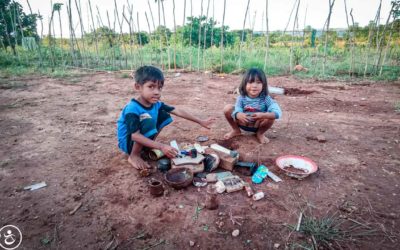
This "Picture of the Day" shows two children from Tanah Mbanas, Sumba Tengah, who have created a kitchen with waste from the plastic they found around their houses made of earth and bamboo. They are playing cooking. Here, families do not have access to water and even less to clean water.
Here in Sumba, in these ultra-rural villages, it is not uncommon for children of all ages to invent toys and games from natural materials or objects from waste or old. In these areas, children rely on their creativity and ingenuity to find new forms of play and have fun.
For example, children can make their toys from natural materials such as sticks, pebbles and leaves. They can use these materials to create games like building forts or playing "tag" with modified rules. Likewise, old items like cans, tires, or ropes can be repurposed to create new toys, like a toy truck, makeshift soccer ball, or swing.
These types of imaginative play experiences are very beneficial for the development of children. They encourage creativity, problem-solving and social interaction as children work together to develop new ideas and adapt the rules of their games. Additionally, playing in nature can provide opportunities for physical activity and exploration, positively affecting physical and mental health.
Health, happiness & sustainable development
What does Sustainable Development Goals mean in a nutshell for Fair Future? Reduce poverty (and not eradicate it because it is impossible), increase access to basic and primary medical care, improve access to technology and knowledge, reduce the number of undernourished people, be better health, reduce antimicrobial resistance, provide quality education for all, eliminate gender inequalities, reduce all forms of discrimination against women and girls, ensure universal protection and equitable access to clean, non-lethal water at an affordable cost and much more. Our teams on the ground manage to change things, that’s obvious, but it takes time.
Primary medical care training for 60 teachers
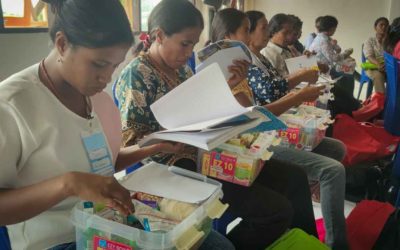
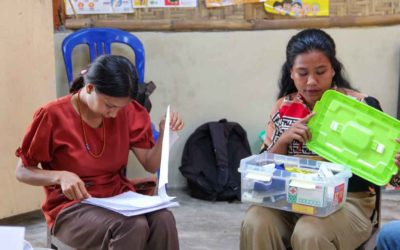
Whether a minor skin injury or a severe life-threatening injury, all types of damage should be treated with first aid on the spot without delay, as it may save a life or a limb. Teachers in the poorest and most rural areas learn this with Fair Future’s medical teams. Since November 2022, Fair Future Switzerland has taken a new step in the primary medical care program for children in ultra-rural areas here in East Sumba. The first two training modules for rural school teachers took place during the second week of December. It was a considerable success since more than sixty teachers were present for this first session.