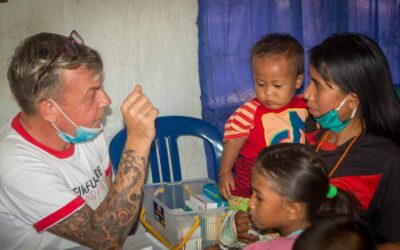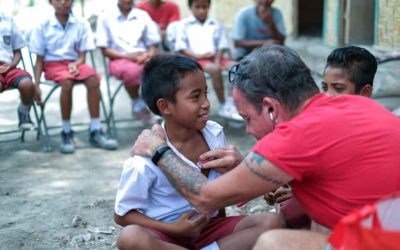

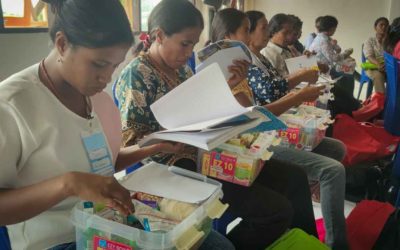
Whether a minor skin injury or a severe life-threatening injury, all types of damage should be treated with first aid on the spot without delay, as it may save a life or a limb. Teachers in the poorest and most rural areas learn this with Fair Future’s medical teams. Since November 2022, Fair Future Switzerland has taken a new step in the primary medical care program for children in ultra-rural areas here in East Sumba. The first two training modules for rural school teachers took place during the second week of December. It was a considerable success since more than sixty teachers were present for this first session.
Malaria continues to pose a daily threat in this area. Through Kawan Against Malaria, we monitor cases, test all fevers, protect homes, and educate families. The use of bed nets, spraying, and prompt treatment turns statistical data into lives that endure quietly, rather than ending prematurely.
Donate
Support Care
Programs
All projects
Quick News
Field updates
Stories
Field stories
Holistic Education and Social Empowerment
At Fair Future Foundation, we believe education is the key to transforming communities. Our holistic approach integrates schooling with clean water access, primary healthcare, and nutrition, ensuring that vulnerable communities thrive. By actively involving local communities, we create sustainable solutions that address real needs, paving the way for a brighter future in the ultra-rural regions we serve
The Education & Community category examines how education, knowledge sharing, and community engagement strengthen health and resilience in ultra-rural settings. Articles document initiatives that improve health literacy, support learning environments, and reinforce community structures essential for prevention and long-term well-being. These actions align with WHO social determinants of health, recognizing education and social cohesion as key factors influencing health outcomes. This category highlights how informed communities are
Education is not just about learning; it’s about empowering communities
Malaria outbreak in East Sumba, Indonesia
Malaria is one of the most severe public health problems in the world. Here in Indonesia, and especially in the eastern regions, it is one of the leading causes of death and disease. Children under five years old and pregnant women are the most affected groups. The problem in East Sumba is the staggering rate of cases affecting families and the anti-malaria drugs that are unavailable or too expensive.
Water Connections program, the work of teams in the field
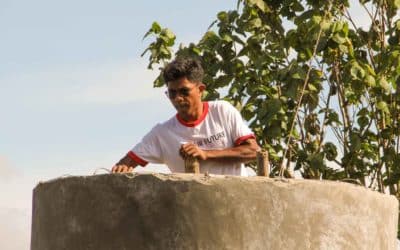
The past few weeks have been hectic for all of us here in East Sumba. What a titanic job we are all doing with the help of our friends, the villagers, and members of the rural communities of Mbinudita. The nights are short, and the days are very long and hot too. Imagine, friends, it’s almost 40°, and we work under a blazing sun, which almost anaesthetizes us if we don’t hydrate ourselves enough.
Strong women representing a strong nation
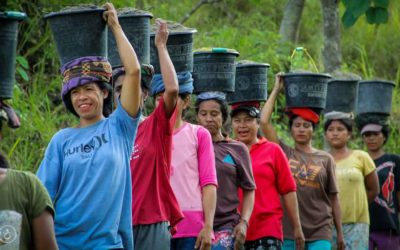
These women play a major role in the rural economy of their village. They are the ones who transport sand for the construction of a new drinking water reservoir on the Mbinudita site. They sing traditional songs to give themselves courage, because it takes a lot. They are the ones who are in charge of helping us, in what is certainly the most difficult work. Yes, strong women represent a strong nation.
For the past two months, we have been on the Mbinudita site
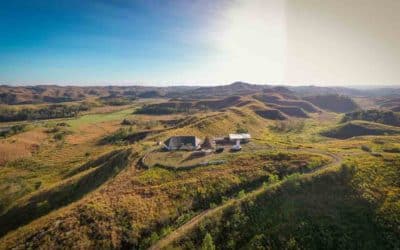
Our teams have been on the SD Mbinudita site for two months for the Water Connections project, clean, safe and clean water for all. The Mbinudita school is the centre of life for an entire region, where more than 2,500 people live, divided into nearly 250 families, the vast majority of whom are children. The social, technical, medical and logistics staff and documentalists have been working for several months on the realization of this unique project. The Water Connections program connects groups of houses and an entire population to clean water connections, sometimes houses more than three kilometres apart from each other. This uses buried pipes, 6500-litre tanks, healthy sanitary facilities, and our boreholes. The innovation is that we mainly use gravity, iron and cement for the construction.
Khris Praing, Bupati of East-Sumba to Mbinudita site
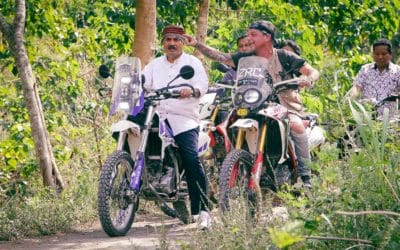
The Mbinudita school is now an official school, which falls within the bosom of the schools of the Indonesian state. A huge ceremony that took more than 4 days of preparation took place on June 25, 2022 on the #sdmbinudita school site. In the presence of the Regent of East Sumba, Drs. Khristofel Praing and a number of officials, we have been able to visit the facilities already in place and built as part of the clean water access project for more than 2,500 people. Doing it on a motorcycle with the Bupati was exceptional!
Fair Future’s Mission: Health, Education, and Vital Resource
For over 15 years, the Fair Future Foundation has provided healthcare, education, and vital resources to rural areas. Our goal is to promote self-sufficiency and sustainable development by collaborating with local partners.
What you can do for us?
Want to make a real difference? Support Fair Future Foundation by donating, volunteering, or sharing our mission. Every contribution, no matter how small, helps provide vital medical care, clean water, and education to ultra-rural communities in Indonesia. Explore the many ways you can get involved and join us in building a healthier, fairer future.
Meet Team Kawan Baik: The Heart of Fair Future
Meet the incredible individuals who make up Team Kawan Baik, the heartbeat of Fair Future. Bound by friendship and driven by professionalism, they are the force behind our successful humanitarian projects in Southeast Asia. Discover how their unbreakable bond fuels our mission to serve the most vulnerable communities.
About Fair Future: Transforming Lives Through Action
The Fair Future Foundation has transformed many lives in Southeast Asia through innovative programs in healthcare, clean water, and education. With a focus on compassion and transparency, 93% of funds go directly to projects benefiting underserved communities.