



Donate
Support Care
Programs
All projects
Quick News
Field updates
Stories
Field stories
Fair Future’s Picture of the Day unveils unseen rural realities through authentic field images.
Each photograph captures the raw truth of our daily mission in the most remote areas of Indonesia.
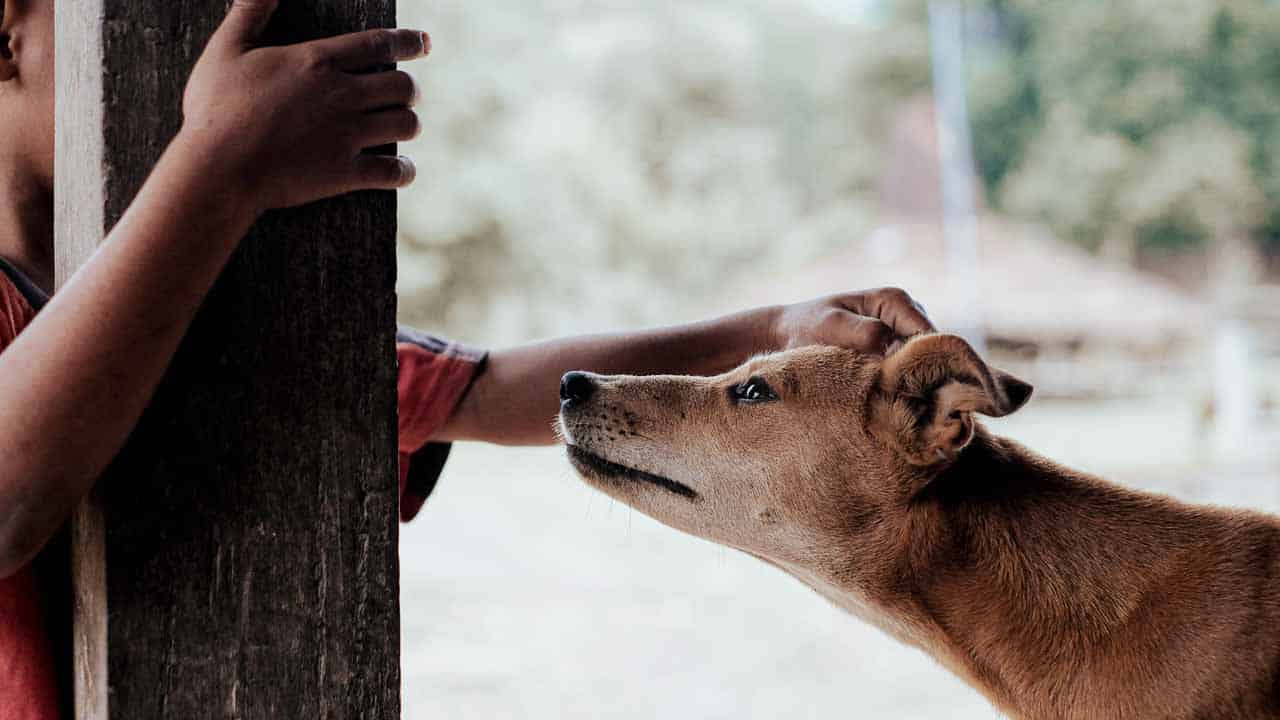
Fair Future’s work addresses health and wealth disparities in ultra-rural regions through community-based programs.
One Picture – A Story of Reality, Resilience, and Action
At Fair Future, we hold the belief that a single image can convey a truth that no written paragraph could ever capture. Our “Picture of the Day” serves as more than just a photo; it offers a glimpse into the daily lives in the world’s most overlooked regions.
Captured by our teams in the depths of rural Southeast Asia, particularly Eastern Indonesia, each image stands as a direct testament to the realities we witness, endure, and support.
These photos reflect genuine, unfiltered moments—Kawan Sehat health agents tending to patients in clinic-less areas, children gathering water from wells we constructed, a mother transporting her child across arid land, or the quiet fortitude seen in a face etched by malnutrition and illness. Each picture tells a tale of medical urgency, social injustice, isolation, and remarkable resilience.
This page showcases those stories. Through each image, we reveal the silent struggles we observe and the dignity of those who battle them. They are unposed, raw, and candid—taken by us, amid the mud, under the sun, and through the long nights.
“A photo speaks when words fall short. This is our everyday reality, captured with heart and grit.” — Alex Wettstein, CEO and Founder of Fair Future
Every photo demands awareness and action. We encourage you to look closer, experience our feelings, and join us—one story, one truth, one picture per day.
Alex Wettstein – Fair Future Foundation – Updated in May 2025
Our last News
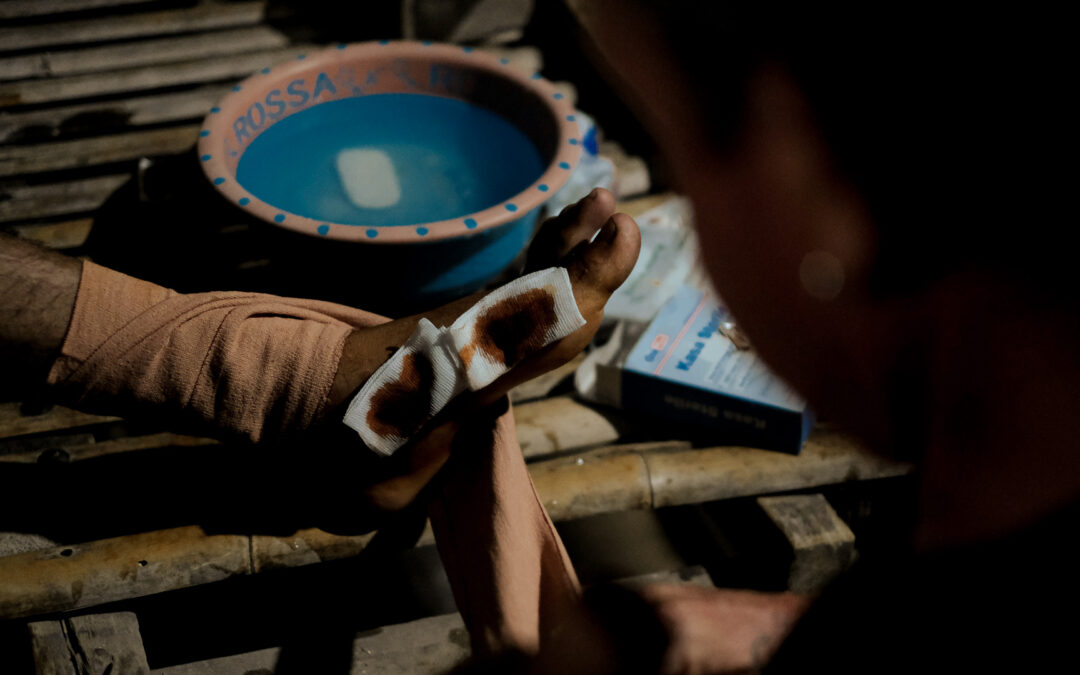
Snakebite Rural Indonesia | A Neglected Emergency
Snakebites in Rural Indonesia: A Neglected Medical Emergency Snakebites are often seen as rare, unpredictable accidents. In rural Indonesia, they are not. They are a daily, expected risk for farmers working barefoot in fields, for children walking at dusk, and for...
Our last pictures of the day
Clean water and healthy toilets for the first time
Clean and healthy water is distributed almost everywhere now here in Mbinudita, East Sumba. This clean and healthy water supplies more than thirty reservoirs and twenty healthy sanitary facilities. All for the benefit of more than 2,500 people, nearly 65% of whom are children.
People are happy, and It's a significant change in their life. They also have to get used to living with clean water to change their habits. Imagine: Having lived a life without having access to toilets, without having access to clean water, and being constantly sick… You have to get used to feeling better now and having more time for yourself. Change your habits? This is where the most significant challenge lies.
Aimere, the Truck of Life is ready to board for Waingapu
Port d'Aimere, Flores Nusa Tenggara Timur. After more than five days on the road, the Truck of Life, loaded like a real truck, is ready to embark for Waingapu. The last ferry out of five that we have already taken throughout this journey will take us to the foundation's medico-social base camp, Rumah Kambera, in East Sumba. The crossing between Forès and Sumba will take over eight hours in extreme conditions. From tomorrow, we will be working with the poorest families in Indonesia in the framework of the project of primary medical care for children in rural areas and medical care for malaria victims, which is raging here.
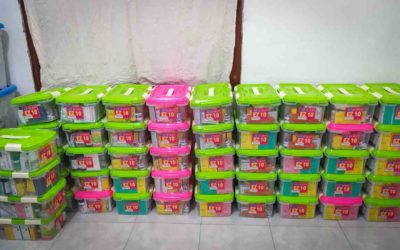
First aid kits are being prepared here in Sumba
What the foundation is setting up is innovative and ingenious and cannot be done without the help of nearly a hundred teachers from the poorest and rural areas of East Sumba. And yes, teachers, like everywhere in the world, are the most influential people in the villages.
During these three or four training days, they will learn how to treat a wound and give first aid to an injured or sick child so that his situation does not worsen and becomes much more severe. But also, above all, determining when to call a doctor or go to the nearest medical centre.
Kawan Sehat book is finished and printed
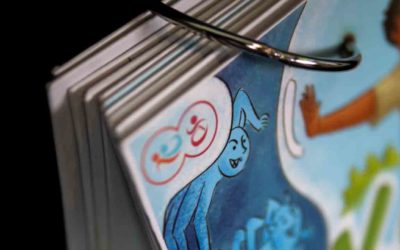
A simple picture is that of the book "Kawan Sehat", which means "the healthy friend", on which Kawan Baik and Fair Future have been working for a few months. We are happy because the book is now finished, printed and ready to be loaded into the Truck of Life, which will leave tomorrow evening (08.12.22) for a five-day journey towards our Rumah Kambera Base Camp.
As a reminder, this book features three characters around the themes of a healthier life, how not to get sick, avoid injuries, and everyday sores. It is aimed at children from the ultra-rural regions of eastern Indonesia, where we work. It is one of the tools set up as part of the program for access to primary medical care intended for children in ultra-peripheral regions.
We invite you to get to know "Kawan Sehat" in .PDF format, in its latest version, by clicking on this link. Happy reading, Kawan.
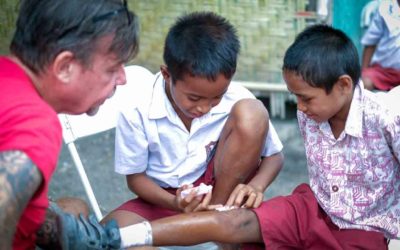
Primary medical care for rural kids
Residents of rural villages do not have access to primary care, and most medical centres are often several hours' walk away. The harshness of life here means that we are often injured, but nothing is available to treat us – no doctor, knowledge, medical equipment and, of course, no antiseptic or medicine.
These injuries can lead to the death of a child or an adult if they get worse. We must therefore act quickly. Fair Future has for years empowered schools and families in ultra-rural communities to take action in the event of an accident.
Today, we are taking a new step in this program.
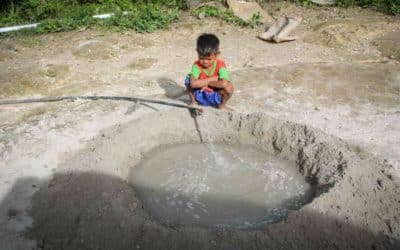
A child looks at the water flowing from a pipe
This photograph was taken by Kawan Elthon, at the end of November 2022, at one of the Water Connections project sites. It features a child from Mbinudita, a small village in eastern Sumba that does not have water access (or not yet, but soon). When he wants water, he has to walk for hours and bring one or two five-litre jerry cans, which he often fills with dirty water. He is, therefore, often ill and hires so many people here.
But there, while Fair Future and Kawan Baik are building new toilets, the clean and present water is flowing from one of the thirty tanks of more than 6,000 litres that we have built.
It's magical to see this kid staring at water flowing from a pipe for the first time in his life. I find it brilliant. It gives me the strength to continue in what we are doing.
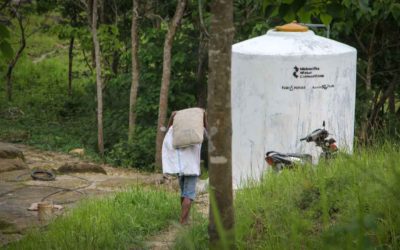
The construction of this 6700 liter water tank is complete
Thanks to the water we fetch deep in the ground via one of the deep boreholes already drilled, we can supply one of the thirty reservoirs built, including this one, for the Water Connections Project here in Mbinudita,
This facility will enable approximately 25 families to live healthier and more hygienic lives. This improvement decreases exposure to diseases caused by unclean water or lack of toilets.
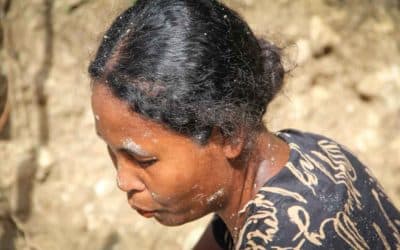
Everyone is at work here in East Sumba
Since August 2021, our teams have been at work. We have built over thirty Clean Water Tanks and now nearly twenty sanitary facilities for the Water Connections Project here in Mbinudita, East Sumba.
This work could not be done with our hands because the staff of Fair Future and Kawan Baik are on site; it comes down to eight people employed on the sites. These women and men from this poor and ultra-rural region are the real heroes of the projects we are carrying out.
They are the ones who, for years (previously with the Mbinudita school), have been working with us. They are part of our family now.
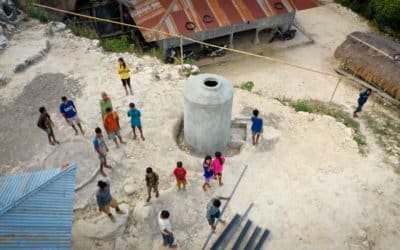
Still building clean and safe water tanks in East Sumba…
Water connections create a clean water network for families from rural areas in eastern Indonesia. Each facility includes gender-specific toilets, showers and access to life-sustaining drinking water.
These water points also aim to improve people's health, especially children. From a single borehole, we create water networks using the slope of the land, solar energy or hydrodynamic pumps.
Water to reduce infant mortality, birth problems and serious illnesses linked to the consumption of unsanitary water. Improving living conditions, creating economic opportunity, creating wealth and creating mental well-being
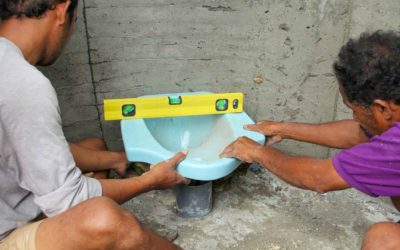
Healthy Sanitation Construction Program
This photo is from this week. In the regions where we are active, tens of thousands of people cannot use the toilets. Do you know why? Quite simply because they don't have any, because they don't have water and no financial resources to ensure their construction.
The inhabitants, therefore, have no other means than to relieve themselves in fields, bushes, forests, ditches, streets, canals or other open areas. In our view, this is not only an attack on dignity but, above all, enormous risks to the health of families, especially vulnerable people: children, the elderly, pregnant women and the chronically ill. That's why we continue to build healthy sanitary facilities at this time with the "Water Connections" program in East Sumba.

Kawan Sehat, the book for the Sumba kids
Kawan Sehat means "healthy friend". This is a book for children in rural areas. Our friend Bayu illustrated these boards simply for the children to understand immediately. Each panel presents Rambu (the woman), Umbu (the man) and a Horse (the most sacred animal of East Sumba) around socio-sanitary themes. The foundation's medical teams, familiar with local customs and traditions, treated about twenty subjects. Since the beginning of January, the foundation's medical teams have been developing additional medical topics for this book.
We invite you to get to know "Kawan Sehat" in .PDF format, in its latest version, by clicking on this link. Happy reading, Kawan.
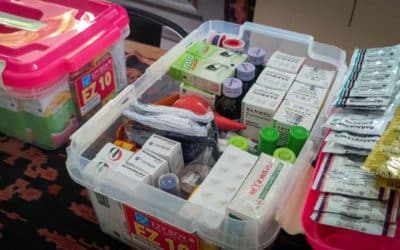
Preparing primary health care kits
Sixty (60) containers filled with medical equipment, essential drugs, and what to treat a wound quickly to prevent it from getting worse are being prepared.
Next week, more than a ton of medical equipment will reach our Rumah Kambera Medico-Social Base Camp by road. This represents a considerable volume of purchases, believe me.
The Rumah Baik Base Camp in Denpasar is filled with boxes, tape, medicines, plasters, bandages, disinfectants and other medical equipment.