


Donate
Support Care
Programs
All projects
Quick News
Field updates
Stories
Field stories
Water Connections
Clean Water Infrastructure
Safe water systems in ultra-rural villages
Water Connections is a field-based water infrastructure programme developed in ultra-rural Indonesia, where safe water systems do not exist. Entire villages rely on seasonal streams, open wells or distant sources. There is no municipal network, no treatment plant, and no maintenance structure. Our teams design, finance and build gravity-fed systems, deep wells, reservoirs and protected distribution points, in coordination with local authorities and village leaders.
The programme prevents waterborne infections, chronic dehydration and hygiene-related diseases that directly affect child health and maternal safety. We construct reinforced reservoirs, install submersible pumps when required, protect catchment areas and train local operators for maintenance. Each site is monitored over time to ensure structural durability and safe daily access for households and schools.
Water access is not assistance. It is a public health infrastructure.
Why Water Matters
Unsafe water drives preventable disease cycles.
Without safe water infrastructure, minor infections escalate into severe dehydration, sepsis or chronic malnutrition. Delayed access to clean water increases exposure to pathogens and weakens immune resilience, especially in children. Early intervention through structured water systems reduces infection risk, stabilizes hygiene practices and reinforces community health at its foundation.
Field Evidence and Case Reports
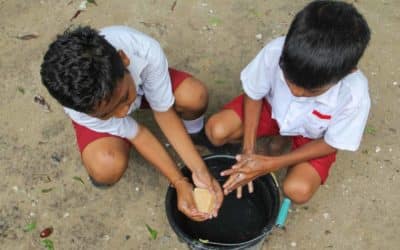
Washing hands to preserve health and life
Some forms of gastrointestinal and respiratory infections can lead to serious complications, especially in young children, the elderly, or people with weakened immune systems. This is why hand washing prevents the spread of disease. Indeed, many infectious and contagious diseases can be transmitted from one person to another through contaminated hands. These illnesses include gastrointestinal infections, such as salmonellosis, and respiratory infections, such as the flu, colds, and coronavirus (COVID-19). Washing your hands properly with water (when available) and soap will prevent the spread of germs, bacteria and viruses that cause these illnesses.
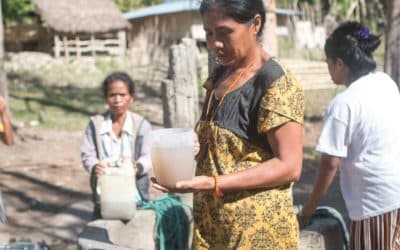
Women, children and water at home
Indonesian women play a vital role in water management due to their traditional responsibilities of collecting water, cooking, cleaning and raising children. These women from these ultra-rural areas of eastern Indonesia are strong. They represent tremendously well the strength and the courage it takes to survive here in this vast country. To fend for themselves most of the time, without the help of others, to meet the family’s most basic needs. Therefore, empowering women to increase water security is essential in the regions where we work. With climate change affecting water sources, it is vital to ensure that women are involved in water management decisions. This allows (we see this every day) families and local communities to improve their incomes and the health of family members, including their children.
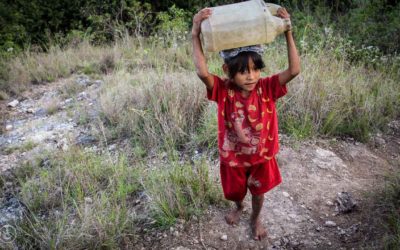
Consuming unsafe water can look like this!
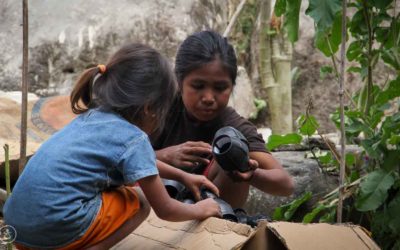
In these few images taken at the end of October 2022, in a village in East Sumba, more than a hundred people have access to this unique water source. A well was dug by hand more than ten years ago and is almost always dry. People have to queue to get a few litres of water that is totally unfit for consumption and dangerous to their health.
Report of the water connections project
Fair Future regularly presents reports establishing what we have achieved in all our necessary actions. The document that we offer you here explains what, all together, we have been doing over the past twelve months as part of this colossal project, Water Connections, Mbinudita Site. As a reminder, this project aims to provide access to drinking water and sanitation to more than 2,500 people whose homes are scattered over nearly 10 hectares.
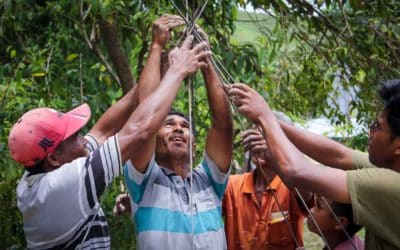
New complete and healthy sanitary facilities in Ritta, East Sumba
We do not stop; the teams of Fair Future and Kawan Baik foundations have already built, as part of the #waterconnections project, site of #mbinudita #sdmbinudita, more than thirty (30) tanks of more than 6000 litres, six ( 6) complete sanitary facilities including two toilets, showers, laundry washing and water collection point. More than 10,000 meters of PVC pipes have been buried, connecting all these installations. We still have a lot of work to do. It’s intense activity.
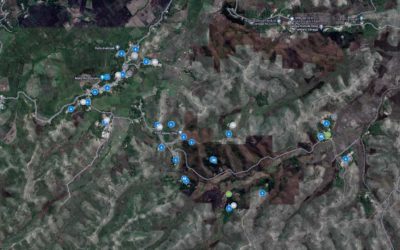
The Interactive Map of Water Connections Project
Fair Future develops participatory monitoring tools as part of its screening and definition of needs. This map is produced as part of the #WaterConnections project. It is updated as a new sewerage installation, a new deep borehole, a new clean water reservoir and everything that directly or indirectly affects this project is built. This Google map allows us to work, do this project and calculate: Heights, elevations, distances, depths etc… Thanks to this tool, this project is much easier to set up.
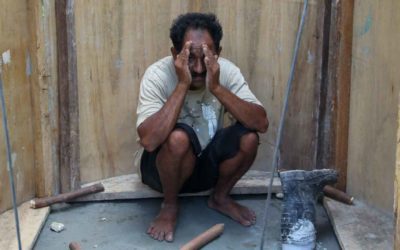
New complete and healthy sanitary facilities in Wondenu, East Sumba
In rural villages in eastern Indonesia, where we work, toilets are very rare. This is particularly a problem in rural areas where a third of the population must continually defecate in the open air. For Bapak Rinto, it is a relief and a great pride that his family finally has a toilet, thanks to the support of Fair Future and Kawan Baik Indonesia.
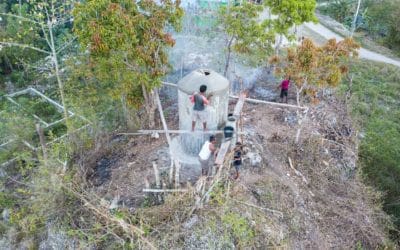
Water Connections from the sky – 04 October 2022
The health burden of poor-quality water is enormous, and providing clean water to such a large population is a considerable challenge. Indonesia, particularly the east of this immense country, is characterized by a non-uniformity in the level of awareness and socio-economic development. Therefore, our two foundations do what they can. These few images are taken from the sky and show you what this major project consists of, Water Connections: Drinking water and sanitation for 2,500 people.
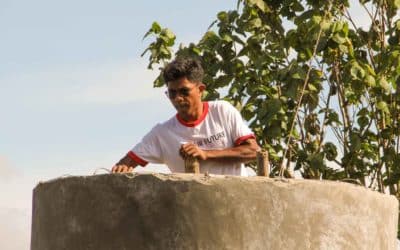
Water Connections program, the work of teams in the field
The past few weeks have been hectic for all of us here in East Sumba. What a titanic job we are all doing with the help of our friends, the villagers, and members of the rural communities of Mbinudita. The nights are short, and the days are very long and hot too. Imagine, friends, it’s almost 40°, and we work under a blazing sun, which almost anaesthetizes us if we don’t hydrate ourselves enough.
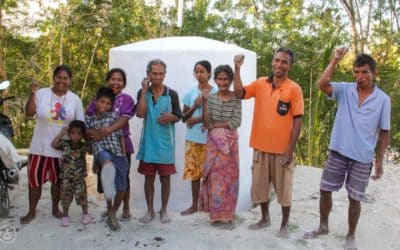
Building two new Water Tank – East Sumba, Mbinudita
In these few images, the teams of Kawan Baik Indonesia and Fair Future Foundation, with the help of volunteers from the village, are building two new Ferro-cement tanks of more than 6000 litres, which in a few weeks will provide clean water to a group of houses. In all, a good thirty families here in the village of #Mbinudita, where our #sdmbinudita school is located.
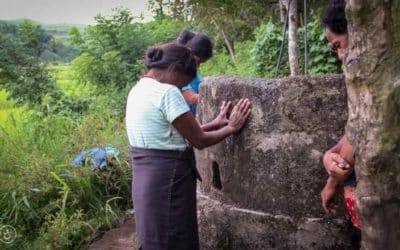
A prayer for water around a well in East Sumba
With a few friends from Kawan Baik and Fair Future, we had the privilege and emotion to experience a touching moment, thanks to the strong words of villagers living in a very isolated region of eastern Indonesia. We felt that these brave people had hope that time and the Lord might bring them a better life. For that, we have no choice but to help them.
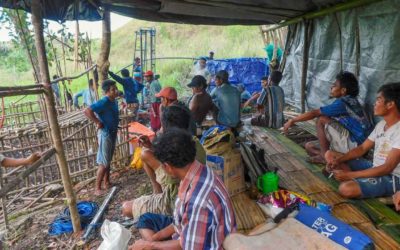
The drilling of the first well in Mbinudita, East Sumba
The procedure for drilling the first well in Mbinudita as part of the Water Connections project. A work of Titan in insane conditions. Three weeks of life on site in the rain, working around the clock to reach a relatively deep water table since clean, clear and healthy water is found at a depth of just over 60m.