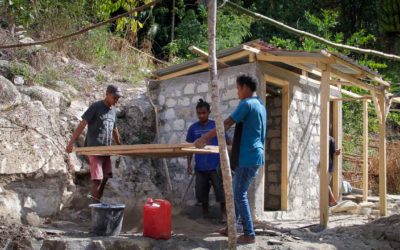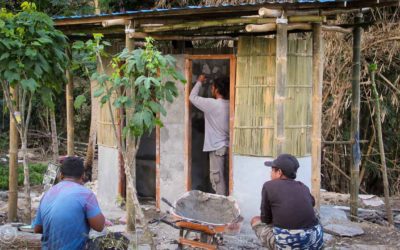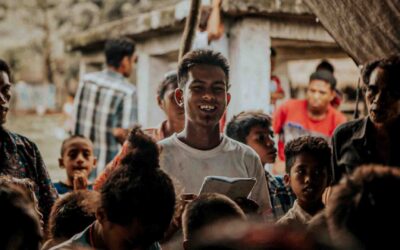

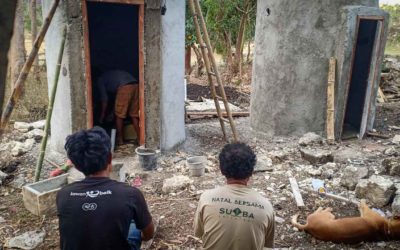
We are in the process of completing new clean water tanks and new sanitation facilities in Mbinudita. Our teams are on-site with the help of the entire local community, women, men and children who help us in this work. These infrastructures are made of Ferro-cement, like all the others, with the difference that we give the possibility to the villagers to choose the type of construction. Once again, this type of collaboration works wonders on site because it allows everyone to learn and work.
PRIMARY MEDICAL CARE AND DISEASE PREVENTION
Where no doctor is available, care must reach people directly. Fair Future Foundation delivers primary medical care and disease prevention through trained local health agents following structured protocols. Treatment of common illnesses, fever, wounds, and malaria is combined with hygiene, vaccination, and community education. This integrated model reflects WHO public health principles, where prevention and care form a single, continuous medical response.
The Medical & Prevention category focuses on evidence-based field medicine and public health actions implemented in ultra-rural contexts. It documents how primary medical care, disease prevention, and early intervention reduce morbidity and mortality where access to healthcare is absent. Articles address infectious diseases, maternal and child health, hygiene, vaccination, and community education, aligned with WHO recommendations. Beyond theory, this section presents concrete medical practices carried out on the ground by trained local health agents, highlighting how prevention remains the most effective and sustainable medical act in vulnerable populations.
Primary medical care for kids in rural areas
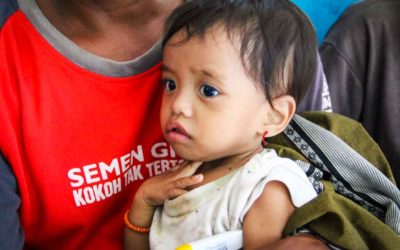
The inhabitants of rural villages do not have access to primary care, and most medical centres are often several hours away on foot. The harshness of life here means we often get hurt, but nothing is available to treat ourselves—no doctor, knowledge, medical equipment and, of course, no antiseptic or medicine. These injuries can lead to the death of a child or an adult if they get worse. We must therefore act quickly. Fair Future, for years, has empowered schools and families in ultra-rural communities to take action in the event of an accident. Today, we are taking another step in this program.
Benefits of Clean Water in life
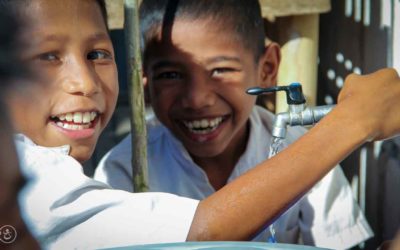
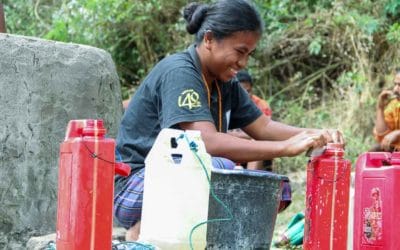
The Benefits of Clean Water Influence the Daily Lives of Children and Adults and Impact the Quality of Life in a Community for Generations to Come. Fair Future sees a change in the habits of families who benefit from the Water Connections program. Without drilling deep wells here, families will not be able to access clean water and will have to continue walking for miles and hours to fetch dirty, unsanitary water. Most of the time, women and children are assigned to this exhausting task. Access to better health has always been the foundation’s primary mission, and healing people simply by giving them water is incredible for us. It is the only possible solution.
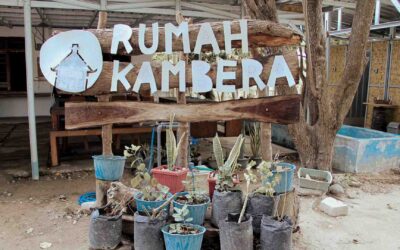
Rumah Kambera medico social base in rural Indonesia
Provides a permanent medico social base in rural Indonesia, enabling healthcare delivery, medical logistics, training and emergency response in remote East Sumba villages where no public infrastructure exists. Rumah Kambera anchors long term humanitarian and medical field operations.
The 2nd sanitary facility of the village is almost finished
Although access to clean water continues to be a problem, it isn’t easy to ensure it is safe. In this sense, Fair Future is putting in place measures to ensure that it is sustainable. By tests, of course, filtration systems that use elements present in nature. But also, and above all, the education of users on “how to keep the installation clean and in optimal working order” is part of the “water Connections” program. On the other hand, it should be noted that individual practices also play an essential role in determining the quality of the water that we make available to the villagers here in East Sumba.
We create water connections, look…
The first idea was to treat people at the source of their health problems because our medical teams and us allow the expression: “-We were a little tired of giving medicine with a glass of inedible water. …”. And as we have told you many times before, the vast majority of patients who come to us are primarily because of the poor quality of the water they use. But also because they simply don’t have enough or no water.
The 1st toilets of the village are almost finished
Sanitary facilities, showers, toilets, a wastewater collection tank… This was a pilot project for the foundation. Today it is something normal. How do we build healthy, ecological, environmentally friendly sanitary facilities using mainly local materials (apart from sand, iron and cement)? How not to waste the water we found by drilling so deep here in Mbinudita? Where had drilling never been attempted? How to reuse wastewater to be able to water the gardens, the plants, and the vegetables that do so much good to and improve the lives of everyone here? It was a challenge, but it is now a reality.
Truck of Life goes everywhere almost no one goes
The truck of Life is so important… It allows us to go where almost no one ever goes. To meet people who have unexpected problems. To provide medical care, to take children or even a doctor or dentist to the nearest town. Truck of Life allows us to bring equipment, food, and drinking water where no one goes while ensuring the safety of our volunteers and specialized collaborators. Indeed, hundreds of thousands of people live in the most inaccessible territories who do not have access to the most basic needs to ensure a healthy life: No access to medical care, drinking water, or a light source for children to read or study.
Shortage of clean, safe drinking water
All these people, we meet every day. When we ask them what their biggest dream is, all without exception answer us this: To have clean water, some not dangerous for their health and that of children, and pregnant women. To have access to it here, close to home. To be able to water and cultivate a garden, eat better, shower, and wash. But above all to be able to drink more, cook more. The Fair Future and Kawan Baik foundations within the framework of the Water Connections project, strive by all means to fulfil their dreams. Their lives, their health and their future are at stake. Water is the source of life, of all life!
Days of medical care in rural areas
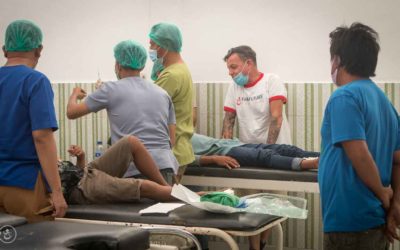
Discover the different contexts and situations in which Fair Future teams intervene to provide care, including crisis and natural disaster situations, and how and why we adapt our activities to each. Days of care like the one we present to you below we do dozens of them a year and they are adapted to people from rural areas, who for the most part have never seen a doctor before us.
What you can do for us?
Want to make a real difference? Support Fair Future Foundation by donating, volunteering, or sharing our mission. Every contribution, no matter how small, helps provide vital medical care, clean water, and education to ultra-rural communities in Indonesia. Explore the many ways you can get involved and join us in building a healthier, fairer future.