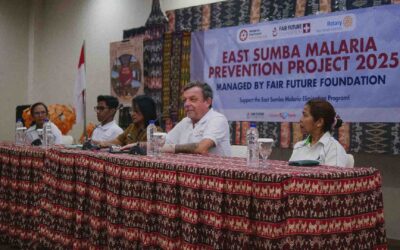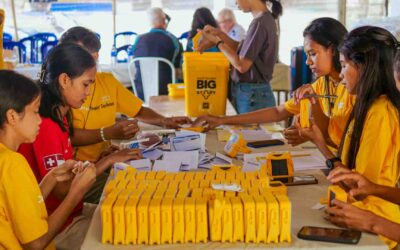

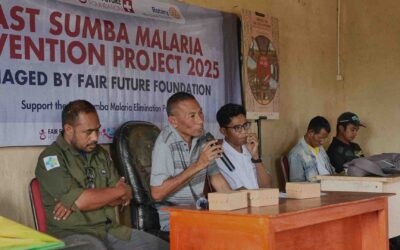
Day two of malaria microscopy training validates real diagnostic skills in East Sumba. In clinics without hospitals or laboratories, accurate slide reading guides treatment, prevents severe cases, and protects lives through disciplined, field-based medical practice.
Projects & Field Operations: From Plan to Impact
Projects & Field Operations documents how Fair Future Foundation plans and delivers humanitarian action in ultra-rural Indonesia. From medical care and water systems to logistics and electrification, it shows how strategy becomes measurable health impact under real field constraints, aligned with WHO operational standards.
The Projects & Field Operations category documents how humanitarian programs are designed, implemented, and monitored in ultra-rural Indonesia. Articles detail field execution of medical programs, water infrastructure, logistics, and community-based systems under real operational constraints. Content focuses on planning, coordination, data tracking, and supervision, aligned with WHO operational and public health standards. This category shows how rigorous field methods translate strategy into measurable health impact.
Malaria microscopy training day one | Fair Future Foundation
Laying the Foundations for Accurate Diagnosis Malaria remains a major challenge to global public health, with 282...
SolarBuddy distribution update reaches final phase
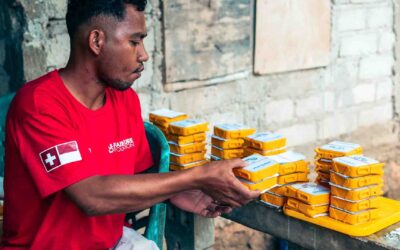
The original plan counted 24 schools. Field reality allowed more. Careful logistics and constant presence made it possible to extend distribution beyond expectations, proving that long term engagement creates room for added impact where children need it most.
About Fair Future | Swiss Medical Action in Remote Areas
Since 2008, Fair Future Foundation has delivered field-based medical care and disease prevention in isolated communities. Swiss-governed and field-present year-round, we combine primary healthcare, clean water, and education to reduce health risks before emergencies occur.
Humanitarian jobs and field positions with our NGO
This page presents paid humanitarian jobs and field positions focused on medical care, disease prevention, and essential services. Roles require professional skills, ethical rigor, and long-term commitment in ultra-rural environments where responsibility matters.
Kawan Sehat Medical App – Offline care in rural regions
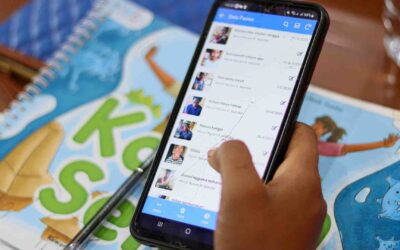
In ultra rural Indonesia, access to medical care depends on distance, roads, and signal. The Kawan Sehat Medical App was created to change that reality by enabling trained community health agents to deliver structured primary medical care without internet access, while generating reliable medical data for long term action.
Solar Light for Children in Ultra-Rural Regions
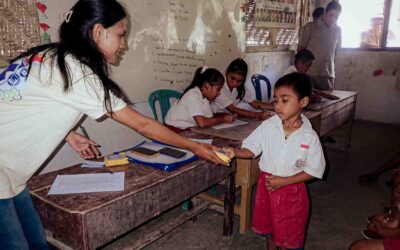
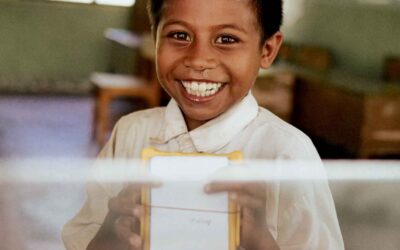
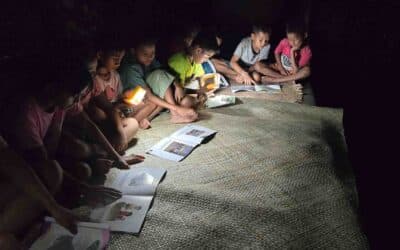
This new picture of the day shows solar light for children delivered through patience and care. In an ultra-rural classroom, a lamp is not simply handed over. Time is taken to explain, to show, to ensure understanding. For children living without electricity, light means safety, learning, and dignity once the sun goes down.
SolarBuddy distribution reports now available East Sumba
The two documents prove that light delivery is more than numbers. They show routes taken, funds used, and hours of study gained. They record teacher involvement, safer evenings, and lower injury risk. Evidence builds trust, and trust keeps the lights arriving where they are needed most.
The Day Night Changed – Solar Light for Mbajik School
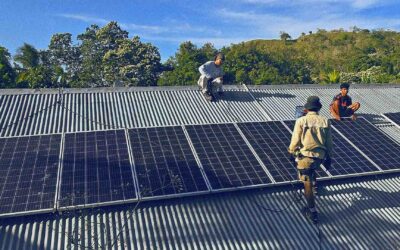
For five days, we lived and worked in Haray to create The Day Night Changed, a film showing how electricity reached Mbajik School for the first time. This is the story of before, during, and after, in a district where over 100 schools still wait for power.
SolarBuddy lamps Matawai Katingga protect child health
In Lapinu, an isolated village in Matawai Katingga, SolarBuddy lamps Lapinu children change daily life. Without electricity or clean water, evenings meant smoke, kerosene and darkness. Our joint teams from Fair Future and Kawan Baik bring light as a medical tool, to protect lungs, eyes and learning
SolarBuddy lamps East Sumba – quality control to classrooms
At Rumah Kambera we checked 2,224 SolarBuddy lamps East Sumba one by one. Volunteers, Rotary, Fair Future and Kawan Baik tested brightness, panels, switches and batteries, fixed faults, logged QR codes, and packed each unit for long journeys to schools with no electricity. Light prevents injuries, improves study, and protects health.
SolarBuddy Lights for Rural Children
The SolarBuddy Program delivers solar-powered lamps to children and schools in villages with no electricity. These small lights illuminate homes, pathways, and classrooms—improving safety, education, and dignity. In the dark corners of Sumba, light changes everything.