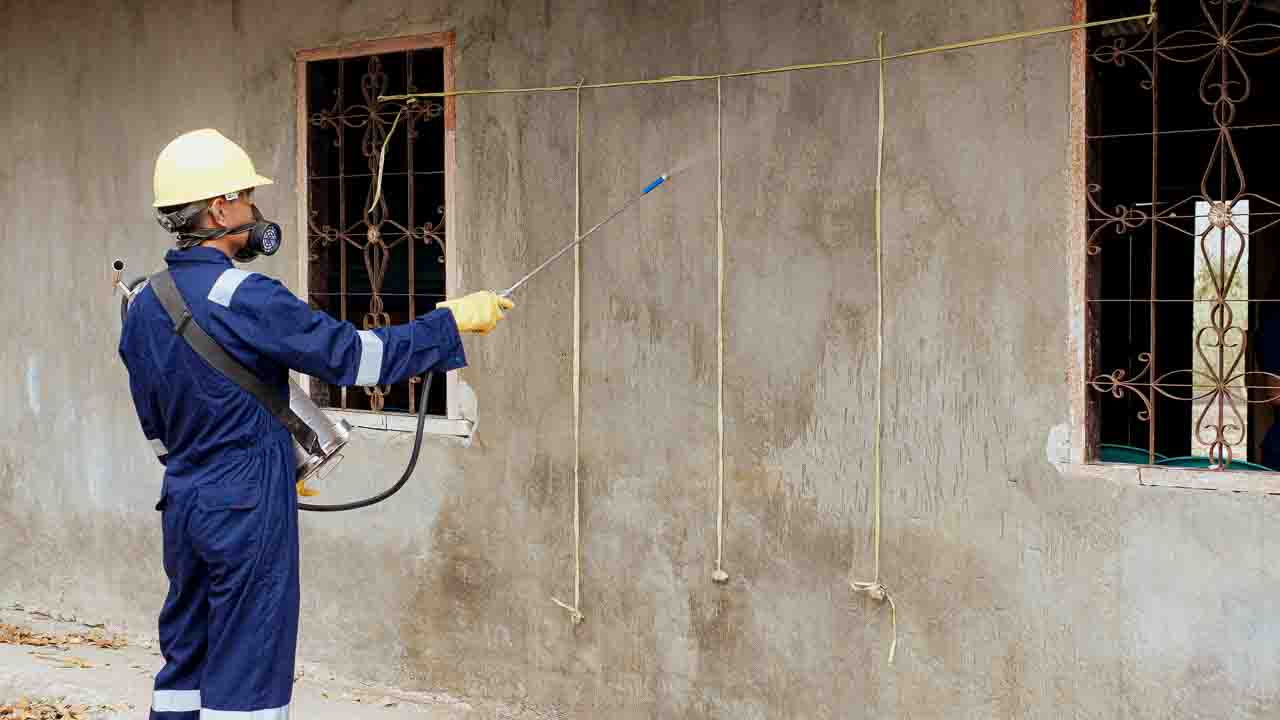




Teams conduct Indoor Residual Spraying in bamboo houses to reduce malaria risks for children and families.
In ultra-rural areas of East Indonesia, malaria is not seasonal.
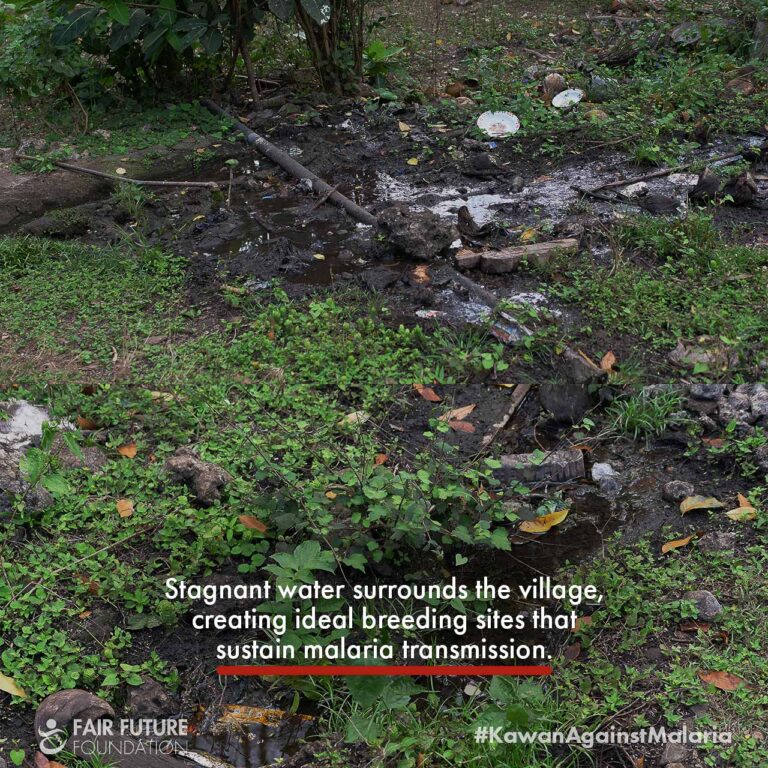
It is constant. Stagnant water accumulates around homes, humidity remains trapped inside traditional structures, and Anopheles mosquitoes find ideal conditions to survive and transmit disease. In this context, prevention must be immediate, methodical, and measurable.
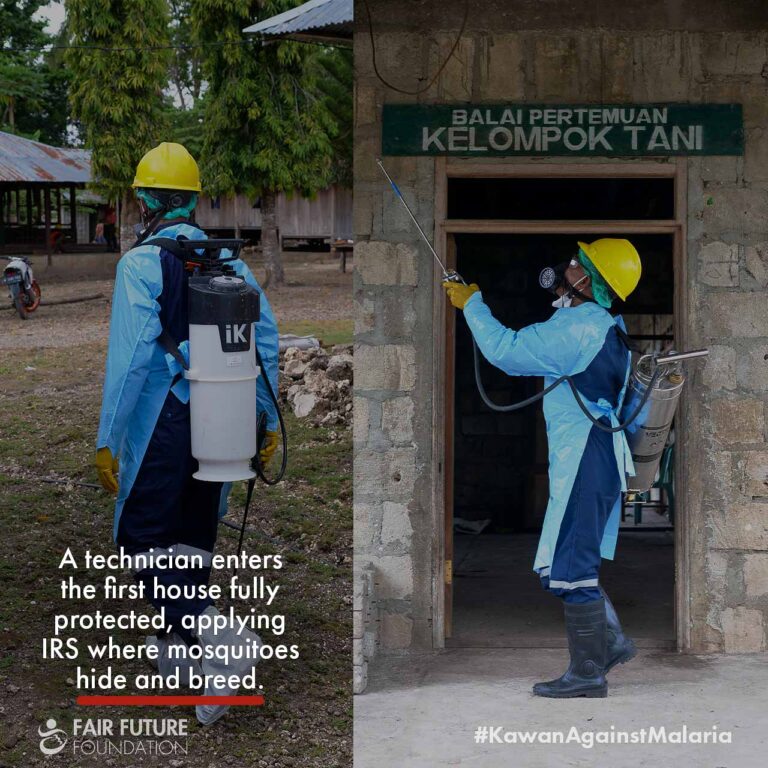
Indoor Residual Spraying is one of the most effective vector control interventions when applied correctly. For Fair Future teams working alongside Kawan Baik Indonesia and local Kawan Sehat agents, IRS is not merely symbolic. It is a medical procedure performed under strict protocols to reduce transmission in the very spaces where families sleep, eat, and live.
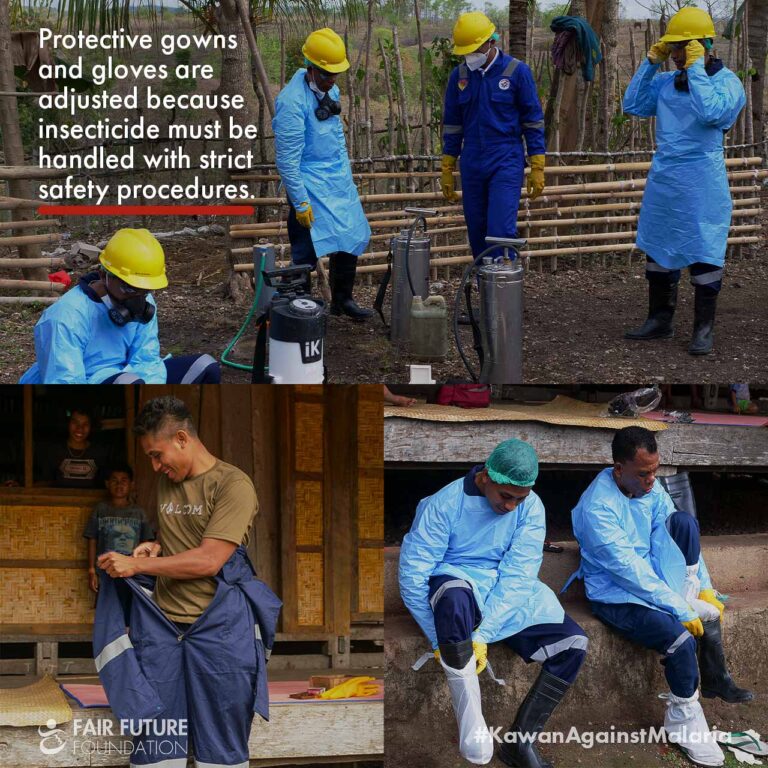
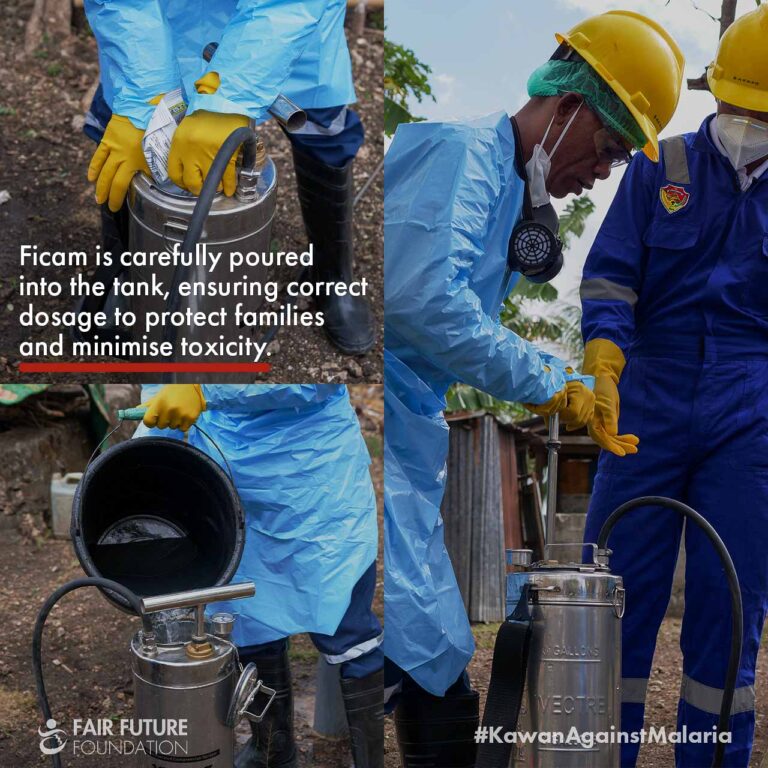
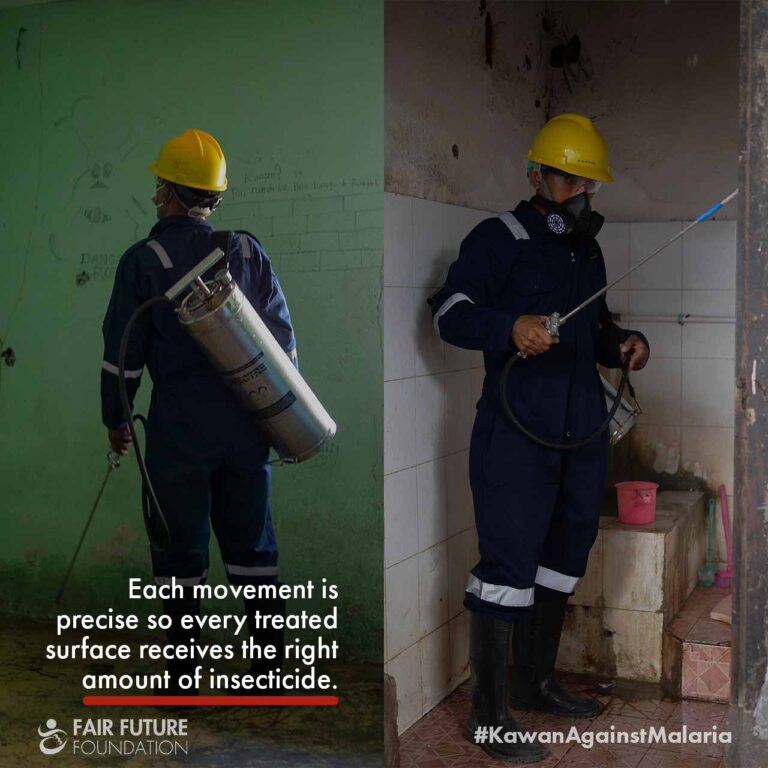
Each intervention begins with preparation. Protective equipment is checked, insecticide dosage (Ficam form Bayer) is calculated precisely, and spraying devices are tested before entering any household. The product used is effective but toxic, requiring full protective gear and disciplined handling. There is no improvisation. Every movement within the house is slow, controlled, and intentional to ensure treated surfaces receive the correct amount.
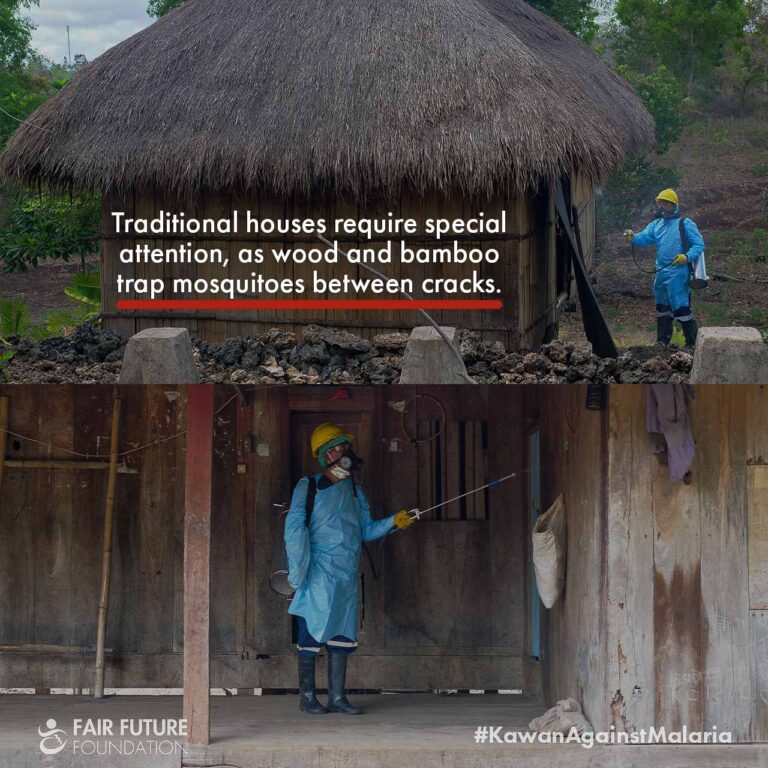
Traditional houses built from bamboo, wood, and earth demand particular attention. Cracks, dark corners, and humid walls create countless resting sites for mosquitoes after feeding. Spraying these surfaces interrupts the transmission cycle for several months, protecting children, adults, and elders alike.
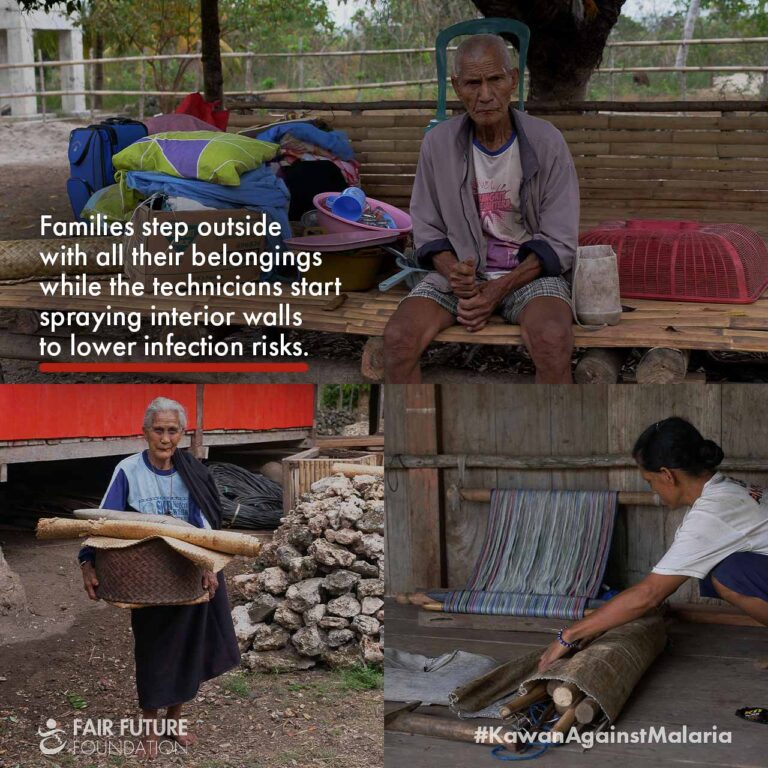
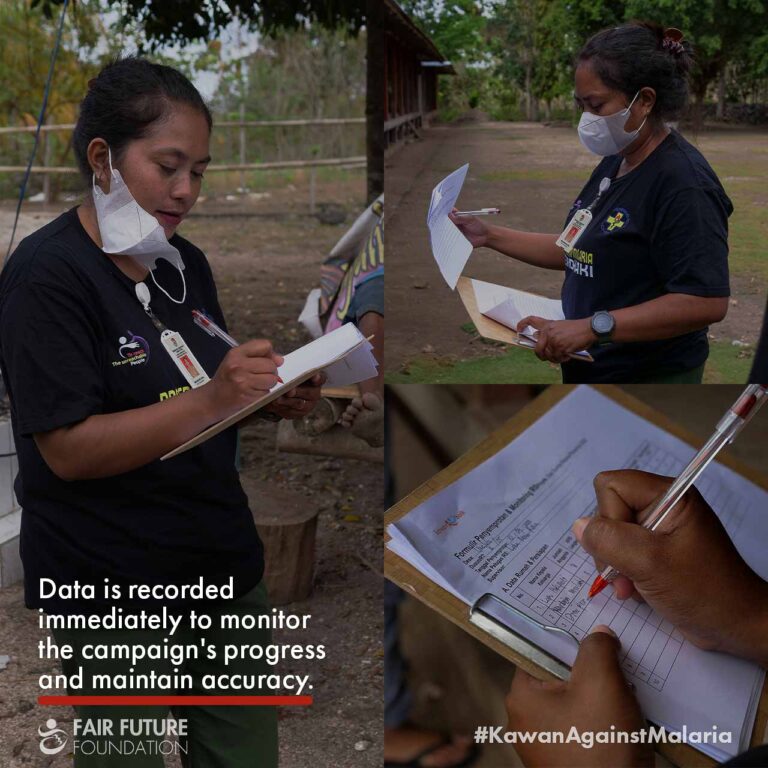
Families temporarily step outside while spraying takes place. At the same time, the Fair Future field officers document each household, verify coverage, and record data in real time. This information is essential for monitoring effectiveness, ensuring accountability, and guiding future interventions.
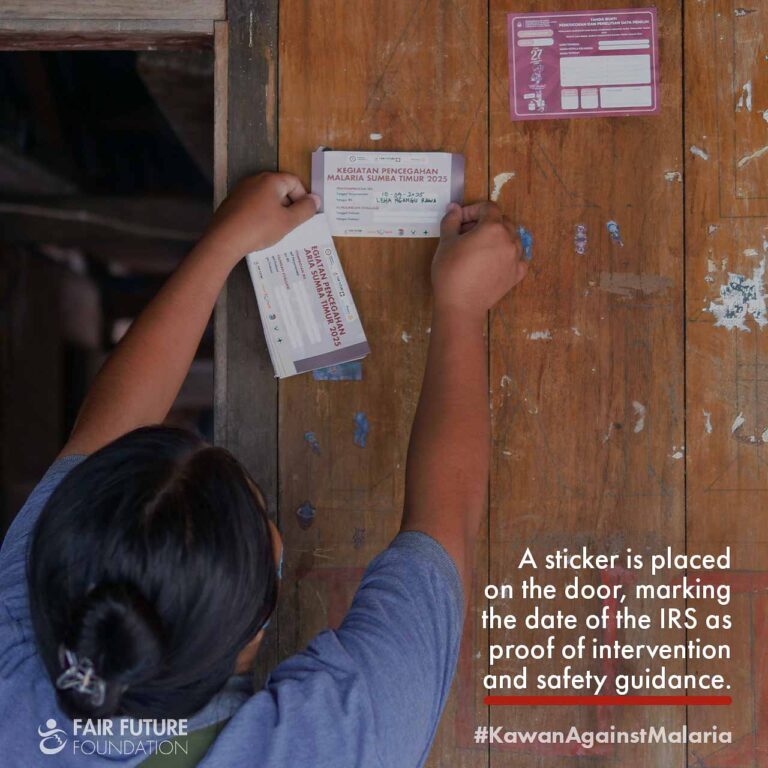
A sticker placed on the door marks the date of spraying. It is not a label. It is traceable proof that prevention has taken place, that safety instructions were delivered, and that the household is now part of a documented public health response.
This is malaria prevention as practised medicine. Precise, demanding, and human. A daily effort sustained by presence, discipline, and long-term commitment in regions where malaria remains a permanent threat.
About the East Sumnba Malarai Prevention Program: All documents are publicly available via this article, including the final report and the comprehensive accounting annexes. For audit and traceability purposes, the online digital version remains the sole authoritative record.
Today, the 2nd of February2026 – Alex Wettstein
In Short | When Precision Saves Lives
Indoor residual spraying only works when it is applied with medical discipline. In ultra-rural villages, teams must control dosage, protect themselves from toxicity, treat every surface correctly, and document each house. This precision transforms a technical intervention into real malaria prevention for entire communities.
Indoor Residual Spraying for Malaria
Malaria Indoor Residual Spraying in Rural Homes
Vector control where malaria never rests
Indoor Residual Spraying is one of the most effective malaria prevention tools in ultra-rural Indonesia, yet it is also one of the most demanding. In East Sumba, stagnant water surrounds homes built from bamboo, wood, and earth, creating ideal conditions for Anopheles mosquitoes. Malaria transmission is constant, silent, and deadly if left unchecked.
Fair Future teams, working side by side with Kawan Baik field officers and Kawan Sehat health agents, enter these environments wearing full protective equipment. The insecticide used is effective but toxic. Dilution is calculated precisely, sprayers are checked repeatedly, and every surface is treated with controlled movements. There is no room for improvisation.
Families temporarily leave their homes while interior walls are sprayed, especially dark, humid areas where mosquitoes rest after feeding. Traditional housing requires slow, deliberate work, as cracks in wood and bamboo provide countless hiding places. Each house is documented, each intervention recorded, and each family informed about post-spray safety.
Beyond spraying, this work is public health in practice. Data collection, household verification, and follow-up ensure scientific rigour and accountability. A sticker placed on the door marks the intervention, not as a symbol but as traceable proof of protection.
This is how malaria prevention becomes tangible. Presence, precision, and continuity. For Fair Future and Kawan Baik teams, malaria control is not an abstract concept. It is daily fieldwork, carried out with dis
Alex Wettstein – Fair Future Foundation medico-social camp in East Sumba – Rumah Kambera, Lambanapu – the 2nd of February 2025


List of Related Organisations with Hyperlinks
- Rotary International: Supports community-based health interventions and malaria prevention programmes worldwide.
- Malaria Partners International: Their mission is to launch an international Rotarian campaign to eradicate malaria.
- UNICEF Health Programmes: Works on child health and malaria prevention for vulnerable populations.
- Global Fund: Finances malaria prevention and treatment initiatives globally.
- Save the Children Health Programmes: Focuses on child survival and disease prevention.
- Roll Back Malaria Partnership: Coordinates global malaria control strategies.