

In the heart of East Sumba, the village of Wairara, Mahu, faces a dire water crisis. Poverty, malnutrition, and malaria have already taken a toll, and the breakdown of the Lorenz© solar pumping system has left the community in uncertainty. We’re on a mission to restore clean water access and safeguard their health. Join us as we navigate challenging terrain and work tirelessly to ensure that no one is deprived of this fundamental necessity.
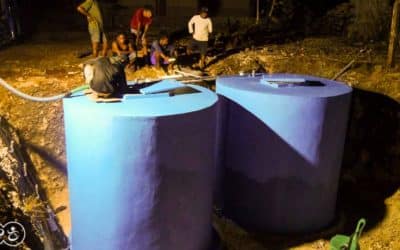
In the scattered hills of East Sumba, 5,300-litre ferrocement tanks collect each drop of rain. Families help build and maintain them. Children drink safely, and women no longer have to carry 20-kilo jerrycans for hours. Water near the house is a primary source of health care.
Providing solutions to water shortages in ultra-rural areas where access to clean water is critical.
Barefoot Journeys to Education: A Tale of Resilience
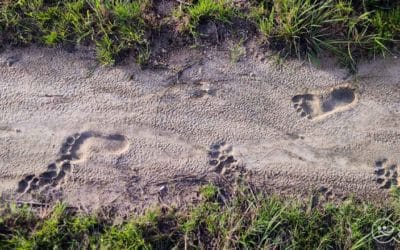
In the secluded areas of Eastern Indonesia, it’s common to see children walking barefoot on muddy paths. This is a clear indication of their determination and hope for a brighter future. However, these children face real risks due to their lack of footwear. Fortunately, Fair Future’s #PrimaryMedicalCare program is providing them with essential medical support and shoes to help them realize their dreams.
A Word from Alex: The Unyielding Battle for Medical Equity in East Sumba
In this poignant narrative, Alex Wettstein, founder of Fair Future, takes us into the trenches of the foundation’s work in East Sumba. From combating rampant diseases like malaria to navigating the glaring absence of international aid, Fair Future’s commitment is unwavering. A must-read to understand the arduous yet imperative mission to bring medical equity to one of the most impoverished regions in Southeast Asia.
Bringing Clean Water to Tanambanas #WaterConnections
Fair Future’s #WaterConnections project is a beacon of hope in Tanambanas, Sumba, where every drop of water is a treasure. By collecting and filtering rainwater, we’re creating not just reservoirs but sanctuaries of health. Dive into this inspiring story of how innovation and collective effort are changing lives, one drop at a time.
Matawai: Fair Future’s Eye-Opening Documentary on East Indonesia’s Water Crisis
Matawai’ serves as a profound wakeup call to the global community about the water crisis in Eastern Indonesia. Produced by Fair Future Foundation, this compelling documentary vividly portrays the day-to-day struggles of rural families. Through this film, you’ll also witness the groundbreaking initiatives we’ve implemented to transform access to clean water, sanitation, and hygiene education. We invite you to join Fair Future in advocating for universal access to these basic human needs.
Transforming Lives in East Sumba: Rotary Australia’s Vital Partnership
The partnership between Rotary Australia and Fair Future aims to make a positive impact on vulnerable communities in East Sumba. Through a joint effort, we are dedicated to providing clean water access and disease control, which will help bring hope and a brighter future to these communities. Our collaboration highlights the importance of friendship and teamwork in achieving these life-changing initiatives. Explore the transformative results of our revolutionary programs and witness the strength of our commitment to making a difference.
Happy to have water without going far to get it
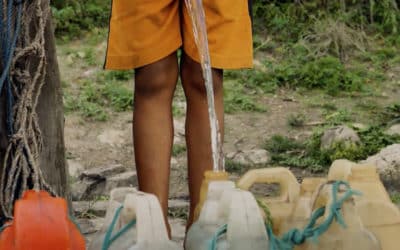
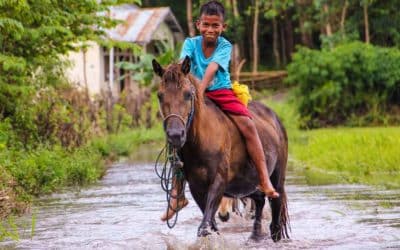
This new "Picture of the Day" shows you a 12-year-old kid named Yaspan. He was born in a tiny village in East Sumba where Fair Future and Kawan Baik have worked for over four years. We built a new school for him a few years ago, #sdmbinudita, and now he and his family have clean water reaching his house, which was not the case before. Yaspan and all his friends from the Village of Mbinudita are lucky because children struggle to get water everywhere else. They have to find it very far on foot; to do this, they miss school, get injured, and fall ill.
There's something inexplicably satisfying about the heavy rains in ultra-rural East Sumba, especially when you live in a water-scarce area: The sound of raindrops hitting the roof is soothing, and the smell of wet earth is refreshing; plus, you feel good because you know that this rain will help the family. When it rains a lot, kids and families here can't help but be happy knowing that their water tanks will be filled and they won't have to worry about running out of water for a moment.
"-It's a small blessing for which I am grateful, and I always make sure to take advantage of the rain while it lasts…" a friend from the village told me last month.
Heavy rains like the ones we experienced last month in one of the ultra-rural villages in East Sumba, where we work with Fair Future and Kawan Baik Indonesia foundations, are also an opportunity to celebrate as these kids wade through the water. They are the first to be happy because they won't have to walk for hours to fetch water far from home.
With those heavy rains comes plenty of water and the relief of much-needed hydration. The floods will provide much-needed food for crops, wash livestock and provide villagers with general water and sanitation assistance. With the bonus of increased economic activity and improved social well-being from the new abundance of water, these small floods are becoming the opportunity of a lifetime for the villages of Sumba. With increased water storage, a healthier environment and better living conditions, small floods caused by heavy rains are the perfect way to improve the lives of villagers in these areas where water is absent.
It's interesting to consider that what may be a challenge for many of us is a helpful solution for these families.
Kullup is a hole in the rock to collect rainwater
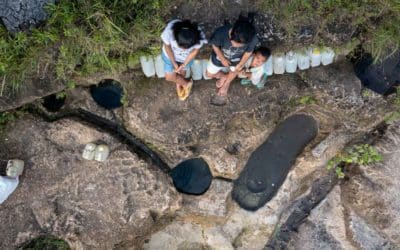
This new "Picture of the Day" shows you kids from the village of Laidatang, who fetch water far from home in the "Kullup" of the village. Elthon, responsible for documentation (with the black t-shirt), and Alex, from the medical staff, are also present in this photo. With the kids and one or two adults accompanying us, we walk more than an hour to reach this place in the middle of a high hill. You must descend a steep path to access these hand-dug holes in the rock. In 30 minutes, we will have to go up the hill and walk back. But this time, loaded with several jerrycans filled to the brim.
The Fair Future and Kawan Baik teams spend two days with the families of the ultra-rural and isolated village of Laindatang to get to know them even better. In this village, we have the project to create a #WaterConnections project. I let you read here the articles related to this project and here to see what your want to do to save their lives,
In Laindatang, families only have access to rainwater. It's for everything: eating, drinking, cooking, bathing, washing clothes, drinking water, caring for children, sick people or watering animals. Therefore, one of the ways for women and young girls to have water at home to live on is to walk several kilometres to find the "Kullup".
Kullup, what is it? These are small stone basins, directly dug into the rock by the villagers, used to collect and store rainwater in rural areas. When it rains, the water seeps into the ground at the top of the hill and then is filtered through the earth and the basements. It flows drop by drop in these stone basins, the "Kullup". Then the villagers come to fill their jerrycans with five or ten litres.
The "Kuluk" are an essential water source for the local communities. But the quality of stored water can be affected by bacterial contamination, chemicals, animal waste or debris. Therefore, regularly cleaning these small holes in the rock is essential to maintain water quality. It is important to note that the "kuluk" is only a temporary solution to the water crisis in areas with limited access to drinking water. Indeed, the "kuluks" cannot fill up correctly without rain. They dry out about ten days after the last rains and remain dry for almost nine months. To find water, young girls, women and children, sometimes under five, will have to walk even further and longer.
Our two organizations work with local communities to implement longer-term solutions, such as constructing water supply networks using deep boreholes and sealed and healthy rainwater cisterns. The Water Connections program offers innovative and sustainable solutions. It includes promoting water conservation practices with “Kawan Sehat” and self-sustaining access to Primary Medical Care through the PMC program.