The current priority in this village is to give them clean, safe water and sanitation. Here, families must walk for miles, sometimes more than 10 hours, to bring a few litres of clean water home. People here have less than 2 litres per day and a person to drink, eat, go to the toilets, and wash. So you have to make sacrifices.
We have compiled a list of articles and pages for this topic
The Fair Future Foundation in East Indonesia combats social and medical injustice and aims to ensure everyone has access to healthcare, clean water, and education. Join us in making a difference.
Improving sanitation with simple, safe toilet facilities to protect health and dignity in remote communities.
Malaria outbreak in East Sumba, Indonesia
Malaria is one of the most severe public health problems in the world. Here in Indonesia, and especially in the eastern regions, it is one of the leading causes of death and disease. Children under five years old and pregnant women are the most affected groups.
Water Connections project in Laindatang
The Water Connections project, Laindatang Site, is our current top priority. Laindatang is a village without water. Everyone is sick and does not have enough to eat and drink. Children are underweight, and so are adults. We must act for these hundreds of people and give them access to clean water.
Living without toilets and without water, Fair Future is changing that
We are in the process of completing new clean water tanks and new sanitation facilities in Mbinudita. Our teams are on-site with the help of the entire local community, women, men and children who help us in this work. These infrastructures are made of Ferro-cement, like all the others, with the difference that we give the possibility to the…
Building a 6,500-litre Ferro-cement tank
Building a water storage tank is something simple but complicated at the same time. Working day and sometimes night too, sleeping under challenging conditions, eating little and walking a lot… This is the life of the Fair Future and Kawan Baik teams in the field, every day for months with the support and unconditional support of the villages where we are setting up a new program. We are very involved in all the constructions, be it the reservoirs but also the healthy sanitary installations, the water connections, the filtration systems, and so many other things which, put together, create infrastructures which make them more useful, simpler life.
New complete and healthy sanitary facilities in Ritta, East Sumba
We do not stop; the teams of Fair Future and Kawan Baik foundations have already built, as part of the #waterconnections project, site of #mbinudita #sdmbinudita, more than thirty (30) tanks of more than 6000 litres, six ( 6) complete sanitary facilities including two toilets, showers, laundry washing and water collection point.
New complete and healthy sanitary facilities in Wondenu, East Sumba
In rural villages in eastern Indonesia, where we work, toilets are very rare. This is particularly a problem in rural areas where a third of the population must continually defecate in the open air. For Bapak Rinto, it is a relief and a great pride that his family finally has a toilet, thanks to the support of Fair Future and Kawan Baik Indonesia.
Water Connections from the sky – 04 October 2022
The health burden of poor-quality water is enormous, and providing clean water to such a large population is a considerable challenge. Indonesia, particularly the east of this immense country, is characterized by a non-uniformity in the level of awareness and socio-economic development. Therefore, our two foundations do what they can.
Building two new Water Tank – East Sumba, Mbinudita
In these few images, the teams of Kawan Baik Indonesia and Fair Future Foundation, with the help of volunteers from the village, are building two new Ferro-cement tanks of more than 6000 litres, which in a few weeks will provide clean water to a group of houses.
Building healthy sanitation facilities in rural areas
We are building safe and healthy sanitation facilities for these reasons: Ending defecation in the open rather than in toilets will have “transformational benefits” for the most vulnerable people in East Sumba. Open defecation is when people defecate in the open -for example, in fields, forests, bushes, lakes and rivers rather than toilets.
We have a toilet for the first time in our life!
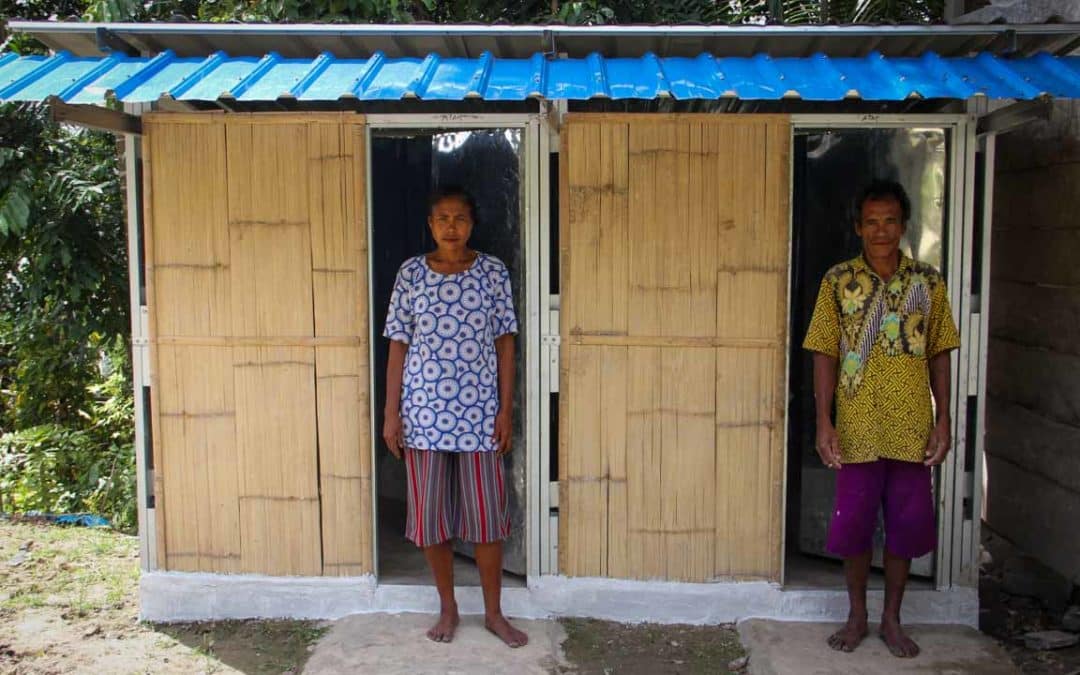
This "Picture of the Day" shows you an adorable couple from East Sumba, the village of #mbinudita -who are not used to being photographed-. Beneficiaries of the #waterconnections program who have had access to toilets at home for a few hours. But not only toilets: They can shower there, wash their clothes, and create a vegetable garden. And most importantly, eat and drink healthily. No more getting sick from the water. No more spending hours on the paths to fetch a few litres of dirty water.
East Sumba is one of the regions in the world with the highest rate of malnourished children. Infant mortality due to lack of clean water and toilets is staggering. Our medical teams still spend much of their time giving medical treatment and medicine to people and children who don't have clean water to swallow. Or how to treat a child who suffers from diarrhoea by giving him tablets that he will have to drink with inedible water, the source of his illness? Say to cook the water? It has no wood; frankly, when you're thirsty, you drink what's there.
But here, things have changed dramatically. Over thirty healthy sanitation facilities and over forty clean water tanks have been built for these almost 280 #rebuildmbinudita families. Every week we see new vegetable gardens created, many more children going to school, including young girls, and more mothers looking after their families instead of walking for hours to fetch five litres of dirty water.
Drinking and eating better thanks to water connections
For months, Fair Future has noticed a fundamental change in habits in families who benefit from the “Water Connections” program. Gardens are created. People eat better, drink more, have more energy and are less ill. This observation fills us with joy and comforts us in our choices and decisions.