

Empowering Communities and Transforming Healthcare through Education: How the Fair Future Foundation’s Groundbreaking...
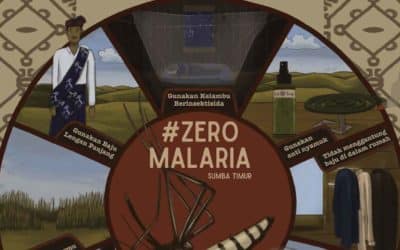
Malaria Prevention: An Educational Tool That Saves Lives
read more
Acting Now…
Local teams at work every day in the field


Malaria continues to pose a daily threat in this area. Through Kawan Against Malaria, we monitor cases, test all fevers, protect homes, and educate families. The use of bed nets, spraying, and prompt treatment turns statistical data into lives that endure quietly, rather than ending prematurely.
Support Care
All projects
Field updates
Field stories
At Fair Future Foundation, we believe education is the key to transforming communities. Our holistic approach integrates schooling with clean water access, primary healthcare, and nutrition, ensuring that vulnerable communities thrive. By actively involving local communities, we create sustainable solutions that address real needs, paving the way for a brighter future in the ultra-rural regions we serve
The Education & Community category examines how education, knowledge sharing, and community engagement strengthen health and resilience in ultra-rural settings. Articles document initiatives that improve health literacy, support learning environments, and reinforce community structures essential for prevention and long-term well-being. These actions align with WHO social determinants of health, recognizing education and social cohesion as key factors influencing health outcomes. This category highlights how informed communities are
Empowering Communities and Transforming Healthcare through Education: How the Fair Future Foundation’s Groundbreaking...
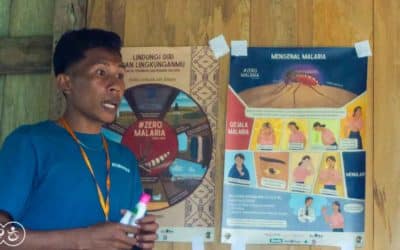
In ultra-rural regions of Eastern Indonesia, malaria is more than a disease; it’s a systemic issue impeding community development. Fair Future Foundation’s #ZeroMalaria program tackles this crisis head-on with a unique, comprehensive approach. From preventive education to providing immediate healthcare, we are dedicated to breaking the chain of malaria. Our council members are actively involved on the ground, ensuring effective, sustainable solutions tailored to community needs.
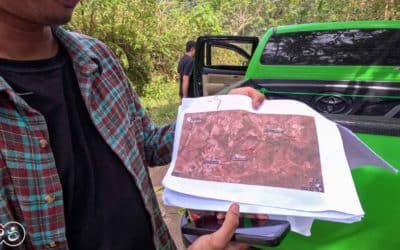
Fair Future Foundation, in collaboration with Kawan Baik and Sumba Volunteer, is taking bold steps to eradicate malaria in one of the world’s most affected regions—East Sumba, Indonesia. This comprehensive program aims to serve tens of thousands of people, focusing on early diagnosis and effective treatment. With more than 10 tons of medical equipment and a dedicated team, we are committed to this cause as a moral obligation. Read on to discover the intricate details of this life-changing initiative.

Embark on a profound journey alongside Rambu Mirna as she courageously battles malaria in the heart of remote East Sumba, where healthcare is a distant dream. Dive into the remarkable story of resilience and hope, and discover how Fair Future Foundation’s #ZeroMalaria initiative is not just saving lives but also transforming entire communities. Join us in this life-changing narrative of overcoming adversity and restoring futures in the most isolated corners of Indonesia.
At Fair Future, we don’t just initiate projects; we live them. Our approach, honed over 15 years, begins with in-depth feasibility studies and extends to immersive community interaction in East Sumba’s ultra-rural areas. We live, eat, and cook with local families to understand their real-life challenges, thereby ensuring that every program we launch has a lasting and balanced impact. Discover how Fair Future’s method sets a gold standard for meaningful and sustainable humanitarian work
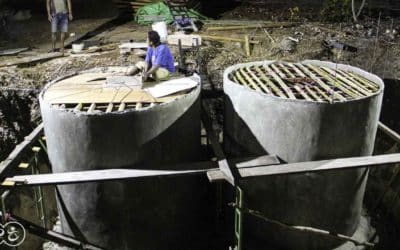
Fair Future, in partnership with Kawan Baik, is taking revolutionary strides to resolve the critical water shortage in Tanambanas. This groundbreaking initiative employs innovative ferrocement technology to build durable, cost-effective water reservoirs. More than just a construction project, this initiative is a lifeline for an ultra-rural community, catalyzing improved health, poverty reduction, and ensuring the fundamental human right to clean water.
Fair Future Foundation faces a critical situation that threatens the continuation of our lifesaving programs in Indonesia. With only 4000 francs left, we urgently require your support to sustain our medical and social initiatives. Your donation will help us purchase essential medical equipment, provide clean water and nutritious food, and fight diseases like Malaria and Tuberculosis. This is a dire call to humanity—every donation counts. Help us ensure a brighter tomorrow for those who need it most
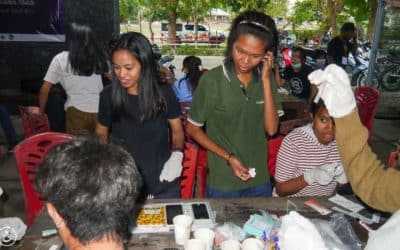
In the fight against malaria in East Sumba, volunteers stand at the front lines, embodying hope, dedication, and community-driven action. Discover how these everyday heroes, contributing to Fair Future Foundation’s #ZeroMalaria initiative, are changing the landscape of public health. Their hands administer life-saving treatments, their voices educate vulnerable communities, and their efforts are the cornerstone of a better, healthier future.
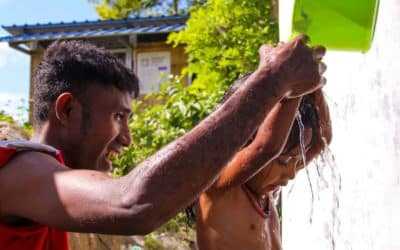
This new "Picture of the Day" shows a delighted father who can now provide daily showers for his children, thanks to the newly installed water supply. Previously, they could only shower sporadically, sometimes only once a month. Additionally, the photo showcases the new sanitation facilities constructed in Mbinudita. The Water Connections project has successfully installed over forty reservoirs, thirty sanitary installations, three deep boreholes, and more than 15000 meters of HDPE pipes.
Water scarcity can be a significant source of stress for some regions, and various factors can cause it. Arid climates, low rainfall and prolonged droughts are just a few conditions that can contribute to water scarcity. Poor water resource management and a lack of knowledge can also exacerbate this problem, making it even more difficult for everyone to access the water they need to thrive.
Despite these challenges, Fair Future is working hard to address water scarcity and ensure people have access to this vital resource. That is why we have developed the Water Program Connections.
Fair Future and Kawan Baik have noticed a significant improvement in the behaviour of families who have benefited from the "Water Connections" initiative. This program has enabled people to grow gardens, consume healthier food, enjoy life more, reduce stress, and boost energy levels. As a result, there has been a marked decrease in illnesses.
Witnessing these positive changes fills us with joy and reinforces our conviction in our decisions. Fair Future and Kawan Baik Foundation have always aimed to improve individual health, and providing access to safe drinking water is a beautiful way to accomplish this objective. As a Medical Foundation, Fair Future Foundation understands clean water's significance for maintaining good health. Drinking enough clean and healthy water is crucial for various physiological processes, including body hydration, proper organ function, digestion, and elimination of toxins.
Access to clean and safe water prevents dehydration-related illnesses, such as urinary tract infections, kidney stones, and constipation. It also significantly prevents dehydration, particularly in hot areas where sweating and water loss through respiration are common. While water is necessary for maintaining good health, we understand better than anyone else that certain medical conditions may require alternative treatments.
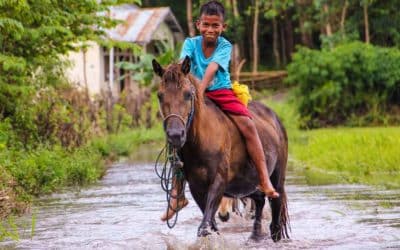
This new "Picture of the Day" shows you a 12-year-old kid named Yaspan. He was born in a tiny village in East Sumba where Fair Future and Kawan Baik have worked for over four years. We built a new school for him a few years ago, #sdmbinudita, and now he and his family have clean water reaching his house, which was not the case before. Yaspan and all his friends from the Village of Mbinudita are lucky because children struggle to get water everywhere else. They have to find it very far on foot; to do this, they miss school, get injured, and fall ill.
There's something inexplicably satisfying about the heavy rains in ultra-rural East Sumba, especially when you live in a water-scarce area: The sound of raindrops hitting the roof is soothing, and the smell of wet earth is refreshing; plus, you feel good because you know that this rain will help the family. When it rains a lot, kids and families here can't help but be happy knowing that their water tanks will be filled and they won't have to worry about running out of water for a moment.
"-It's a small blessing for which I am grateful, and I always make sure to take advantage of the rain while it lasts…" a friend from the village told me last month.
Heavy rains like the ones we experienced last month in one of the ultra-rural villages in East Sumba, where we work with Fair Future and Kawan Baik Indonesia foundations, are also an opportunity to celebrate as these kids wade through the water. They are the first to be happy because they won't have to walk for hours to fetch water far from home.
With those heavy rains comes plenty of water and the relief of much-needed hydration. The floods will provide much-needed food for crops, wash livestock and provide villagers with general water and sanitation assistance. With the bonus of increased economic activity and improved social well-being from the new abundance of water, these small floods are becoming the opportunity of a lifetime for the villages of Sumba. With increased water storage, a healthier environment and better living conditions, small floods caused by heavy rains are the perfect way to improve the lives of villagers in these areas where water is absent.
It's interesting to consider that what may be a challenge for many of us is a helpful solution for these families.
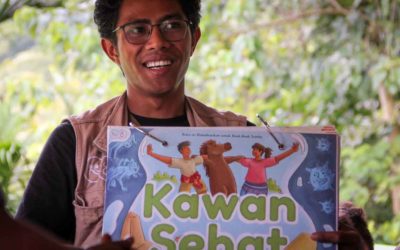
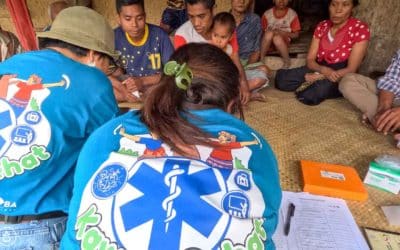
This new "Picture of the Day" features Kawan Ino, one of the Fair Future team members in Sumba (Rumah Kambera Leader), talking to health workers and the village community of Kabanda. To do this, he uses the "Kawan Sehat" book we produced at the end of 2022 for children in these regions. This book is an integral part of the program of access to primary medical care for children in ultra-rural areas.
We spend two days here, and you can read what we have done in Kabanda. This village is genuinely one of the most isolated I have ever seen. Getting it is difficult, even dangerous, at times. No road leads to this village; only extremely steep or steep stony paths allow us to go there. Kawan Ino explains how to have a healthier life thanks to implementing specific things in everyday life. This includes physical and mental health, body and home hygiene, daily habits and women empowerment.
Thanks to the Kawan Sehat program, we see a significant improvement in the health and well-being of rural populations. It is truly heartening to see healthy habits being encouraged and access to health care increasing. It is vital that everyone has access to quality health care, and we are happy that this program allows more people to receive the care they need.
Here, when a person is sick or injured while a woman is due to give birth, one of the only ways for her to receive medical attention is to carry her on people's backs for several hours or even a whole day until the nearest health centre. This person also does not know if he will arrive in time at the medical centre, called "Puskesmas or Pustu", as we have seen on several occasions.
This is why this book is necessary: “Kawan Sehat” is intended for schools and teachers. It's an amazing teaching aid for them, and kids love it. Nothing is done here to give children the means to learn from an early age how to wash themselves, eat healthier, use soap, and learn not to pollute or brush their teeth etc… In the classrooms here in East Sumba, the book“Kawan Sehat” is the only one available for children; there are no others.
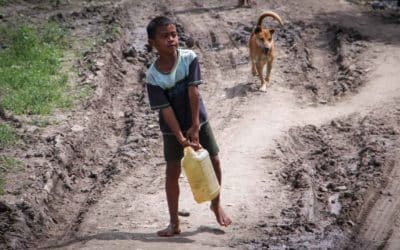
This "Picture of the Day" shows young children's struggles in East Sumba. The jerry cans are heavy and sometimes more prominent than the children themselves. With limited access to drinking water sources, the kids who live there (here in these images in the villages of Kabanda, Mahu, Laindatang, and Tana Mbanas) are forced to walk long distances to fetch water. Water in rivers or wells which are also contaminated. It takes up a lot of their time and puts them at risk of injury or illness by carrying heavy loads of water. Lack of access to clean water also contributes to poor hygiene and sanitation practices, further compounding the health problems of those East Sumba communities where Kawan Baik and Fair Future work so hard. Together, we are taking action to improve access to clean water sources, in these areas where no roads lead, to ensure the health and well-being of young children and their families. In addition to the physical hardship of fetching water, and as explained in this post, children in rural areas of East Sumba are often deprived of education and other opportunities because of this task. It is widespread (like in this picture of the day) that they miss school or other activities to help collect water, which affects their academic progress and social development.
Here people mainly only have access to contaminated water. This leads to many diseases, including gastrointestinal infections, skin diseases, parasitic diseases and other infectious diseases such as Malaria, Dengue Fever, Cholera, typhoid fever, hepatitis A or diarrhoea. Children and the elderly are particularly vulnerable to illnesses caused by contaminated water, a significant cause of infant mortality here.
In conclusion, ensuring access to clean water through a program like the #waterconnections project is our top priority that cannot be overlooked. Access to clean water is essential to sustaining life and maintaining good health for everyone here. Water plays a vital role in preventing the spread of the diseases mentioned above, ensuring people can lead healthier lives. Whether for drinking, cooking or cleaning, clean water is essential for everyday life. Without access, communities in the ultra-rural areas of East Sumba suffer from a lack of sanitation and hygiene, leading to various health problems.
Therefore, we must do everything we can to ensure that clean water is available to everyone who needs it.