

Light In Action…

Local teams at work every day in the field

From the field:help us deliver care
We provide medical & social assistance where it is most needed. Since 2008 we have helped thousands of people & talk about what they are going through.
Select Page
Content type Post Page Gallery
Beyond Borders, Fighting Malaria Together in Eastern Indonesia

Beyond Borders, Fighting Malaria Together in Eastern Indonesia

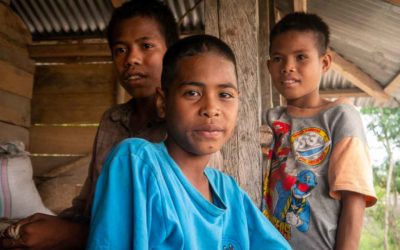
Beyond Borders: Fighting Malaria Together in Eastern Indonesia. This new "Picture of the Day"  shows three kids between 8 and 12 years old. Children are among the most vulnerable malaria victims in Indonesia, especially in the east of the country and of course here, where we work with Fair Future, Kawan Baik foundations and all our partners and friends.

The health and well-being of children in eastern Indonesia are threatened by malaria, which hinders their growth, development, and quality of life. Our organizations have a deep understanding of the urgency to address this issue, and we are working hard on our disease control program, which is of utmost importance. We have a strong track record of working in these regions where the epidemic affects about 80% of children. Collaborative efforts are underway to combat malaria and prioritize the welfare of children in these areas.

Young children are at a higher risk of contracting malaria due to their underdeveloped immune systems. Living in rural and poor areas with limited access to preventive measures only exacerbates the severity of symptoms if infected. A contributing factor is that young children typically haven't been exposed to the malaria parasite enough times to build up immunity* against it.

It can be challenging for young children in our regions to communicate or identify the symptoms of malaria, and their parents may not be familiar with them either. As a result, affected children may display non-specific symptoms like fever, tiredness, loss of appetite, irritability, and vomiting, which could easily be mistaken for other common childhood illnesses like drinking contaminated water. Consequently, this can cause delays in diagnosing and treating malaria accurately

*Some additional explanation: People living in malaria-endemic areas gradually develop acquired immunity, which reduces their susceptibility to severe infections in the future.
read more
Malaria in East Sumba: All villages turned Red!

Malaria in East Sumba: All villages turned Red!

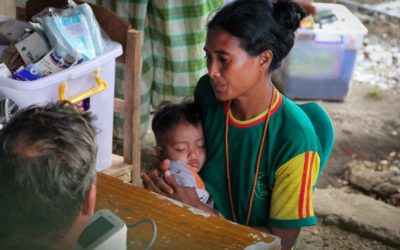
This new "Picture of the Day" shows you a brave but sad mom who asks for care for her little boy. She is a courageous but sad mother who seeks care for her little boy, who suffers from Malaria. With pain and more than 40 fever, He is the example of the "typical patient" here: Under five years old, this family lives in an ultra-rural and marginalized area. She is poor, and they don't have access to medical care or enough food and clean water; They don't have toilets either. Moreover, the whole village does not have access to electricity.

The medical staff of Kawan Baik and Fair Future Foundation bring him relief and medicine to lower his fever and get better as soon as possible. We also talk to the mother and give her good advice.

Let me re-explain to you what malaria is and why this disease is hazardous, and the categories of people it affects in the first place:

Malaria is caused by parasites transmitted by the bites of infected mosquitoes. Although anyone can get malaria, specific categories of people are more susceptible to severe illness and complications. We find that the impact of malaria varies by geographic region and local health infrastructure. Our efforts to fight malaria focus on prevention through measures such as the establishment of the Primary Medical Care Program (PMC), mosquito nets, spraying in villages (fogging), and learning to wash with an "ani-malaria or disinfectant" soap, among others. 

1. First, children under five: This is because young children have a weaker immune system and have not yet developed immunity to disease. They are more likely to have serious symptoms and complications, including severe anaemia and cerebral malaria, which can be life-threatening. This is the case here: Infant mortality is very high in ultra-rural areas and marginalized populations of East Sumba.

2. But also pregnant women: Of course, malaria can have adverse effects on both the mother and the unborn child. Pregnant women are at an increased risk of developing severe malaria, leading to complications such as maternal anaemia, spontaneous abortion, stillbirth or low birth weight infants. I spoke to you about a similar case in Kabanda, right?

Public health interventions to provide vital advice to the most affected populations via the #kawansehat program are essential. You have to be close to people if you want to advise them on the best way to have a healthier life.

3. Ultra-rural and marginalized populations: Communities living in rural and remote areas, often with limited access to health care, such as here in East Sumba, are disproportionately affected by malaria. Factors such as poverty, lack of knowledge about preventive measures and limited access to health services contribute to malaria's higher prevalence and impact in these communities.

4. Immunocompromised people: People with weakened immune systems, such as those living with HIV/AIDS, are more likely to contract severe malaria. We are also talking about people with chronic illnesses. Malaria can also aggravate the progression of HIV infection. And concerning the rate of HIV-positive people here is also very high, even with very few tests being conducted.

read more
Happy to have water without going far to get it

Happy to have water without going far to get it

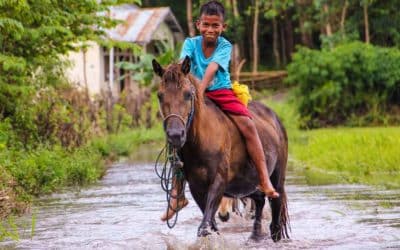
This new "Picture of the Day" shows you a 12-year-old kid named Yaspan. He was born in a tiny village in East Sumba where Fair Future and Kawan Baik have worked for over four years. We built a new school for him a few years ago, #sdmbinudita, and now he and his family have clean water reaching his house, which was not the case before. Yaspan and all his friends from the Village of Mbinudita are lucky because children struggle to get water everywhere else. They have to find it very far on foot; to do this, they miss school, get injured, and fall ill.

There's something inexplicably satisfying about the heavy rains in ultra-rural East Sumba, especially when you live in a water-scarce area: The sound of raindrops hitting the roof is soothing, and the smell of wet earth is refreshing; plus, you feel good because you know that this rain will help the family. When it rains a lot, kids and families here can't help but be happy knowing that their water tanks will be filled and they won't have to worry about running out of water for a moment.

"-It's a small blessing for which I am grateful, and I always make sure to take advantage of the rain while it lasts…" a friend from the village told me last month.

Heavy rains like the ones we experienced last month in one of the ultra-rural villages in East Sumba, where we work with Fair Future and Kawan Baik Indonesia foundations, are also an opportunity to celebrate as these kids wade through the water. They are the first to be happy because they won't have to walk for hours to fetch water far from home.

With those heavy rains comes plenty of water and the relief of much-needed hydration. The floods will provide much-needed food for crops, wash livestock and provide villagers with general water and sanitation assistance. With the bonus of increased economic activity and improved social well-being from the new abundance of water, these small floods are becoming the opportunity of a lifetime for the villages of Sumba. With increased water storage, a healthier environment and better living conditions, small floods caused by heavy rains are the perfect way to improve the lives of villagers in these areas where water is absent.

It's interesting to consider that what may be a challenge for many of us is a helpful solution for these families.

read more
Fair Future field updates
Follow our WhatsApp Channel
Short, real updates from ultra-rural East Indonesia. Medical, water, logistics. No noise.
Join on WhatsApp
Fair Future field updates
Get our Newsletter
Short field stories. Clear impact. No spam.
Subscribe
Support from Switzerland
Donate via TWINT
Fast, secure giving from Switzerland. Small gifts help a lot.
Donate with TWINT