

Kabanda is genuinely one of the most isolated I have ever seen. Getting it is difficult, even dangerous, at times. No road leads to this village; only extremely steep or steep stony paths allow us to go there. It took us over six hours to get there, including four hours of absolute terrain with the Truck of Life, a 4×4 medical truck specially designed for this journey. Kabanda is no exception; so many villages are in the same situation: That is to say, they have no road leading there. This raises – among other things – the question of access to health care, of course. And it is for these types of communities that Fair Future exists, and together with our friends from Kawan Baik, Sumba Volunteer and Charis Foundation, we have created this primary medical care program.
We have compiled a list of articles and pages for this topic
The Fair Future Foundation in East Indonesia combats social and medical injustice and aims to ensure everyone has access to healthcare, clean water, and education. Join us in making a difference.
Fair Future’s medical truck brings essential care to communities far from clinics or hospitals.
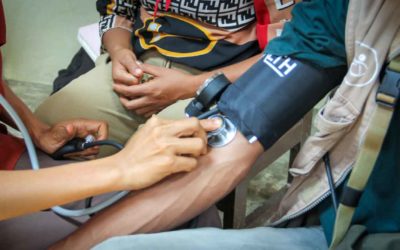
Check blood pressure in rural areas
Here in the ultra-rural and poor areas where Fair Future Foundation and Kawan Baik Indonesia work, populations tend to have a higher prevalence of high blood pressure than in urban and wealthier areas. This is mainly due to poor diet, excessive tobacco consumption, and poor hydration. Of course, poverty and limited access to resources will also contribute to higher stress levels, increasing blood pressure. An unhealthy lifestyle increases the risk of cardiovascular disease and other health problems. We teach some “Kawan Sehat” health workers participating in the primary medical care program to measure blood pressure and take the necessary measures.
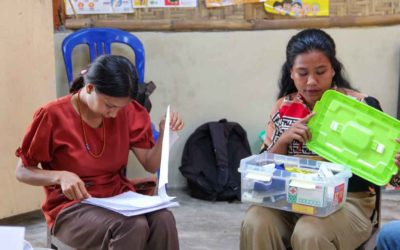
PMC program evaluation in Mbatapuhu
Non-professionals who give medical care and medicine to people, sick children, and injured. They do so through a unique and innovative medical care program. Because here, there are no doctors, no health centre, or else too far away. No one has a vehicle, and the roads that lead to these villages are often impassable. This program saves and preserves the lives of children as well as adults. Today, we are in Mbatapuhu.
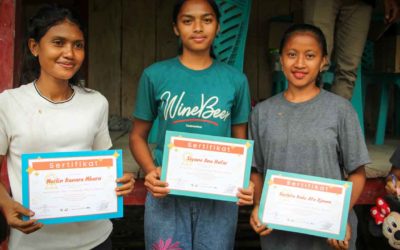
PMC – Teachers receive their training certificate
This new "Picture of the Day" shows three real heroes and three incredible women, Merlin, Siyane and Sarlota. In the ultra-rural and isolated village of Kabanda, the three participants and teachers in the primary medical care program received their first work and training certificate.
This follows the teaching they received from the foundation's teams in December 2022. Complete medical training based on fifteen modules, which explain and demonstrate how to care for a sick or injured patient (adult or child ). This is in villages where no health centre, doctor, or health professional is present, available or accessible, and most of the time, like here in this village, where no road leads.
You must understand the situation, friends: These women come from Asia's most rural regions and perhaps even the world. Most have not been to school or received basic compulsory training. They were trained for three months in teaching in the ultra-rural areas by a partner association called Charis Sumba.
So you have to imagine their pride to have succeeded in becoming one of these health workers, the person in the village responsible for providing first aid in an emergency, the possibility of illness in the event of an injury, an adult or a child. So when they received this certificate, tears flowed. Their tears flowed ours too, and it was a moment of incredible strength, but above all, very emotional.
In principle, here, and related to local culture and traditions, a woman takes care of household chores, fetching water, cooking for the children, and caring for the family. These three female superheroes are not only teachers within the framework of Charis Sumba, but they are also now – and for more than four months – the health workers of the PMC program. They are the ones who can save a life in the absence of a medical centre, medical care or a doctor in the village. This is not anything in terms of enhancing the role of women in ultra-rural villages; this is immense and important progress.
Evaluation of 8 Kawan Sehat agents, in Mbinudita
In the village where it all started for us: The #rebuildmbinudita program is the construction of a school, and the construction of a drinking water network for more than 2700 people, 60% of whom are children under 12 years old . It is really the (re)construction of an entire village or learning to live healthier, healthier all together, within the framework of the creation of innovative programs. Access to primary medical care is part of this program here in Mbinudita and it is only natural that we have included it in this Care program.
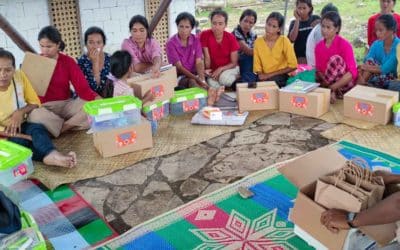
Learn how to provide Primary Medical Care
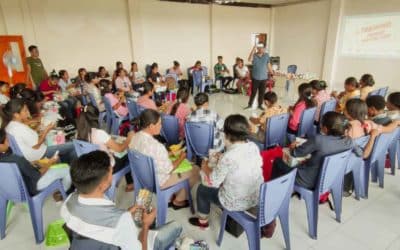
This "Picture of the Day" shows you one of the classes of brave women (and two or three men) who learn with our teams how to give first aid – Primary Medical Care which is the most important – to a person or a sick or injured child.
These first days of medical training welcomed around sixty participants from the most isolated and rural villages. To give you an idea, folks, none of these villages has access to clean or safe water, and only a few have access to some electricity. There is often no road leading there, but only paths that are often impassable. And, of course, no medical centre or health centre near the villages.
The participants are 95% women, and all are teachers in the school of their ultra-rural region. What they have been doing for a few months now is remarkable. They heal and undoubtedly save lives, see here some images taken with their mobile phone.
Aside from being most undoubtedly unique in the world, the magic of this "primary medical care" program is that it works. The first batch of about 60 teachers who have undergone training in rural primary medical care are now gaining more and more confidence, and hundreds of urgent medical care are being provided to the children of sick or injured adults. Lives are being saved.
In a few days, Fair Future Foundation with Kawan Baik Indonesia will evaluate this program directly from the villages, in the company of those who are its heroes, all these extraordinary women.
A 9-year-old child needs surgery quickly
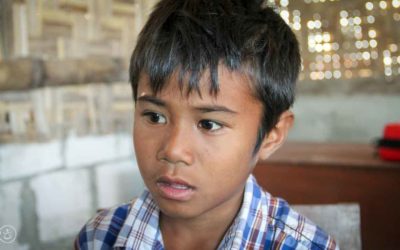
This little boy’s name is Assaria, he’s nine years old. He has severe 3rd-degree burns to over 24% of his body and requires surgical attention. He is not well, and we have to find a solution together. He can barely walk because of terrible burns to his legs and back. The consequences while growing up are significant circulatory and neurological problems. If nothing is done, he risks a double amputation. Let’s help him get surgery for severe burns on both legs before his health deteriorates.
Truck of Life goes everywhere almost no one goes
The truck of Life is so important… It allows us to go where almost no one ever goes. To meet people who have unexpected problems. To provide medical care, to take children or even a doctor or dentist to the nearest town. Truck of Life allows us to bring equipment, food, and drinking water where no one goes while ensuring the safety of our volunteers and specialized collaborators. Indeed, hundreds of thousands of people live in the most inaccessible territories who do not have access to the most basic needs to ensure a healthy life: No access to medical care, drinking water, or a light source for children to read or study.
Days of medical care in rural areas
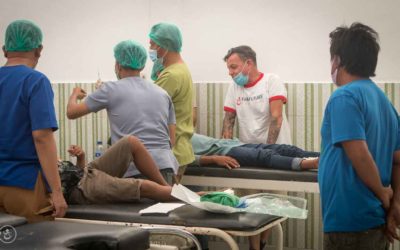
Discover the different contexts and situations in which Fair Future teams intervene to provide care, including crisis and natural disaster situations, and how and why we adapt our activities to each. Days of care like the one we present to you below we do dozens of them a year and they are adapted to people from rural areas, who for the most part have never seen a doctor before us.
All Articles & News
Dive deep into the quiet revolution led by Fair Future Foundation in East Sumba, Indonesia. Here, you’ll find real stories of communities being transformed through medical, social, and infrastructural support. From combating diseases like malaria to setting up clean water sources, discover how we are rewriting the future of the most vulnerable.
Reach Out to Fair Future
Reach out to Fair Future Foundation and become part of a transformative journey that transcends conventional charity. Based in East Sumba, our healthcare initiatives actively combat life-threatening diseases like malaria, tuberculosis, and polio, while striving to provide clean water and quality education. Your contact is not just a message; it’s a step towards medical equality.
Fair Future Foundation Statutes
Our statutes are the cornerstone of the Fair Future Foundation’s work, outlining our mission, governance, and legal responsibilities to ensure sustainable humanitarian impact in Indonesia.