

Preparing Care…

Thousands of children monitored for health and nutrition

From the field:help us deliver care
We provide medical & social assistance where it is most needed. Since 2008 we have helped thousands of people & talk about what they are going through.
Select Page
Logo of the Swiss Fair Future Foundation

Donate

Support Care

Programs

All projects

Quick News

Field updates

Stories

Field stories

Fighting Malnutrition Through Food and Nutrition Programs

Content type Post Page Gallery
Malnutrition is taking its toll here where we are

Malnutrition is taking its toll here where we are

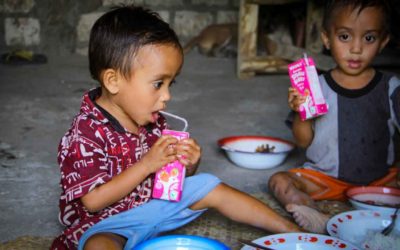
This "Picture of the Day" shows children in East Sumba, where we are at work, as I post this Photo of the Day. Fair Future and Kawan Baik teams, as part of the #kawansehat #primarymedicalcare and #waterconnections projects, cook for children in the most rural and poor areas. In this image, some are drinking strawberry milk for the first time. They had never seen a straw before, and I remember all the kids asking us how to drink that kind of drink. We had to show them and help them plant the straw in the milk carton.

Malnutrition is an endemic problem here in all the rural villages of East Sumba. It is also the region with the highest rate of malnourished children in Indonesia. Here, clean water is absent from the houses, and the consumption of unclean water generates health problems and serious illnesses. And to cook, drink, and wash, you need water. And in order not to get sick, you also need water. Food production cannot occur without water, and families do not have enough income to buy food, rice and vegetables. On average, they live with less than two litres of water per person per day for everything: cooking, eating, drinking, drinking, bathing, going to the toilet and doing laundry. Have you ever tried?

Most children here are underweight and malnourished because they cannot eat enough. Meal frequency is one meal per day. Young children may be able to eat twice if all goes well. The menu will consist of rice and corn because more than rice alone is needed. In East Sumba, a kilo of rice costs three times more than in Java or Bali. Only a little salt and peppers accompany the meal to give flavour and taste.

read more
We have a toilet for the first time in our life!

We have a toilet for the first time in our life!

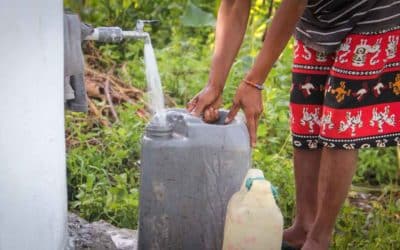
This "Picture of the Day" shows you an adorable couple from East Sumba, the village of #mbinudita -who are not used to being photographed-. Beneficiaries of the #waterconnections program who have had access to toilets at home for a few hours. But not only toilets: They can shower there, wash their clothes, and create a vegetable garden. And most importantly, eat and drink healthily. No more getting sick from the water. No more spending hours on the paths to fetch a few litres of dirty water.

East Sumba is one of the regions in the world with the highest rate of malnourished children. Infant mortality due to lack of clean water and toilets is staggering. Our medical teams still spend much of their time giving medical treatment and medicine to people and children who don't have clean water to swallow. Or how to treat a child who suffers from diarrhoea by giving him tablets that he will have to drink with inedible water, the source of his illness? Say to cook the water? It has no wood; frankly, when you're thirsty, you drink what's there.

But here, things have changed dramatically. Over thirty healthy sanitation facilities and over forty clean water tanks have been built for these almost 280 #rebuildmbinudita families. Every week we see new vegetable gardens created, many more children going to school, including young girls, and more mothers looking after their families instead of walking for hours to fetch five litres of dirty water.

read more
When only dirty water remains to try to survive

When only dirty water remains to try to survive

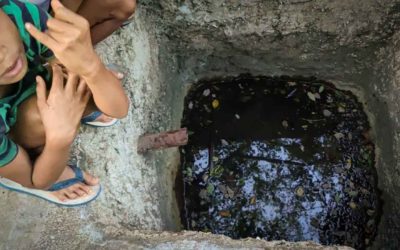
This "Picture of the Day" shows some children looking slightly disappointed at the edge of the well, which contains no water. There are only 30 to 50 centimetres of water left. This water is black and dirty, and it will surely make them sick. But they will bring some back because, as the villagers often tell me: "When you're thirsty, you don't have time to boil water or find clean water. You're thirsty, so you drink this that there is …".

Having clean water heals people, improves families' health and reduces disease. Water is the best medicine in the world.

Here in Laindatang, the community, its inhabitants, and the families have always maximized the use of rainwater for cooking, eating, and drinking. Washing or doing laundry is done simultaneously: People wash their bodies with detergents directly at the water source. Linked to the lack of water, the villagers wash only once a month – with the related health consequences – or at best, every two weeks.

It should be noted that these families have never had sanitary facilities. Peeing and pooping are done behind a tree with all the health issues. For menstruating women, the lack of water makes this time very complicated.

A sanitary emergency: We invite you to support the urgent program in the village of Laindatang, East Sumba, which consists of giving water as quickly as possible via a deep borehole, two healthy sanitary installations and two/three water tanks 6,750-litres of water to these several hundred people. Click on the button bellow.

read more
Kids here have to fetch water from the age of five!

Kids here have to fetch water from the age of five!

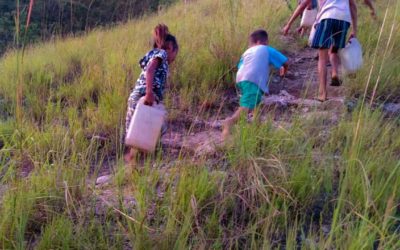
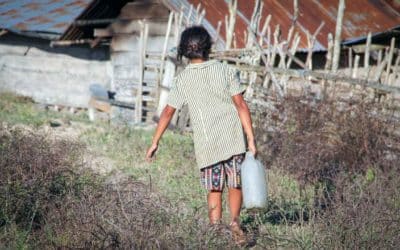
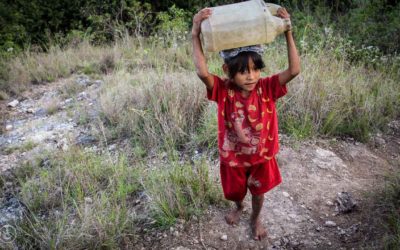
This "Picture of the Day" shows you a five-year-old girl who, twice a day, descends the hill, steep and stony, without shoes to fetch water. She runs to go to the source, 500m away. Sometimes she falls, hurts herself, and comes back up with difficulty carrying a 5-litre jerrycan of not-so-clean water, which she and her friends have been looking for at the source.

In this village, like in many others here, people can only wash once a month, are all sick and don't have enough to eat and drink. Without access to this clean water, families – especially children – suffer from severe malnutrition, chronic respiratory and joint diseases and other illnesses linked to the consumption of dirty water and the absence of sanitation facilities. The fight against malaria, dengue fever and infectious diarrhoea also requires access to clean water and healthy water tanks. And to water that does not stagnate but circulates between the installations.

As we have already said, East Sumba is the poorest province in Southeast Asia, the region with the highest child malnutrition and associated mortality. Fait Future, therefore, wishes to act for these hundreds of people and give them access to clean and healthy water for their health.

read more
East Sumba, a village without clean water!

East Sumba, a village without clean water!

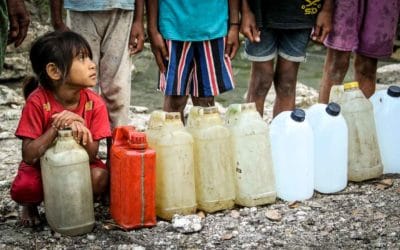
This "Picture of the Day" shows you a thrilled woman because when we last visited the "Water Connections – Laindatang" Project site, we brought – thanks to the Truck of Life – several jerry cans filled with drinking water, or about one hundred litres. So everyone is scrambling to get a little. We shared this water with the villagers.

The Water Connections project, Laindatang Site, is one for which we also seek help. Laindatang is a village without drinking water. People only wash once a month, are sick and don't have enough to eat and drink. All children are underweight, and so are adults. We must act for these hundreds of people and give them access to drinking water. The project consists of drilling a deep borehole, building healthy sanitary facilities and two clean water storage tanks, of the ferro-cement type, with a capacity of 6,500 litres each.

Here Malaria, Dengue fever and infectious diarrhoea linked to the problems of contaminated water are wreaking havoc. After carrying out the feasibility studies, we are now ready to implement this project this month. Indeed, we are on the site now and would like to start this necessary project for the hundreds of people suffering from a lack of water in the region.

read more
Water Connections project in Laindatang

Water Connections project in Laindatang

The Water Connections project, Laindatang Site, is our current top priority. Laindatang is a village without water. Everyone is sick and does not have enough to eat and drink. Children are underweight, and so are adults. We must act for these hundreds of people and give them access to clean water. Here, malaria, dengue fever and infectious diarrhoea linked to contaminated water problems are taking their toll. After completing the feasibility studies, we are ready to implement this project this month. Indeed, we are there now and wish to start this necessary project for the hundreds of people suffering from the lack of water in the region.

read more
A simple jerrycans story in East Sumba

A simple jerrycans story in East Sumba

Two litres of water per day and per person to live. And this, thanks to an object as innocuous as an old five-litre can. A stupid plastic container? For most of us, it is an object that will go irretrievably in the trash. But here, for the families that Fair Future and Kawan Baik work with – tens of thousands of families – it is essential to the survival of an entire family because it is thanks to him that these two litres of water will come home. So, let’s talk a bit about plastic canisters, if you don’t mind, to understand why it’s so important.

read more
Water Connections, look at all we’ve done!

Water Connections, look at all we’ve done!

Look at what has been done in the last 20 months, it’s simply extraordinary because doing this in this region was a priori impossible, but we did it. We are at the end of the line in the Water Connections project, we have “only” a few things left to build, including a huge 25,000-liter tank. Here is the project map for you, so you can see all that has been done in this ultra-rural region, one of the poorest in Southeast Asia.

read more
Washing hands to preserve health and life

Washing hands to preserve health and life

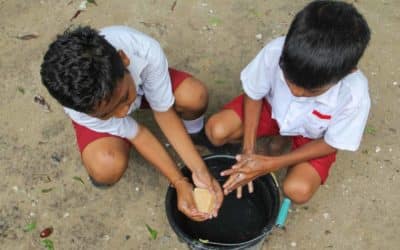
Some forms of gastrointestinal and respiratory infections can lead to serious complications, especially in young children, the elderly, or people with weakened immune systems. This is why hand washing prevents the spread of disease. Indeed, many infectious and contagious diseases can be transmitted from one person to another through contaminated hands. These illnesses include gastrointestinal infections, such as salmonellosis, and respiratory infections, such as the flu, colds, and coronavirus (COVID-19). Washing your hands properly with water (when available) and soap will prevent the spread of germs, bacteria and viruses that cause these illnesses.

read more
Deep drilling project in Laindatang

Deep drilling project in Laindatang

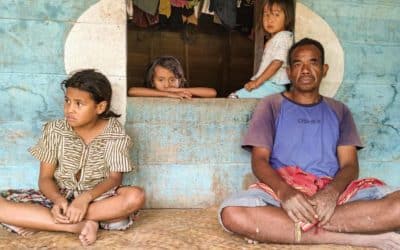
This "picture of the day" shows you a family from the village of Mabtakapidu/Laindatang, which like all the others, lives in the greatest destitution and extreme poverty. Malnutrition and infant mortality are high here.

Yes, this is one of the situations we want to act on as quickly as possible here. Fair Future and Kawan Baik are trying to help this community by offering them the possibility of having clean water in quantity in the village. We have the project to drill on-site at nearly 80m deep and build two or three reservoirs. We have found a water source close to the houses; only the funding is missing for the drilling. We have already received the submersible pump and solar panels for the site, and this is thanks to a private company in Europe.

The families of the village of Laindatang have a tough life, which is a euphemism. They do not eat every day, never meat, rarely vegetables. Rice is expensive, so they mix it with corn when they still have it and pests haven't destroyed it. To wash in the sense of "taking a shower" is maybe once a month for everyone. Her life is organized with less than two litres of water per person per day

To get poor-quality water here, the nearest well is a ten-hour walk there and back. You have to leave in the evening to return in the morning with only a few 5-10 litre jerrycans.

Read more here Kawan's.

read more
Women, children and water at home

Women, children and water at home

Indonesian women play a vital role in water management due to their traditional responsibilities of collecting water, cooking, cleaning and raising children. These women from these ultra-rural areas of eastern Indonesia are strong. They represent tremendously well the strength and the courage it takes to survive here in this vast country. To fend for themselves most of the time, without the help of others, to meet the family’s most basic needs. Therefore, empowering women to increase water security is essential in the regions where we work. With climate change affecting water sources, it is vital to ensure that women are involved in water management decisions. This allows (we see this every day) families and local communities to improve their incomes and the health of family members, including their children.

read more