

Thank You 2025…

More than 40,000 people reached with training

From the field:help us deliver care
We provide medical & social assistance where it is most needed. Since 2008 we have helped thousands of people & talk about what they are going through.
Select Page
Content type Post Page Gallery
Happy to have water without going far to get it

Happy to have water without going far to get it

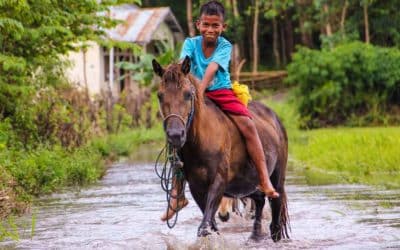
This new "Picture of the Day" shows you a 12-year-old kid named Yaspan. He was born in a tiny village in East Sumba where Fair Future and Kawan Baik have worked for over four years. We built a new school for him a few years ago, #sdmbinudita, and now he and his family have clean water reaching his house, which was not the case before. Yaspan and all his friends from the Village of Mbinudita are lucky because children struggle to get water everywhere else. They have to find it very far on foot; to do this, they miss school, get injured, and fall ill.

There's something inexplicably satisfying about the heavy rains in ultra-rural East Sumba, especially when you live in a water-scarce area: The sound of raindrops hitting the roof is soothing, and the smell of wet earth is refreshing; plus, you feel good because you know that this rain will help the family. When it rains a lot, kids and families here can't help but be happy knowing that their water tanks will be filled and they won't have to worry about running out of water for a moment.

"-It's a small blessing for which I am grateful, and I always make sure to take advantage of the rain while it lasts…" a friend from the village told me last month.

Heavy rains like the ones we experienced last month in one of the ultra-rural villages in East Sumba, where we work with Fair Future and Kawan Baik Indonesia foundations, are also an opportunity to celebrate as these kids wade through the water. They are the first to be happy because they won't have to walk for hours to fetch water far from home.

With those heavy rains comes plenty of water and the relief of much-needed hydration. The floods will provide much-needed food for crops, wash livestock and provide villagers with general water and sanitation assistance. With the bonus of increased economic activity and improved social well-being from the new abundance of water, these small floods are becoming the opportunity of a lifetime for the villages of Sumba. With increased water storage, a healthier environment and better living conditions, small floods caused by heavy rains are the perfect way to improve the lives of villagers in these areas where water is absent.

It's interesting to consider that what may be a challenge for many of us is a helpful solution for these families.
read more
Kullup is a hole in the rock to collect rainwater

Kullup is a hole in the rock to collect rainwater

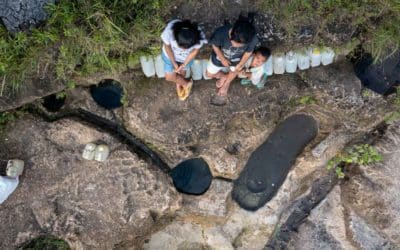
This new "Picture of the Day" shows you kids from the village of Laidatang, who fetch water far from home in the "Kullup" of the village. Elthon, responsible for documentation (with the black t-shirt), and Alex, from the medical staff, are also present in this photo. With the kids and one or two adults accompanying us, we walk more than an hour to reach this place in the middle of a high hill. You must descend a steep path to access these hand-dug holes in the rock. In 30 minutes, we will have to go up the hill and walk back. But this time, loaded with several jerrycans filled to the brim.

The Fair Future and Kawan Baik teams spend two days with the families of the ultra-rural and isolated village of Laindatang to get to know them even better. In this village, we have the project to create a #WaterConnections project. I let you read here the articles related to this project and here to see what your want to do to save their lives,

In Laindatang, families only have access to rainwater. It's for everything: eating, drinking, cooking, bathing, washing clothes, drinking water, caring for children, sick people or watering animals. Therefore, one of the ways for women and young girls to have water at home to live on is to walk several kilometres to find the "Kullup".

Kullup, what is it? These are small stone basins, directly dug into the rock by the villagers, used to collect and store rainwater in rural areas. When it rains, the water seeps into the ground at the top of the hill and then is filtered through the earth and the basements. It flows drop by drop in these stone basins, the "Kullup". Then the villagers come to fill their jerrycans with five or ten litres.

The "Kuluk" are an essential water source for the local communities. But the quality of stored water can be affected by bacterial contamination, chemicals, animal waste or debris. Therefore, regularly cleaning these small holes in the rock is essential to maintain water quality. It is important to note that the "kuluk" is only a temporary solution to the water crisis in areas with limited access to drinking water. Indeed, the "kuluks" cannot fill up correctly without rain. They dry out about ten days after the last rains and remain dry for almost nine months. To find water, young girls, women and children, sometimes under five, will have to walk even further and longer.

Our two organizations work with local communities to implement longer-term solutions, such as constructing water supply networks using deep boreholes and sealed and healthy rainwater cisterns. The Water Connections program offers innovative and sustainable solutions. It includes promoting water conservation practices with “Kawan Sehat” and self-sustaining access to Primary Medical Care through the PMC program.

read more
Helping ultra-rural families to have a healthier life

Helping ultra-rural families to have a healthier life

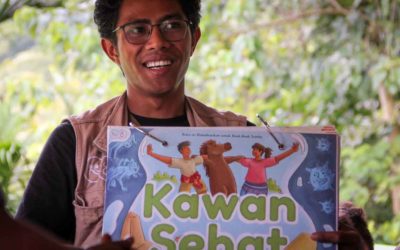
This new "Picture of the Day" features Kawan Ino, one of the Fair Future team members in Sumba (Rumah Kambera Leader), talking to health workers and the village community of Kabanda. To do this, he uses the "Kawan Sehat" book we produced at the end of 2022 for children in these regions. This book is an integral part of the program of access to primary medical care for children in ultra-rural areas.

We spend two days here, and you can read what we have done in Kabanda. This village is genuinely one of the most isolated I have ever seen. Getting it is difficult, even dangerous, at times. No road leads to this village; only extremely steep or steep stony paths allow us to go there. Kawan Ino explains how to have a healthier life thanks to implementing specific things in everyday life. This includes physical and mental health, body and home hygiene, daily habits and women empowerment.

Thanks to the Kawan Sehat program, we see a significant improvement in the health and well-being of rural populations. It is truly heartening to see healthy habits being encouraged and access to health care increasing. It is vital that everyone has access to quality health care, and we are happy that this program allows more people to receive the care they need.

Here, when a person is sick or injured while a woman is due to give birth, one of the only ways for her to receive medical attention is to carry her on people's backs for several hours or even a whole day until the nearest health centre. This person also does not know if he will arrive in time at the medical centre, called "Puskesmas or Pustu", as we have seen on several occasions.

This is why this book is necessary:Kawan Sehat” is intended for schools and teachers. It's an amazing teaching aid for them, and kids love it. Nothing is done here to give children the means to learn from an early age how to wash themselves, eat healthier, use soap, and learn not to pollute or brush their teeth etc… In the classrooms here in East Sumba, the book“Kawan Sehat” is the only one available for children; there are no others.

read more
Let’s prevent malaria rather than cure it!

Let’s prevent malaria rather than cure it!

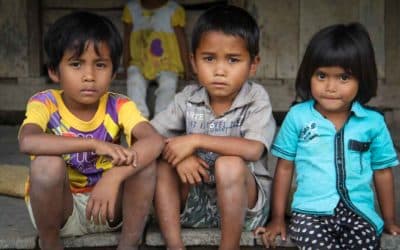
In this "Picture of the Day" shows you three children from Kabanda Village in East Sumba (read this post here), where the PMC program is in place. In this village, very far from everything, especially health centres, malaria is very active and wreaking havoc. We are talking about 80% of children under 12 are affected. It is, therefore, essential to prevent and train families. This is what we are doing here.

The daily observations concerning the causes of malaria are multiple here. These include, in particular, the lack of access to health care, information on prevention methods, the unavailability of health centres and sanitation, and the growing resistance to antimalarial drugs for regions with access to these treatments.

A reminder for all Kawans: Malaria is transmitted by female mosquitoes of the "Genus Anopheles", throughout the East Sumba region. These mosquitoes breed in standing water, such as rainwater storage tanks and open water sources, most of the time in rural and deprived areas of East Sumba.

As Fair Future has repeatedly seen and repeated for years, the consequences of malaria are serious if nothing is done to treat it: High fever, severe headache, nausea and vomiting. If not treated quickly, the disease can progress and lead to severe complications, including kidney failure, anaemia, seizures and death.

It is essential to train families and rural communities to protect themselves from this disease to reduce its transmission. Also, by learning how to prevent and treat Malaria, rural families and communities will reduce the economic and social burden of the disease. Malaria entails high costs for families and communities, particularly medical expenses (if they can access them), school absenteeism, and reduced productivity.

As we apply it with the Primary Medical Care Program (PMC), training families and rural communities to protect themselves from malaria contributes to strengthening the resilience of these populations in the face of epidemics of infectious diseases such as HIV, Tuberculosis, Gastroenteritis, cholera etc… 

Alexandre Wettstein from the Foundation’s Medico-Social Camp in East Sumba, Rumah Kambera, Lambanapu, on the 2nd of May 2023

read more
Fighting Malaria in Eastern Indonesia

Fighting Malaria in Eastern Indonesia

East Sumba, where we work at the time of writing this article, was experiencing a dramatic malaria epidemic. In the first quarter of 2023, there were more than 28,000 cases of Malaria, a significant increase from the previous year. A few months ago, Fair Future declared this life-threatening emergency. Despite our best efforts, Malaria cases are increasing. Here, when a child has a fever, it is more than 80% of the time a question of Malaria. We conduct health education campaigns to raise awareness of the importance of malaria prevention and early detection. Efforts to control the epidemic should include the distribution of mosquito nets, the provision of essential antimalarial drugs, as well as rapid diagnostic tests.

read more
Medical care for children affected by Malaria

Medical care for children affected by Malaria

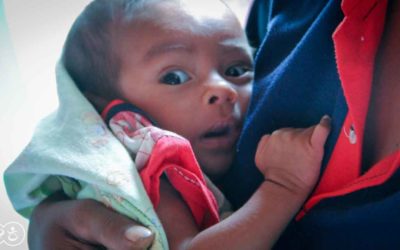
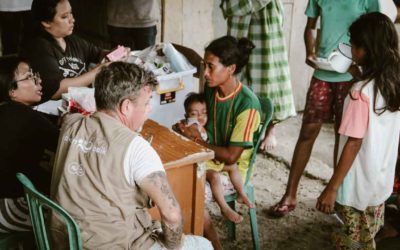
In this "Picture of the Day", Fair Future and Kawan Baik medical teams provide medical care to a child most likely affected by Malaria. He is less than two years old and has a fever of 40.6. Her symptoms fit this diagnosis of Malaria. We give him appropriate primary medical care to reduce his fever as quickly as possible. Then he will go for treatment tomorrow at the nearest health centre, more than three hours from the village.

Malaria is a severe public health problem, especially in the ultra-rural and impoverished areas where Fair Future and Kawan Baik Foundations work so hard. Malaria is a life-threatening disease caused by the Plasmodium parasite is transmitted to humans through the bites of infected female Anopheles mosquitoes. Children under five and pregnant women are also particularly vulnerable to Malaria, as their immune systems are less developed and may have more difficulty fighting infection. People suffering from chronic illnesses are also vulnerable (HIV, Hepatitis, malnutrition, etc.)

Ultra-rural and poor areas such as East Sumba are particularly vulnerable to the spread of Malaria due to factors such as lack of water or contaminated water, deplorable housing conditions, lack of access to healthcare health and preventive measures, inadequate sanitation… Moreover, here we do not have antimalarial drugs nor rapid tests to detect the disease. This makes our treatment and prevention work very difficult.

read more
PMC program evaluation in Lapinu

PMC program evaluation in Lapinu

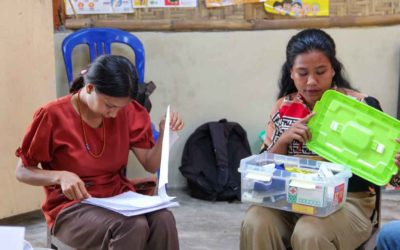
These women linked to the PMC program devote part of their lives to saving others. These unsung heroines work tirelessly to keep people from the danger of illness and injury. They put their lives on the line to ensure others can live to see another day. Teachers trained in primary medical care, these women are the backbone of these ultra-rural communities in East Sumba. They exemplify true bravery and selflessness, and we are eternally grateful for their service. Therefore, we express our deep gratitude to all women who save lives. Thanks for what you’re doing for the others.

read more
PMC program evaluation in Kabanda

PMC program evaluation in Kabanda

Kabanda is genuinely one of the most isolated I have ever seen. Getting it is difficult, even dangerous, at times. No road leads to this village; only extremely steep or steep stony paths allow us to go there. It took us over six hours to get there, including four hours of absolute terrain with the Truck of Life, a 4×4 medical truck specially designed for this journey. Kabanda is no exception; so many villages are in the same situation: That is to say, they have no road leading there. This raises – among other things – the question of access to health care, of course. And it is for these types of communities that Fair Future exists, and together with our friends from Kawan Baik, Sumba Volunteer and Charis Foundation, we have created this primary medical care program.

read more
Check Blood Pressure as part of the PMC program

Check Blood Pressure as part of the PMC program

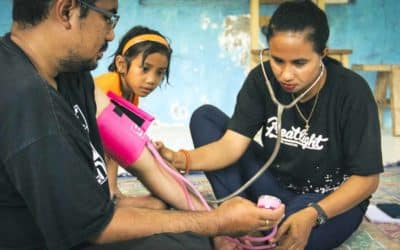
This new "Picture of the Day" shows you Mama Katerina, from the village of Lapinu, who is learning to take blood pressure with Dr Aldo. She knows what a systole is or a diastole is and from when and under what conditions there is hyper or hypotension. She will also learn to give appropriate medical treatment (Captopril) for high blood pressure.

As part of the Primary Medical Care program, Katerina and eight other "Kawan Sehat" health workers participate in this unique pilot experience. These women teachers can measure a patient's blood pressure and give appropriate medical treatment in case of hypertension.

It is a social and medical revolution, in our opinion. The fight and prevention of hypertension and cardiovascular diseases are essential here in the ultra-rural regions of eastern Indonesia. To be active and efficient, our medical teams provide knowledge and equipment (manual blood pressure measuring device, stethoscope) in each pilot village. They are five out of the thirty-five in which the PMC project is implemented.

This, for example, has led us to talk about active and passive smoking. To make it clear, tobacco is dangerous for your health, and it is also the cause of high blood pressure and, consequently, strokes, heart attacks, respiratory problems and a host of other related diseases at the cigarette shop.

read more
PMC program evaluation in Mbatapuhu

PMC program evaluation in Mbatapuhu

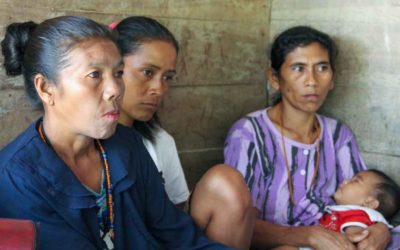
Non-professionals who give medical care and medicine to people, sick children, and injured. They do so through a unique and innovative medical care program. Because here, there are no doctors, no health centre, or else too far away. No one has a vehicle, and the roads that lead to these villages are often impassable. This program saves and preserves the lives of children as well as adults. Today, we are in Mbatapuhu.

read more
Giving life to the village of Laindatang

Giving life to the village of Laindatang

The current priority in this village is to give them clean, safe water and sanitation. Here, families must walk for miles, sometimes more than 10 hours, to bring a few litres of clean water home. People here have less than 2 litres per day and a person to drink, eat, go to the toilets, and wash. So you have to make sacrifices. Malaria is taking its toll here, just like infectious diseases that considerably weaken families' health, especially those of children under five. This is a critical situation for us on a health level. Still, on a social level, Fair Future and Kawan Baik, in collaboration with the local authorities, wish to start a simple Water Connections project in this village as soon as possible.

read more
PMC – Teachers receive their training certificate

PMC – Teachers receive their training certificate

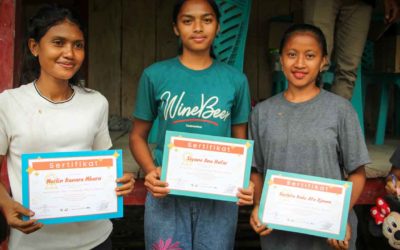
This new "Picture of the Day" shows three real heroes and three incredible women, Merlin, Siyane and Sarlota. In the ultra-rural and isolated village of Kabanda, the three participants and teachers in the primary medical care program received their first work and training certificate. 

This follows the teaching they received from the foundation's teams in December 2022. Complete medical training based on fifteen modules, which explain and demonstrate how to care for a sick or injured patient (adult or child ). This is in villages where no health centre, doctor, or health professional is present, available or accessible, and most of the time, like here in this village, where no road leads.

You must understand the situation, friends: These women come from Asia's most rural regions and perhaps even the world. Most have not been to school or received basic compulsory training. They were trained for three months in teaching in the ultra-rural areas by a partner association called Charis Sumba.

So you have to imagine their pride to have succeeded in becoming one of these health workers, the person in the village responsible for providing first aid in an emergency, the possibility of illness in the event of an injury, an adult or a child. So when they received this certificate, tears flowed. Their tears flowed ours too, and it was a moment of incredible strength, but above all, very emotional.

In principle, here, and related to local culture and traditions, a woman takes care of household chores, fetching water, cooking for the children, and caring for the family. These three female superheroes are not only teachers within the framework of Charis Sumba, but they are also now – and for more than four months – the health workers of the PMC program. They are the ones who can save a life in the absence of a medical centre, medical care or a doctor in the village. This is not anything in terms of enhancing the role of women in ultra-rural villages; this is immense and important progress.

read more
Fair Future field updates
Follow our WhatsApp Channel
Short, real updates from ultra-rural East Indonesia. Medical, water, logistics. No noise.
Join on WhatsApp
Fair Future field updates
Get our Newsletter
Short field stories. Clear impact. No spam.
Subscribe
Support from Switzerland
Donate via TWINT
Fast, secure giving from Switzerland. Small gifts help a lot.
Donate with TWINT